Tag Archives: Christianity

On wargames, history and heroes: “this story shall the good man teach his son”

Memoir '44: Pegasus Bridge setup
Memoir ’44: Pegasus Bridge setup

Re-posting this old post because Dina and I spent Friday night playing games again! And this is one of my favorite posts. Last night was Portal 2 and Orcs Must Die! 2.

Last night, I played through the Pegasus Bridge scenario from the Memoir ’44 wargame with Dina a few times. We actually played the online version of the game, using Steam. She was very gracious to play a wargame with me, which I don’t think is necessarily the first thing on most women’s lists of things to do on a Thursday night! I appreciated her agreeing to learn how to play and then playing with me several times. I think that Christians need to plan and execute more “together” activities like that – activities that involve interaction, co-operation, communication and engagement. We try to avoid doing things where we are both spectators. Playing wargames is not the only thing we do – we also do Bible study and cooking lessons (for me), for example.

Anyway, the point of this post is to express the deeper meaning behind playing wargames. I think that it is important to recognize and celebrate those who have demonstrated good character, whether it be now, or in the past. I think that it is important for us to search out the best role models ourselves, so that they will influence the way we act in our own lives. The second world war was a clear example of good versus evil. Anyone on the Allied side who demonstrated bravery and courage should be celebrated for safeguarding the security, liberty and prosperity that we enjoy today. In the case of Pegasus bridge, the hero is Major John Howard of the British paratroops.

Here is a quick re-cap of his exploits that day from the New York Times:

Maj. John Howard, the commander of glider-borne British infantrymen who seized the strategically vital Pegasus Bridge in the first battle of the D-Day invasion of Normandy, died Wednesday in a hospital in Surrey, England. He was 86 and had lived in Burford, near Oxford.

Under cover of night on June 6, 1944, six gliders carrying 181 officers and men of the Second Oxfordshire and Buckinghamshire Light Infantry landed on the eastern flank of a 60-mile invasion front on the northern coast of France. The regiment had a heritage going back to the battles of Bunker Hill and New Orleans, to Waterloo and to World War I. Now its soldiers were in the vanguard of the invasion of Hitler’s Europe.

Major Howard’s D Company was ordered to seize two bridges, one over the Caen Canal and the other spanning the parallel Orne River. If the Germans held on to those bridges, panzer units could move across them in a counterattack isolating 10,000 British paratroopers jumping behind the British invasion beach known as Sword, where infantry forces would arrive at daybreak. And Major Howard’s men sought to strike swiftly to prevent the Germans from blowing up the bridges if they were overwhelmed; the British needed those bridges to resupply their airborne units.

British Halifax bombers towed the gliders over the English Channel, then cut them loose.

Major Howard’s lead glider landed at 12:16 A.M., only 50 yards from the Caen Canal bridge, but the glider’s nose collapsed on impact, knocking everybody aboard unconscious for a few seconds. The soldiers quickly emerged, and over the next five minutes the men directly under Major Howard killed the surprised German defenders.

The nearby Orne River bridge was captured by other troops in Major Howard’s unit, and soon the words ”Ham and Jam,” signifying mission accomplished, were radioed to the airborne.

Two British soldiers were killed and 14 wounded in the operation.

Over the next 12 hours, British paratroopers and commandos reinforced Major Howard’s men, and British forces were able to move toward the city of Caen, their flank having been protected by the capture of the bridges.

On July 16, Major Howard received the Distinguished Service Order, Britain’s second-highest award for valor. On the 10th anniversary of D-Day, he received the Croix de Guerre Avec Palme from the French Government, which had renamed the Caen Canal span Pegasus Bridge, for the flying horse symbolizing the British airborne. The road crossing the bridge was later renamed Esplanade Major John Howard.

Why is this important? Well, it’s important to think on the things that are excellent. There are so many things in the culture that are not excellent that we are confronted with every day. We have to make it our business to do things together where goodness is celebrated. Especially when manly virtues like courage are celebrated. We don’t do that much anymore. And I think there’s a connection between wargames and Christian apologetics that we need to deliberately encourage.

Here’s an excellent passage from Shakespeare’s “Henry V” that makes the point:

This day is called the feast of Crispian:
He that outlives this day and comes safe home,
Will stand a tip-toe when this day is named,
And rouse him at the name of Crispian.
He that shall live this day, and see old age,
Will yearly on the vigil feast his neighbours,
And say, ‘To-morrow is Saint Crispian:’
Then will he strip his sleeve and show his scars,
And say, ‘These wounds I had on Crispin’s day.’
Old men forget: yet all shall be forgot,
But he’ll remember with advantages
What feats he did that day. Then shall our names,
Familiar in his mouth as household words,
Harry the King, Bedford and Exeter,
Warwick and Talbot, Salisbury and Gloucester,
Be in their flowing cups freshly remembered.
This story shall the good man teach his son;
And Crispin Crispian shall ne’er go by,
From this day to the ending of the world,
But we in it shall be rememberèd;
We few, we happy few, we band of brothers;
For he to-day that sheds his blood with me
Shall be my brother; be he ne’er so vile
This day shall gentle his condition:
And gentlemen in England, now a-bed
Shall think themselves accursed they were not here,
And hold their manhoods cheap whiles any speaks
That fought with us upon Saint Crispin’s day. (4.3.43)

This is from the famous speech in which King Henry charges his men to fight well before the famous Battle of Agincourt.

You can read more about the history of the British Airborne division and Pegasus bridge. The famous historian of the second world war Stephen E. Ambrose also wrote a history of the Pegasus bridge battle, called “Pegasus Bridge: June 6, 1944“. You won’t find many military historians better than Stephen E. Ambrose!

You might be surprised how many men are interested in military history and wargames, precisely because men instinctively look up to men like John Howard who embody qualities like bravery and courage. We have a dearth of moral character in this society. And we don’t do much to teach young men about manly virtues, even in the church. I think that it is important for us to think of creative ways for us to present good character to our young men. Young women should also learn about good character, because they must separate out the good men from the bad when they are courting.

Thanks to Dina for helping me to edit this post!

When can Christians start dating?

Painting:
Painting: “Courtship”, by Edmund Blair Leighton (1888)

First, read this article from a Crisis Pregnancy Center worker.

Excerpt:

I have concerns about the number one way that our culture chooses to perpetuate the cancer of broken marriages and failed relationships– underage dating.

You can follow them on Facebook – the failed attempts at love, I mean. Somebody is always changing their status from “in a relationship” to “single.” Unfortunately, a huge number of these disappointed lovers are too young to be legally married. I wonder sometimes if I am the only one who winces to hear a thirteen-year old speak with cavalier abandon of his or her “ex?”  Since when is it considered healthy and acceptable for underage people to be in “relationships?” Just what do parents and educators expect to be the result of the romantic conquests of these middle-school children and young high school students? The results I’ve witnessed personally are beyond disturbing; they are downright sinister, and have caused me to question whether or not those who claim to champion marital fidelity and family values are paying any attention at all to the standards we are passing to our children.

The trouble with underage dating is that it presents an entirely faulty view of what interaction with the opposite gender should be about. Rather than placing emphasis on building one strong relationship with one person at a stage of life when a marital commitment is feasible, dating encourages young people to pour their energies into consistently seducing other young people at a time when neither of them are capable of making any long-term commitments. Their “relationships” are destined to fail from the get-go because they are founded on unhealthy perceptions of love and not backed by any real necessity to stick it out.

The beauty of marriage, as it was intended to be, is that it teaches two people of opposite genders to learn to work through incompatibilities and give of themselves. In the same way, the great ugliness of dating as it is practiced by our culture and portrayed by our media, is that it teaches two people of opposite genders to be selfish by giving them an easy “out” when things don’t go according to their initial feelings. I believe it is fair to say that this form of dating is a training manual for divorce, because it encourages young people to grow accustomed to giving their hearts away and then taking them back.

Sadly, parents who should know better continue to display shocking naïveté regarding the absurd practices of driving their twelve year olds out on a “date,” or purchasing provocative clothing for their sixteen-year-olds, or sympathizing with their broken-hearted fourteen-year-olds by assuring them that they’ll “find someone better.” “They’re just having fun,” they’ll tell us, rolling their eyes at what they consider to be our tightly wound principles. I work a volunteer shift at Crisis Pregnancy Clinic where I witness every week the ruined lives and broken dreams that “fun” has left with our youth.

And now here’s my take.

Basically, relationships are not meant to be entertainment, but to lead to marriage. So, you can start dating whenever the woman and man are able to demonstrate to each other that they are prepared to fulfill their roles in a future marriage.

For example, the woman should be able to show that she has been able to maintain commitments to caring for others through some period of time, maybe with small children or pets. She should be voluntarily entering into relationships and responsibilities with other people where she is giving of herself – like volunteering at a crisis pregnancy center or caring for an ailing or elderly relative. That shows potential suitors that she has the right attitude to relationships – serving others self-sacrificially, and not looking for tingles and excitement. She should be able to show that she is good at making commitments and solving problems by studying hard subjects in school, i.e. – STEM subjects. And then she should be able to get a job in a difficult field and save money, instead of wasting it on frivolous fun activities. That shows a man that she can do hard things self-sacrificially – even if she doesn’t feel like it.

And for the man, he should be able to show that he is able to do his roles – protector, provider and moral/spiritual leader. He should be able to prove that he is able to mentor and guide other people to learn things and do things that will make them more effective Christians. That’s moral and spiritual leadership. Spiritual leadership is not just agreeing with people, it means leading them to serve God more effectively, perhaps by helping others to make better decisions about their education and careers. A man  should have studied a subject that is going to allow him to find work. It’s not enough to be a hard worker, he has to be able to show from his resume and bank account that he understands how to earn, save and invest money. I don’t think that an unemployed man should start a relationship with a woman, because cannot demonstrate ability in the provider role. He needs to show that he can work self-sacrificially, even if the work does not make him feel happy. He also needs to prove that he is comfortable sharing it with others – since he will have to share with his family when the time comes.

I think there are other ways for men and women to show that they are ready for marriage, but those are some ways. The key thing is that people shouldn’t be dating until they are able to show that they know the roles that they are expected to fill in marriage as men and women. They should also be looking for the right things in others. They can’t be looking for the shallow things that give them tingles, like looks, athleticism, etc. Before men and women start dating, they have to be able to show that they are working on being able to handle their responsibilities, and they have to show that their selection criteria for the opposite sex are at least partly based on the responsibilities that the opposite sex has in a marriage.

Should Christians be motivated by the fear of missing out (FOMO)?

Theology that hits the spot

Dina was off from her stressful job last week, so we spent some time talking over some articles that we found on the culture. We specifically talked about what is motivating young people, so I wanted to write something about that.

FOMO: Fear Of Missing Out

Here’s a leftist New York Times article explaining where FOMO comes from:

It’s known as FOMO, or “fear of missing out,” and refers to the blend of anxiety, inadequacy and irritation that can flare up while skimming social media like Facebook, Twitter, Foursquare and Instagram. Billions of Twitter messages, status updates and photographs provide thrilling glimpses of the daily lives and activities of friends, “frenemies,” co-workers and peers.

[…]When we scroll through pictures and status updates, the worry that tugs at the corners of our minds is set off by the fear of regret, according to Dan Ariely, author of “Predictably Irrational” and a professor of psychology and behavioral economics at Duke University. He says we become afraid that we’ve made the wrong decision about how to spend our time.

[…]A friend who works in advertising told me that she felt fine about her life — until she opened Facebook. “Then I’m thinking, ‘I am 28, with three roommates, and oh, it looks like you have a precious baby and a mortgage,’ ” she said. “And then I wanna die.”

It’s like they want to run a race to do fun and exotic things with their peers, and not finish last.

Anyway, I want to begin this post with examples of FOMO behavior I have personally encountered.

FOMO Travel

Dina and I read and discussed this article by Alain de Botton in The European – notice the emphasis on travel and having fun, sophisticated experiences:

We’re continually being bombarded with suggestions about what we might do (go jet skiing, study in Colorado, visit the Maldives or see the Pyramids). We’re always hearing of the amazing things friends have done or are going to do: ‘there was this great bar we all went to …’; ‘she’s getting married in a little country church, then we’re having a picnic…’; ‘the sun was glinting on Sydney Harbour…’ There are endless hints of the allure of life in other places: an article about family-friendly restaurants in Brooklyn, a crime novel set in Trieste, the departure board at the airport with its list of places only a plane trip away: Moscow, Bangkok, Addis Ababa… The modern world makes sure we know at all times just how much we’re missing. It is a culture in which intense and painful doses of FOMO (Fear Of Missing Out) are almost inevitable.

What’s interesting is this – how does FOMO travel affect young, unmarried Christians?

Travel through missions work seems to be the FOMO activity of choice for at least a few young, unmarried Christians. One of my best friends who is married to another of my best friends told me about her missions trip to a European country. I asked her why she did it, since it meant lost savings, lost earnings, lost work experience, etc. (She gave up a year of earnings, and she had a great job in engineering). Her answer was that she did it for the adventure. I have a hard time hearing Jesus say that he was going to do something because he was bored and wanted an adventure. Especially when it’s $30,000 in costs, $60,000 of lost income, and lost work experience – per year. This was before the time of the Internet, though, when missionary work actually made sense. I just don’t think it’s worth spending that kind of money for the impact you make. The people I know who went on missionary trips just wanted to feel spiritual, look spiritual, and have a fun “life experience” vacation. One missionary told me that she was desperate to get away from her boring mid-Western roots.

If you really want to share Christ effectively with people in other countries, then you can start a blog and pay the tiny costs for it out of your earnings from your day job – that’s what I do. I get more people from Europe reading my blog than I could contact in a year of missionary work. I Skype with the people who are interested in Christianity from these countries (Scotland, Northern Ireland, England, Canada, etc.), as well. Meanwhile, I keep working my not-exciting job, so my savings increase, and my resume remains gap-less. This is good stewardship of finances, and self-denial prepares your character for the hard work of marriage and parenting. The Bible says that those who do not work should not eat. And Paul says that he built tents so that no one could accuse him of taking on missionary work for financial gain.

You can tell whether a person is sincere in their missionary intentions by looking at how responsible they’ve been in their decision-making. If a person has gone into debt paying for fun, thrilling activities like skydiving, ziplining, surfing, etc., then it’s FOMO travel. We must look past the spiritual smokescreen, and tell young people to grow up.

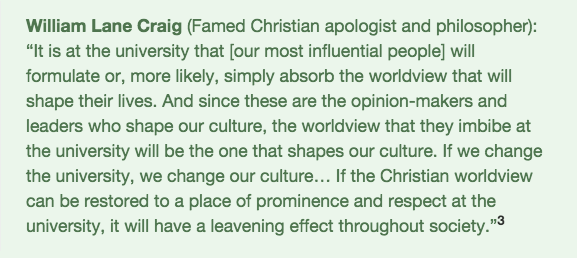
After all, if defending God’s honor was the missionary’s main goal, then the real battlefield would be the university.

Bill Craig puts it best:

If serving God is your goal, look to the university

There is already a perfectly fine university right next door – no need to fly to Europe to find one! Remember, the university that took your faith away, or maybe the faith of someone you cared about? Yeah, it’s still there in your home town! And it’s still ruining the lives of thousands of young people. It seems to me that it’s better stewardship to stay here and work, then give money to groups like Reasonable Faith. And you can start a blog, teach in church and invite scholars to the local university, too. That costs almost nothing, and it produces better results.

What about Jesus?

Sometimes, it’s a good idea to look beyond the words of the Bible and reflect on the overall message of it at a higher level. When I look in the Bible, I see that Jesus went through a lot of suffering in obedience to God in order to secure the salvation of people who did not even like him. And it’s from this sacrifice on our behalf that his claim on our obedience comes. There are things that I don’t like to do that I do anyway because they work to serve God. Jesus life’s ambition was not to do things that were easy, or that made him happy. Experienced Christians do things that are not fun, because these things are right and because they solve the real problem.