Tag Archives: Christianity

What was the Jesus Seminar? Should anyone have taken them seriously?

The Jesus Seminar and their pre-suppositions

A friend of mine was asking me about the “Jesus Seminar”, which is a group of people who claim to be able to speak for broad spectrum of scholars about who Jesus really was. She was telling me that someone’s child went to college, heard about the Jesus Seminar, and lost their faith because of their writings. I wanted to find a good article for her on this, and since Dr. William Lane Craig has debated most of the leading scholars in the Jesus seminar, (e.g. – John Dominic Crossan, Marcus Borg, Roy Hoover, Gerd Ludemann, Robert Price, John Shelby Spong, etc.), I chose an article by Dr. Craig. I also link to two debates that Dr. Craig did with Jesus Seminar people below.

First a short video (4 minutes):

If you can’t watch anything long, then watch that.

Here is the article, on the Reasonable Faith web site.

Intro:

In 1985 a prominent New Testament scholar named Robert Funk founded a think tank in Southern California which he called the Jesus Seminar. The ostensible purpose of the Seminar was to uncover the historical person Jesus of Nazareth using the best methods of scientific, biblical criticism. In Funk’s view the historical Jesus has been overlaid by Christian legend, myth, and metaphysics and thus scarcely resembled the Christ figure presented in the gospels and worshipped by the Church today. The goal of the Seminar is to strip away these layers and to recover the authentic Jesus who really lived and taught.

Excerpt:

The number one presupposition of the Seminar is antisupernaturalism or more simply, naturalism.Naturalism is the view that every event in the world has a natural cause. There are no events with supernatural causes. In other words, miracles cannot happen.

Now this presupposition constitutes an absolute watershed for the study of the gospels. If you presuppose naturalism, then things like the incarnation, the Virgin Birth, Jesus’ miracles, and his resurrection go out the window before you even sit down at the table to look at the evidence. As supernatural events, they cannot be historical. But if you are at least open to supernaturalism, then these events can’t be ruled out in advance. You have to be open to looking honestly at the evidence that they occurred.

[…][T]he second presupposition which I wanted to discuss, namely, sceptical critics presuppose that our most primary sources for the life of Jesus are not the Gospels, but rather writings outside the New Testament, specifically the socalled apocryphal gospels. These are gospels forged under the apostles’ names, like the Gospel of Thomas, the Gospel of Peter, the Gospel of Philip, and so forth. These extrabiblical writings are said to be the key to correctly reconstructing the historical Jesus.

In addition to that, there seems to be a third presupposition – radical religious pluralism.

John Dominic Crossan closed his opening speech in his debate with Dr. Craig with this:

When I look a Buddhist friend in the face, I cannot say with integrity, “Our story about Jesus’ virginal birth is true and factual. Your story that when the Buddha came out of his mother’s womb, he was walking, talking, teaching and preaching (which I must admit is even better than our story)—that’s a myth. We have the truth; you have a lie.” I don’t think that can be said any longer, for our insistence that our faith is a fact and that others’ faith is a lie is, I think, a cancer that eats at the heart of Christianity.

But of course, he thinks that all miracle claims are lies, because of his supernaturalism. What he is really trying to do here is redefine these claims so they are not truth claims at all, but personal preference claims.

But the main point is that the co-chair of the Jesus Seminar pre-supposes that nothing that Christianity claims that offends people in other religions can be true. Before he sits down to look at the evidence. I’m not saying that these guys can’t do history, I’m saying that the real debate with these guys should not be about history. The real debate should be about their presuppositions. We should work to defeat their pre-supposition naturalism with good scientific arguments like the origin of the universe, the fine-tuning, the origin of life, the Cambrian explosion, the habitability-discoverability argument, etc. And we should work to defeat their pre-supposition of pluralism by just asking them to defend it, and maybe point out that a person’s being offended by some claim about reality being true does not make that claim false. Logic requires that people who make claims that are made false by reality are wrong and no amount of crying and sobbing can change that.

The second article in the series that Dr. Craig mentioned in the article I linked above is a generic article on the evidence for the historical Jesus. If you have not read a case for the resurrection of Jesus, then read it, too. Or you can check out this lecture by Dr. Craig on the Jesus Seminar and the historical Jesus:

If you want to see a good debate between Dr. Craig and Marcus Borg, here it is:

Dr. Borg is one of the more respected Jesus Seminar people, and a really nice guy. But also, a really wrong guy.

The key thing to know about them is that they presuppose naturalism (miracles never happen) and radical pluralism (no exclusivist religion can be correct, because that would make people in the other religions feel bad).

Now is this the right way to do history? Suppose a historian began with the presupposition that the North and South never engaged in any battles and interpreted all of the Civil War history through that lens. Would he arrive at an accurate understanding of what happened?

The presuppositions are key to understanding the “historical work” of the Jesus Seminar.
William Lane Craig talks about the book “Contending With Christianity’s Critics”

William Lane Craig lecturing to university students
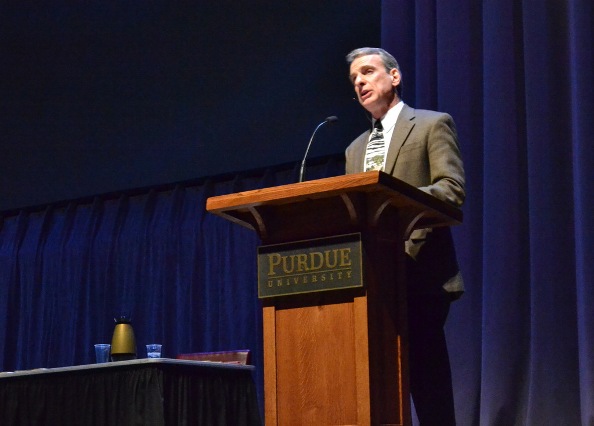
William Lane Craig lecturing to students and faculty at Purdue University

Note: This book is currently on sale for only 99 cents (Kindle edition). Get it! Sorry if the price has changed by the time you read this post.

A series of three interviews from the “Reasonable Faith” podcast about the essay collection “Contending with Christianity’s Critics: Answering New Atheists and Other Objectors“.

Here is the first MP3 file.

Topics:

  • About the editor Paul Copan, (the nicest Christian apologist)
  • 1: Responding to Dawkins’ argument “Who designed the designer?”
  • 2: Responding to the multiverse counter to the fine-tuning argument
  • 3: The argument that rationality and consciouness require theism
  • 4: The evidence for humans being hard-wired for belief in God
  • 5: Responding to naturalism’s claim to rationally ground morality
  • 6: Responding to Dawkins’ idea that the universe looks undesigned

Here is the second MP3 file.

Topics:

  • 7: The criteria that historians use to establish historical reliability
  • 8: Did Jesus think that he was the Son of Man in Daniel
  • 9: A time line for the resurrection of Jesus from the early sources
  • 10: Responding to scholarly distortions of the historical Jesus
  • 11: Responding to Bart Ehrman’s claim that the NT text is corrupted
  • 12: The evidence for Jesus divine self-understanding

Here is the third MP3 file.

Topics:

  • 13: The logical coherence of the concept of God
  • 14: The logical coherence of the doctrine of the Trinity
  • 15: The logical coherence of the doctrine of the Incarnation
  • 16: The logical coherence of the doctrine of the Atonement
  • 17: The logical coherence of the doctrine of the Hell
  • 18: Responding to objections to God’s knowledge of the future

My favorite chapters in this book are the ones by Mark Linville on evolution and morality, and the chapter by Robert H. Stein on historical criteria and methodology. This is not an introductory book, this book is an intermediate-level book. You want to read the two Jim Wallace books and the Lee Strobel “Case For” books before you tackle this one.

Much of the book is philosophy and philosophy of religion and philosophical theology. Well, I guess everyone knows that I hate non-STEM disciplines, and I only read philosophy because it’s useful for Christian apologetics. If you are like me, and think that only STEM disciplines have value, then this book is for you. You will be able to make use of it in your case-making adventures. It. Works. This is the stuff that gets William Lane Craig invited to all the best universities to debate against all the best atheists. And he beats them all up with it, too.

William Lane Craig’s secret weapon is his amazing wife Jan

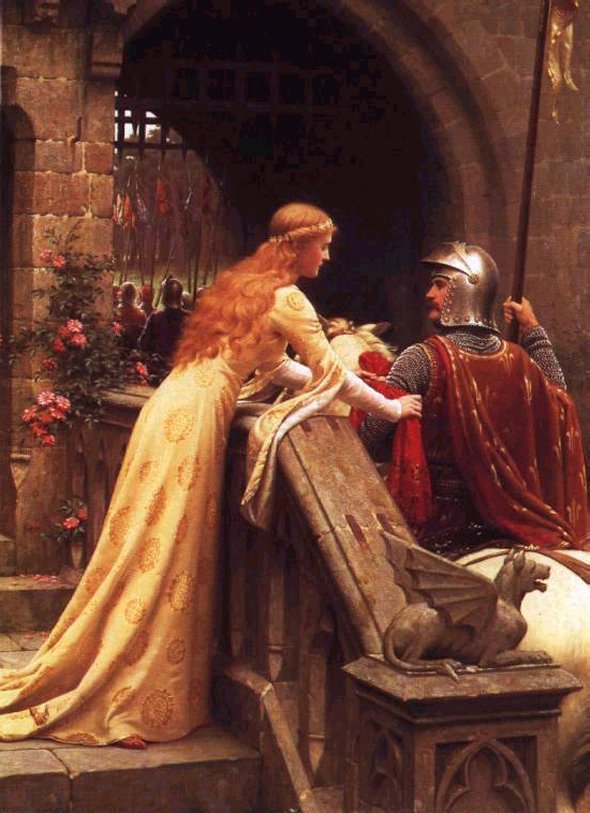
My favorite painting: "Godspeed" by Edmund Blair Leighton, 1900
My favorite painting: “Godspeed” by Edmund Blair Leighton, 1900

I want to draw your attention to a talk on “Vision in Life” given by Dr. William Lane Craig. Dr. Craig is the ablest defender of the Christian faith operating today. He has done formal academic debates with all of the best known atheists on major university campuses in front of thousands of university students.

It turns out that he owes a lot of his success to his amazing wife Jan.

The MP3 file is here. (32 minutes)

This talk was Dr. Craig’s chapel address to Biola University students.

About 11 minutes into the talk, Bill describes what happened after he finished his Bachelor’s degree at Wheaton:

And so I joined the staff of Campus Crusade for Christ for 2 years, and was assigned to Northern Illinois University. And that was where I met my wife Jan. She was a graduate of the University of North Dakota where she had come to faith in Christ. And she had a similar vision for her life of evangelism and discipleship.

And as we worked at NIU together, she with gals and I with the guys, leading students to Christ and discipling them to walk with the Lord, we fell in love. And we decided that we would be more effective if we joined forces and became a team.

So their reason for getting together was because they thought that they would be more effective in evangelism and discipleship if they worked as a team.

It is at this point in the talk where Bill begins to explain just how Jan molded him into the lean, mean debating machine that travels the world striking terror into the hearts of atheists.

Bill’s first story about Jan occurs early after their marriage while he is working on his first Masters degree at Trinity:

And it was also at that time that I began to see what an invaluable asset the Lord had given me in Jan. I remember I came home from classes one day, and found her at the kitchen table with all the catalogs and schedules and papers spread out in front of her and she said, “look! I’ve figured out how you can get two Masters degrees at the same time that it would normally take to get one! All you have to do is take overloads every semester, go to all full-time summer school and do all these other things, and you can do two MAs in the time it takes to do one!”

And I thought, whoa! Are you sure you really want to make the commitment it takes to do this kind of thing? And she said, “Yeah! Go for it!” And it was then I began to see that God had given me a very special woman who was my supporter – my cheerleader – and who really believed in me. And as long as she believed in me, that gave me the confidence to dream bigger dreams, and to take on challenges that I had never thought of before.

In an article on his web site, he talks about how Jan encouraged him to do his first Ph.D:

As graduation from Trinity neared, Jan and I were sitting one evening at the supper table in our little campus apartment, talking about what to do after graduation. Neither of us had any clear leading or inclination of what we should do next.

So Jan said to me, “Well, if money were no object, what would you really like to do next?”

I replied, “If money were no object, what I’d really like to do is go to England and do a doctorate under John Hick.”

“Who’s he?” she asked.

“Oh, he’s this famous British philosopher who’s written extensively on arguments for the existence of God,” I explained. “If I could study with him, I could develop a cosmological argument for God’s existence.”

But it hardly seemed a realistic idea.

The next evening at supper Jan handed me a slip of paper with John Hick’s address on it. “I went to the library today and found out that he’s at the University of Birmingham in England,” she said. “Why don’t you write him a letter and ask him if you can do a doctoral thesis under him on the cosmological argument?”

What a woman! So I did, and to our amazement and delight Professor Hick wrote back saying he’d be very pleased to supervise my doctoral work on that subject. So it was an open door!

And in the same article, he explains how Jan encouraged him to get his second Ph.D:

As Jan and I neared the completion of my doctoral studies in Birmingham, our future path was again unclear to us. I had sent out a number of applications for teaching positions in philosophy at American universities but had received no bites. We didn’t know what to do.

I remember it like yesterday. We were sitting at the supper table in our little house outside Birmingham, and Jan suddenly said to me, “Well, if money were no object, what would you really like to do next?”

I laughed because I remembered how the Lord had used her question to guide us in the past. I had no trouble answering the question. “If money were no object, what I’d really like to do is go to Germany and study under Wolfhart Pannenberg.”

“Who’s he?”

“Oh, he’s this famous German theologian who’s defended the resurrection of Christ historically,” I explained. “If I could study with him, I could develop a historical apologetic for the resurrection of Jesus.”

Our conversation drifted to other subjects, but Jan later told me that my remark had just lit a fire under her. The next day while I was at the university, she slipped away to the library and began to research grants-in-aid for study at German universities. Most of the leads proved to be defunct or otherwise inapplicable to our situation. But there were two grants she found that were possibilities. You can imagine how surprised I was when she sprung them on me!

Both of these Ph.D experiences are also described in the talk. And the talk concludes as follows:

I am so thankful to be married to a woman who is tremendously resourceful, tremendously talented and energetic, who could have pursued an independent career in any number of areas, but instead, she has chose to wed her aspirations to mine, and to make it her goal to make me the most effective person I can be, for Christ. And she has been like my right arm in ministry over these many years. And it is a tremendous privilege to be a team with a person like that.

And you young men, I would encourage you, if you marry, to find a gal who shares your vision, not some independent vision, but who is interested in aligning herself with you, and pursuing together a common vision and goal that will draw you [together], so that you will avoid the growing separateness that so often creeps into marriages.

And now you know the rest of Bill’s story. The person you marry will have an enormous influence on the impact you will have for Christ and his Kingdom. It is up to you to decide whether that influence is going to be positive or negative, by deciding if you will marry, and if you do marry, by deciding whom you will marry.

You may also be interested in this talk given by William Lane Craig, entitled “Healthy Relationships” (National Faculty Leadership Conf. 2008) (audio here) In that talk, he offers advice to Christians who want to have a marriage that is consistent with their Christian faith.