Tag Archives: Book

Peter Williams debates Bart Ehrman on his book “Misquoting Jesus”

The audio for this Unbelievable radio show debate is available from Apologetics 315.

Details:

Bart Ehrman is the US author of the bestselling book “Misquoting Jesus” (In the UK “Whose word is it?”).  He calls into question the authority of the New Testament as scribal changes over time have changed the documents.

So can we trust the scripture? Bible scholar Peter Williams believes in the reliability of the New Testament and that Bart’s prognosis is far too pessimistic.

I think Justin Brierley breaks his record for saying “if you like” in this particular debate. So, if you like it when he says “if you like”, this debate is for you!

Summary of the Williams-Ehrman debate:

Note: this summary is snarky. When I get annoyed with whiners, I make things up.

Ehrman:

  • I had a mystical experience in childhood and became an evangelical Christian
  • I went to Moody Bible Institute, and they told me that the Bible was inerrant
  • For a while, I was committed to the view that there are no mistakes in the Bible
  • At Princeton, I was taught and graded by professors who did not accept inerrancy
  • I began to see that the Bible did have errors after all!
  • We don’t have the originals written by the authors, we only have thousands of copies
  • if the words of the Bible are not completely inerrant, then none of it is historical
  • if all of the words in the copies of the Bible are not identical, then none of it is historical

Williams:

  • I would say the New and Old testaments are the Word of God
  • We don’t need to have the original Greek writings in order to believe in the authority of the Bible
  • I believe in inerrancy, but doesn’t mean there are no problems
  • the doctrine of inerrancy has always referred to the original copies, not the translations

Moderator:

  • what are the main points of Misquoting Jesus?

Ehrman:

  • we don’t have the originals of any of the books of the New Testament
  • we have copies that are much later, sometimes even centuries later
  • the copies we have all differ from one another – they were changed by scribes
  • we have 5000 manuscripts in the original Greek language
  • there are hundreds of thousands of differences
  • most of the differences don’t matter
  • some differences are significant for meaning or doctrine
  • errors are propagated because the next scribe inherits the mistake of their source copy
  • a large gap between the time of writing and the first extant copy means more errors have crept in

Williams:

  • the reason we have so many variants is because the number of manuscripts is large

Angry Jesus or compassionate Jesus in Mark

Ehrman:

  • most manuscripts say that Jesus was compassionate when healing a leper, but one says he was angry
  • it makes a huge huge huge really really big difference if Jesus is compassionate or angry
  • the whole Bible needs to be thrown out because of this one word between different in one manuscript

Williams:

  • this variant is important for understanding the passage, but it has no great meaning
  • the change is probably just an accident – the two words are very similar visually in Greek
  • it’s just an accident – it emerged in one manuscript, and it impacted a few more
  • the tiny number of manuscripts that have the error are geographically isolated
  • I’m pretty sure that WK prefers the angry Jesus anyway – so who cares?

Ehrman:

  • no! someone changed it deliberately! it’s a conspiracy! you should buy my book! it’s a *big deal*!!!!!1!!1!one!!eleventy-one!

The woman caught in adultery in John

Ehrman:

  • it is isn’t in any of the earliest manuscripts
  • this is an apocryphical story that some scribe deliberately inserted into the text
  • most people don’t even know about this! it’s a cover-up! you need to buy my scandalous book!

Williams:

  • that’s right, it’s a late addition by some overzealous scribe
  • and it’s clearly marked as such in every modern Bible translation
  • the only people who don’t know about this are people who don’t read footnotes in their Bible
  • and in any case, this isn’t a loss of the original words of the New Testament – it’s an addition

Grace of God or apart from God in Hebrews

Ehrman:

  • well this is just a one word difference, but it makes a huge huge really really big difference!
  • the words are very similar, so it’s could be an accident I guess
  • but it wasn’t! this was a deliberate change! it’s a conspiracy! it’s a cover-up! scandal!
  • buy my book! It’s almost as good as Dan Brown!

Moderator:

  • hmmmn…. I kind of like “apart from God”, and I’m sure WK does too – why is this such a big scandal again?

Ehrman:

  • you don’t care? how can you not care? it has to be inerrant! or the whole thing is false!
  • Moody Bible Institute says!

Williams:

  • yeah Bart is always saying that every change is deliberate but it’s just an accident
  • the words are very similar, just a few letters are different, this is clearly an accident
  • I have no problem with apart from God, or by the Grace of God
  • please move on and stop screaming and running around and knocking things over

Moderator:

  • but what if pastors try to use this passage in a sermon?

Williams:

  • well, one word doesn’t make a big different, the meaning that appears is fine for preaching
  • it’s only a problem for people who treat the Bible as a magic book with magical incantations
  • they get mad because if one word is out of place then the whole thing doesn’t work for their spell
  • then they try to cast happiness spells but the spells don’t work and they experience suffering
  • the suffering surprises them since they think that fundamentalism should guarantee them happiness
  • then they become apostates and get on TV where they look wide-eyed and talk crazy

Ehrman:

  • hey! are you talking about me? a lot of people buy my books! i am a big success!
  • it is very important that people don’t feel bad about their sinning you know!

Is Misquoting Jesus an attack?

Williams:

  • it’s rhetorically imbalanced and misleading
  • it tries to highlight change and instability and ignore the majority of the text that is stable
  • he makes a big deal out of 5 or so verses that are different from the mainstream text
  • he says that scribes deliberately changed the scriptures, but he doesn’t prove that
  • it’s just as likely that the differences are just scribal errors made by accident

Ehrman:

  • well, maybe the variants aren’t a big deal, but what about one angel vs. two angels?
  • that’s a significant issue! significant enough for me to become an apostate – a rich apostate
  • if one word is different because of an accident, then the whole Bible cannot be trusted
  • it has to be completely inerrant, so a one word difference means the whole thing is unreliable
  • we don’t even know if Jesus was even named Jesus, because of one angel vs two angels
  • buy my book! you don’t have to read it, just put it on your shelf, then you’ll feel better about not having a relationships with God – because who’s to say what God really wants from you? Not the Bible!

Other debates:

Other critiques:

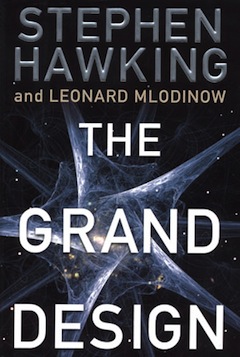
Book review of Stephen Hawking’s “The Grand Design” by Edgar Andrews

First, who is Edgar Andrews?

Professor Edgar H. Andrews (BSc, PhD, DSc, FInstP, FIMMM, CEng, CPhys.) is Emeritus Professor of Materials at the University of London and an international expert on the science of large molecules. In 1967 he set up the Department of Materials at Queen Mary College, University of London, and served both as its Head and later as Dean of Engineering. He has published well over 100 scientific research papers and books, together with two Bible Commentaries and various works on science and religion and on theology. His book From Nothing to Nature has been translated into ten languages.

Edgar Andrews was an international consultant to the Dow Chemical Company (USA) for over thirty years and to the 3M Company (USA) for twenty years. He was a non-executive director of Denbyware PLC throughout the 1970s and for five years a member of the Scientific Advisory Board of Neste Oy, the national oil company of Finland.

And now an excerpt from the book review: (H/T Apologetics 315)

Hawking and Mlodinow declare: ‘According to M-theory, ours is not the only universe. Instead, M-theory predicts that a great many universes were created out of nothing. Their creation does not require the intervention of some supernatural being or god. Rather, these multiple universes arise naturally from physical law. They are a prediction of science’ (p.9).

So what is this magical M-theory? The authors are rather coy about it. ‘M-theory’, they say, ‘Is not a theory in the usual sense. It is a whole family of different theories, each of which is a good description of observations only in some range of physical situations’ (p.8). Theoretical physicist Lee Smolin is more explicit: ‘… we still do not know what M-theory is, or whether there is any theory deserving of the name’ (The trouble with physics, Allen Lane, 2007, p.146).

The fact is that M-theory is an untestable mathematical construction which many scientists believe has no bearing on physical reality. But that doesn’t deter our authors because they don’t believe in ‘objective reality’ anyway. What we think is ‘real’, they say, is simply a model assembled in our brains from raw data input by our senses. But, confusingly, the authors then claim that the best models are those that reflect the way things really do happen in the real world — appealing to the very objective reality they say does not exist! Confused? Me too.

But it gets worse. They claim that M-theory (whatever it might be) predicts not one universe but a multiverse — a vast collection of universes which cannot be observed or known to us in any way. On their own criterion, this makes M-theory a very bad model indeed. So it’s hardly a useful replacement for God.

Here’s a better book to read if you want to understand how belief in God relates to experimental science.

My Dad just finished reading his book “Who Made God?” and called me up to tell me how much he liked the book. My Dad is not a scientist, yet he read the whole thing and learned a lot about science. This is the book for people who haven’t read a thing about science and religion. It’s easy to understand because he explains the same thing over and other giving more and more detail. Even a child can understand the first explanation, and then he keeps layering on details until he gets up to the state-of-the-art.

Remember Brian Auten of Apologetics 315 picked this book as his favorite of 2010. You can’t go wrong!

My Dad is now reading my copy of “Is God Just a Human Invention?” by Jonathan Morrow and Sean McDowell. I’m working on “Is God a Moral Monster?” by Paul Copan. I like books where difficult questions are asked and then careful answers are given. Then when people ask me the same questions, I can answer them using what I’ve learned – and often phrase the question even more clearly and forcefully than they did when they asked me.

Paul Copan interviewed on the hard passages of the Old Testament

How would you respond to all of the troubling stories in the Old Testament, (conquest, slavery, etc.), and the characterizations of God as jealous and angry and vengeful? Paul Copan has written a new book on those topics and more.

From the Evangelical Philosophical Society blog. (H/T Mary)

What surprising thing did he learn while researching the book?

Surprising—and yet not surprising—is the fact that the more deeply I dug into understanding the ancient Near East, the more the biblical text made sense and the more favorable it looked in comparison to other relevant texts in the ancient Near East.  For example, the strong bravado and exaggeration typical of ancient Near East war texts (“leaving alive nothing that breathed”) was used even when lots of the enemy were left standing and breathing!  What’s more, Israel’s warfare—directed at non-combatants in citadels or fortresses (“cities”)—is tame in comparison to other ancient Near Eastern accounts of, say, the Assyrians.
As far as servitude (“slavery”) goes, this was voluntary and contractual rather than forced (unless Israel was dealing with, say, hostile foreign POWs who might be pressed into service to cut wood and carry water).  Yet Israel’s laws prohibited (a) kidnapping, (b) returning runaway (foreign) slaves to their masters, and (c) injuring servants.  If these three Mosaic regulations were observed during by Western colonial powers, slavery would not have emerged and the nineteenth-century history of the United States would have looked much different.

What kinds of questions will people who read the book be able to answer?

While I can’t cover all the territory I would like in this book, I try to address the range of topics that are most pressing and most frequently raised by the critics.  Part I deals with the phenomenon of the New Atheists and their arguments—and their case against the “Old Testament God.”  In fact, as you can see in the table of contents below, I use their quotations as my chapter headings!  In Part II, I deal with issues related to the nature of God: Is God narcissistic?  Why should God get jealous?  How could God command Abraham to sacrifice Isaac?

Part III looks at life in the ancient Near East and how Israel’s laws look in comparison to those of other ancient Near Eastern cultures.  I maintain, first, that while many of Israel’s laws are not ideal (human hard-heartedness is part of the problem, as Matthew 19:8 indicates), they are generally a significant humanizing improvement over other ancient Near Eastern cultures.  God meets his people where they are—with their embedded, fallen moral and social patterns—but he challenges them to greater moral and spiritual heights.  Then I go on to address topics like Israel’s kosher and purity laws, its civil laws and punishments, the treatment of women in Israel, slavery (or better “servitude”) in Israel (and I extend the discussion to include the New Testament), then finally the question of Canaanite “genocide” (which it most certainly is not!) and of whether “religion” produces violence.

In Part IV, I argue that the biblical God serves as the basis for objective moral values and that atheists borrow the metaphysical grounding for human dignity and rights from a theistic worldview in which God makes human beings in his image. Finally, I refer to the role of Jesus Christ as the fulfiller of the Old Testament, who illuminates the Old Testament and puts it into proper perspective.  Moreover, his followers, when living consistently with his teachings, have actually made a remarkable moral impact on the world which scholars in both the East and the West, both Christian and non-Christian, acknowledge.

If some of you are following my debates on Facebook, then you know that I am using this argument against one of the atheists I am currently debating on the topic of spanking. Never, ever let an atheist get away with making moral statements. Moral statements are meaningless in an atheistic universe.

Paul Copan’s new book might be worth picking up because I don’t have anything on that topic. Not many people ask me questions like that, but maybe that’s God’s grace since I would not be able to answer them well anyway. Usually when I read something, he sometimes gives me that question from someone the very same week. It’s very interesting when this happens. But that’s what I mean when I say relationship with God. I mean we work together.

By the way, if you are looking for some good apologetics books for Christmas, take a look at this list at Apologetics 315.