
Tag Archives: Biology

Dr. Walter Bradley lectures on scientific evidence for the creation and design of the universe

Dr. Walter L. Bradley

This lecture is special to me, because I bought a VHS tape of it from Access Research Network just after I started working full-time, and watched it a million times. A lot of people come to their convictions about God’s existence because of parents or church or intuitions, but for me it’s all about the scientific evidence. This lecture changed my life. I wish more people taught their children about this evidence! This lecture was delivered at the University of California, Santa Barbara.

About the speaker:

Dr. Bradley received his B.S. in Engineering Science and his Ph.D. in Materials Science from the University of Texas in Austin.

Dr. Bradley taught for eight years at the Colorado School of Mines before assuming a position as Professor of Mechanical Engineering at Texas A&M University (TAMU) in 1976.

During his 24 years at Texas A&M, Dr. Bradley served as Head of the Department of Mechanical Engineering at Texas A&M University and as Director of the Polymer Technology Center, and received five College of Engineering Research Awards. He has received over $4,500,000 in research grants and has published over 140 technical articles and book chapters. He has also co-authored “The Mystery Of Life’s Origin: Reassessing Current Theories. He is a Fellow of the American Society for Materials and of the American Scientific Affiliation and serves as a consultant for many Fortune 500 companies.

He currently serves as Distinguished Professor of Engineering at Baylor University.

The lecture: (63 minutes lecture, 25 minutes audience Q&A)

Summary slide:

This slide summarizes the content of the lecture

Introduction:

  • At the beginning of the 20th century, people believed that the progress of science was pointing away from an intelligent Creator and Designer, and towards naturalism
  • A stream of new discoveries has shifted the support of science towards theism, and away from naturalism
  • Richard Dawkins, an atheist, says that nature only has the appearance of design, but that if you look closer, naturalistic mechanisms can account for the appearance of design
  • When deciding between design and apparent design (“designoid”), it matters whether you think there is an intelligence there to do the designing

Evidence #1: The Big Bang:

  • an eternal “steady state” universe is more compatible with naturalism, but a created universe is more compatible with a Creator
  • In 1929, Hubble used telescopes to observe that the light from distant galaxies was redshifted. The further away galaxies were, the faster they were moving away. Therefore, space is expanding in all directions, suggesting an explosive origin of the universe
  • In 1965, the discovery of the cosmic microwave background radiation matched a prediction of the Big Bang cosmology, and of the creation event
  • In 1992, the COBE space telescope allowed us to test four specific predictions of the Big Bang model, especially the predictions for light element abundances (hydrogen and helium), which matched the predictions of the creation model

Evidence #2: Simple mathematical structure of the physical laws

  • the simple mathematical structure of natural laws allows us to understand these laws, make discoveries, and engineer solutions to problems
  • early scientists saw the mathematical structure of the universe to mean that nature was designed by an intelligent to be understood
  • the fundamental equations of the laws of the universe can be easily written on one side of one sheet of paper
  • Eugene Wigner’s famous paper, “The Unreasonable Effectiveness of Mathematics in the Physical Sciences” makes the point that this simple structure is an unexpected gift that allows is to do science

Evidence #3: fine-tuning of the physical constants and quantities

  • in order for any kind of complex life to survive, we need stars that provide energy within specific ranges for long periods of time
  • in order for any kind of complex life to survive, we need planets with stable orbits that will not suffer from extreme temperature swings as it varies in distance from its star
  • in order for any kind of complex life to survive, we need stable atomic structure
  • in order for any kind of complex life to survive, we need to have chemical diversity and correct relative abundances of each element
  • organic life has minimum requirements: process energy, store information, replicate, and you can’t fulfill those functions if there is only one element, e.g. – hydrogen
  • the energy level from the photons from the sun have to match the energy levels of the different elements in order to drive the chemical bonding needed for life
  • These requirements for life of any imaginable type depend on the values of the constants and quantities. The constants and quantities cannot vary much from what they are, or the universe will lose the characteristics (above) that allow it to support complex life of any imaginable time
  • For example, ratio of strong force to electromagnetic force:
    – if 2% larger, then no stable hydrogen, no long-lived stars, no compounds containing hydrogen, e.g. – water
    – if 5% smaller, no stable stars, heavy hydrogen would be unstable, few elements other than hydrogen

Evidence #4: initial conditions for habitability

  • Universe: expansion rate of the universe must be fast enough to avoid a re-collapse, but slow enough to allow matter to clump together and form stars and planets for complex life to live on
  • Planet: right distance from the star to get the right climate
  • Planet: right mass to retain the right atmosphere

Evidence #5: origin of life and information theory

  • It’s possible to explain every process in an automobile engine using plain old naturalistic mechanisms – no supernatural explanation is necessary to understand the processes
  • But the existence of engine itself: engineering all the parts has to be explained by the work of an intelligence
  • Similarly, we can understand how living systems work, but the existence of the living systems requires an intelligence
  • Even the simplest living system has to perform minimal function: capture energy, store information and replicate
  • Living systems are composed of objects like proteins that are composed of sequences of components complex such that the order of the components gives the overall structure function
  • Developing the components for a simple living cell is very improbable – even given the large number of galaxies, stars and planets in the universe, it is unlikely that complex, embodied life would exist anywhere in the universe

Evidence #6: more initial conditions for habitability

  • Location within the galaxy: you need to be away from the center of the galaxy, because the explosions from dying stars, and excessive radiation will kill life
  • Location within the galaxy: you need to be close enough to the center in order catch the heavy elements you need for life from the explosions of other stars
  • Location within the galaxy: the best location is between two arms of  a spiral galaxy, where you can get the heavy elements you need from dying stars, but without being hit with explosions and harmful radiation
  • Star mass: determines rate at which the sun burns, determines the energy level of photons that are used to drive chemical bonding reactions, determines the length of time the star will be stable
  • Star mass: star mass must be the correct value in order to allow liquid water on the planet’s surface, while still preserving stable orbit

I wish there was more curiosity about science in churches, and young Christians understood how critical science is for grounding the rationality of the Christian worldview. We need to be training up more scientists who think about the big questions, like Dr. Walter Bradley.
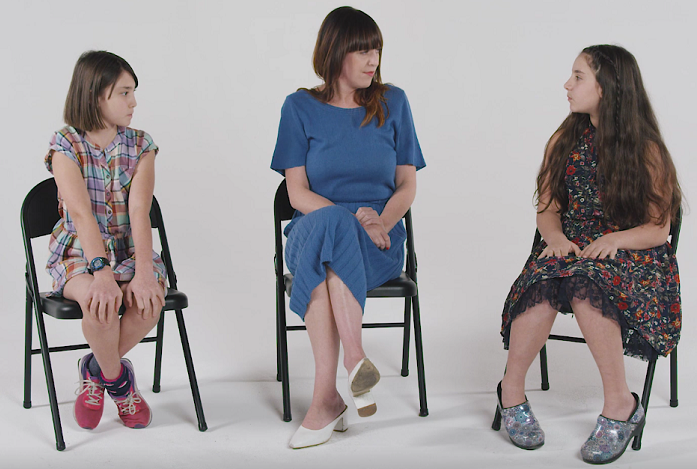
Feminist presents sophisticated arguments for abortion to elite scholars in rigorous academic debate

Abortion rights activist takes on pro-life doctors in formal academic debate

I love to watch formal academic debates, with timed speeches, where scholars with published work get to interact with one another. Even if my side loses, I learn something, because I learn what I can and cannot press in a discussion with the other side. Debates between scholars helps me to tolerate listening quietly to people I disagree with. All good things.

But not everyone agrees with me about this. Some people just prefer to present their views to those who are easily manipulated and uncritical, so that they will change their minds because of stories and feelings, instead of reason and evidence.

Here’s a story about it from Life News:

Have you seen the video going around about kids meeting someone who is post-abortive? The video does not talk about the psychological consequences of having an abortion, or talk about how to help women and families who are post-abortive heal from their abortion. No, it normalizes abortion so that 10 and 11-year-olds grow up to think taking an innocent human life is okay–and that no one ever regrets their abortion.

And the actual video:

I noticed that Nathan Apodaca wrote a reasonable response to the content of the video, over at Human Defense initiative.

He writes:

The most common theme in the entire video is the host’s avoidance of the real issue: Can we kill the preborn? What is the preborn?

[…]The problem with the video is the spokeswoman for “Shout Your Abortion,” along with several of the teenagers in the piece, constantly do what philosopher Francis Beckwith aptly calls “Begging the question”; that is, they assume what they should be trying to prove.

Consider the first few conversations. We (the audience) are told indirectly that sometimes mistakes happen, that people can’t afford a child, and other issues influence the decision to get an abortion.

Poverty is obviously a problem, along with people who think they will not be able to afford a child, but a question never gets asked: why stop with abortion to alleviate these problems? Why not allow parents to kill their newborns and toddlers as well to alleviate any problems that may arise? The answer is most assuredly a firm “No, that’s different.”

Ah, but that is the question! Why are the preborn so different we may kill them if we so please? This never seems to occur to anyone in the video, but it does raise a further question which deserves an answer: if the preborn are also human, just like babies and toddlers, should we really be killing them, or should we protect them, just like toddlers and newborns?

OK, this is important.

In the debate over atheism, I always advise you to disregard everything that anyone says until we get the atheist to come to terms with the evidence for the origin of the universe and the fine-tuning – mainstream science. The same thing is the case with the abortion debate. I don’t want to hear any sob-stories about poor people, and so on, until I get a scientific answer to the question “what is the unborn?” Let’s decide what’s true based on what mainstream science tells us.

And guess what? Just like the atheism debate, mainstream science is completely on our side. The same rigorous experimental science that establishes the beginning of the universe, and the fine-tuning of the universe for life, also establishes that a new living human being is created at the moment of conception, with a different DNA signature than either the mother or the father. It’s a new human being! And this is the scientific view – the same view you see in textbooks on human development. (Lots of citations in that PDF, you should download it and share it – it came from the lady that Trump just appointed to the National Science Board)

But it’s not just science textbooks that agree that abortion takes the life of an unborn child, even pro-abortion scholars concede that, as Nathan explains:

Something else Amelia and her interviewees miss is the many times supporters of abortion have called abortion for what it is: the intentional killing of an innocent human being.

There are three separate links to citations by abortion defenders in that citation.

Another important point is that abortion defenders always point to something that unborn children can’t do, and use that as the basis for excluding them. But the truth is that their criteria excludes a lot of other people:

[…][O]ne of the teenagers makes the off-the-cuff remark that “Like your arm is incapable of complex thought, a baby in the womb isn’t, either.”

No one bothers to defend this view though, and it is just asserted as if it settles the debate. The problem is, so what? Why does complex thought grant us a protection against being intentionally killed, instead of being protected because we are human in the first place? He never expands on this concept.

And how much complex thought is necessary in order to be protected from being killed? We never get an explanation. Some people, like the sleeping, the mentally ill, and someone in a medically induced coma may happen to not be capable at a given point in time to exercise complex thought; but it seems ludicrous to think they can be justifiably excluded from the community of human beings with a right to not be killed.

I have a whole post about the different criteria that pro-abortion people use to exclude the unborn from the right to life, and in every case, they end up excluding other people who even they would admit have the right to life.

The argument that seems to be the most convincing to the children is the “pro-lifers are stinky poopyheads” argument, also known as the ad hominem fallacy in formal logic.

Nathan responds:

This claim is a flat out lie, and is painfully obvious to anyone paying the slightest bit of attention. Pro-lifers regularly step up to help those in need. In north San Diego county alone, there are more pro-life resource centers for women (and men) in need than abortion clinics. In my own hometown, Escondido, two pro-life pregnancy resource centers provide healthcare to those who need it. There are even pro-lifers opening up housing and adoption referrals for women who choose to keep their babies, but are homeless and in need of a place to stay. “Shout Your Abortion”, the organization the host represents, does none of this, and doesn’t help women who decide not to have an abortion find support.

[…]This isn’t all. Consider the following: groups and affiliates like the Obria Group, CareNet, LifeLine, Heartbeat International, and the National Institute of Family and Life Advocates (NIFLA) connect people in need to thousands of care centers; many of whom operate with no tax dollars or government subsidies whatsoever.

Slave owners used similar “arguments” against abolitionists who didn’t like them owning slaves: calling them names, to make other people not want to oppose slavery. Well, I guess if your audience is a bunch of children, then this might be persuasive to them.

What is the best scientific theory to explain the origin of life on Earth?

Christianity and the progress of science

Evolution News talks about a new peer-reviewed science paper which re-caps the current origin of life situation:

…the dominant biological paradigm — abiogenesis in a primordial soup. The latter idea was developed at a time when the earliest living cells were considered to be exceedingly simple structures that could subsequently evolve in a Darwinian way. These ideas should of course have been critically examined and rejected after the discovery of the exceedingly complex molecular structures involved in proteins and in DNA. But this did not happen. Modern ideas of abiogenesis in hydrothermal vents or elsewhere on the primitive Earth have developed into sophisticated conjectures with little or no evidential support.

…independent abiogenesis on the cosmologically diminutive scale of oceans, lakes or hydrothermal vents remains a hypothesis with no empirical support…

The conditions that would most likely to have prevailed near the impact-riddled Earth’s surface 4.1–4.23 billion years ago were too hot even for simple organic molecules to survive let alone evolve into living complexity…

The requirement now, on the basis of orthodox abiogenic thinking, is that an essentially instantaneous transformation of non-living organic matter to bacterial life occurs, an assumption we consider strains credibility of Earth-bound abiogenesis beyond the limit.

The transformation of an ensemble of appropriately chosen biological monomers (e.g. amino acids, nucleotides) into a primitive living cell capable of further evolution appears to require overcoming an information hurdle of superastronomical proportions, an event that could not have happened within the time frame of the Earth except, we believe, as a miracle. All laboratory experiments attempting to simulate such an event have so far led to dismal failure.

Before the extensive sequencing of DNA became available it would have been reasonable to speculate that random copying errors in a gene sequence could, over time, lead to the emergence of new traits, body plans and new physiologies that could explain the whole of evolution. However the data we have reviewed here challenge this point of view. It suggests that the Cambrian Explosion of multicellular life that occurred 0.54 billion years ago led to a sudden emergence of essentially all the genes that subsequently came to be rearranged into an exceedingly wide range of multi-celled life forms — Tardigrades, the Squid, Octopus, fruit flies, humans — to name but a few.

…the complexity and sophistication of life cannot originate (from non-biological) matter under any scenario, over any expanse of space and time, however vast.

What is the explanation of the origin of life, then, according to true-believing atheists?

Richard Dawkins explains:

Got that? The origin of life on Earth is best explained as a result of higher aliens seeding the Earth with life. And where did those aliens come from? They evolved by chance. And can we observe or test the hypothesis that they evolved by chance? No.

Lest you think that this “aliens did it” explanation is a trick of video editing, consider this article from Scientific American.

Excerpt:

Francis Crick (who co-discovered the structure of DNA with James Watson) and Leslie Orgel once proposed that life on Earth was the result of a deliberate infection, designed by aliens who had purposely fled mother nature’s seed to a new home in the sun.

[…]The origins of life remains an unresolved mystery. I argue that Crick and Orgel’s paper was meant both as a serious and plausible scientific alternative and as a means to criticize concurrent origins of life.

Previously, I’ve laid out the evidence for cosmic fine-tuning, so that we could understand how slight changes to the constants and quantities given at the Big Bang would make complex, embodied life in the universe impossible. The smallest of changes has massive effects: only hydrogen, no hydrogen, no stars, universe re-collapses into a hot fireball, etc. The atheistic response to this evidence, which has been documented in the most prestigious academic presses and peer-reviewed journals, is to either deny the evidence, or assert that there is an untestable, unobservable multiverse. As if this were not bad enough, the multiverse generator itself requires fine-tuning.

Similarly with the origin of the universe. The best atheistic responses to the origin of space, time, matter and energy from nothing, about 14 billion years ago, has been to either assert that nothing exists (Peter Atkins) or that the nothing that preceded the universe was actually something (Lawrence Krauss) or to introduce a speculative theoretical model that is disproved by observations (Sean Carroll).

So, let’s take stock. We have evidence for the origin of the universe, like the cosmic microwave background radiation and the light element abundance observations. Atheist answer: either nothing exists right now, or the nothing causally prior to the universe was really something, or here is a disproved speculative theory. We have evidence of cosmic fine-tuning to allow the existence of complex, embodied intelligence. Atheist answer: the unobservable, untestable multiverse did it. We have evidence that origin of life was almost immediate after the cooling of the Earth, and that the problem is best explained by an intelligence sequencing amino acids and proteins, similar to the way that humans write code and blog posts. Atheist answer: unobservable, untestable aliens who evolved did it.  This is not even to mention the Cambrian explosion. The last article I saw argued that the introduction of oxygen was the best naturalistic explanation for that. Does oxygen write genetic code?

I’ll leave it to you to decide which side likes science, and which side likes science fiction. Personally, I would not be comfortable being an atheist at this time in history. We’ve just made too much scientific progress to still believe in stone-age mythology. I understand that atheists find Star Wars and Star Trek comforting and entertaining. I understand that real peer-reviewed science papers are boring and dull compared to science fiction. I’m not saying that we can’t believe in atheism when we are children, and still reading comic books. But there comes a time when we need to grow up and be more responsible about adjusting our worldviews to match the progress of science. A child who believes in Santa Claus is cute, but it’s not the same thing when a grown-up does it.

Positive arguments for Christian theism