
Tag Archives: Bad Boys

How many pro-abortion men have to be caught raping before women stop choosing them?

Although I had a lot of fun attacking feminism in Tuesday’s post, it wasn’t my intention to attack feminism again today. But I feel I have to say something about a news story about New York Attorney General Eric Schneiderman. Although he was a major figure in the #MeToo movement, he resigned after being accused of sexual assault by four different women.

Let’s start by learning a little about the man from his own tweets:
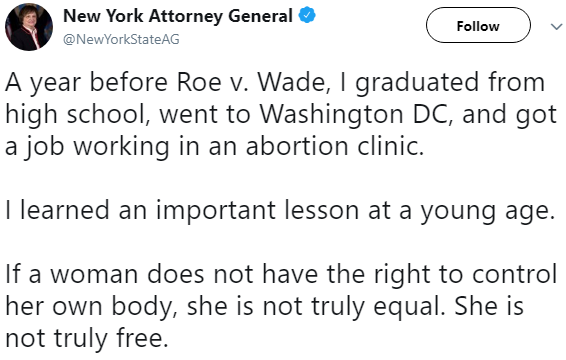
New York Attorney General Eric Schneiderman wants women to be free?

Now, let’s be clear about what abortion is. Abortion is ending the life of an innocent unborn child that has human DNA distinct from either the mother or the father. It happens after two strong grown ups have agreed to have recreational sex with no plan to welcome and care for a child that they might create. They don’t want to be responsible for the consequences of their own choices. If a child is conceived, then the powerful grown-ups resort to murder in order to keep the good times rolling for themselves.

That’s what Democrat Attorney General Eric Schneiderman supports. And many, many young unmarried women voted for this man, precisely because he held this self-centered and irresponsible view of women, relationships and children.

In fact, radical feminists not only prefer men who have this view of relationships and sex, they insist on it.

Consider this dating guide published by a feminist writer.

Excerpt:

2. “What Are Your Views On Abortion?”

If you’re considering a sexual relationship that could potentially lead to pregnancy, holding conflicting views on abortion can cause a lot of tension. If you can get pregnant, you’ll want to know whether someone will respect your choice to handle the pregnancy as you see fit. And if you can get someone pregnant, you want to make sure you’re on the same page about what will be done about it. Even if you’re not in a relationship that could lead to pregnancy, someone’s views on abortion can speak volumes about their level of misogyny as well as their respect for others’ bodily autonomy.

Got that? Pro-life men are mysogynistic and deny bodily autonomy. But pro-abortion men aren’t misogynistic, and respect women’s bodily autonomy. That’s what radical feminists believe.

With that said, let’s take a look at the charges against Eric Schneidernman, as reported by the New York Post.

Excerpt:

State Attorney General Eric Schneiderman called his Sri Lankan girlfriend his “brown slave” and wanted her to refer to him as “Master,” the woman says.

Harvard-educated activist writer Tanya Selvaratnam told the New Yorker magazine that her yearlong affair with Schneiderman “was a fairytale that became a nightmare” — and quickly escalated into violence in the bedroom, even as he begged for threesomes.

“Sometimes, he’d tell me to call him Master, and he’d slap me until I did,” Selvaratnam said.

“He started calling me his ‘brown slave’ and demanding that I repeat that I was ‘his property.’”

Selvaratnam said, “The slaps started after we’d gotten to know each other.

“It was at first as if he were testing me. Then it got stronger and harder. It wasn’t consensual. This wasn’t sexual playacting. This was abusive, demeaning, threatening behavior.”

She said that as the violence grew, so did his sexual demands.

“He was obsessed with having a threesome and said it was my job to find a woman,” Selvaratnam said. “He said he’d have nothing to look forward to if I didn’t and would hit me until I agreed.”

She said she had no intention of adding a second woman to their bed.

The abuse increased until Schneiderman was not only slapping her but spitting on her and choking her, she said.

“He was cutting off my ability to breathe,” she said.

Soon, “we could rarely have sex without him beating me.”

The attorney general was often fueled by booze, Selvaratnam said.

And he would push her to drink, too, she said.

“Drink your bourbon, Turnip,’’ she said he ordered her, using his nickname for her.

This is just the tip of the iceberg, there’s a lot more here at the Washington Free Beacon.

This was interesting:

“Now that I know it’s part of a pattern, I think, God, I should have reported it,” the accuser said. “But, back then, I believed that it was a one-time incident. And I thought, He’s a good attorney general, he’s doing good things. I didn’t want to jeopardize that.”

This man is a hero of radical feminists. Here is a video featuring feminist comedian Samantha Bee:

Most women support pro-abortion men like Eric Schneiderman:
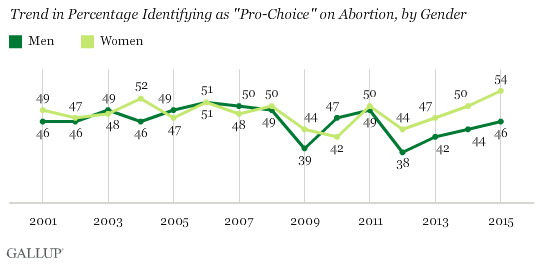
Women are more liberal on abortion than men
GALLUP polling: Women support abortion more than men

According to 2008 exit polls, 77% of young, unmarried women voted for a pro-abortion Democrat (Obama). Obama even voted against banning infanticide as a state senator in Illinois. Young, unmarried women had no problem voting for a supporter of infanticide (killing a baby born alive).

We know about lots of Democrats who talk about women’s rights in public, and mistreat them in private, e.g. – Ted Kennedy, Bill Cinton, John Edwards, Elliott Spitzer, Harvey Weinstein, Al Franken, etc. Some pro-abortion Democrat men kill women. Some rape women. Some sexually assault women. They are all willing to destroy a defenseless unborn child in order to escape the consequences of their selfish choices. If they are willing to kill an innocent, defenseless unborn child, they are certainly willing to sexually assault a grown woman.

Pro-abortion men are NOT the kind of men that a woman can depend on for love, fidelity, commitment and respect. It doesn’t matter how hot they are, how rich they are, or how powerful they are. If the goal is a faithful, life-long committed relationship that persists through the woman’s old age, then the answer cannot be a pro-abortion man. Just because young, unmarried women are attracted to men who are hot and non-judgmental, that does not translate into a long-term relationship where the man will be loving and leading the woman well. Women need to stop thinking that moral character doesn’t matter when evaluating a man for a relationship. A man’s refusal to condemn irresponsible behavior is not a sign of good character. A man’s mistreatment of others around him is not a sign of good character. Men who don’t have good character should not be chosen for relationships. Having feelings of attraction for a man does not mean that his character is suitable for loving and caring for others. Men need to be chosen based on their ability to do the job, not based on feelings of attraction.

The same women who support the pro-abortion rapists, sexual assaulters, etc. also OPPOSE men like Billy Graham and Mike Pence, who are so serious about their marriage vows that they refuse to even put themselves into situations where they might be tempted. I blogged before about how radical feminists jeered at the rules that good men impose on themselves in order to avoid even the appearance of an affair. Feminists consider Mike Pence to be a terrible person, but one feminist journalist said of Bill Clinton “I’d be happy to give him [oral sex] just to thank him for keeping abortion legal”. This is the same Bill Clinton who cheated on his wife with his female subordinates, and was credibly accused of rape. But he gives feminists the tingles. Who cares about character? He’s hot. And he supports abortion.

The alternative

Now, just to be clear, I am the worst freaking nightmare of a radical feminist. I am a virgin. I will not even kiss on the lips unless it’s to seal an engagement. I don’t buy drinks for women, unless it’s one beer in a restaurant, and we’re sharing it. And as far as abortion, I think life begins at conception. I also think that marriage is solely between one man and one woman, for life. Whatever it is that I’m going to do to convince a woman to marry me, it’s going to be done outside of the bedroom, when she’s stone-cold sober. I will get the consent of her father, first.

It is important to me that I am able to demonstrate my ability to be self-controlled and faithful to one woman, and to speak the language of love outside of the bedroom. That’s what chastity is for – it demonstrates the ability to love totally apart from selfishness and lust. Fidelity is not free. Women need to be chaste themselves, and they need to insist on chastity in the men they choose. Fidelity and self-control cannot be left to chance. They are more important than surface level concerns. Instead of looking for men who want to murder children, women should be looking for men who are comfortable taking on demanding relationships and keeping their commitments even if they become difficult.

Since I have a Christian view of marriage, my marriage has a customer. My choices with women and marriage will be designed to manufacture a result for my Commanding Officer. Treating women and children badly would cause them to move away from God, and so these things are just not permitted. Women dealing with me always have that leverage – the ability to hold me accountable to that vertical commitment to our common Boss.

What is important for everyone to realize is that many women today, thanks to radical feminism, do not go after men who are prepared and suited to marriage. They do not want to marry early and have children. They want to ride the carousel with hot pro-abortion bad boys until their looks and youth start to fade. They see marriage as boring, and children as distractions from travel and fun. They smash themselves up against pro-abortion men, and get very bitter, disrespectful and selfish. It is very hard for a marriage-minded man to marry women who graduate from the Eric Schneiderman school of relationships. Maybe we should tell women the truth for a change.

What does the Bible say about judging others and Hell?

UPDATE: I thought I’d better explain what’s in this post at the top. First, I show where Hell is mentioned in the gospels. Second, I talk about whether can Christians should judge non-Christians. Finally, I talk about why judging can actually be the loving thing to do.

Where is Hell in the New Testament?

Here’s a few Bible verses where Jesus talks about Hell.

  1. Matthew 5:22
    But I tell you that anyone who is angry with his brother will be subject to judgment. Again, anyone who says to his brother, ‘Raca, ‘ is answerable to the Sanhedrin. But anyone who says, ‘You fool!’ will be in danger of the fire of hell.
  2. Matthew 5:29
    If your right eye causes you to sin, gouge it out and throw it away. It is better for you to lose one part of your body than for your whole body to be thrown into hell.
  3. Matthew 5:30
    And if your right hand causes you to sin, cut it off and throw it away. It is better for you to lose one part of your body than for your whole body to go into hell.
  4. Matthew 10:28
    Do not be afraid of those who kill the body but cannot kill the soul. Rather, be afraid of the One who can destroy both soul and body in hell.
  5. Matthew 18:9
    And if your eye causes you to sin, gouge it out and throw it away. It is better for you to enter life with one eye than to have two eyes and be thrown into the fire of hell.
  6. Matthew 23:33
    “You snakes! You brood of vipers! How will you escape being condemned to hell?
  7. Mark 9:43
    If your hand causes you to sin, cut it off. It is better for you to enter life maimed than with two hands to go into hell, where the fire never goes out.
  8. Mark 9:45
    And if your foot causes you to sin, cut it off. It is better for you to enter life crippled than to have two feet and be thrown into hell.
  9. Mark 9:47
    And if your eye causes you to sin, pluck it out. It is better for you to enter the kingdom of God with one eye than to have two eyes and be thrown into hell,
  10. Luke 12:5
    But I will show you whom you should fear: Fear him who, after the killing of the body, has power to throw you into hell. Yes, I tell you, fear him.
  11. Luke 16:23
    In hell, where he was in torment, he looked up and saw Abraham far away, with Lazarus by his side

I don’t mind if people disagree with those verses on historical grounds – maybe because they are not early enough or not multiply attested enough, although I think they are historically reliable. What bothers me is when a person throws verses out because they just don’t like them, because of intuitions and emotions.

Who to judge and how to judge

Did you know that it is forbidden to judge non-Christians on Christian moral standards?

1 Cor 5:9-13:

9I have written you in my letter not to associate with sexually immoral people—

10not at all meaning the people of this world who are immoral, or the greedy and swindlers, or idolaters. In that case you would have to leave this world.

11But now I am writing you that you must not associate with anyone who calls himself a brother but is sexually immoral or greedy, an idolater or a slanderer, a drunkard or a swindler. With such a man do not even eat.

12What business is it of mine to judge those outside the church? Are you not to judge those inside?

13God will judge those outside. “Expel the wicked man from among you.”

I think this text explains what judging is. If you “judge” someone, it seems to mean disagreeing with them or it could even mean avoiding them. For example, I often speak against single motherhood and day care in front of people who are single mothers and who use day care, for example.

I think that Christians can vote for political candidates who are pro-life and pro-marriage and pro-liberty. But the verse above says that but you can’t force individual non-Christians to act like Christians against their own free will. You can judge other Christians, but be careful how you do that if you actually want them to listen to you. Have a relationship with them first, and then talk about moral issues in the abstract. People get defensive unless you make the discussion about the evidence, not about their personal lives.

And of course you can disagree with people of other religions about which religion is true when tested against history and the external world, but again, it’s best to appeal to logic and evidence. E.g. – the big bang, which falsifies a whole stack of world religions and cults, and is testable scientifically.

Why judging is wonderful and you should do it, too

I wonder if you all remember a while back when I linked to all the chapters of Theodore Dalrymple’s famous book “Life at the Bottom”, which is about the worldview of the British lower class. It’s also about how rich, well-meaning secular leftists hurt the poor by enacting public policies that reward bad behavior and punish good behavior. Dalrymple is a psychiatrist in a hospital, so he sees it all firsthand.

This is from the introduction to the book:

The disastrous pattern of human relationships that exists in the underclass is also becoming common higher up the social scale. With increasing frequency I am consulted by nurses, who for the most part come from and were themselves traditionally members of (at least after Florence Nightingale) the respectable lower middle class, who have illegitimate children by men who first abuse and then abandon them. This abuse and later abandonment is usually all too predictable from the man’s previous history and character; but the nurses who have been treated in this way say they refrained from making a judgment about him because it is wrong to make judgments. But if they do not make a judgment about the man with whom they are going to live and by whom they are going to have a child, about what are they ever going to make a judgment?

“It just didn’t work out,” they say, the “it” in question being the relationship that they conceive of having an existence independent of the two people who form it, and that exerts an influence on their on their lives rather like an astral projection. Life is fate.

I think that young people today prefer moral relativists as mates, because they are afraid of being judged and rejected by people who are too serious about religion and morality, especially the old kind of morality that was focused on chastity, sobriety, worship, charity, etc. The problem is that if a young person chooses someone who doesn’t take religion and morality seriously, then that person can’t rely on their partner to behave morally and to exercise moral leadership in the home.

Here’s another one of my favorite passages from the “Tough Love” chapter, in which he describes how he easily he can detect whether a particular male patient has violent tendencies or not, on sight. But female victims of domestic violence – and even the hospital nurses – cannot or will not recognize the signs that a man is violent.

All the more surprising is it to me, therefore, that the nurses perceive things differently. They do not see a man’s violence in his face, his gestures, his deportment, and his bodily adornments, even though they have the same experience of the patients as I. They hear the same stories, they see the same signs, but they do not make the same judgments. What’s more, they seem never to learn; for experience—like chance, in the famous dictum of Louis Pasteur—favors only the mind prepared. And when I guess at a glance that a man is an inveterate wife beater (I use the term “wife” loosely), they are appalled at the harshness of my judgment, even when it proves right once more.

This is not a matter of merely theoretical interest to the nurses, for many of them in their private lives have themselves been the compliant victims of violent men. For example, the lover of one of the senior nurses, an attractive and lively young woman, recently held her at gunpoint and threatened her with death, after having repeatedly blacked her eye during the previous months. I met him once when he came looking for her in the hospital: he was just the kind of ferocious young egotist to whom I would give a wide berth in the broadest daylight.

Why are the nurses so reluctant to come to the most inescapable of conclusions? Their training tells them, quite rightly, that it is their duty to care for everyone without regard for personal merit or deserts; but for them, there is no difference between suspending judgment for certain restricted purposes and making no judgment at all in any circumstances whatsoever. It is as if they were more afraid of passing an adverse verdict on someone than of getting a punch in the face—a likely enough consequence, incidentally, of their failure of discernment. Since it is scarcely possible to recognize a wife beater without inwardly condemning him, it is safer not to recognize him as one in the first place.

This failure of recognition is almost universal among my violently abused women patients, but its function for them is somewhat different from what it is for the nurses. The nurses need to retain a certain positive regard for their patients in order to do their job. But for the abused women, the failure to perceive in advance the violence of their chosen men serves to absolve them of all responsibility for whatever happens thereafter, allowing them to think of themselves as victims alone rather than the victims and accomplices they are. Moreover, it licenses them to obey their impulses and whims, allowing them to suppose that sexual attractiveness is the measure of all things and that prudence in the selection of a male companion is neither possible nor desirable.

Often, their imprudence would be laughable, were it not tragic: many times in my ward I’ve watched liaisons form between an abused female patient and an abusing male patient within half an hour of their striking up an acquaintance. By now, I can often predict the formation of such a liaison—and predict that it will as certainly end in violence as that the sun will rise tomorrow.

At first, of course, my female patients deny that the violence of their men was foreseeable. But when I ask them whether they think I would have recognized it in advance, the great majority—nine out of ten—reply, yes, of course. And when asked how they think I would have done so, they enumerate precisely the factors that would have led me to that conclusion. So their blindness is willful.

Just remember not to judge people for the purpose of hurting them. Judge others for the purpose of helping them to set up boundaries that will protect them from actions that might hurt them or those around them, and impose costs on the whole society to repair the damage. The best thing to do is to discuss moral issues in the abstract.