Tag Archives: Atheism

What happens to people who never hear about Jesus and the gospel?

One of the most difficult questions for Christians to answer, especially when posed by adherents of other religions, is the question of what happens to those who have never heard of Jesus? In this post, I will explain how progress in the field of philosophy of religion has given us a possible (and Biblical) solution to this thorny question.

First, Christianity teaches that humans are in a natural state of rebellion against God. We don’t want to know about him, and we don’t want him to have any say in what we are doing. We just want to appropriate all the gifts he’s given us, do whatever we want with them, and then have eternal bliss after we die. We want to do whatever we want and then be forgiven, later.

Along comes Jesus, who, through his sinless life and his death on the cross, heals that rift of rebellion between an all-good God and rebellious man. Now we have a real understanding of the fact that God is real, that he has power over death, and that he has very specific ideas on what we should be doing. If we accept Jesus’ atoning sacrifice and follow his teachings, we can avoid the penalty of our rebellion.

The only problem is that in order to appropriate that free gift of reconciliation, people need to actually know about Jesus. And there are some people in the world who have not even heard of him. Is it fair that these other people will be sent to eternal separation from God, just because they happened to be born in the wrong place at the wrong time?

Enter William Lane Craig to save the day. His solution is that God orders the world in such a way that anyone who would freely choose to acknowledge Jesus and appropriate his teachings in their decision-making will be given eternal life. God knows in advance who would respond, and chooses their time and place of birth, and he supplies them with the amount of evidence they need.

And this agrees with what the Bible teaches. The apostle Paul says this in his apologetic on Mars Hill in Acts 17:22-31:

22 So Paul stood in the midst of the Areopagus and said, “Men of Athens, I observe that you are very religious in all respects.
23 “For while I was passing through and examining the objects of your worship, I also found an altar with this inscription, ‘ N D ‘ Therefore what you worship in ignorance, this I proclaim to you.
24 “The God who made the world and all things in it, since He is Lord of heaven and earth, does not dwell in temples made with hands;
25 nor is He served by human hands, as though He needed anything, since He Himself gives to all people life and breath and all things;
26 and He made from one man every nation of mankind to live on all the face of the earth, having determined their appointed times and the boundaries of their habitation,
27 that they would seek God, if perhaps they might grope for Him and find Him, though He is not far from each one of us;

28 for in Him we live and move and exist, as even some of your own poets have said, ‘For we also are His children.’
29 “Being then the children of God, we ought not to think that the Divine Nature is like gold or silver or stone, an image formed by the art and thought of man.
30 “Therefore having overlooked the times of ignorance, God is now declaring to men that all people everywhere should repent,
31 because He has fixed a day in which He will judge the world in righteousness through a Man whom He has appointed, having furnished proof to all men by raising Him from the dead.”

In this research paper, Craig explains in detail how God foreknows how people will choose in every set of circumstances, and how God uses that knowledge to get everyone where they need to be without violating their free will. God wants the best for everybody, and has ordered to whole universe in order to give each of us our best opportunity for eternal life.

Here is a summary of the what is in his paper:

The conviction of the New Testament writers was that there is no salvation apart from Jesus. This orthodox doctrine is widely rejected today because God’s condemnation of persons in other world religions seems incompatible with various attributes of God.

Analysis reveals the real problem to involve certain counterfactuals of freedom, e.g., why did not God create a world in which all people would freely believe in Christ and be saved? Such questions presuppose that God possesses middle knowledge. But it can be shown that no inconsistency exists between God’s having middle knowledge and certain persons’ being damned; on the contrary, it can be positively shown that these two notions are compatible.

Go read this paper and equip yourself to answer this common question!

And now I want to close by making a general point. There are two kinds of people in the world. The first kind encounters problems, like the hiddenness of God, or the problem of evil, the problem of Cookie monster objections (thanks, Truthbomb!), or religious pluralism, and they respond by leveraging that problem in order to justify rejecting God and going their own way.

Even uninformed Christians read books like “The Da Vinci Code”, and avoid the arguments and evidence that would defeat the objections raised by that book. Why? They want to be lazy, or to fit in, or to pursue pleasure apart from God. This is because if we don’t know that God is real for certain then we won’t feel rationally compelled to be good. And that’s why many Christians go out of their way not to find out the truth about these thorny problems.

And doubts also relieve us of the burden of evangelizing. Uninformed Christians know that their doubts give them freedom to keep silent about God, so they can get along with non-Christians. They think that keeping the truth about God to themselves, and not being ready and available to answer questions, is loving. But it’s really just selfishness. It doesn’t help non-Christians to keep the truth from them.

So why do some Christians hide the truth from others? It’s because they really do not believe that God will exclude people based on their beliefs about Him, even though Jesus says so in many places. Deep down, we believe that God’s purpose for humans is to be happy. When Christians don’t try to find answers to difficult questions like religious pluralism, they end up softening the Bible’s exclusive claims based on their emotions.

This is not what ambassadors are supposed to do – we are not free to make up our own doctrines and then lie to people in order to be happy and popular.

The second group is willing to spend time and effort to assess whether science, history, philosophy, etc. support Christianity. This kind of person is willing to go where the evidence leads. They don’t jump on doubts and use them to justify disobedience. They are willing to be public (i.e. – “divisive”) about their faith and put God first, above worldly goals, like popularity.

The whole point of life is for God to draw people to himself in a two-way relationship. He reveals himself a little, and we respond and pursue him. How about you? Do you want to know for certain whether God is real? Are you willing to give up everything to follow him? Or would you rather that God just keep out of your busy life and your subjective purposes in the world?

UPDATE: A related post over at Tough Questions Answered on whether Jesus is required to be rightly related to God and to get eternal life.
Why doesn’t God gives us more evidence that he exists?

Welcome, Please Convince Me listeners! This post was mentioned in Please Convince Me Podcast #190.

Have you ever heard someone say that if God existed, he would give us more evidence? This is called the “hiddenness of God” argument. It’s also known as the argument from “rational non-belief”.

Basically the argument is something like this:

  1. God is all powerful
  2. God is all loving
  3. God wants all people to know about him
  4. Some people don’t know about him
  5. Therefore, there is no God.

You may hear have heard this argument before, when talking to atheists, as in William Lane Craig’s debate with Theodore Drange, (audio, video).

Basically, the atheist is saying that he’s looked for God real hard and that if God were there, he should have found him by now. After all, God can do anything he wants that’s logically possible, and he wants us to know that he exists. To defeat the argument we need to find a possible explanation of why God would want to remain hidden when our eternal destination depends on our knowledge of his existence.

What reason could God have for remaining hidden?

Dr. Michael Murray, a brilliant professor of philosophy at Franklin & Marshall College, has found a reason for God to remain hidden.

His paper on divine hiddenness is here:
Coercion and the Hiddenness of God“, American Philosophical Quarterly, Vol 30, 1993.

He argues that if God reveals himself too much to people, he takes away our freedom to make morally-significant decisions, including responding to his self-revelation to us. Murray argues that God stays somewhat hidden, so that he gives people space to either 1) respond to God, or 2) avoid God so we can keep our autonomy from him. God places a higher value on people having the free will to respond to him, and if he shows too much of himself he takes away their free choice to respond to him, because once he is too overt about his existence, people will just feel obligated to belief in him in order to avoid being punished.

But believing in God just to avoid punishment is NOT what God wants for us. If it is too obvious to us that God exists and that he really will judge us, then people will respond to him and behave morally out of self-preservation. But God wants us to respond to him out of interest in him, just like we might try to get to know someone we admire. God has to dial down the immediacy of the threat of judgment, and the probability that the threat is actual. That leaves it up to us to respond to God’s veiled revelation of himself to us, in nature and in Scripture.

(Note: I think that we don’t seek God on our own, and that he must take the initiative to reach out to us and draw us to him. But I do think that we are free to resist his revelation, at which point God stops himself short of coercing our will. We are therefore responsible for our own fate).

The atheist’s argument is a logical/deductive argument. It aims to show that there is a contradiction between God’s will for us and his hiding from us. In order to derive a contradiction, God MUST NOT have any possible reason to remain hidden. If he has a reason for remaining hidden that is consistent with his goodness, then the argument will not go through.

When Murray offers a possible reason for God to remain hidden in order to allow people to freely respond to him, then the argument is defeated. God wants people to respond to him freely so that there is a genuine love relationship – not coercion by overt threat of damnation. To rescue the argument, the atheist has to be able to prove that God could provide more evidence of his existence without interfering with the free choice of his creatures to reject him.

People choose to separate themselves from God for many reasons. Maybe they are professors in academia and didn’t want to be thought of as weird by their colleagues. Maybe they didn’t want to be burdened with traditional morality when tempted by some sin, especially sexual sin. Maybe their fundamentalist parents ordered them around too much without providing any reasons. Maybe the brittle fundamentalist beliefs of their childhood were exploded by evidence for micro-evolution or New Testament manuscript variants. Maybe they wanted something really bad, that God did not give them. How could a good God allow them to suffer like that?

The point is that there a lot of people who don’t want to know God, and God chooses not to violate their freedom by forcing himself on them. God wants a relationship – he wants you to respond to him. (See Matthew 7:7-8) For those people who don’t want to know him, he allows them to speculate about unobservable entities like the multiverse. He allows them to think that all religions are the same and that there is nothing special about Christianity. He allows them to believe that God has no plan for those who never hear about Jesus. He allows them to be so disappointed because of some instance of suffering that they reject him. God doesn’t force people to love him. If they don’t want to look into these things because they want to avoid having to care what he thinks, then he lets them think anything they want that “works for them”. What they think is false, but so long as they don’t investigate anything, then they can keep doing what they want and thinking it’s fine.

Michael Murray’s work

Murray has defended the argument in works published by prestigious academic presses such as Cambridge University Press, (ISBN: 0521006104, 2001) and Routledge (ISBN: 0415380383, 2007). The book chapter from the Cambridge book is here. The book chapter from the Routledge book is here.

Michael Murray’s papers are really fun to read, because he uses hilarious examples. (But I disagree with his view that God’s work of introducing biological information in living creatures has to be front-loaded).

Here’s more terrific stuff from Dr. Murray:

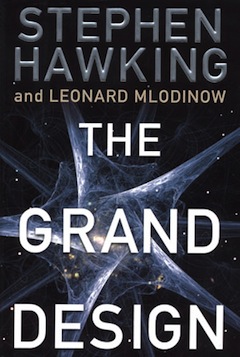
Book review of Stephen Hawking’s “The Grand Design” by Edgar Andrews

First, who is Edgar Andrews?

Professor Edgar H. Andrews (BSc, PhD, DSc, FInstP, FIMMM, CEng, CPhys.) is Emeritus Professor of Materials at the University of London and an international expert on the science of large molecules. In 1967 he set up the Department of Materials at Queen Mary College, University of London, and served both as its Head and later as Dean of Engineering. He has published well over 100 scientific research papers and books, together with two Bible Commentaries and various works on science and religion and on theology. His book From Nothing to Nature has been translated into ten languages.

Edgar Andrews was an international consultant to the Dow Chemical Company (USA) for over thirty years and to the 3M Company (USA) for twenty years. He was a non-executive director of Denbyware PLC throughout the 1970s and for five years a member of the Scientific Advisory Board of Neste Oy, the national oil company of Finland.

And now an excerpt from the book review: (H/T Apologetics 315)

Hawking and Mlodinow declare: ‘According to M-theory, ours is not the only universe. Instead, M-theory predicts that a great many universes were created out of nothing. Their creation does not require the intervention of some supernatural being or god. Rather, these multiple universes arise naturally from physical law. They are a prediction of science’ (p.9).

So what is this magical M-theory? The authors are rather coy about it. ‘M-theory’, they say, ‘Is not a theory in the usual sense. It is a whole family of different theories, each of which is a good description of observations only in some range of physical situations’ (p.8). Theoretical physicist Lee Smolin is more explicit: ‘… we still do not know what M-theory is, or whether there is any theory deserving of the name’ (The trouble with physics, Allen Lane, 2007, p.146).

The fact is that M-theory is an untestable mathematical construction which many scientists believe has no bearing on physical reality. But that doesn’t deter our authors because they don’t believe in ‘objective reality’ anyway. What we think is ‘real’, they say, is simply a model assembled in our brains from raw data input by our senses. But, confusingly, the authors then claim that the best models are those that reflect the way things really do happen in the real world — appealing to the very objective reality they say does not exist! Confused? Me too.

But it gets worse. They claim that M-theory (whatever it might be) predicts not one universe but a multiverse — a vast collection of universes which cannot be observed or known to us in any way. On their own criterion, this makes M-theory a very bad model indeed. So it’s hardly a useful replacement for God.

Here’s a better book to read if you want to understand how belief in God relates to experimental science.

My Dad just finished reading his book “Who Made God?” and called me up to tell me how much he liked the book. My Dad is not a scientist, yet he read the whole thing and learned a lot about science. This is the book for people who haven’t read a thing about science and religion. It’s easy to understand because he explains the same thing over and other giving more and more detail. Even a child can understand the first explanation, and then he keeps layering on details until he gets up to the state-of-the-art.

Remember Brian Auten of Apologetics 315 picked this book as his favorite of 2010. You can’t go wrong!

My Dad is now reading my copy of “Is God Just a Human Invention?” by Jonathan Morrow and Sean McDowell. I’m working on “Is God a Moral Monster?” by Paul Copan. I like books where difficult questions are asked and then careful answers are given. Then when people ask me the same questions, I can answer them using what I’ve learned – and often phrase the question even more clearly and forcefully than they did when they asked me.