
Tag Archives: Arguments

J. Gresham Machen on the relationship between knowledge and faith

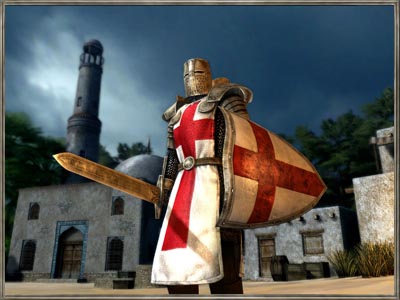
Christian scholarship is the new Crusade

Most of my readers are familiar with William Lane Craig and J.P. Moreland – they are two of the most famous Christian apologists out operating today. They both cite a person named “J. Gresham Machen”, and today I want to tell you more about this person.

William Lane Craig quotes him in this chapel address to Wheaton College students. (I am adding some context to Craig’s citation: Craig started the quote at “False ideas…” and ended it at “…harmless delusion”)

We are all agreed that at least one great function of the Church is the conversion of individual men. The missionary movement is the great religious movement of our day. Now it is perfectly true that men must be brought to Christ one by one. There are no labor-saving devices in evangelism. It is all hard-work.

And yet it would be a great mistake to suppose that all men are equally well prepared to receive the gospel. It is true that the decisive thing is the regenerative power of God. That can overcome all lack of preparation, and the absence of that makes even the best preparation useless. But as a matter of fact God usually exerts that power in connection with certain prior conditions of the human mind, and it should be ours to create, so far as we can, with the help of God, those favorable conditions for the reception of the gospel. False ideas are the greatest obstacles to the reception of the gospel. We may preach with all the fervor of a reformer and yet succeed only in winning a straggler here and there, if we permit the whole collective thought of the nation or of the world to be controlled by ideas which, by the resistless force of logic, prevent Christianity from being regarded as anything more than a harmless delusion.

I was actually in the audience when he gave this speech – I was there for the philosophy conference.

So Craig is citing J. Gresham Machen. What about Moreland?

Here’s an essay that Moreland wrote for Christian Leadership Ministries, the faculty arm of Campus Crusade for Christ.

He cites he exact same passage by J. Gresham Machen, as well, only he starts his citation at “God usually exerts…”.

So that’s Craig and Moreland. Citing the same passage, by the same writer. Interesting.

So who is this J. Gresham Machen anyway?

Here’s the bio:

J. Gresham Machen was professor of New Testament at Princeton Theological Seminary before becoming one of the founders of Westminster Theological Seminary and the Orthodox Presbyterian Church (OPC). This address on The Scientific Preparation of the Minister, was delivered September 20, 1912, at the opening of the one hundred and first session of Princeton Theological Seminary, and in substance (previously) at a meeting of the Presbyterian Ministers’ Association of Philadelphia, May 20, 1912. It was first published in The Princeton Theological Review, Vol. 11, 1913.

And Craig and Moreland are citing this essay, which you can read online for free. If you want to know what makes the Wintery Knight the Wintery Knight, this is the place to find your answers.

The essay was published in the Princeton Theological Review in 1913. The essay explains what the church should have done, but didn’t. And the only way out of the mess we are in now is to go back to the fork in the road and make the right turn this time.

You really need to read the essays I linked to by Craig, Moreland and Machen. It will open your eyes and show you how there can be so many Christians attending church on Sundays, and yet they have so little impact on the culture as a whole.

Autobiographical note

When I was a young man, I was exposed to the writings of William Lane Craig, J.P. Moreland, Walter L. Bradley, Greg Koukl, Hugh Ross, and Philip E. Johnson – and they changed my life. It really does make a big difference to young people when they are engaged at an intellectual level, with logic and evidence. I had no other connections to the church at that time. No one in my family, and none of my friends, were religiously inclined. I had no felt needs for religion. But approaching Christianity as knowledge worked for me. Before my conversion, I never attended the feminized church. And I was never told that Christianity was opposed to logic and evidence. Imagine my surprise to see what was being taught in the church compared to the public, testable claims to knowledge in the Bible, and the public, testable claims to knowledge that Christians scholars made in their books.

This passage from R.C. Sproul and John Gerstner in their otherwise useless book on Christian apologetics was formative for me, as well:

Secularism, on the other hand, is a post-Christian phenomenon carrying in its baggage, a conscious rejection of the Christian world view. It supplants the Christian consensus with its own structured view of reality. Less barbaric on the surface than paganism, secularism adopts a benevolent paternalism toward the not yet enlightened Christian who continues the practice of an anachronistic faith. Wearing a benign mask, the secularist loudly proclaims his commitment to religious tolerance on behalf of those weak-minded souls who still cannot bear to face a hostile, or worse, an indifferent universe, without the narcotic effect of ecllesiastical opium. The church is safe from vicious persecution at the hands of the secularist, as educated people have finished with stake-burning circuses and torture racks. No martyr’s blood is shed in the secularist West – so long as the church knows her place and remains quietly at peace on her modern reservation. Let the babes pray and sing and read their Bibles, continuing steadfast in their intellectual retardation; the church’s extinction will come not by sword of pillory, but by the quiet death of irrelevance. It will pass away with a whimper not a bang. But let the church step off the reservation, let her penetrate once more the culture of the day and the Janus-face of secularism will change from benign smile to savage snarl.

This is the problem we are facing today. We have changed Christianity into “faith” instead of KNOWLEDGE.

What’s the best way to combat the trend toward “village atheism”

A village atheist is an atheist who is very convinced about his atheism but whose reasons for atheism are completely naive and superstitious, and who is completely unaware of the scholarly evidence for theism. Letitia wrote a post recently on her blog in which she expressed her concerns about the idea that the public may be trending towards village atheism, just because atheism is being presented as the most intelligent view in popular culture, and because Christians are not getting their scholarly arguments and evidences heard.

Excerpt:

While reflecting on his debate with Sam Harris and the audience questions that came after, Dr. William Lane Craig wrote the following about the makeup of the audience that night:

I wonder is something culturally significant is going on here. Several years ago, I asked the Warden at Tyndale House in Cambridge why it is that British society is so secular when Britain has such a rich legacy of great Christian scholars. He replied, “Oh, Christianity is not underrepresented among the intelligentsia. It’s the working classes which are so secular.” He explained that these folks are never exposed to Christian scholarship because of their lack of education. As a result there is a sort of pervasive, uninformed, village atheism among them. I wonder if something like this could be happening in the States. I was surprised to see the number of blue collar folks from the community buying Harris’ book and thanking him for all he has done. They didn’t seem to have any inkling that his views had just been systematically exposed as logically incoherent. The intelligentsia have almost universally panned Harris’ recent book (read the reviews!). Yet it is lapped up in popular culture. Wouldn’t it be amazing if unbelief became the possession mainly of the uneducated?

This comment causes my heart to sink. Personally, I like to think that I am fairly observant of the religious cultural shifts here in the U.S. and their bearing on what Christians should do to respond to them. However, I have to admit that Dr. Craig’s note above catches me a little off guard, even alarming to a degree as I realize what his observation, if truly symptomatic of an eve of a significant change, means for Christian apologists in this day and age. An inculcation of “New Atheism” among the blue collar/working class here would be a dramatic reversal of the religious landscape of America. I cannot help but feel that such a situation might be more “dismaying” than “amazing.”

[…]I have no doubt that the inculcation is taking place. It is being impressed upon the public through books by New Atheists like Sam Harris that are aimed on the popular level, both to adults and youth (e.g. Philip Pullman’s His Dark Materials). In the public classroom, atheism is the default worldview in the disciplines of both the hard and social sciences. Atheism is marketed as the new neutral position in almost all of public literature, television, and many commercial media outlets. Atheists pronounce that atheism is the only viable alternative for fair-minded people once they have shed the evil “superstition” of theism and Christianity that has existed here since the Pilgrims brought their Bibles off the Mayflower. Pair the New Atheists’ media blitz of book tours and public appearances and the fruits of declining Christian influence over American culture, I suppose we should expect an eventual ‘atheism-of-the-masses’ to emerge.

She then finishes the post with three ideas on how to counter this trend: 1) Christian scholars should try to appear on television shows, 2) Christian scholars should try to submit opinion columns to newspapers, and 3) Christians who are prepared to discuss theology and apologetics should participate in public discussions. I’ll just point out that it is excellent for Christian women to be concerned about these things, and to come up with solutions to the problems they raise. We need more women like Letitia to be concerned about these things, and to come up with effective plans to do something about it. (You’ll recall that she has a conference coming up in Arizona where she will be speaking – so she has chips on the table).

She also posted her post on Facebook, and got a few interesting replies. I’ll just paste a few of them in anonymously.

Here’s one from P:

The culprit here is government-controlled education. Secular progressives control teacher certification, teacher and administrator education, curriculum construction, textbook writing and selection, and just about all curriculum selection. …Virtually everybody but the very wealthy are required to spend 12 years under this regime. The consequence is uniform inculcation of the young in America, from kindergarten to high school graduation, with the same ideas that we just heard come out of Sam Harris’ mouth.

That echoes my comments earlier about how Christians should support school choice and oppose a public school monopoly.

But there’s more from S:

[D]on’t you think we (the church) ought to be more supportive of our congregants who wish to pursue doctorate level work within their particular field of discipline? It seems that if we had a individuals …with full-on Christian worldviews who have risen to the highest levels of authority in places like the educational system, that they could make just as much impact as what is happening now.

And then I chimed in and recommended that the church bring more scholars to speak in the on issues of policy and apologetics, so that the congregants would have something to talk about with their neighbors, and so that the children would get ideas about what they could study in order to have an effective influence.

I would like to see churches turn to questions like 1) is Christianity true? 2) how do we know it’s true from science, philosophy and history? 3) which economic policies are the best for Christians to support? 4) how do you use evidence and arguments to convince other people to be pro-life and pro-traditional marriage? 5) why do Christians have so many rules about sex and relationships? 6) how do you respond to the arguments made by non-Christians? 7) what is the best way to prevent wars – disarmament or deterrence? 8) what should Christians think about secular fads like global warming and feminism? And so on.

When the church starts to become interesting again, by actually having lectures, debates and disagreements about what’s true, then people in the culture will take it seriously. Right now, I think we are too focused on not have debates, not pursuing truth, not making exclusive theological claims, not making moral judgments, and just putting on a show that will make people have happy feelings and a sense of community. Eventually, when people in church notice that there are no men in the church, and consequently no children in the church, then we may decide to try something else.

Frank Turek asks atheists: would you follow Jesus if Christianity were true?

His latest radio show is awesome as usual. We need to get used to talking to atheists, and this will help you because he’s taking calls on that question – “if Christianity were true, would you become a Christian?”.

The MP3 file is here. (54 minutes, not ad-free – skip ahead 3 minutes at breaks)

Topics from opening monologue and then callers:

  • if Christianity were true, would atheists necessarily become Christians?
  • does God force people to believe in him against their will?
  • how important is evidence to persuading someone?
  • what are some reasons to believe that God exists?
  • what are some reasons to accept the resurrection of Jesus?
  • what does the Bible mean by the word “faith”?
  • what should you do with someone who needs reasons to believe?
  • what should you do with someone who wouldn’t believe even with reasons?
  • what about Christians who think the Earth is only thousands of years old?
  • was their death and suffering before the Fall?
  • what about evolution? haven’t we been able to observe evolution in action?
  • what about the origin of life – the origin of biological information?
  • what about the fossil record – especially the hominid fossil record?
  • what about theistic evolution?

This is a great podcast, especially for beginners.

Frank Turek is a former naval aviator. He flew military aircraft. If you’ve seen the movie Top Gun, he’s Maverick. And he’s talking to you about apologetics, with all the benefit of his experience debating and conducting open forums on college campuses. Fun, fun, fun! (And not the bad kind of fun that Mary likes) Sometimes I wonder why I have to sit at a keyboard all day and slave over a hot computer*, when I would much rather be doing what Frank Turek is doing. Oh well. At least I get to listen and tell you about it, too.

By the way, the right answer to his question for an atheist is “yes, but where is the evidence?”. That’s what atheists should say in response to the question, and then they should listen to the evidence. Also, they should have reasons for believing that there is no God, or they are just exercising blind faith. And if they ask you, “would believe there were no God if atheism were true?” then you have to answer yes, because if atheism is true then you are rationally obligated to believe it. But then, they have to have evidence before you actually have to believe it! Being open to being proved wrong means a lot to people who don’t agree with you. For example, I used to be a young-earther and I changed my mind.

By the way – that question he’s asking? – “if Christianity were true, would you become a follower of Jesus?” – he stole that from my 13-question quiz for atheists. But I won’t be bitter if you go to this page, print out my 13 questions, find an atheist of your very own, and ask them the questions yourself. Don’t let them know why you are asking or what the right answers are. Just ask your atheist the questions and then report back to me here.

Frank’s web site is called Cross Examined.

* I stole this from Brian Auten.