Tag Archives: Abortion

Baby elephant in China cries for 5 hours after being stomped by his mom

Baby elephant rejected by his mother
Baby elephant cries after being attacked by his own mother

From the New York Daily News. (Printable version linked)

Excerpt:

Little Zhuangzhuang, a newborn elephant at a wildlife refuge in China, was inconsolable after his mother rejected him and then tried to stomp him to death.

Tears streamed down his gray trunk for five hours as zookeepers struggled to comfort the baby elephant.

They initially thought it was an accident when the mom stepped on him after giving birth, according to theCentral European News agency.

Employees removed him, cleaned him up and treated his injuries, then reunited the baby with his momma.

But she was having none of it, and began stomping him again.

So the game keepers stepped in once more and permanently separated the two.

“We don’t know why the mother turned on her calf but we couldn’t take a chance,” an employee told CEN.

“The calf was very upset and he was crying for five hours before he could be consoled,” he said.

“He couldn’t bear to be parted from his mother and it was his mother who was trying to kill him.”

The petite pachyderm, born in August, is now doing well. The zookeeper who rescued him from his violent mother adopted him and helped him thrive at the Shendiaoshan wild animal reserve in Rong-cheng, China.

I found another photo of the baby elephant here:

Baby elephant's birthday is supposed to be happy
A baby elephant’s birthday is supposed to be happy

And Sun News added this:

Elephants rejecting their young is not uncommon, either in captivity or in the wild. In 2004, baby elephant Keemaya died at the Calgary Zoo after its mother refused to care for it.

I am posting this because of the abortion issue (human abortion). I thought that by feeling sad for this baby elephant, it would remind us what abortion is really about. To me, abortion is about men and women having sex before they are able to take care of a child. When the child comes along “unexpectedly”, then the child is viewed as an enemy who needs to be killed before she can interfere with the happiness of her parents. Yes, they are the child’s parents. And yes, they are treating sex as recreational.

I guess a lot of my views on ethics are rooted in the obvious needs that children have. When I look at an unborn baby, I can tell what it needs. So, I am careful not to cause a pregnancy before I can supply its needs. The needs of the little unborn creature are driving these moral boundaries on me. And the same with born children. I oppose gay marriage because when I look at little children, I want them to have a stable environment to grow up in with a mother and father who are biologically related to them (in the best case). I permit lots of arrangements, but I promote one arrangement over the others because that’s what’s best for children. Anyone can look at unborn and born children and see that, just like anyone can look at a crying baby elephant and understand – “I have to govern my behavior so that I don’t hurt you”. If that means cutting off the premarital sex and making decisions that are likely to produce a stable marriage, then that’s what we should do.

Children cry too, you know. They cry when we hurt them. They cry when we make bad decisions and then they don’t get what they need. Children need mothers and fathers who care about them. Making a safe environment for a child isn’t an accident. It isn’t random and unpredictable. We have to control our desires before we have children, so that we provide children with what they need. It would be nice if men and women were more thoughtful and unselfish about children and marriage before they started in with sex.
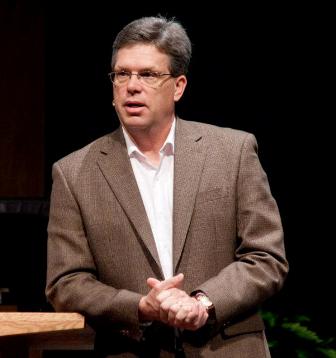
Scott Klusendorf responds to atheist P.Z. Myers on the Issues, Etc. show

Scott Klusendorf, Life Training Institute

About Scott:

Scott Klusendorf travels throughout the United States and Canada training pro-life advocates to persuasively defend their views in the public square. He contends that the pro-life message can compete in the marketplace of ideas if properly understood and properly articulated.

[…]Scott has participated in numerous debates at the collegiate level. His debate opponents have included Nadine Strossen, President of the ACLU (1991-2008) – Kathyrn Kolbert, an attorney that has argued for abortion rights in a United States Supreme Court case – and Kathy Kneer, President of Planned Parenthood of California.

Scott has debated or lectured to student groups at over 70 colleges and universities, including Stanford, USC, UCLA, Johns Hopkins, Loyola Marymount Law School, West Virginia Medical School, MIT, U.S. Air Force Academy, Cal-Tech, and University of North Carolina.

Each year thousands of students at Protestant and Catholic high schools are trained by Scott to make a persuasive case for life as part of their worldview training prior to college. He’s provided that same training to students at Summit Ministries and Focus on the Family Institute.

Scott is the author of The Case for Life: Equipping Christians to Engage the Culture, released in March 2009 by Crossway Books. Scott has also published articles on pro-life apologetics in The Christian Research Journal, Clear Thinking, Focus on the FamilyCitizen, and The Conservative Theological Journal.

Chuck Colson, founder and Chairman of the Board of Prison Fellowship, says: “Scott first grabbed my attention when Focus on the Family featured one of his presentations on its national broadcast. I was struck by his ability to communicate truth so clearly and insightfully. I’ve heard many speakers who deliver excellent content, but few who can actually equip people to communicate their pro-life convictions to a secular culture. In fact, I was so impressed with Scott’s talk that I phoned him directly to learn more about his work. After that, I scheduled him as a keynote speaker for our own Breakpoint conference.”

Scott is a graduate of UCLA with honors and holds a Masters Degree in Christian Apologetics from Biola University.

The MP3 file is here.

Topics:

  • Myers: I could imagine a culture where a child doesn’t have the right to life until they are 5-years old
  • Moderator: Myers is an atheist. He believes that standards of conduct are variable depending on what is dominant in a culture. Since cultures  vary by time and place, and none is objectively right or wrong, then a 5-year limit for personhood is as valid as any other standard that might evolve. There is no way to judge between cultures against some objective standard
  • Moderator (to Klusendorf): Myers says that the unborn is a “piece of meat”. It’s not a person until well after birth. Do only atheists believe this?
  • Klusendorf: No others hold them. But what is more interesting is that he just asserts his views, he never argues for them. He says that pro-lifers lie when debating this issue
  • Moderator: (to Myers) What is the unborn?
  • Myers: It’s a piece of tissue that will develop into a human being over time
  • Moderator: (to Myers) What is it 5 minutes before it’s born?
  • Myers: It’s fetus, it’s not a baby
  • Klusendorf: The development stages of a human are all stages of development of the same entity, as even Peter Singer and David Boonin admit
  • Moderator: He made a distinction between before birth and after birth
  • Klusendorf: Yes, and that contradicts what he says later when he says there are no sharp boundaries
  • Klusendorf: Myers is confusing parts with wholes. The skin cells on my hand are part of a larger human being. The embryo is not part of a larger human being, they are a whole human being, directing its own development
  • Klusendorf: Myers also makes the claim that embryos are constructed piece by piece from the outside. But the science of embryology is clear – the embryo develops itself.
  • Moderator (to Myers): Is the unborn a person?
  • Myers: Personhood develops gradually. A newborn baby is not a person. A baby’s brain is still forming so it’s not a person. There is no specific moment when a baby becomes a person. It is culturally determined. Our society says it’s birth. Some people say viability. Either of those are acceptable to me
  • Moderator: (to Myers): So drawing the line between unborn and born is arbitrary?
  • Myers: Yes it is
  • Klusendorf: He is separating human beings into classes: persons and non-persons. This has resulted in injustices, historically speaking. E.g. – with American Indians

(Break until 15:00)

  • Klusendorf: He says that a human being becomes a person when their brain is fully developed, but even teens don’t have fully developed brains
  • Klusendorf: Look at this scientific evidence from PBS about NIH research which shows that brains still developing in teens and it causes them to make poor decisions
  • Klusendorf: If development gives us value, then those with more of it have more of a right to life than those with less
  • Klusendorf: This point was made by Lincoln in his debates about slavery, when he warned his opponent that someone with lighter skin could enslave him
  • Moderator (to Myers): How do you decide these life issues?
  • Myers: We use the notion of “greater good”
  • Moderator (to Myers): that’s a culturally determined notion?
  • Myers: Yes. The greater good here is that we maximize the security and happiness of most people in the society. Women are persons, so we favor their rights.
  • Klusendorf: His response begs the question. He is assuming that the unborn are not human persons. He talks about the need for women’s rights. Are unborn women included in those who have rights?
  • Klusendorf: If cultures decide who is and who is not a person, then he cannot oppose cultures that say that Jews are not persons, or that women are not persons
  • Klusendorf: He admits that he cannot oppose cultures that think that children of age 5 are not persons, and can be killed
  • Moderator (to Myers): You call that kind of society “brutal”, why do you say that?
  • Myers: It’s my personal preference because I like my own kids
  • Moderator (to Klusendorf): Respond to that
  • Klusendorf: He has no argument, just his own opinion. He cannot oppose any society that things that it is OK to traffic, kill, etc. 5-year-olds
  • Klusendorf: He says that he has a personal preference. That is an interesting fact about his psychology, but he has no argument
  • Klusendorf: In an atheistic worldview, human beings at any stage are cosmic accidents
  • Klusendorf: How do we get any kind of intrinsic value and human rights out of an atheist worldview? I don’t see how you can
  • Klusendorf: Even a woman’s absolute right to an abortion is not grounded by atheism
  • Moderator (to Myers): What do you think of the pro-life movement?
  • Myers: I’m a developmental biologist. The pro-life movement is lying to people. An embryo is not a person. “Personhood implies much more than being a piece of meat with the right number of chromosomes in it”. The primary issue in abortion is women’s autonomy. It is entirely the woman’s decision
  • Klusendorf: You have to present arguments to prove that pro-lifers are lying. There are pro-abortion scholars who have arguments, he isn’t one. He only has assertions, opinions and preferences.
  • Klusendorf: What if a woman gets pregnant solely in order to take a drug during pregnancy in order to have a deformed child. Myers has no argument against that

Myers also has no argument against sex-selection abortions. So much for “women’s rights”.

I just want to mention that the Life Training Institute is one of the ministries I recommend to people. They are the only pro-life group I support, because they are apologists all the way. If they’re not debating, they’re training others to debate. If you like Christians who have battlefield experience on the pro-life issue, this is your organization.

You can get Scott’s book on pro-life apologetics here on Amazon.com. It’s the best introductory book on pro-life apologetics out there. And he has another book about making a pro-life case on campus.

UPDATE: P.Z. Myers responds to this post here. Reader discretion is advised.

New study finds that unborn babies can recognize spoken words

Scheming unborn baby can hear what you're saying, potty-mouth
Scheming unborn baby can hear what you’re saying, potty-mouth

The study was published in the prestigious peer-reviewed journal Science.

Excerpt:

As a fetus grows inside a mother’s belly, it can hear sounds from the outside world—and can understand them well enough to retain memories of them after birth, according to new research.

It may seem implausible that fetuses can listen to speech within the womb, but the sound-processing parts of their brain become active in the last trimester of pregnancy, and sound carries fairly well through the mother’s abdomen. “If you put your hand over your mouth and speak, that’s very similar to the situation the fetus is in,” says cognitive neuroscientist Eino Partanen of the University of Helsinki. “You can hear the rhythm of speech, rhythm of music, and so on.”

A 1988 study suggested that newborns recognize the theme song from their mother’s favorite soap opera. More recent studies have expanded on the idea of fetal learning, indicating that newborns already familiarized themselves with sounds of their parent’s native language; one showed that American newborns seem to perceive Swedish vowel sounds as unfamiliar, sucking on a high-tech pacifier to hear more of the new sounds. Swedish infants showed the same response to English vowels.

But those studies were based on babies’ behaviors, which can be tricky to test. Partanen and his team decided instead to outfit babies with EEG sensors to look for neural traces of memories from the womb. “Once we learn a sound, if it’s repeated to us often enough, we form a memory of it, which is activated when we hear the sound again,” he explains. This memory speeds up recognition of sounds in the learner’s native language and can be detected as a pattern of brain waves, even in a sleeping baby.

The team gave expectant women a recording to play several times a week during their last few months of pregnancy, which included a made-up word, “tatata,” repeated many times and interspersed with music. Sometimes the middle syllable was varied, with a different pitch or vowel sound. By the time the babies were born, they had heard the made-up word, on average, more than 25,000 times. And when they were tested after birth,these infants’ brains recognized the word and its variations, while infants in a control group did not, Partanen and colleagues report online today in the Proceedings of the National Academy of Sciences.

Babies who had heard the recordings showed the neural signal for recognizing vowel and pitch changes in the pseudoword, and the signal was strongest for the infants whose mothers played the recording most often. They were also better than the control babies at detecting other differences in the syllables, such as vowel length. “This leads us to believe that the fetus can learn much more detailed information than we previously thought,” Partanen says, and that the memory traces are detectable after birth.

“This is a well-respected group and the effects are really convincing,” says Patricia Kuhl, a neuroscientist at the University of Washington in Seattle. Combined with previous work, she says, these results suggest “that language learning begins in the womb.”

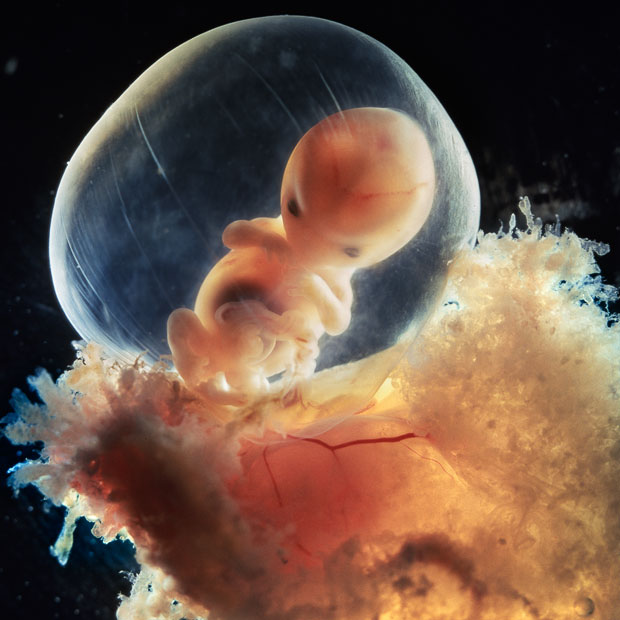
More evidence that unborn babies are not just blobs of tissue. Every one is precious, and we need to be more careful with our decisions so that we welcome them into the world and look after them as they grow up. Not just giving them protection and sustenance, but a mother and a father close by, too. That’s what they need.