

Is it the man’s responsibility to pursue the woman, or the other way around?

Telling a woman how to make wise decisions protects her

If you ask this question theoretically, most people will probably say that it’s the man’s responsibility, especially in the church. Is this because women don’t like the idea of having to plan out and achieve something? Maybe. But what is interesting is that the man-pursues view is very popular in the church, even though it’s not very common in the Bible. Dalrock posted something about this.

He writes:

One comment I see from fathers with surprising regularity is that their unmarried daughter is in a great position to find a husband because she’s not remotely interested in the kind of men who express interest in her.

I… think this is tied into the erroneous idea that the Bible teaches that men should pursue and women should judge the performance. But it isn’t the Bible that teaches this ethic, it is the religion of Courtly Love that teaches this. Think of the only two women to have books of the Bible named after them. Both Ruth and Esther pursued their eventual husbands. Ruth’s pursuit of Boaz resulted in her being the grandmother of King David, which meant that Christ would come from her line. Esther’s pursuit of Ahasuerus allowed her to save the Jews.

Cane Caldo was actually the first to write about this on his blog:

According to traditionalists (and others): Men are supposed to chase, and women are supposed to be caught. Or they might say: Men are to initiate, and women are to respond.

[…]If you fancy yourself a traditionalist… [s]earch your Bible for a story about a man who woos a woman directly.

So, just consider that for a minute. Ruth is probably the best example of a woman who just makes decisions to get on with life, and happens across a wealthy single man. Then she consults with Naomi and takes action to pursue that man. It works out for her. Where in the Bible does the man pursue the woman?

Derek Ramsey was able to come up with two examples, and he commented on Dalrock’s blog:

You can find examples of all cases in the Bible: fully arranged marriages (for Isaac), where the man pursued the woman (Jacob; Hosea), where the woman pursued the man (Ruth; Esther), and where both pursued each other or it wasn’t clearly stated one way or the other (Samson; Solomon). I would argue that pursuit (by either sex) is neither condemned nor encouraged. Each situation is different and there is no rule one way or the other.

I think that Derek wins the argument, here. But I still think that practically speaking, in such a time (of feminism) as this, it’s much much wiser for women to take action to “pursue” men she is interested in. That doesn’t mean asking men out, though.

thedeti explains in a comment:

A man setting his sights on one or two or three women and then pursuing them really hard trying to get on their radar isn’t the best way to find a woman who’s interested in him and who is the best match.

Instead, he should be his best version of himself, and then see which women are tossing subtle signs of interest at him. Which women just kind of show up where he is, which ones make a point to say hi to him, which ones reach out to him, which ones contact him, which ones strike up conversations with him. And then from THOSE women he should select a few he is interested in and then pursue them.

That certainly isn’t what most Christians are teaching their children. I certainly wasn’t taught this.

And a bit later, thedeti says:

In the current #MeToo climate, false rape allegations, and sexual harassment’s current definition as “any conduct or words uttered by any man anywhere that any woman within sight or earshot didn’t like”, this model can be downright dangerous for men.

A man can no longer just pick a few girls he’s interested in and pursue them. If he selects some girls who dont’ like him, he’s in for a world of hurt by trying to “perform” for them. If he selects one who kind of likes him, but he makes even one wrong move or says one remotely mildly offensive thing, he’s done. Not only will she know about it, all her friends will know too.

When a woman is very interested and shows it, she’ll be much more forgiving of his expected missteps. That gives him room to run, and gives a budding relationship the space it needs to germinate and grow.

Deti advises women to just show up in places where men they are interested in are, and not actively discourage them. Maybe ask him questions about what he is doing as a Christian, and ask for his advice about something he knows about, etc. And deti warns women to consider that in a culture where false accusations and frivolous no-fault divorces are everywhere, men with good educations, degrees and finances will be very careful about pursuing women.

My thoughts

I was speaking to someone who thinks that she wants to be pursued by a man. I suggested that she read the book of Ruth to counter her view. The first and most important piece of advice I gave her was to “cross the room” for any man she is interested in. Stand up, walk directly at him, and speak right in his face. Maintain eye contact and speak directly to him about things he is interested in. On another day, I told her that the most important thing you can ask a man about is his vision to serve God.

As women age and lose their beauty, the only thing that remains is the man’s passion – his plan – and the place of the woman within it. Men stay in love with women who have invested in the plan they made to serve God. Naturally, it’s POINTLESS to choose any man unless he has a plan to serve God effectively that he has demonstrated his willingness to sacrifice for. In my case, writing this blog is a sacrifice, and giving money to Christian apologists and pro-life debaters is a sacrifice. A woman should be skeptical about anything a man says – look at what he has already done for his vision, and whether he is actually practical and determined enough to achieve anything. That’s where you’ll find your place. And that’s what you need to investigate in a husband candidate. Standing back and remaining passive, waiting to be pursued, is just going to attract a lot of non-Christian men who are pursuing you for sex. If the man is pursuing you, and he hasn’t told you his vision (why he needs you as his wife anyway), then he wants sex.

The pursuit of women by non-Christian alpha male bad boys seems to be welcomed, surprisingly, by a lot of passive Christian women who kind of lie back and expect to just acquiesce to experiences that feel good. Women today don’t like to think about marriage in a structured way. And they especially don’t want to be asked by men about past decisions, demonstrated abilities, future wife responsibilities and obligations, etc. (How dare men evaluate them for a marriage plan!) They don’t want marriage, defined as self-sacrificial commitment. They want marriage as constant tingles, supplied by an alpha male bad boy who exists solely to generate feelings of happiness in them, and feelings of envy in their girlfriends. Think about marriage as a plan? That’s boring. Let’s get drunk and hook up with an alpha male bad boy, and see if he calls back after the abortion.

Alpha male bad boys feel good (for a while) and this is how women get trapped into relationships with men who have no reason to commit to them. A much better strategy is to stop being attracted to alpha male bad boys, and deliberately engage in conversations with marriage-ready men. As my friend Lindsay says, you need to learn to become attracted to men who have a vision that will survive the loss of your youth and beauty.

In my own case, I’ll be able to retire at 50 with a net worth well north of 7 figures. Because of this, it would be stupid for me to waste my time pursuing Christian women whose criteria for men has nothing to do with the marriage enterprise, and is INDISTINGUISHABLE from the criteria used by non-Christian women. The ONLY thing that would catch my eye at this point is a woman who is equal to me (chaste, no tattoos, STEM degree(s), debt-free, married parents, house or savings, into apologetics, conservative politics, and between the ages of 23-28). And that’s a minimum. And she can forget about being pursued by me. She’ll have to approach me, and question me about what my plan is, and where she would fit into it.

I’ve often been told by wise female Christian advisors that I need to do a better job of showing off my situation to women. But if I spent the money on sparkly things and fun, I wouldn’t be financially secure, would I? It’s up to women to stop being so shallow and emotional. They need to look beyond appearances and fun. They need to have a marriage focus, and they need to choose men, show up and start investigating and investing. I simply don’t have the time to flail around in a feminist culture where women, including Christian women, are woefully unqualified for the marriage enterprise. It’s not my job, after having made thousands of good decisions, to risk my fortune by pursuing women who have made thousands of bad decisions (promiscuity, debt, useless degrees, etc). The entitled attitudes of women today, including Christian women, is nothing short of astonishing to men like me who have spent a lifetime being careful about being chaste, sober, practical, frugal and effective.

Alistair Begg has a great sermon series on Ruth that emphasizes Ruth’s agency, and her willingness to make decisions that were practical without any sort of being led by feelings or being nudged by God. Christian women, if you want to get married, then get to work on finding a man and making it easy for him to choose you.
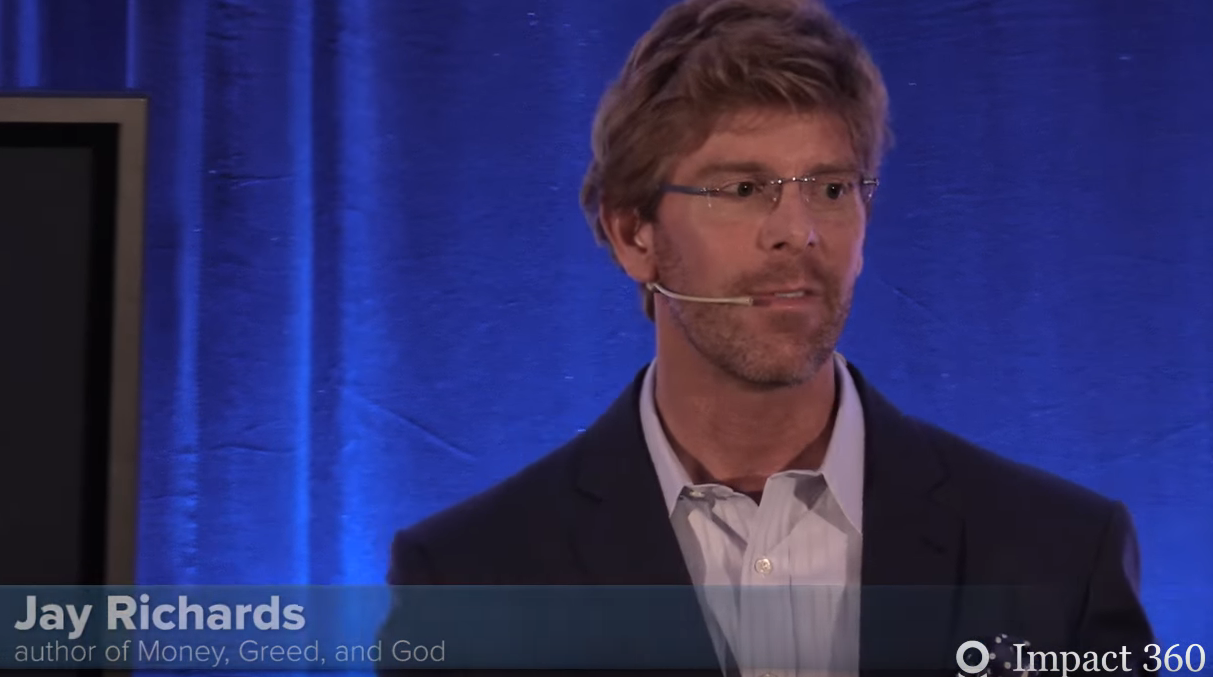

Jay Richards: How to end poverty in 10 tough steps

Jay Richards: How to end poverty in 10 tough steps

Why are some nations more prosperous than others? Is it because the wealthier nations exploit the poorer ones, keeping them poor? Or are there certain policies, laws, and cultural beliefs that lead to prosperity? Dr. Jay Richards delivers a lecture for Impact 360, in which he identifies 10 different factors that lift nations out of poverty, and explains why they work.

Summary:

  1. Establish and maintain the rule of law.
  2. Focus the jurisdiction of government on maintaining the rule of law, and limit its jurisdiction over the economy and the institutions of civil society.
  3. Implement a formal property system with consistent and accessible means for securing a clear title to property one owns.
  4. Encourage economic freedom: Allow people to trade goods and services unencumbered by tariffs, subsidies, price controls, undue regulation, and restrictive immigration policies.
  5. Encourage stable families and other important private institutions that mediate between the individual and the state.
  6. Encourage belief in the truth that the universe is purposeful and makes sense.
  7. Encourage the right cultural mores—orientation to the future and the belief that progress but not utopia is possible in this life; willingness to save and delay gratification; willingness to risk, to respect the rights and property of others, to be diligent, to be thrifty.
  8. Instill a proper understanding of the nature of wealth and poverty—that wealth is created, that free trade is win-win, that risk is essential to enterprise, that trade-offs are unavoidable, that the success of others need not come at your expense, and that you can pursue legitimate self-interest and the common good at the same time.
  9. Focus on your comparative advantage rather than protecting what used to be your competitive advantage.
  10. Work hard.

Solving economic problems is just like solving any other problem. First, we read to learn what has been proven to work. Then, we do what works. I want to encourage Christians to move beyond good intentions to good results when voting for economic policies. Often, people on the left want to “fix” inequalities by doing what feels good to them, or what sounds good to them. Economics is about choosing policies that we know have worked in other times and places.

Let’s talk more about #4 from Richards’ list.

Economic freedom linked to prosperity

Consider the book “The Poverty of Nations: A Sustainable Solution” by famous conservative theologian Wayne Grudem.

You can even read an article about it from the left-wing Christian Post here:

In a presentation of his new book at the Family Research Council, biblical theologian Wayne Grudem argued that poor countries can become rich only by producing their own prosperity, and that the free market is not only the economic answer, but in tune with the Bible’s moral teachings.

“Every nation that has escaped poverty has done so by producing its own prosperity,” said Grudem, professor of theology and biblical studies at Phoenix Seminary in Arizona. Perhaps best known for his book Systematic Theology: An Introduction to Biblical Doctrine, Grudem presented the key themes in his new book The Poverty of Nations: A Sustainable Solution. The very first of his 79 factors to help nations escape poverty in “a free market economy.”

[…]Grudem argued that the wealth of a country is determined by its per-capita income – the average amount of money each citizen makes. The only way to increase this is to increase the production of goods and services, creating more wealth for everyone, he said.

[…]The professor pointed to 79 factors to help a country produce more goods and services, in three different key areas: the economic system, government, and cultural beliefs and values.

For the economic system, Grudem mentioned the Index of Economic Freedom, a report put out by the Heritage Foundation to judge each country’s openness to trade and wealth creation.

You can find the Heritage Foundation Index of Economic Freedom right here. Take a look at the countries at the top… these countries also have a very high per capita income. Their citizens are earning a lot of money by selling what they produce to willing customers. The ones at the bottom are run by socialist governments. You wouldn’t want to try to make a living in Venezuela or Cuba or North Korea. But these are the places that American socialists admire and support. Does that tell you something about what they would do to you, if they got hold of the reins of government?

The Fraser Institute in Canada did a similar ranking of economic freedom (economic freedom = low taxes, low regulation, free trade), and they concluded:

Countries in the top quartile (25 per cent) of economic freedom (such as the U.K., Japan and Ireland) had an average per-capita income of US$40,376 in 2016 compared to US$5,649 for the bottom quartile countries (such as Venezuela, Iran and Zimbabwe). And life expectancy is 79.5 years in the top quartile of countries compared to 64.4 years in the bottom quartile.

Economic freedom works best.

Video, audio and summary of intelligent design discussion, with Ben Shapiro and Stephen C. Meyer

Stephen C. Meyer and Ben Shapiro discuss evolution and intelligent design

This is a must-see / must-hear conversation. Famous conservative Ben Shapiro discusses evolution and intelligent design with Dr. Stephen C. Meyer, author of “Signature in the Cell” (origin of life) and “Darwin’s Doubt” (fossil record). These are the two best books on intelligent design. Their conversation covers the most important issues in the origins debate.

So to start, here’s the full video:

And here is a link to the audio. You can download the MP3 there.

Someone actually put out an outline on Youtube, with a time-based index, so I’ll just steal that as a base, and add to it:

  • 1:34 What is your scientific background? Science undergraduate degree, professional geologist, later did a PhD in philosophy of science from Cambridge University.
  • 2:39 What is the difference between intelligent design and creationism? Creationism starts from the Bible and posits a shorter history of the universe. ID starts from the data of the natural world and is neutral about the age of the Earth / universe. Meyer accepts the old-Earth.
  • 3:36 How is Intelligent Design a scientific theory? The discovery of DNA reveals that code is central to living systems. Intelligent design uses the method of “inference to the best explanation” in order to argue that the best explanation for the code is an intelligent agent.
  • 6:10 What evidence would have to arise to make Intelligent Design Falsifiable? If a naturalistic mechanism was discovered that could produce biological information using the probabilistic resources of the universe, and the time available, then intelligent design would be falsified.
  • 7:26 Is religion separate from science or intertwined within it? There are three views: science is totally separate from religion, science is in total conflict with religion, science and religion agree on some issues, e.g. – the origin of the universe and Genesis 1:1. There are areas where science and religion overlap.
  • 9:55 Why are the most prominent Darwinians also militant atheists? Evolution is a theory that tries to explain nature using naturalistic mechanisms, so it is compatible with atheism.
  • 10:45 What does the theory of evolution say? The term evolution has multiple meanings, and should be defined before discussions. It can refer to change over time. It can refer to animals changing slightly to adapt to enviromental changes. It can refer to the idea that all animals evolved from simpler life forms, and that there is a tree of life showing how different types of organisms share common ancestors. And it can refer to the idea that purely undirected processes can explain the history of life using purely materialistic forces. It’s that final view that intelligent design challenges.
  • 13:15 Where is the discontinuity in naturalistic processes in the development of life? The first discontinuity is the origin of simple life from non-living components. The second discontinuity is the sudden appearance of different body plans in a very narrow window of time in the Cambrian era.
  • 15:42 Why does information theory suggest that code requires some sort of designer? DNA is a true information-bearing system identical to the software in computers, e.g. – operating system, applications.
  • 19:45 Can information be created by random mutation, and favorable mutations preserved by natural selection? Just as in software code, instructions must be added in order to develop new functionality. Random additions of characters will almost always degrade biological function. The number of possible sequences that do nothing useful is vastly higher than the number of sequences that perform biological functions. Doug Axe did research on this at Cambridge University, and he found that the number of functional sequences of amino acids is 1 in 10 to the 77th power. Given the probabilistic resources (replicating organisms)and the time available, it is extremely unlikely to find sequences that have functional information by chance.
  • 25:05 What about Stephen Jay Gould’s model of punctuated equilibrium – doesn’t it explain the sudden jumps in information? Gould’s mechanism is accurate according to the fossil record, which shows a lot of jumps. But he did not have a naturalistic explanation for sudden jumps in biological function. Darwinian mechanisms work slowly and would (in theory) produce different body plans gradually. But this is not what the fossil record shows.
  • 27:22 What is the mechanism for injecting information in the theory of intelligent design? The information comes in from an intelligence when new major body plans appear, and minor variations within types could be explained by evolution.
  • 29:25 Does the Miller-Urey experiment provide a naturalistic explanation for the building blocks necessary for the origin of life? The MU experiment only produced a few types of amino acids, it doesn’t say anything about how to sequence the amino acids in order to form protein folds that can perform biological functions. The MU experiment also pre-supposes conditions on the early Earth (reducing gases) that do not match what was there (oxidyzing or neutral gases).
  • 32:00 Is the RNA world hypothesis is a good explanation for the origin of life? Evolution requires that replication already be in place, because evolution assumes that mutations appear during the replication. The RNA world hypothesis suggests that sequences contain information, but also catalyze origin of life chemistry. The problem with RNA world is that it starts with self-replicating systems. And those replicating systems require the scientist to inject information into the system to get even the simplest replication started.
  • 34:56 How do scientists respond to the critiques of Darwinism proposed by intelligent design advocates? By and large, they accept them. They think that mutation and selection works once living systems are in place, but they realize it has no explanation for the origin of life or the sudden origin of body plans. (Tells about the  conference of the Royal Society, where problems with Darwinian mechanisms were discussed, and the 2003 MIT Press book by Muller and Newman).
  • 37:16 Why do people hold to Darwinian evolution in the face of these problems? Many scientists presuppose methodological naturalism, which requires that any explanation for the origin of life and the origin of major body plans involve materialist explanations only. No intelligent agents are allowed. The problems occur when assumption of naturalism causes scientists to propose incorrect explanations for what we observe in nature. It’s also not clear how naturalistic mechanisms could produce organisms who are capable of reason and free will.
  • 40:43 Does naturalistic evolution have an answer for conscious minds, reasoning, free will? No, consider the work of atheist scholar Thomas Nagel, who argues in his book “Mind and Cosmos” (Oxford University Press 2012) that the existence of mind is a disproof of the neo-Darwinian explanation for life. Darwinism stops us from accepting the reality of minds.
  • 42:06 So do naturalistic evolutionists have to explain away the mind as an illusion? First, we humans have immediate experience of consciousness, reason and free will. Second, our whole legal system is based on the idea free will, because you can’t hold someone guilty unless they chose to do something they knew was wrong. Third, we have an epidemic of suicide among young people. This is caused by a crisis of meaning. Intelligent design opens up the possibility of their being a mind behind the universe, who we could have a relationships with.
  • 44:53 Why aren’t schools allowed to be honest about the problems with neo-Darwinian evolution? The intellignt design view is to that teachers should be allowed to teach all the vidence for Darwinian evolution, and also discuss some of the problems with the theory. Students learning science should not be told that everything is solved. Students learn science better when they are presented with peer-reviewed evidence for and against a theory, rather than being indoctrinated.
  • 47:37 Is intelligent design theory connected to God? Intelligent design infers from the information content in nature that a mind with capabilities like ours injected information into living systems. Intelligent design is agnostic about the designer, because in principle, embodied or unembodied agents could inject information into living systems. Intelligent design is friendly to theism, because theists will immediately identify the mind as God. Furthermore, the fine-tuning in the initial conditions of the universe is another intelligent design argument. In that case, since the design occurs at the beginning of the universe, the intelligent agent acting prior to the creation of the universe would have to be supernatural, i.e. – God.
  • 50:53 Can naturalists say that the imposition of “function” on a sequence is arbitrary, in the same way that the English language is arbitrary? This won’t work, because biological function is not arbitrary in the same way as language. Biological function is not arbitrary, because sequences can be tested for function objectively by observing whether sequences can perform functions necessary for life, e.g. – replication.
  • 52:43 Doesn’t the multiverse explain away the improbabilities of the fine-tuning, the origin of life, and the development of life? No, because all models of the multiverse require fine-tuning in the mechanism that generates the different universes.
  • 55:42 What about cosmological models that eliminate the beginning of the universe? The standard Big Bang model and the inflationary model both posit a beginning of the universe. There is also the Borde-Guth-Vilenkin theory which proves that any universe that is expanding requires a beginning. The only chance for naturalists is quantum cosmologies, but this doesn’t work because 1) it requires an abstract reality of mathematics to actualize the physical universe, but this presupposes a mind. 2)  The model requires an earlier input of information, which can only have come from a mind.

If you listen to this lecture, or watch the video, and you enjoyed it, then please share. If you have questions, I can try to answer them for you – just leave your question in the comments, or shoot me an e-mail, or message me from the blog’s Facebook page, or direct message me on Twitter. I’ve invested a lot of time in this, and have been studying intelligent design since the late 1990s.

By the way, I listen to the Ben Shapiro podcast, (and the Andrew Klavan podcast), every day. I never miss an episode, and I think if you give them a try, you’ll enjoy them, too.