Senate committee authorizes subpoenas for Obama officials involved in Trump campaign surveillance

Left to right: Comey, Lynch, Clinton, McCabe

Have you ever wondered which members of the Obama administration were involved in spying on the Trump campaign? Would you like to hear from former CIA Director John Brennan, former Director of National Intelligence James Clapper, former FBI Director James Comey? The Senate does. They’ve issued subpoenas for these people, and many more.

Fox News has the story:

The Senate Homeland Security Committee on Wednesday voted to authorize subpoenas for former CIA Director John Brennan, former Director of National Intelligence James Clapper, former FBI Director James Comey, and other Obama administration officials as part of its broad review into the origins of the Russia investigation.

[…]The committee also authorized subpoenas for Sidney Blumenthal, former Obama chief of staff Denis McDonough, former FBI counsel Lisa Page, former FBI agent Joe Pientka, former ambassador to the United Nations Samantha Power, former FBI director of counterintelligence Bill Priestap, former White House national security adviser Susan Rice, former FBI agent Peter Strzok, former FBI lawyer Kevin Clinesmith – who pleaded guilty to making a false statement in the first criminal case arising from U.S. Attorney John Durham’s review of the investigation into links between Russia and the 2016 Trump campaign – among others.

The committee further authorized subpoenas for “the production of all records” related to the FBI’s original Russia investigation and the Department of Justice Inspector General’s probe, as well as the process of “unmasking” for James Baker, former FBI Deputy Director Andrew McCabe, DOJ official Bruce Ohr, FBI case agent Steven Somma, former U.S. Ambassador to Russia John Teftt, former deputy assistant attorney general Tashina Gauhar; and Stefan Halper.

Do you remember the details of the FBI-media collaboration on the Trump-Russia collusion story? I have a summary of it for you, below.

The Trump-Russia collusion story that was trumpted by the progressive media for the last two years was a joint effort between the Hillary Clinton campaign and high-ranking members of the FBI during the Obama administration.

The goal was to get the government to spy on the Trump campaign, in order neutralize his administration, if he won the 2016 election.

Here’s the left-leaning The Hill, reporting on an important finding from October 2018:

Congressional investigators have confirmed that a top FBI official met with Democratic Party lawyers to talk about allegations of Donald Trump-Russia collusion weeks before the 2016 election, and before the bureau secured a search warrant targeting Trump’s campaign.

Former FBI general counsel James Baker met during the 2016 season with at least one attorney from Perkins Coie, the Democratic National Committee’s private law firm.

That’s the firm used by the DNC and Hillary Clinton’s campaign to secretly pay research firm Fusion GPS and Christopher Steele, a former British intelligence operative, to compile a dossier of uncorroborated raw intelligence alleging Trump and Moscow were colluding to hijack the presidential election.

The article notes that Perkins Coie is the “Democratic National Committee’s private law firm”.

The Federalist reports that the Obama presidential election campaign also paid $972,000 to Perkins Coie in 2016 alone:

Former president Barack Obama’s official campaign organization has directed nearly a million dollars to the same law firm that funneled money to Fusion GPS, the firm behind the infamous Steele dossier. Since April of 2016, Obama For America (OFA) has paid over $972,000 to Perkins Coie, records filed with the Federal Election Commission (FEC) show.

[…]Federal records show that Hillary Clinton’s official campaign organization, Hillary For America, paid just under $5.1 million to Perkins Coie in 2016. The DNC paid nearly $5.4 million to the law firm in 2016.

[…]The Washington Post reported last week that Perkins Coie, an international law firm, was directed by both the Democratic National Committee (DNC) and Hillary Clinton’s campaign to retain Fusion GPS in April of 2016 to dig up dirt on then-candidate Donald Trump. Fusion GPS then hired Christopher Steele, a former British spy, to compile a dossier of allegations that Trump and his campaign actively colluded with the Russian government during the 2016 election. Though many of the claims in the dossier have been directly refuted, none of the dossier’s allegations of collusion have been independently verified. Lawyers for Steele admitted in court filings last April that his work was not verified and was never meant to be made public.

In addition, Fox News reports that the FBI paid Christopher Steele ELEVEN TIMES in 2016. So this dossier was funded by Democrats from many different groups. They probably thought that no one would ever find out who was behind it.

But why would the FBI and the FISA court accept the Democrat-funded dossier as a basis to spy on the Democrat’s main political rival? Answer: there were Democrats in the FBI who covered up the source of funding for the Steele dossier, as well as the anti-Trump bias of the dossier’s author.

The Washington Examiner reported on the released text messages from highly-placed anti-Trump Democrat Lisa Page within the FBI in March 2019:

The text messages, between then-Deputy Director of the FBI Andrew McCabe, who was later fired, and former FBI attorney Lisa Page — who was having an affair with FBI agent Peter Strzok — were obtained by Fox News.

[…]Then-Director of the FBI James Comey ultimately signed off on the application to the Foreign Intelligence Surveillance Court for approval to surveil Carter Page. It was dated nine days after the Page-McCabe texts: Oct. 21 2016.

The specific funding of Steele’s dossier was never mentioned to the FISA court, either during that first application or during three subsequent FISA renewals. Steele’s anti-Trump fervor and determination to provide his dossier to the media and members of the U.S. government later became well known.

The reason why the mainstream media reported on a #FakeNews story for two years was because they wanted to sway voters away from Trump in the 2018 elections. And it worked.


Baby elephant in China cries for 5 hours after being stomped by his mom

Baby elephant rejected by his mother
Baby elephant cries after being attacked by his own mother

From the New York Daily News. (Printable version linked)

Excerpt:

Little Zhuangzhuang, a newborn elephant at a wildlife refuge in China, was inconsolable after his mother rejected him and then tried to stomp him to death.

Tears streamed down his gray trunk for five hours as zookeepers struggled to comfort the baby elephant.

They initially thought it was an accident when the mom stepped on him after giving birth, according to the Central European News agency.

Employees removed him, cleaned him up and treated his injuries, then reunited the baby with his momma.

But she was having none of it, and began stomping him again.

So the game keepers stepped in once more and permanently separated the two.

“We don’t know why the mother turned on her calf but we couldn’t take a chance,” an employee told CEN.

“The calf was very upset and he was crying for five hours before he could be consoled,” he said.

“He couldn’t bear to be parted from his mother and it was his mother who was trying to kill him.”

The petite pachyderm, born in August, is now doing well. The zookeeper who rescued him from his violent mother adopted him and helped him thrive at the Shendiaoshan wild animal reserve in Rong-cheng, China.

I found another photo of the baby elephant here:

Baby elephant's birthday is supposed to be happy
A baby elephant’s birthday is supposed to be happy

So, in this post, I wanted to take about the duty that parents have to their children.

I guess a lot of my views on ethics are rooted in the obvious needs that children have. When I look at an unborn baby, I can tell what it needs. So, I am careful not to cause a pregnancy before I can supply its needs. The needs of the little unborn creature are driving these moral boundaries on me. And the same with born children. I oppose gay marriage because when I look at little children, I want them to have a stable environment to grow up in with a mother and father who are biologically related to them (in the best case). I permit lots of arrangements, but I promote one arrangement over the others because that’s what’s best for children. Anyone can look at unborn and born children and see that, just like anyone can look at a crying baby elephant and understand – “I have to govern my behavior so that I don’t hurt you”. If that means cutting off the premarital sex and making decisions that are likely to produce a stable marriage, then that’s what we should do.

Children cry too, you know. They cry when we hurt them. They cry when we make bad decisions and when we don’t provide them with what they need. Children need mothers and fathers who care about them. Making a safe environment for a child isn’t an accident. It isn’t random and unpredictable. We have to control our desires before we have children, so that we provide children with what they need. It would be nice if men and women were more thoughtful and unselfish about children and marriage before they started in with sex.

What criteria do historians use to get to the minimal facts about the historical Jesus?

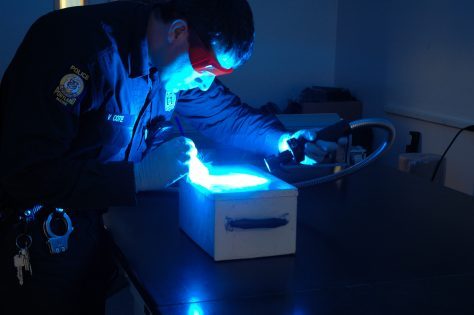
Policeman investigates crime scene for evidence

Have you ever heard Gary Habermas, Michael Licona or William Lane Craig defend the resurrection of Jesus in a debate by saying that the resurrection is the best explanation for the “minimal facts” about Jesus? The lists of minimal facts that they use are typically agreed to by their opponents during the debates. Minimal facts are the parts of the New Testament that meet a set of strict historical criteria. These are the facts that skeptical historians agree with, totally apart from any religious beliefs.

So what are the criteria that skeptical historians use to derive a list of minimal facts about Jesus?

Dr. Craig explains them in this article.

Excerpt:

The other way, more influential in contemporary New Testament scholarship, is to establish specific facts about Jesus without assuming the general reliability of the Gospels. The key here are the so-called “Criteria of Authenticity” which enable us to establish specific sayings or events in Jesus’ life as historical. Scholars involved in the quest of the historical Jesus have enunciated a number of these critieria for detecting historically authentic features of Jesus, such as dissimilarity to Christian teaching, multiple attestation, linguistic semitisms, traces of Palestinian milieu, retention of embarrassing material, coherence with other authentic material, and so forth.

It is somewhat misleading to call these “criteria,” for they aim at stating sufficient, not necessary, conditions of historicity. This is easy to see: suppose a saying is multiply attested and dissimilar but not embarrassing. If embarrassment were a necessary condition of authenticity, then the saying would have to be deemed inauthentic, which is wrong-headed, since its multiple attestation and dissimilarity are sufficient for authenticity. Of course, the criteria are defeasible, meaning that they are not infallible guides to authenticity. They might be better called “Indications of Authenticity” or “Signs of Credibility.”

In point of fact, what the criteria really amount to are statements about the effect of certain types of evidence upon the probability of various sayings or events in Jesus’ life. For some saying or event S and evidence of a certain type E, the criteria would state that, all things being equal, the probability of S given E is greater than the probability of S on our background knowledge alone. So, for example, all else being equal, the probability of some event or saying is greater given its multiple attestation than it would have been without it.

What are some of the factors that might serve the role of E in increasing the probability of some saying or event S? The following are some of the most important:

(1) Historical congruence: S fits in with known historical facts concerning the context in which S is said to have occurred.

(2) Independent, early attestation: S appears in multiple sources which are near to the time at which S is alleged to have occurred and which depend neither upon each other nor a common source.

(3) Embarrassment: S is awkward or counter-productive for the persons who serve as the source of information for S.

(4) Dissimilarity: S is unlike antecedent Jewish thought-forms and/or unlike subsequent Christian thought-forms.

(5) Semitisms: traces in the narrative of Aramaic or Hebrew linguistic forms.

(6) Coherence: S is consistent with already established facts about Jesus.

For a good discussion of these factors see Robert Stein, “The ‘Criteria’ for Authenticity,” in Gospel Perspectives I, ed. R. T. France and David Wenham (Sheffield, England: JSOT Press, 1980), pp. 225-63.

Notice that these “criteria” do not presuppose the general reliability of the Gospels. Rather they focus on a particular saying or event and give evidence for thinking that specific element of Jesus’ life to be historical, regardless of the general reliability of the document in which the particular saying or event is reported. These same “criteria” are thus applicable to reports of Jesus found in the apocryphal Gospels, or rabbinical writings, or even the Qur’an. Of course, if the Gospels can be shown to be generally reliable documents, so much the better! But the “criteria” do not depend on any such presupposition. They serve to help spot historical kernels even in the midst of historical chaff. Thus we need not concern ourselves with defending the Gospels’ every claim attributed to Jesus in the gospels; the question will be whether we can establish enough about Jesus to make faith in him reasonable.

And you can see Dr. Craig using these criteria to defend minimal facts in his debates. For example, in his debate with Ehrman, he alludes to the criteria when making his case for the empty tomb.

Here, he uses multiple attestation and the criteria of embarrassment:

Among the reasons which have led most scholars to this conclusion are the following:

1. The empty tomb is also multiply attested by independent, early sources.

Mark’s source didn’t end with the burial, but with the story of the empty tomb, which is tied to the burial story verbally and grammatically. Moreover, Matthew and John have independent sources about the empty tomb; it’s also mentioned in the sermons in the Acts of the Apostles (2.29; 13.36); and it’s implied by Paul in his first letter to the Corinthian church (I Cor. 15.4). Thus, we have again multiple, early, independent attestation of the fact of the empty tomb.

2. The tomb was discovered empty by women.

In patriarchal Jewish society the testimony of women was not highly regarded. In fact, the Jewish historian Josephus says that women weren’t even permitted to serve as witnesses in a Jewish court of law. Now in light of this fact, how remarkable it is that it is women who are the discoverers of Jesus’ empty tomb. Any later legendary account would certainly have made male disciples like Peter and John discover the empty tomb. The fact that it is women, rather than men, who are the discoverers of the empty tomb is best explained by the fact that they were the chief witnesses to the fact of the empty tomb, and the Gospel writers faithfully record what, for them, was an awkward and embarrassing fact.

There are actually a few more reasons for believing in the empty tomb that he doesn’t go into in the debate, but you can find them in his written work. For example, in his essay on Gerd Ludemann’s “vision” hypothesis. That essay covers the reasons for all four of his minimal facts.

So, if you are going to talk about the resurrection with a skeptic, you don’t want to invoke the Bible as some sort of inerrant/inspired Holy Book. You want to look at it as a historical book, and use historical criteria to get to some facts that critical historians would accept. From that, it’s possible to make a case for the resurrection, which is the guarantee that the words of Jesus are authoritative. Including the words of Jesus where he describes the Bible as a whole as God’s revelation of Himself to his creatures.

Here is the approach I use when talking to non-Christian co-workers:

  1. Explain the criteria that historians use to get their lists of minimal facts
  2. Explain your list of minimal facts
  3. Defend your list of minimal facts using the criteria
  4. Cite skeptics who admit to each of your minimal facts, to show that they are widely accepted
  5. List some parts of the Bible that don’t pass the criteria (e.g. – guard at the tomb, Matthew earthquake)
  6. Explain why those parts don’t pass the criteria, and explain that they are not part of your case
  7. Challenge your opponent to either deny some or all the facts, or propose a naturalistic alternative that explains the facts better than the resurrection
  8. Don’t let your opponent attack any of your minimal facts by attacking other parts of the Bible (e.g. – the number of angels being one or two, etc.)

And remember that there is no good case for the resurrection that does not make heavy use of the early creed in 1 Corinthians 15:3-8. That passages is universally accepted as early, eyewitness testimony from Paul, and represents the core of early Christian beliefs about the death and resurrection of Jesus. Everyone who takes evidence seriously has to account for that early creed, which passes the historical tests I outlined above.

The best essay on the minimal facts criteria that I’ve read is the one by Robert H. Stein in “Contending with Christianity’s Critics“. It’s a good short essay that goes over all the historical criteria that are used to derive the short list of facts from which we infer the conclusion “God raised Jesus from the dead”. That whole book is really very, very good.