Study explains why university women embrace binge-drinking and hook ups

This study is from the Institute for American Values. Despite their name, they are not conservatives. It was done by Norval Glenn and Elizabeth Marquardt.

If you download the 88 page PDF, the first few pages are an executive summary.

There are a couple of things that really struck me about this IAV study on hooking-up.

First, this one from p. 15:

A notable feature of hook ups is that they almost always occur when both participants are drinking or drunk.

A Rutgers University student observed, “You always hear people say, oh my gosh, I was so drunk, I hooked up with so and so…” Perhaps not surprisingly, many noted that being drunk helped to loosen one’s inhibitions and make it easier to hook up. A number of students noted that being drunk could later serve as your excuse for the hook up. A Yale University student said, “Some people like hook up because they’re drunk or use being drunk as an excuse to hook up.” A New York University student observed, “[Alcohol is] just part of an excuse, so that you can say, oh, well, I was drinking.”

A Rutgers University student commented, “If you’re drinking a lot it’s easier to hook up with someone… [and] drugs, it’s kind of like a bonding thing… and then if you hook up with them and you don’t want to speak to them again, you can always blame it on the drinking or the drugs.”

Other women observed that being drunk gives a woman license to act sexually interested in public in ways that would not be tolerated if she were sober. For instance, a University of Michigan student said, “Girls are actually allowed to be a lot more sexual when they are drunk…”

A University of Chicago junior observed, “One of my best friends… sometimes that’s her goal when we go out. Like she wants to get drunk so I guess she doesn’t have to feel guilty about [hooking up].”

Some reported that drinking had led them to do things they later regretted. A University of Virginia student said, “My last random hook up was last October and it was bad. I was drunk and I just regretted it very much.”

And this one from p. 30 on the effects of hooking-up on their future commitments:

A few women did see an unambiguous connection between present relationships and future marriage.

[…]Many women either saw little or no connection between present and future relationships, or their understanding of this connection was curiously flat. A student at New York University said, “[The present and the future are] connected because I will still have the same values and principles that I have now, but I just won’t be single anymore.”A number of women said that the present and the future are connected because whatever heartache or confusion they experience now gives them lessons for the future.

A University of Michigan student said, “Early relationships prepare you for marriage because it’s like, oh, what type of person do I want to be with? Oh, I’ve had these bad experiences. Or, I’ve learned from this relationship that I should do this and I shouldn’t do this.”

A sophomore at Howard University said that “I am kind of learning from a lot of the mistakes that I have made.” At a further extreme, some women saw their future marriage as the reason to experiment widely in the present. A Rutgers University student said,“I think hooking up with different people and seeing what you like and don’t like is a good idea. Because eventually you’re going to have to… marry someone and I’d just like to know that I experienced everything.”

Although it is admirable to take risks and learn from one’s mistakes, these women would probably find it difficult to explain how having your heart broken a few or even many times in your early years — or trying to separate sex from feeling, as in hooking up — is good preparation for a trusting and happy marriage later on.

And on p. 42, we learn what women think marriage is and isn’t for:

For instance, in the on-campus interviews one student complained, “[With] marriage…you have to debate everything… Why do you need a piece of paper to bond a person to you? …But I know if I don’t get married I’ll probably feel like… [a] lonely old woman… If anything, I’d get married [because of] that.”

This student went on to say that she would be satisfied to live with a man, but added that, if the man was committed to her, he would offer to marry her, and that this was the kind of commitment that she wanted. A student at the University of Washington said,“I don’t want to get married right after I graduate from college. I just think that would stunt my growth in every way that there is. I would like to be in a very steady, committed relationship with a guy.”

And on p. 44, we learn that they like co-habitation, which increases the risk of divorce by about 50% (but they don’t know that):

In the national survey, 58 percent of the respondents agreed that “It is a good idea to live with someone before deciding to marry him.” This belief often coexists with a strong desire to marry, because it was embraced by 49 percent of the respondents who strongly agreed that marriage was a very important goal for them.

[…]Women we interviewed on campus reflected a similar range of attitudes about cohabitation. Some women thought that cohabitation was a good way to test whether one could spend a lifetime with a potential partner. In such cases, women often cited fears of divorce as the reason for trying cohabitation first. A senior at the University of Washington said, “I kind of don’t really see marriages work ever, so I want to make sure that everything’s all right before [we get married]. I don’t see how people can get married without living together because I know like I have a best friend and I live with her and we want to kill each other, like, every few months.”

Other women felt that, in an age of divorce, cohabitation was a preferable alternative to marriage. A student at New York University said, “You see so [many] people getting divorces… I just don’t see the necessity [of marriage].” She went on to say, “I think that I don’t have to be married to [the] person that I’m with…. You know like… Goldie Hawn [and Kurt Russell]? They’re not married.”

But let’s get back to the drinking and the hook-up sex…

Once a woman abandons femininity for feminism, then sex is all that she can use to get noticed by a man. Men are like hiring managers, and courting is like a job interview for the job of marriage and mothering. If a woman tries to get the job by having sex with the interviewer, he isn’t going to hire her for the marriage job, since sex has almost nothing to do with the marriage job. Men have to think about things like fidelity and mothering ability when they are choosing a wife. The problem is that thanks to feminism, women have stopped trying to show their ability to be wives and mothers to men, preferring to instead act like bad boys – no emotions, toughness, hardness, binge-drinking, promiscuity. Men may be happy to have sex with women like that, but they do not commit to them for life. They’re just looked upon as feral animals, to be pumped and dumped by every man who isn’t a Christian. And Christian men are disqualified for relationships with young feminists, because we have morals.

Moreover, if a man is constantly being offered sex from feminist women during his 20s and 30s, he basically loses all the time that he could be training for his roles as protector, provider and moral/spiritual leader. He will never take on those roles if he is handed sex before marriage for free. That is the root cause of the “man-up” complaint that women make. Why don’t men grow up? Because they don’t have to. They don’t have to do a thing to audition for husband roles, in order to get sex. They just have to be “hot” and feign liberal political views. Many (most?) teenage women are giving the bad boys oral sex on the first date now. Women aren’t looking for husbands until much later, when their effort to achieve self-esteem through slutty behavior stalls out, and they realize that the whole feminist project was futile and unsustainable.

In a previous post, I explained how feminist leaders wanted to get women to drink like men, have sex like men, and to abolish courtship and marriage. Under the influence of cultural definitions of what makes a good man and a good relationship, women began to choose men to have sex with without any consideration of morality, religion, marriage, etc. This results in a cycle of binge-drinking, one-night-stands, cheating, co-habitating, breaking-up, stalking, aborting, etc., until the woman’s ability to trust and love anyone – including herself – is completely destroyed. And yet these college women somehow believe this is is “fun” and “adventurous”, that it makes them feel “sexy”, and that the experience of being selfish and seeing the worst kind of men acting in the worst possible ways, point blank, somehow prepares them for marriage and motherhood. They are told this, and they are so unable to break out of their need to “fit in” with their peers and culture that by the time they realized they’ve been had, it’s too late to fix it. And yet, they themselves made those decisions. They are responsible, whether they intended the consequences or not. No one was stopping them from investigating what was likely to happen, if they decided to play the fool sexually.

Wintery Knight interviewed for the Apologetics 315 podcast

This is a re-post about the interview I did in April 2021.

I’ve met the two gentlemen who host the Apologetics 315 podcast in person (Brian Auten and Chad Gross) and they asked me to come on and talk about my experience doing apologetics online with an alias. I thought that I would link to them, and then add an important point that I wanted to say during the podcast, but I forgot to come back to it.

Anyway, you can listen to the episode here on their web site.

Here’s the description:

Today’s Show Notes:
Episode 016 – Christianity in the Public Square with Wintery Knight

In this episode, Brian Auten and Chad Gross interview Christian blogger Wintery Knight on the topics of Christian blogging, apologetics in the workplace and in the public square, how policy effects Christian freedoms, and more. www.winteryknight.com

1:30 – Discussing moral and ethical issues, having an alias, and observing the changers in culture.
8:00 – The conflict between the Happiness Quest and the Truth Quest.
10:00 – The difficulty getting apologetics into the church. The importance of a commitment to a truth quest.
13:00 – Doing apologetics on the internet.
17:30 – How to interact with skeptics, and what to do when the people you interact with become hostile.
20:00 – In-person interaction and discerning the right way to communicate in the workplace or public square.
25:20 – How can Christians be informed about what’s going on in culture and public policy? How does one become equipped? Resources for being equipped.
37:00 – “The Equality Act” and religious liberty issues.
43:00 – The speed of cultural change in the US, and the importance of religious freedoms.
52:45 – Christianity and politics.

If you’re looking for a great podcast on apologetics, these guys are interviewing a lot of my favorite people – Craig Hazen, Fazale Rana, and soon Stephen C. Meyer. If you like the interview, please leave a comment. If you have any questions about any of the resources or blog posts that I mentioned, please let me know.

Extra point

So, the extra point I wanted to make was about the question of how should Christians feel about the ascent of the woke people.

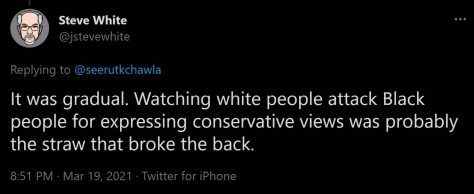
To start, consider this interesting article from Not The Bee, where they feature a whole bunch of moderates and classical liberals explaining why they walked away from the left because of the left’s descent into censorship and cancel culture.

Example:

In addition to that, there was an interesting survey about which group of people were more likely to self-report being diagnosed with a mental illness. It was the far-left people. And this data came from Pew Research, which skews to the left.

So, the point I wanted to make was this. The people on the left are only able to persist in being on the left, by exchanging reason and evidence for emotions and coercion. I admit that things look bad now, especially when you look at the powerful big corporations who are allying with the secular left mob. But I don’t think that people who are fixated on left-wing concerns are comfortable for moderate people to talk with. I think that secular leftism has left extreme leftists without the basic moral framework for respectful dialog. What’s more, I don’t think that secular leftists are very good at friendship, dating and especially marriage. You can’t marry someone who is lacks charity and self-control.

In view of this, I think that there is a tremendous opportunity to provide moderates and open-minded people with a safe place to express their views and seek truth. In order to be ready for them, I recommend that you prepare yourself to have respectful discussions by reading good books, and listening to good debates. The more you can stay calm while listening to different points of view, the more that people will want to speak to you. Please don’t rely on the church to train you. We’re not doing a very good job of training Christians about different points of view in the church. So, you’ll have to train yourself if you want to develop the ability to debate and disagree in a calm and respectful way.

Exciting news

By the way, I mentioned on the podcast that my Bible study partner and I are planning to start a podcast of our own. I explain what it will be about and about my co-host during the episode.

If you missed my previous appearance on Tim Stratton’s Free Thinking Ministries podcast, then you can listen to that here.

A lesson about men for marriage-minded women from the movie “High Noon”

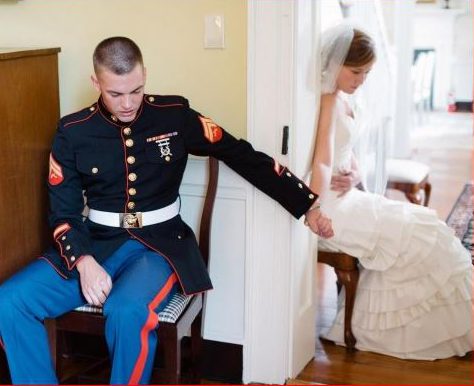
Marine prays with his wife on their wedding day

One of my favorite movies for explaining the differences between men and women is “High Noon” (1952).

Here’s the summary from IMDB:

Former marshal Will Kane (Gary Cooper) is preparing to leave the small town of Hadleyville, New Mexico, with his new bride, Amy (Grace Kelly), when he learns that local criminal Frank Miller has been set free and is coming to seek revenge on the marshal who turned him in. When he starts recruiting deputies to fight Miller, Kane is discouraged to find that the people of Hadleyville turn cowardly when the time comes for a showdown, and he must face Miller and his cronies alone.

The main theme of the film concerns Amy’s decision to break her wedding vows the very day that she makes them. She tells her new husband that he must bow to her will, and give up his male role as protector. When he explains his reasons for standing his ground to her practically (Miller will hunt them down) and morally (he has a duty protect the town), she dismisses both. She tells him that if he doesn’t run away from Miller and his gang with her, that she will get on the train and leave town by herself.

The intro of film shows the member’s of Miller’s gang assembling, and the words of the song explain the central conflict between husband and wife:

Here’s the part of the lyrics we care about:

The noonday train will bring Frank Miller.
If I’m a man I must be brave
And I must face that deadly killer
Or lie a coward, a craven coward,
Or lie a coward in my grave.

O to be torn ‘twixt love and duty!
S’posin’ I lose my fair-haired beauty!
Look at that big hand move along
Nearin’ high noon.

He made a vow while in State’s Prison,
Vow’d it would be my life or his’n
I’m not afraid of death, but O,
What will I do if you leave me?

Do not forsake me O my darlin’
You made that promise when we wed.
Do not forsake me O my darlin’
Although you’re grievin’, I can’t be leavin’
Until I shoot Frank Miller dead.

What’s interesting is that his new wife Amy apparently does not understand the meaning of wedding vows or the natural roles of good men as protectors of the weak, and fighters against evil. Although she vowed to stick by him and help him, the minute anything threatening appears that makes her feel unhappy, she abandons her vows and abandons her man. Let’s break down her mistakes now, using actual conversations from the movie.

First, she doesn’t understand or respect the man she married as a man:

Kane: [while riding out of town] It’s no good. I’ve got to go back, Amy.

Amy: Why?

Kane: This is crazy. I haven’t even got any guns.

Amy: Then let’s go on. Hurry.

Kane: No, that’s what I’ve been thinkin’. They’re making me run. I’ve never run from anybody before.

Amy: I don’t understand any of this.

Kane: [after looking at his vest watch] Well, I haven’t got time to tell ya.

Amy: Then don’t go back, Will.

Kane: I’ve got to. That’s the whole thing. [He turns the buggy around and rides back into town]

Her feelings and her desires for the world to be a happy place for her are so strong that they cloud her judgment.

Second, she doesn’t understand the threat posed by evil men:

More:

Kane: I sent a man up five years ago for murder. He was supposed to hang. But up North, they commuted it to life and now he’s free. I don’t know how. Anyway, it looks like he’s coming back.

Amy: I still don’t understand.

Kane: He was always wild and kind of crazy. He’ll probably make trouble.

Amy: But that’s no concern of yours, not anymore.

Kane: I’m the one who sent him up.

Amy: Well, that was part of your job. That’s finished now. They’ve got a new marshal.

Kane: He won’t be here until tomorrow. Seems to me I’ve got to stay. Anyway, I’m the same man with or without this. [He pins his badge on his vest]

Amy: Oh, that isn’t so.

Kane: I expect he’ll come lookin’ for me. Three of his old bunch are waiting at the depot.

Amy: That’s exactly why we ought to go.

Kane: They’ll just come after us, four of ’em, and we’d be all alone on the prairie.

Amy: We’ve got an hour.

Kane: What’s an hour?…What’s a hundred miles? We’d never be able to keep that store, Amy. They’d come after us and we’d have to run again, as long as we live.

Amy: No we wouldn’t, not if they didn’t know where to find us. Oh Will! Will, I’m begging you, please let’s go.

Kane: I can’t.

Amy: Don’t try to be a hero. You don’t have to be a hero, not for me.

Kane: I’m not trying to be a hero. If you think I like this, you’re crazy.

Instead of recognizing how her feelings are deceiving her about the threat and trusting her husband, she tries to force him to accept her mistaken view of reality by threatening to abandon him.

One of Kane’s ex-girlfriends has a talk with Amy, which helps her to understand who Kane is, and what is expected of her:

Amy: That man downstairs, the clerk, he said things about you and Will. I’ve been trying to understand why he wouldn’t go with me, and now all I can think of is that it’s got to be because of you…Let him go, he still has a chance. Let him go.

Helen: He isn’t staying for me. I haven’t spoken to him for a year – until today. I am leaving on the same train you are…What kind of woman are you? How can you leave him like this? Does the sound of guns frighten you that much?

Amy: I’ve heard guns. My father and my brother were killed by guns. They were on the right side but that didn’t help them any when the shooting started. My brother was nineteen. I watched him die. That’s when I became a Quaker. I don’t care who’s right or who’s wrong. There’s got to be some better way for people to live. Will knows how I feel about it.

Helen: I hate this town. I always hated it – to be a Mexican woman in a town like this.

Amy: I understand.

Helen: You do? That’s good. I don’t understand you. No matter what you say. If Kane was my man, I’d never leave him like this. I’d get a gun. I’d fight.

Amy: Why don’t you?

Helen: He is not my man. He’s yours.

Helen understands the need for a wife to stand by her man. But Amy’s response to evil is to shut her eyes and focus on feeling good and being happy. Notice that her “better way” is unspecified – it’s just a feeling she has that pacificism and no-violence will somehow “work” to stop evil. But in reality, pacifism is not a “better way” of dealing with evil – it does not work. Her pacifist response not only does not make evil go away, it actually encourages more evil. Weakness emboldens evildoers, and laying down your arms provokes them to do more evil. Will Kane knows this, but she won’t listen to him.

You can watch the final gunfight here, as well as Amy’s final decision:

So, this is why I really recommend this movie as a discussion-starter when you like a girl and are thinking of marrying her. It clarifies the essential problem with many young women today not being ready for marriage. To be fair, most women come around to respect their husbands and his different roles after they get married. However, the risk of divorce is so dangerous that it makes sense to bring it up for discussion before the marriage happens. Marriage is supposed to be an engine to serve God, and the success of that enterprise cannot be left to chance. You can’t just rely on the fact that she says the words of the vow, you have to check to see if she has a habit of keeping her promises when it goes against her own self-interest.

Ask yourself: Who are you, as a man? And does your woman accept that you have obligations to stand up to evil and do good ? Will she support you in your battle against evil, or will the marriage just be about her feelings and desires? I would especially beware of women who think that God is speaking to them through their feelings and desires. Look at her friends: are they practical and successful? Or are they irresponsible, unaccountable and reckless? Look at her father: does he have a plan for her, and does he lead her to be practical, frugal and hard-working? If you are not going to get an ally and a supporter in a wife, then you will not be able to serve God well, as a married man. Think about it.