
What can men do to save this 24-year-old woman from toxic masculinity?

I found an interesting set of articles from a young woman who graduated from Pennsylvania State University. In one, she explains how a man she “hooked up” with treated her poorly. I think I’ve been able to figure out what her approach to relationships is. In this post, I’ll explain her approach, and then discuss how social conservatives should solve problems like abortion and single motherhood.

NOTE: Please do not contact or harass this woman, just leave her alone.

So, here’s the first, most important article:

As someone who considers themselves a feminist, and I always thought that being sexual and unashamed was liberating and empowering. And for that reason, I never stopped myself from doing what I wanted to do.

In the article, she explains what it feels like to be used for sex and then ghosted by a man. She says that he never got to know her, and that makes her feel bad. What did he know about her? She says that she appeared to him as “just some blonde blacked out drunk”. In the article, she describes lying awake next to him after sex, then getting up to walk home at 5:30 in the morning. And this is not the only toxic man in her life.

She says:

This applies to more than a few people from my past… I started to realize this lifestyle wasn’t working after I hooked up with a guy who thought New England was a state. And yeah, I still hooked up with him after finding out this knowledge about him… And I don’t know if that says more about him that he didn’t know or more about me since I was willing to overlook that fact just to feel desired for a night.

Because I do turn to other people for validation. When I think about it objectively, 90% of the reason I hook-up with anyone is to feel good about myself.

She calls the search for validation an “addiction”:

I am addicted to validation I got from getting with people. I needed that rush of dopamine. I needed to know I am wanted. I got addicted to hooking up. Cause it was the only thing that made me feel good about myself for a while. When I was feeling down, I turned to boys… that didn’t care about anything except what I look like. And I have been blessed/cursed with a pretty fast metabolism and a naturally larger than average chest. So I always have known I could default to my looks for validation. It’s the easiest thing to get recognition for. And I got addicted to being told I was hot, or pretty, or whatever.

In other articles, she explains what kinds of men she’s looking for.

She’s a strong Democrat.

There are two kinds of Republicans: the ignorant and the evil. Either they are uninformed and dumb or aware of the world and other cultures other than their own and just too corrupt or bigoted to care. It’s just that being a Republican seems to now stand for religious nuts, rich, rednecks, and racists. This current election cycle has only increased my deep seeded hatred for the right-wingers even more.

And I can’t help myself, but whenever I find out someone who I have been talking to or have been friends with is a Republican, I let out an audible “ugh, really?” I can not hide my disgust.

In another article, she explains that she’s an atheist:

If singing songs, praying or going to confession makes you feel better, by all means, do what you have to do to feel better. As long as you aren’t hurting anyone, do what you want to do. As an atheist, it doesn’t offend me. I just choose not to do it.

For example, at thanksgiving dinner this year my family wanted to say grace before eating, but they know where I stand when it comes to religion.

She came out of a Christian family.

In another post, she explains why she cheated on her boyfriend:

I wish I could say I don’t know why I did it, but that would be a blatant lie. I found myself in someone else’s bed because… I didn’t have feelings for you anymore. If you were enough for me, then you would have been. But you weren’t. I stopped craving your company. I felt guilty, sure, but not enough to stop me from doing it multiple times. I didn’t care about you or how you felt. And as my feelings started to fade, yours only seemed to get stronger. I know that stings, but it’s true.

So when I would go out in that extra-lowcut dress you loved when I wore it around you and a cute guy would ask me to dance or to go hangout on the porch, I wouldn’t mention you. I guess I got tired of turning people down when I didn’t feel like there was any “good” reason to. I missed my freedom. I missed the exciting feelings that come with flirting with someone new. The whole giddy honeymoon phase, getting butterflies whenever someone texts you, stalking them on Facebook and pretending you know nothing about them, finding yourself daydreaming about the next time you hang out in class. But I think I skipped a step before getting with someone new– breaking it off with you first.

She seems to be guided primarily by her feelings. If the feelings are gone, they’re gone. She doesn’t try to pick a good guy and invest in the relationship so that she builds something. I don’t think this is going to work for her to avoid bad men.

So, what kind of man is she looking for? She writes about how interested she is in “hot” guys in many of her articles. Guys with height, looks, tattoos, piercings, displayed wealth validate her more than guys who want to protect, provide, and lead her in moral and spiritual areas. I don’t think that the men she is choosing will treat her well – they just have too many options to focus on building something good with one woman.

She’s looking for a man who agrees with her on abortion and same-sex marriage. So, men like that don’t want to protect unborn children, and take responsibility for their choices. And a man who supports same-sex marriage is siding with selfish adults. Every same-sex relationship deprives a child of their bio-mom or bio-dad. That’s not a good man to build a stable marriage with.

Regarding religion, she’s uncomfortable with men who have definite exclusive views. Religion, for her, is not about truth at all. You shouldn’t make any exclusive claims that make people feel bad. Instead, just have your private religion that makes you feel better. She’s looking for men who will not lead her in moral and spiritual areas. That’s not a good man to date, either.

How is it working out for her?

Her worldview – feminism, atheism, socialism – doesn’t have the resources necessary for her to approach relationships in a way that will work for her, in the long run. She is not a Christian, pro-marriage, or conservative. The men she chooses are not Christians, pro-marriage, or conservative. This isn’t going to lead to a relationship that is faithful, exclusive and permanent. If that’s what she wants, then she is choosing the wrong people to get there. And even if she doesn’t want commitment now, she will some day. It’s better for her to focus on finding a good man now and building him up. Men make better husbands and fathers the sooner women get in there and support them at those goals.

I always urge young women to get a STEM degree and work in the private sector until they marry and have their first child. To make them think logically, take responsibility for engineering results, and to feel validated by their achievements. I wanted to see what her college major was – because I suspected that she did not do STEM. While searching, I stumbled upon her dating profile (posted on 9Gag by her), two Instagram pages full of selfies, a Tumblr blog of sexy photos, and an Only Fans page. Her LinkedIn page showed no current or previous work experience. To me, these things are clear signs that she is head straight for evil men who will hurt her.

Saving women from toxic masculinity

I think what we have to do is focus on her disappointment with the results of her own choices, and challenge her to change her worldview and relationship choices. She needs to stop rewarding the hot bad boys with free sex. There are good men out there who want to protect, provide and lead on moral and spiritual issues. She needs to be taught to focus on those good men.
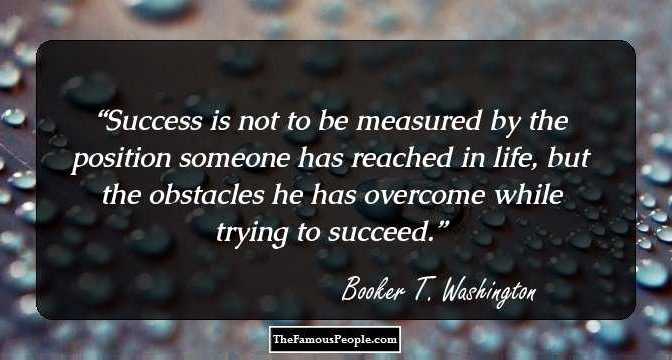
Why you should read “Up From Slavery” by Booker T. Washington

Lately, my friends have been very excited that I’m a non-white conservative. They want me to answer the grievances of BLM people, and explain from my own experiences what Christianity and conservative policies have to say about making the lives of non-whites better. My friend Wes recommended “Up From Slavery” by Booker T. Washington to help me focus my thoughts.

Here’s a summary of the book:

Dignity through Labor

Over the course of Up From Slavery, Washington develops the idea and ideal of dignity through labor. For Washington, the gravest aspect of the institution of slavery is the denigration of labor for both blacks and whites. Because the enslaved had no personal investment or return on their labor, they did not complete their work with an attitude toward improvement. Likewise, whites, largely deprived of meaningful labor, were robbed of the ability to achieve self-sufficiency. In both races, this produced personalities and characters that seek to escape labor. Washington emphasizes labor as the only way to make oneself useful in an interdependent, modern society. Throughout the whole of Up From Slavery, Washington searches for and obtains work. Further, once he obtains it, Washington completes all labor to best of his ability, no matter how lowly the task. At the Tuskegee Institute, Washington makes this idea and ideal a foundational ethos. All students who study at the Tuskegee Institute must learn a trade or industry alongside their more traditional academic pursuits. In addition, many of the buildings, most of the furniture, the wagons, and the materials used at the school are produced by students. This level of practical skill and diligence also acts as the foundation of Washington’s theory and program for racial uplift.

Selflessness, Desire to Be Useful to One’s Community

The people that Washington most admires and models himself after are those he labels selfless. Washington defines this as the willingness to work on the behalf of others. For Washington, this is not only about duty or labor, but also about the willingness to do one’s best for the benefit of the collective good. Washington believes that racial prejudice can be overcome if black people make themselves indispensable to their communities and their nation. The brick-making episode provides an example. Though the brick-making enterprise at Tuskegee felled three kilns before successfully producing bricks, the venture eventually proved successful and the school began to sell its bricks on the open market. Washington describes how whites who were unsympathetic or apathetic to the education of blacks and the overall project of the Tuskegee Institute were willing to purchase Tuskegee bricks due to their quality and convenience. Washington suggests that if black race can find their niche in society by fulfilling a need, then they can co-exist peacefully and productively with whites.

Impracticality of Political Agitation

Throughout Up From Slavery, Washington defends his ideas about racial advancement and uplift by subtly undermining the proposals of his critics. Though Washington does not explicitly state his objection to the strategies of specific thinkers like W.E.B. Dubois or even his predecessor, Frederick Douglass, he nevertheless highlights the wastefulness of political agitation for equal rights at every chance he gets. To do this, Washington shows that political agitation results in worse relations and outcomes than those that existed before. For example, when he goes home to Malden after his second year at the Hampton Institute, Washington finds that both the salt-furnace and the coal-mine are not in operation due to worker’s strikes. In Chapter IV, Washington describes how strikers usually spent all their savings during the strikes and returned to work in debt, but at the same wages. He raises the impracticality of political agitation again after his controversial Atlanta Exposition speech. After the success of his speech, he hypothetically asks if a black man would have been invited to give a speech had people agitated to put a black person on the program. He answers in the negative, saying that such opportunities can only arise through merit.

And here’s a summary of his most famous speech:

On September 18, 1895, Booker T. Washington was selected to give a speech that would open the Cotton States and International Exposition in Atlanta, Georgia. The speech, which is often referred to as the “Atlanta Compromise,” was the first speech given by an African American to a racially-mixed audience in the South. In it, Washington suggested that African Americans should not agitate for political and social equality, but should instead work hard, earn respect and acquire vocational training in order to participate in the economic development of the South. By doing so, eventually, he stated, African Americans would gain the respect of white society and be granted the rights of full citizenship.

There’s a free full audio version of the book, and the full text is online. I recommend this book to people of all races, because as the sexual anarchy brought on by feminism becomes widespread, the majority of the children of tomorrow will face the same kinds of challenges.

I see Washington’s ideas as consistent with a Christian worldview, where we don’t expect to be treated fairly. We expect sinful people to treat us badly. What Christianity says is to be patient, and focus on your relationship with God and loving your neighbor. And one way to love your neighbor is to sell them something valuable that you made through your labor. Another way is to work and save, and give to charity.

Government solutions to problems like racism and poverty aren’t a top priority for Christians. Most of all, we need the freedom to be good, and to do good. That’s priority one. You may not make your life better by being moral and diligent, but it’s rare that doing so causes you to harm yourself. It’s very important that you not harm yourself.

So, this dovetails nicely with my own story. My married non-white parents were not smart enough or willing enough to monitor my education, but they were clear that they wanted me to do well in order to find good-paying work. So I completed my BS and MS in a STEM field, and went to work right away, and I’ve been at it continuously for 22 years now. I save most of what I earn for charity and early retirement.

I’ve never experienced any of the racism or police brutality that American blacks complain about. And that’s because I follow what Washington is teaching. I dress in a clean way that doesn’t communicate danger to others. I’m careful to spend my time reading apologetics, economics and military history. I don’t listen to popular music or watch popular TV or movies. I don’t hang out with people who blame other people for their lack of success.

I got my first job by volunteering to do it for free on Saturdays for 7 months. My first full-time job salary after college was $50,000. Then I got a raise of $6,000 and then a raise of $9,000. I used to work 70 hour weeks in my 20s. I graduated college with $9,000 dollars in the black, because I went to a small local college and lived at home, and never spent any money on alcohol. My net worth is now about $1.35 million. By the way, the secret to becoming wealthy is to not spend money on showing off. You can be very generous to your friends and still get rich. Just never buy anything that is designed to communicate “status” to anyone. And never spend money on alcohol or chasing sex outside of marriage.

At no time did I accept that the problems defined by the secular left were my real problems. And at no time did I accept their “solutions” as real solutions to anything. As black economist Thomas Sowell writes, the “solutions” of the left are not effective at helping people like me. The “solutions” of the left are designed to make leftists feel better, and look more virtuous to others. You are much better off reading the Bible, Christian apologetics, free market economics, American military history, etc., and then respecting what you learn from that in your decision-making. I think that reading the right stuff is even more important than having good parents or attending church.

Knight and Rose Show – Episode 10: Do Evil and Suffering Disprove God?

Welcome to episode 10 of the Knight and Rose podcast! In this episode, we talk about the problems of evil and suffering, and how the Christian worldview answers them. If you like this episode, please subscribe to the podcast, and subscribe to our Youtube channel. We would appreciate it if you left us a 5-star review on Apple Podcasts or Spotify.

Podcast description:

Christian apologists Wintery Knight and Desert Rose discuss apologetics, policy, culture, relationships, and more. Each episode equips you with evidence you can use to boldly engage anyone, anywhere. We train our listeners to become Christian secret agents. Action and adventure guaranteed. 30-45 minutes per episode. New episode every week.

Episode 10:

Episode  Summary:

Wintery Knight and Desert Rose discuss whether evil and suffering disprove God’s existence. We distinguish between objective and subjective standards of good and evil. We distinguish between moral and natural evil. We talk about “morally sufficient reasons” why God might allow suffering, in order to obtain a greater good. We talk about whether humans can know why God allows evil or suffering, and whether God should tell us. We discuss specific Christian doctrines that are related to suffering and evil.

Speaker biographies

Wintery Knight is a black legal immigrant. He is a senior software engineer by day, and an amateur Christian apologist by night. He has been blogging at winteryknight.com since January of 2009, covering news, policy and Christian worldview issues.

Desert Rose did her undergraduate degree in public policy, and then worked for a conservative Washington lobbyist organization. She also has a graduate degree from a prestigious evangelical seminary. She is active in Christian apologetics as a speaker, author, and teacher.

Notes

When WK mentions “grounding”, he means the way a parent “grounds” a child for misbehaving, in order to teach them standards of behavior while they are young. So, for example, parents might ground a child for being late to school. But it’s better for the child to learn to be on time by being grounded by his parents, than for the grown-up child (adult) to learn to be on time by being fired by his employer.

If you like the story of Neil, and his thoughts about having cancer several times, you can check out his blog “Eternity Matters“. He is an amazing authentic, practical Christian man, who has led an amazing life of adventure and action for the Boss.

References

Matt Dillahunty Debates David Robertson on Atheism, Morality and Evil by Wintery Knight

Alvin Plantinga’s Free Will Defense by Got Questions

Stephen Cowan and William Alston on the Limitations of Human Knowledge Related to the Problems of Evil and Suffering by Wintery Knight

William Lane Craig Debates Walter Sinnott-Armstrong: Evil, Suffering and God by Wintery Knight

Belief Map Discussion of the Problem of Evil by Blake Giunta

Belief Map Discussion of the Hiddenness of God by Blake Giunta

Podcast RSS feed:

https://feed.podbean.com/knightandrose/feed.xml

You can use this to subscribe to the podcast from your phone or tablet. I use the open-source AntennaPod app on my Android phone.

Podcast channel pages:

Video channel pages:

Music attribution:

Strength Of The Titans by Kevin MacLeod
Link: https://incompetech.filmmusic.io/song/5744-strength-of-the-titans
License: https://filmmusic.io/standard-license