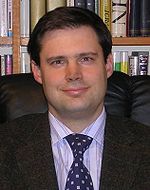
Peter Williams lectures on the historical reliability of the gospels

Peter J. Williams
Peter J. Williams

This is a lecture I found from British historian Dr. Peter J. Williams.

Here’s the main lecture: (54 minutes)

And here’s the Q&A: (9 minutes)

About Peter Williams:

Peter J. Williams is the Warden (CEO) of Tyndale House and a member of the Faculty of Divinity in the University of Cambridge. He received his MA, MPhil and PhD, in the study of ancient languages related to the Bible from Cambridge University. After his PhD, he was on staff in the Faculty of Divinity, Cambridge University (1997–1998), and thereafter taught Hebrew and Old Testament there as Affiliated Lecturer in Hebrew and Aramaic and as Research Fellow in Old Testament at Tyndale House, Cambridge (1998–2003). From 2003 to 2007 he was on the faculty of the University of Aberdeen, Scotland, where he became a Senior Lecturer in New Testament and Deputy Head of the School of Divinity, History and Philosophy. In July 2007 he became the youngest Warden in the history of Tyndale House. He also retains his position as an honorary Senior Lecturer in Biblical Studies at the University of Aberdeen.

Summary of the lecture:

  • What if the stories about Jesus are legendary?
  • were the gospels transmitted accurately?
  • were the gospels written in the same place as where the events happened?
  • do the gospel authors know the customs and locations where the events happened?
  • do the gospels use the right names for the time and place where the events took place?
  • do the gospels disambiguate people’s names depending on how common those names were?
  • how do the New Testament gospels compare to the later gnostic gospels?
  • how do the gospels refer to the main character? How non-Biblical sources refer to Jesus?
  • how does Jesus refer to himself in the gospels? do the later Christians refer to him that way?
  • how does Jesus teach? do later Christians teach the same way?
  • why didn’t Jesus say anything about early conflicts in the church (the Gentiles, church services)?
  • did the writers of the gospels know the places where the events took place?
  • how many places are named in the gospels? how about in the later gnostic gospels?
  • are the botanical details mentioned in the gospels accurate? how about the later gnostic gospels?

And here are the questions from the audience:

  • how what about the discrepancies in the resurrection narratives that Bart Ehrman is obsessed with?
  • what do you think of the new 2011 NIV translation (Peter is on the ESV translation committee)?
  • how did untrained, ordinary men produce complex, sophisticated documents like the gospels?
  • is oral tradition a strong enough bridge between the events and the writers who interviewed the eyewitnesses?
  • what does the name John mean?
  • why did the gospel writers wait so long before writing their gospels?
  • do you think that Matthew and Luke used a hypothetical source which historians call “Q”?
  • which gospel do critical historians trust the least and why?

I really enjoyed watching this lecture. He’s getting some of this material from Richard Bauckham’s awesome book “Jesus and the Eyewitnesses”, so if you aren’t familiar with it, you can get an idea of what’s in it. Peter Williams is a lot of fun to listen to – an excellent speaker.

You can read an interview with Peter Williams here on Between Two Worlds.

And you can listen to the Peter Williams vs Bart Ehrman debate. That link contains a link to the audio of the debate as well as my snarky summary. It’s very snarky.

And Apologetics 315 also posted Peter Williams’ assessment of Bart Ehrman’s “Misquoting Jesus”.

Did the universe have a beginning or has it always existed?

Here’s a short article from the Massachusetts Institute of Technology’s Physics arXiv blog. (H/T Wes)

Excerpt:

The Big Bang has become part of popular culture since the phrase was coined by the maverick physicist Fred Hoyle in the 1940s. That’s hardly surprising for an event that represents the ultimate birth of everything.

However, Hoyle much preferred a different model of the cosmos: a steady state universe with no beginning or end, that stretches infinitely into the past and the future. That idea never really took off.

In recent years, however, cosmologists have begun to study a number of new ideas that have similar properties. Curiously, these ideas are not necessarily at odds with the notion of a Big Bang.

For instance, one idea is that the universe is cyclical with big bangs followed by big crunches followed by big bangs in an infinite cycle.

Another is the notion of eternal inflation in which different parts of the universe expand and contract at different rates. These regions can be thought of as different universes in a giant multiverse.

So although we seem to live in an inflating cosmos,  other universes may be very different. And while our universe may look as if it has a beginning, the multiverse need not have a beginning.

Then there is the idea of an emergent universe which exists as a kind of seed for eternity and then suddenly expands.

So these modern cosmologies suggest that the observational evidence of an expanding universe is consistent with a cosmos with no beginning or end. That may be set to change.

Today, Audrey Mithani and Alexander Vilenkin at Tufts University in Massachusetts say that these models are mathematically incompatible with an eternal past. Indeed, their analysis suggests that these three models of the universe must have had a beginning too.

Their argument focuses on the mathematical properties of eternity–a universe with no beginning and no end. Such a universe must contain trajectories that stretch infinitely into the past.

However, Mithani and Vilenkin point to a proof dating from 2003 that these kind of past trajectories cannot be infinite if they are part of a universe that expands in a specific way.

They go on to show that cyclical universes and universes of eternal inflation both expand in this way. So they cannot be eternal in the past and must therefore have had a beginning. “Although inflation may be eternal in the future, it cannot be extended indefinitely to the past,” they say.

They treat the emergent model of the universe differently, showing that although it may seem stable from a classical point of view, it is unstable from a quantum mechanical point of view. “A simple emergent universe model…cannot escape quantum collapse,” they say.

The conclusion is inescapable. “None of these scenarios can actually be past-eternal,” say Mithani and Vilenkin.

Since the observational evidence is that our universe is expanding, then it must also have been born in the past. A profound conclusion (albeit the same one that lead to the idea of the big bang in the first place).

They link to this peer-reviewed paper featuring Alexander Vilenkin at the end of the article, which was published in the Proceedings of the 10th Incternational Conference on Gravitation, Astrophysics and Cosmology, Quy-Nhon, Vietnam, December 2011.

The paper concludes:

Did the universe have a beginning?

At this point, it seems that the answer to this question is probably yes. Here we have addressed three scenarios which seemed to offer a way to avoid a beginning, and have found that none of them can actually be eternal in the past. Both eternal inflation and cyclic universe scenarios have Hav > 0, which means that they must be past-geodesically incomplete. We have also examined a simple emergent universe model, and concluded that it cannot escape quantum collapse. Even considering more general emergent universe models, there do not seem to be any matter sources that admit solutions that are immune to collapse.

So where do we stand? There is no eternal universe. There was a beginning to space and time. The entire physical universe came into being out of nothing at some point in the past.

Here’s my previous post on the BVG theorem that explains a bit more about how this data applies to the question of God’s existence.

EPA administrator boasts about crucifying oil and gas firms

Tom sent me this article from CNS News.

Excerpt:

Sen. James Inhofe (R-OK) took to the Senate floor today to draw attention to a video of a top EPA official saying the EPA’s “philosophy” is to “crucify” and “make examples” of oil and gas companies – just as the Romans crucified random citizens in areas they conquered to ensure obedience.

Inhofe quoted a little-watched video from 2010 of Environmental Protection Agency (EPA) official, Region VI Administrator Al Armendariz, admitting that EPA’s “general philosophy” is to “crucify” and “make examples” of oil and gas companies.

In the video, Administrator Armendariz says:

“I was in a meeting once and I gave an analogy to my staff about my philosophy of enforcement, and I think it was probably a little crude and maybe not appropriate for the meeting, but I’ll go ahead and tell you what I said:

“It was kind of like how the Romans used to, you know, conquer villages in the Mediterranean.  They’d go in to a little Turkish town somewhere, they’d find the first five guys they saw and they’d crucify them.

“Then, you know, that town was really easy to manage for the next few years.”

“It’s a deterrent factor,” Armendariz said, explaining that the EPA is following the Romans’ philosophy for subjugating conquered villages.

Soon after Armendariz touted the EPA’s “philosophy,” the EPA began smear campaigns against natural gas producers, Inhofe’s office noted in advance of today’s Senate speech:

“Not long after Administrator Armendariz made these comments in 2010, EPA targeted US natural gas producers in Pennsylvania, Texas and Wyoming.

“In all three of these cases, EPA initially made headline-grabbing statements either insinuating or proclaiming outright that the use of hydraulic fracturing by American energy producers was the cause of water contamination, but in each case their comments were premature at best – and despite their most valiant efforts, they have been unable to find any sound scientific evidence to make this link.”

We want to be careful with environmental regulations so that we don’t hurt job creators. We need to work to have money, and we shouldn’t have to give up our prosperity in order to make a few bureaucrats feel as if they are “saving the world”.