
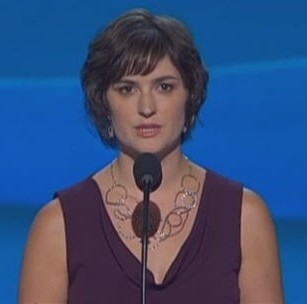
Darren Lund loses second attempt to punish Canadian pastor for exercising free speech

Dr. Darren Lund, Professor of Education at the University of Calgary

From Life Site News.

Excerpt:

Pastor Stephen Boissoin, who was found guilty in 2007 by a provincial human rights tribunal of “hate speech” for writing a letter to the editor expressing his views on homosexuality, has been strongly vindicated after the Alberta Appeals Court dismissed an appeal of a lower court decision in Boissoin’s favor.

The court also ordered Boissoin’s accuser, homosexual activist Dr. Darren Lund, an assistant professor at the University of Calgary, to pay Boissoin’s attorney fees.

Appeals Court Justice Clifton O’Brien concurred with the lower court that Boissoin’s letter “was not likely to expose homosexuals to hatred or contempt within the meaning of the Alberta statute.”

In 2009, Court of Queen’s Bench Justice Earl C. Wilson overturned the 2007 ruling by the Alberta Human Rights Commission (AHRC), which ordered Boissoin to desist from expressing his views on homosexuality in any sort of public forum, ordered him to pay damages equivalent to $7,000 to Lund and called for Boissoin to personally apologize to Lund via a public statement in the local newspaper.

[…]“Matters of morality, including the perceived morality of certain types of sexual behavior, are topics for discussion in the public forum,” concluded Justice O’Brien. “Freedom of speech does not just protect polite speech.”

Boissoin’s lawyer, Gerald Chipeur, Q.C., who is an allied attorney with Alliance Defending Freedom (ADF), pointed out that not only did Justice O’Brien throw out the AHRC’s decision, but ruled that a human rights panel had no constitutional authority to preside in such circumstances.

“This was a watershed case,” Chipeur said. “Very important, in terms of freedom of expression and religious liberty. Going forward, it will be extremely difficult, if not impossible, for religious or political debate to be found in breach of Alberta’s current human rights laws.”

“Christians and other people of faith should not be fined or jailed for expressing their political or religious beliefs. There is no place for thought control in a free and democratic society,” Chipeur remarked. “The tools of censorship should not be available to prohibit freedom of religious expression in Canada. The court rightly found that this type of religious speech is not ‘hate’ speech.”

Gay activists can sometimes go too far and end up suppressing basic human rights like free speech and freedom of association.

Consider the case of the gay activist Floyd Lee Corkins II and the recent shooting at the Family Research Council that he was involved with. We need to be careful in the United States about encouraging gay activists like Floyd Lee Corkins II, who are hostile to basic human rights like free speech and freedom of association. The fascistic tendencies of the secular left have resulted in much violence in the past century, and you can even see it today in places like North Korea, where free speech and freedom of religion are not allowed. I’m sure that Stalin thought that what he was doing to the millions of people who disagreed with his agenda was “social justice”, too.

Related posts

William Lane Craig debates Arif Ahmed: Does God Exist?

I thought that I would summarize a debate that occurred at Cambridge University between Dr. William Lane Craig and Dr. Arif Ahmed. Everyone knows Dr. Craig, but I should say that Arif Ahmed is a Senior Lecturer in the Faculty of Philosophy at Cambridge University.

The full MP3 is available here.

Below, I’ve summarized the two opening speeches from each debater.

Here is Dr. Craig’s opening speech: (1:24)

Craig’s case for God.

1) The origin of the universe (3:10)
– an eternal universe is not compatible with mathematics
– the impossibility of an actual infinite in nature (cites David Hilbert)
– an eternal universe is not compatible with science
– the big bang theory requires space and time to come into being out of nothing (cites PCW Davies)
– even radical alternative theories require an absolute beginning (cites Stephen Hawking)
– atheists must believe that the origin of space and time came from nothing and by nothing (cites Anthony Kenny)

Argument:
P1.1) Whatever begins to exist requires a cause
P1.2) The universe begin to exist
C1.3) Therefore, the universe requires a cause

What can the cause be:
– it must be eternal, because it caused time to exist
– it must be non-physical, because it caused space to begin to exist

Why must the cause of the universe be a person instead of a force?
Only minds can exist non-physically
– the only non-physical entities we know of are abstract objects and minds
– but abstract objects can’t cause physical effects
– therefore, the cause universe is a personal mind

Only minds can cause effects in time without antecedent conditions
– causally prior to the universe’s beginning, there were no antecedent conditions
– the only entity capable of acting freely, not based on antecedent conditions, are free agents
– therefore, the cause of the universe is a free agent

2) The fine-tuning of the initial conditions of the universe (9:15)
– the fine-tuning of the universe is supported by science
– the constants and quantities given in the big bang can take any of a range of values
– the actual values are within a extremely narrow range that supports the requirements of life
– he gives the example of the fine-tuning of the gravitational constant
– he gives the example of the fine-tuning of the weak force

Argument:
P2.1) The fine-tuning is either due to law, chance or design
P2.2) It is not due to law, because the numbers are independent of the law
P2.3) It cannot be due to chance, the life-permitting band is tiny compared to the possible values
C2.4) Therefore, the fine-tuning is due to design

3) Objective moral values are plausibly grounded in God (12:41)
– objective moral values are values that exist and are binding regardless of what individuals think
– objective moral values cannot be rationally grounded on an atheistic worldview (cites Michael Ruse)
– atheists can recognize moral values and act on them, but they cannot explain their origin and existence
– atheists can only appeal to personal or cultural preferences to say what is right and wrong
– the existence of objective moral is undeniable

Argument:
P3.1) If God does not exist, then objective moral values do not exist
P3.2) Objective moral values do exist
C3.3) Therefore, God exists

4) The resurrection of Jesus implies that God exists (16:04)
– if the resurrection of Jesus happened, then it would be a miracle, implying that God exists
– three facts are recognized by the majority of scholars
– the tomb was found empty after his death (cites Jacob Kramer)
– individuals and groups saw Jesus after his death (cites Gerd Ludemann)
– the belief in the resurrection of Jesus was totally unexpected (cites N.T. Wright)
– naturalistic explanations of these facts have been rejected by the consensus of scholars

Argument:
P4.1) The 3 minimal facts are established
P4.2) The hypothesis that God raised Jesus from the dead is the best explanation for these facts
P4.3) The hypothesis that God raised Jesus from the dead entails that God exists
C4.4) Therefore, God exists

5) God can be known directly by personal experience (20:02)
– God can be experienced just like you experience a relationship with human persons

Dr. Ahmed’s first opening speech: (22:10)

Rebuttal to Craig’s case for God.

0) Craig is wrong about faith and reason (25:20)
– Craig’s book Reasonable Faith, he makes a number of statements about faith and reason
– He writes that Christianity is not accountable to reason if reason goes against Christianity
– He writes that the truth of Christianity is knowable without rational arguments
– He writes that even if there are no reasons to believe, and many reasons to disbelieve, humans are still obligated to believe
– Question for Craig: is Christianity reasonable or isn’t it? Do reasons matter or don’t they?

1) Response to Craig’s first argument: the origin of the universe (28:27)
– what mathematicians say about the contradictory nature of subtraction and division for actual infinities is wrong
– what cosmologists and physicists say about the beginning of time is wrong, every event follows another one, there is no first event
– even if the universe is 15 billion years old, the act of Creation requires time and there was no time prior to the supposed beginning of the universe for God to act in
– the cause of the universe need not be a personal agent
– all minds are made of matter so a mind cannot be the cause of the universe, because all the people who pre-suppose materialism like me think that minds must be made of matter
– it is impossible for a person to act outside of time,because all the persons I know act in time
– why did God wait 15 billion years before creating humans and relating to them? – i wouldn’t have done it that way

2) Response to Craig’s second argument: the fine-tuning of the creation (32:38)
– where do these probabilities that Craig is using come from?

3) Response to Craig’s third argument: the moral argument (34:07)
– I have personal preferences about what counts as right and wrong, and they are superior to God’s preferences
– moral intuitions are not a good way of discovering objective moral values, so therefore objective moral values don’t exist

4) Response to Craig’s fourth argument: the resurrection (36:00)
– the number of eyewitnesses is not enough, because groups number of eyewitnesses can be fooled by illusions, as in David Copperfield illusions
– the Gospels contradict themselves, e.g. – the story of Matthew’s earthquake and walking dead isn’t in Mark – so that’s a contradiction, so the Gospels are not reliable sources for Craig’s 3 minimal facts

5) Response to Craig’s fourth argument: personal experience (37:30)
– there are many different religious experiences because there are many different religions
– if lots of people disagree about something, then no one can be right

Ahmed’s case against God.

1) Absence of evidence is evidence of absence (39:00)
– if there is are no reasons to believe in God, then this alters reality to make it true that he doesn’t exist

2) The inductive argument from evil (40:04)
– some evil is gratuitous – events cause people to suffer, and has no benefit that I can see, based on my limited knowledge in time and space and my personal preference of what counts as a benefit and what doesn’t
– God would not have allowed people to suffer, because God’s job is to make us feel happy in this life

3) Belief in God makes people evil (41:52)
– all genuinely religious people are very immoral, according to my personal preferences about what counts as right and wrong

Further study

In case you are wondering about his inductive argument from evil, please read this summary on the problems of evil and suffering, which is taken from my list of arguments for and against Christian theism.  Keep in my mind that I am a software engineer with two degrees in computer science… not philosophy!

Craig mentions a paper by the late William P. Alston of Syracuse University in his rebuttal to the inductive problem of evil. The paper lists six limitations on human cognitive capacities that make it difficult for humans to know that some instance of  apparently gratuitous evil really is gratuitious – that God has no morally sufficient reason for permitting this specific instance of evil.  Since Ahmed is making the claim that some evil is gratuitous, he bears the burden of proof.

What North Korea teaches Christians about the importance of politics and economics

Christian apologist Frank Turek writes about it at Townhall.

Excerpt:

When I hear Christians saying we ought not get involved in politics but just “preach the Gospel,” I show them this satellite picture of the Korean peninsula. Here we see a homogenous population of mostly Koreans separated by a well-fortified border. South Korea is full of freedom, food and productivity—it’s one of the most Christianized countries in the world. North Korea is a concentration camp. They have no freedom, no food, and very little Christianity.

What’s the primary reason for the stark difference between these two countries? Politics. The South politically allows freedom, while the North does not.

Ironically, Christians who shun politics to supposedly advance the Gospel are actually allowing others to stop the Gospel. How so? Because politics and law affects one’s ability to preach the Gospel! If you think otherwise, visit some of the countries I have visited—Iran, Saudi Arabia and China. You cannot legally “preach the Gospel” in those countries—or practice other aspects of your religion freely—because politically they’ve ruled it out as they have in North Korea.

In fact, politics affects virtually every area of your life through the laws made by government. So if you care about your family, business, church, school, children, money, property, home, security, healthcare, safety, freedom, and your ability to “preach the Gospel,” then you should care about politics.

Politics affects everything, which is why leaders throughout the Bible—including Joseph, Moses, Daniel, Nehemiah, Mordecai, Esther, John the Baptist, and Paul— “went political” to influence civil governments to govern morally. Even Jesus himself got involved in politics when he publically chastised the Pharisees—the religious and political leaders of Israel—for neglecting “the more important matters of the law.”

[…]But what can Christians do? After all, we can’t legislate morality, can we? News flash: All laws legislate morality! Morality is about right and wrong and all laws declare one behavior right and the opposite behavior wrong. So the question is not whether we can legislate morality, but “Whose morality will we legislate?”

[…]When we fail to legislate morally, others impose immorality. For example, totalitarian political correctness is already imposed in states such as Massachusetts where the implications of same-sex marriage override the religious liberties of businesses, charities and even parents. As documented here and illustrated here, same sex marriage prevents you from running your business, educating your children, or practicing your religion in accord with your Conscience. And soon, as is the case in Canada, you may not be able to merely speak Biblically about homosexual behavior. That is because those who say they are fighting for “tolerance” are often the most intolerant.

Unless Christians begin to influence politics and the culture more significantly, we will continue to lose the very freedoms that enable us to live according to our beliefs and spread the Gospel all over the world. That’s why you should not vote for candidates because of their race or religion, but because they will govern morally on the more important matters of the law—life, marriage and religious freedom.

Dr. Turek says that some societies make it easier for us to carry out our responsibilities as Christians, such as evangelism. That’s true. But I want to make a different point from Dr. Turek related to the point that he made.

I get a lot of e-mails from people complaining that I spend too much time on fiscal issues, and especially on foreign policy. But I really think that Christians need to branch out and read widely about these issues, too. The more we know about everything, the better we will be able to connect what the Bible says to every area, and the smarter we will be at laying out plans for our lives and achieving the good goals we set for ourselves as part of our relationship with God.

It’s always better to know how things work. What good is it to say that you want to achieve some aim like helping the poor or making the world more peaceful unless you first study economics and foreign policy so that you will know how to achieve it? Many people try to achieve these goals by embracing policies that sound good, but they actually achieve the exact opposite ends that you set out to achieve.  If you want to drive a car to get somewhere, you must first learn how to drive a car. Why should faith be any different than anything else? Don’t take positions based on feelings or peer pressure, get informed and make a right judgment.