How well are Democrat economic policies working in Venezuela and Argentina?

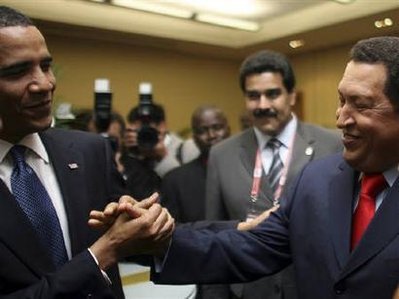
Are Barack Obama and Hugo Chavez very different?

I have been reflecting sorrowfully on some of the outright lies spoken by the President in his recent State of the Union address. I am thinking specifically of lies that are almost universally rejected by economists across the ideological spectrum – lies so obvious that you would have to be an illiterate peasant living in a village in Venezuela or Argentina in order to believe it.

Three of his lies stand out – the minimum wage lie, the global warming lie and women pay gap lie. Each of these lies is as false as saying that the Sun goes around the Earth, or that the Earth is flat. What bothers me is not that the President spoke them, because I expect someone with no scientific background and no private sector experience to say things that are not true. But what bothers me is that the American electorate is now incapable of identifying such obvious lies.

Let’s take a look at this article from the leftist Washington Post.

Excerpt:

On aisle seven, among the diapers and fabric softener, the socialist dreams of the late Venezuelan president Hugo Chávez looked as ragged as the toilet paper display.

Employees at the Excelsior Gama supermarket had set out a load of extra-soft six-roll packs so large that it nearly blocked the aisle. To stock the shelves with it would have been pointless. Soon word spread that the long-awaited rolls had arrived, and despite a government-imposed limit of one package per person, the checkout lines stretched all the way to the decimated dairy case in the back of the store.

[…]Pathetic, in a country with the world’s largest petroleum reserves and oil prices at nearly $95 a barrel, yet unable to supply basic goods because of its crumbling local currency and a shortage of U.S. dollars.

[…]Nearly a year after Chávez’s death of complications from cancer at age 58, his hand­picked successor, Nicolás Maduro, is struggling to contain food shortages, spiraling inflation and rampant crime.

The arrival of basic staples such as cooking oil, chicken, flour or milk brings Venezuelans running to supermarkets and touches off surreal mob scenes, even as the government imposes price caps and rationing to prevent hoarding.

Maduro squeaked past opposition candidate Henrique Capriles in April’s presidential election, and Maduro’s United Socialist Party won enough races in Dec. 8 local elections to push back against perceptions that Chávez loyalists were deserting him. Just before the vote, with television cameras rolling, he sent soldiers into an appliance store accused of price gouging and ordered huge markdowns on televisions and microwaves. Apparently it gave his party a final boost at the polls.

There’s not a dime worth of difference in terms of vision between the Democrats in the USA and the socialists in Venezuela. The same people who think that sending armed troops to nationalize industry in Venezuela are nationalizing health care in this country right now. We will eventually see the same lines for health care that form in Canada and the UK. When you tax, regulate, and even attack those who provide services and products, you get shortages. Period. And yet big government redistribution of wealth seems to be winning over low-information voters in Venezuela and in the United States.

Are Barack Obama and Cristina Kirchner very different?

Venezuela has 56% currency inflation right now thanks to “stimulus” spending, but that is not the only place where Democrat policies are in force. Consider this article from the leftist Guardian about Argentina, where Democrat “stimulus” spending policies have led to rising prices of consumer goods.

Excerpt:

Every morning around 8am, the stern-faced cabinet chief Jorge Capitanich stands behind a podium at the Casa Rosada presidential palace for a televised verbal blast at the perceived enemies of the “victorious decade” presided over by the current president and her husband, the late Nestor Kirchner. Without naming them, Capitanich lashes out against the “visible and invisible” politicians, labour representatives, businessmen and journalists he blames for the sudden collapse of the peso and the explosive price increases that followed the forced devaluation.

Argentina’s economic earthquake has placed a huge question mark over the political future of the stateswoman so powerful she is referred to as Queen Cristina by both the opposition press and her supporters. In the past week, Capitanich has attempted to pin the price lurch on faceless foreign speculators, whom he accuses of a “strategy of domination” to gain control of Argentina’s oil and freshwater reserves, pandering to the widespread belief here, often underlined by the president in her speeches, that “vultures” of the leading industrial countries harbour secret plans to siphon off natural reserves from this resource-rich South American nation.

Capitanich has also blamed “anti-patriotic” farmers and large retailers, allegedly in league with independent, corruption-probing journalists, of fuelling price rises by “generating psychological action of permanent destabilisation” against Fernández de Kirchner.

But critics of the government point to inept administration and populist spending by a government that considers itself to be leading a revolution against Argentina’s erstwhile oligarchy.

Just like Obama, the socialists in Argentina are always looking to blame others for the problems they cause with their own policies. The problem is never bad policies that attack job creating businesses, it’s always a lack of loyalty and patriotism. We are disloyal to our economically-illiterate elites who only want to help us, they say. Leftist economic policies can work if we just believe in the leader, they say. And many ignorant peasants believe that, even when the failure is right in front of them.

Not just in Venezuela and Argentina

Of course in America, we have a different kind of policy failure. We have Obamacare. Conservatives warned the public about it for years, but our peasants went ahead and voted for it anyway when we re-elected a know-nothing in 2012. He said that we could keep our health care plans and that we could keep our doctors. He said he would reduce the cost of health care. And we believed him. We believed him because the uneducated stand-up comedians we watched on the Comedy Channel made us believe him.

Take a look at the peasants realizing that not every piece of happy talk read from a teleprompter by a celebrity is automatically true:

Human Events explains the story behind that video.

Excerpt:

All of Barack Obama’s phony rhetoric about how wonderfully the Affordable Care Act is chugging along means less than nothing compared to the cold reality that awaited the employees of a Pennsylvania company, as a local news station captured their stunned reactions to ObamaCare price hikes in real time.

[…][They] learned they’d be facing premium hikes of over 30 percent, with higher deductibles.  Even their co-payments for doctor visits have doubled.  And the numbers hitting these good people aren’t as bad as the premiums and deductibles slamming into other ObamaCare victims around the country.  The great second wave of damage in the larger group insurance market is about to get under way.

“I don’t know how President Obama thinks he’s helping us,” one employee sighs, “because we can’t afford this, we can’t afford to pay these co-pays, to pay these deductibles on what we’re making.”

Another repeats the sarcastic but accurate observation made by ObamaCare critics since day one: “there’s nothing affordable” about the Affordable Care Act.  It is observed that average people can’t just cough up three hundred dollars a month, because that’s a big chunk of a rent check or mortgage payment.  One shell-shocked woman, looking at a $400 monthly premium increase plus a $4000 deductible, confesses she has no idea how she’s going to pay it.

[…]Needless to say, none of these people will be invited to come on stage with President Obama and talk about their ACA experiences.  They’re learning the hard way that political control of an industry means distant commissars picking winners and losers.  You can do everything right and still get socked by the biggest middle-class tax increase in history, because the imperial President and his court have decided other people need lower premiums, and you must be squeezed to pay for it.

We have a generation of people who have been educated to value rhetoric from celebrities over the Constitution and sound economics in general. We must not think that we can be as ignorant as South American peasants now and avoid the consequences of that ignorance. We need to turn off the TV and pick up the Thomas Sowell book.

Related posts

Two famous near-death experiences: Pam Reynolds and Maria’s tennis shoe

Dr. Mario Beuregard writes about out of body experiences and near death experiences in the leftist Salon.com, of all places.

NDE number one:

Pam was brought into the operating room at 7:15 a.m., she was given general anesthesia, and she quickly lost conscious awareness. At this point, Spetzler and his team of more than 20 physicians, nurses, and technicians went to work. They lubricated Pam’s eyes to prevent drying, and taped them shut. They attached EEG electrodes to monitor the electrical activity of her cerebral cortex. They inserted small, molded speakers into her ears and secured them with gauze and tape. The speakers would emit repeated 100-decibel clicks—approximately the noise produced by a speeding express train—eliminating outside sounds and measuring the activity of her brainstem.

At 8:40 a.m., the tray of surgical instruments was uncovered, and Robert Spetzler began cutting through Pam’s skull with a special surgical saw that produced a noise similar to a dental drill. At this moment, Pam later said, she felt herself “pop” out of her body and hover above it, watching as doctors worked on her body.

Although she no longer had use of her eyes and ears, she described her observations in terms of her senses and perceptions. “I thought the way they had my head shaved was very peculiar,” she said. “I expected them to take all of the hair, but they did not.” She also described the Midas Rex bone saw (“The saw thing that I hated the sound of looked like an electric toothbrush and it had a dent in it … ”) and the dental-drill sound it made with considerable accuracy.

Meanwhile, Spetzler was removing the outermost membrane of Pamela’s brain, cutting it open with scissors. At about the same time, a female cardiac surgeon was attempting to locate the femoral artery in Pam’s right groin. Remarkably, Pam later claimed to remember a female voice saying, “We have a problem. Her arteries are too small.” And then a male voice: “Try the other side.” Medical records confirm this conversation, yet Pam could not have heard them.

I like the second one even better than the first.

NDE number two:

Maria was a migrant worker who had a severe heart attack while visiting friends in Seattle. She was rushed to Harborview Hospital and placed in the coronary care unit. A few days later, she had a cardiac arrest but was rapidly resuscitated. The following day, Clark visited her. Maria told Clark that during her cardiac arrest she was able to look down from the ceiling and watch the medical team at work on her body. At one point in this experience, said Maria, she found herself outside the hospital and spotted a tennis shoe on the ledge of the north side of the third floor of the building. She was able to provide several details regarding its appearance, including the observations that one of its laces was stuck underneath the heel and that the little toe area was worn. Maria wanted to know for sure whether she had “really” seen that shoe, and she begged Clark to try to locate it.

Quite skeptical, Clark went to the location described by Maria—and found the tennis shoe. From the window of her hospital room, the details that Maria had recounted could not be discerned. But upon retrieval of the shoe, Clark confirmed Maria’s observations. “The only way she could have had such a perspective,” said Clark, “was if she had been floating right outside and at very close range to the tennis shoe. I retrieved the shoe and brought it back to Maria; it was very concrete evidence for me.”

This case is particularly impressive given that during cardiac arrest, the flow of blood to the brain is interrupted. When this happens, the brain’s electrical activity (as measured with EEG) disappears after 10 to 20 seconds. In this state, a patient is deeply comatose. Because the brain structures mediating higher mental functions are severely impaired, such patients are expected to have no clear and lucid mental experiences that will be remembered. Nonetheless, studies conducted in the Netherlands, United Kingdom, and United States have revealed that approximately 15 percent of cardiac arrest survivors do report some recollection from the time when they were clinically dead. These studies indicate that consciousness, perceptions, thoughts, and feelings can be experienced during a period when the brain shows no measurable activity.

Here’s the author bio:

Mario Beauregard is associate research professor at the Departments of Psychology and Radiology and the Neuroscience Research Center at the University of Montreal. He is the coauthor of “The Spiritual Brain” and more than one hundred publications in neuroscience, psychology and psychiatry.

It’s a helpful article, and one you might want to share or tweet to get a discussion started.

In previous posts, I have listed six arguments for non-physical minds, and also blogged about peer-reviewed scientific evidence on how consciousness changes brain chemistry through mental effort.

Christina Hoff Sommers: how to make school better for boys

Christina Hoff Sommers

One of the most troubling things I see in the modern church is the tendency of church people and pastors to blame men for not being more aggressive about marrying. Often, the blame is placed on men. Men are told that we need to do better in school, work harder at work, and that we need to be more aggressive about courting and marrying. Very often, you hear the slogan “man up” directed at men, and we are told to stop playing video games and looking at porn and grow up.

The first thing to note is that marriage is much less attractive to men these days. First, the value proposition of marriage changed – especially the problem of no-fault divorce and divorce courts. The economic situation facing men has changed as well – the economy is poor, but the debt is very very high. Those are two important factors.

Another problem is fatherlessness, which is caused by welfare incentives. A lot of the behavior of young men is based on whether there is a father present in the home. The fact of the matter is that single motherhood by choice has become commonplace, and the aggravating factor for this trend is support for welfare. Welfare is bad for two reasons. First, it encourages women to raise children without a father. Boys raised without a father are not as likely to pursue courtship and marriage as boys raised with a father, because fatherlessness harms a boy’s ability to learn to do the things needed for marriage.

Another problem is the availability of pre-marital sex. When a man can get sex without marriage, then he doesn’t feel the same desire to get married.

So there are a few examples of things that we can change to nudge men toward marriage. Just speaking slogans like “man up” to men doesn’t really address these problems.

But in this post, I want to look at a problem that I haven’t even mentioned yet – the problem of schools that don’t produce men who can provide for a family.

Education Reform

Here is Christian equity-feminist Christina Hoff Sommers of the American Enterprise Institute to do that, writing in the left-leaning Atlantic about this problem.

Excerpt:

Women in the United States now earn 62 percent of associate’s degrees, 57 percent of bachelor’s degrees, 60 percent of master’s degrees, and 52 percent of doctorates.

[…]Boys in all ethnic groups and social classes are far less likely than their sisters to feel connected to school, to earn good grades, or to have high academic aspirations. A recent working paper from the National Bureau of Economic Research documents a remarkable trend among high-achieving students: In the 1980s, nearly the same number of top male and female high school students said they planned to pursue a postgraduate degree (13 percent of boys and 15 percent of girls). By the 2000s, 27 percent of girls expressed that ambition, compared with 16 percent of boys. During the same period, the gap between girls and boys earning mostly A’s nearly doubled—from three to five percentage points.

I was a minority boy before I became a minority man – look at this:

This gap in education engagement has dire economic consequences for boys. A 2011 Brookings Institution report quantifies the economic decline of the median male: For men ages 25 to 64 with no high school diploma, median annual earnings have declined 66 percent since 1969; for men with only a high school diploma, wages declined by 47 percent. Millions of male workers, say the Brookings authors, have been “unhitched from the engine of growth.”  The College Board delivered this disturbing message in a 2011 report about Hispanic and African-American boys and young adults: “Nearly half of young men of color age 15 to 24 who graduate from high school will end up unemployed, incarcerated or dead.” Working-class white boys are faring only slightly better. When economist Andrew Sum and his colleagues at the Center for Labor Market Studies at Northeastern University examined gender disparities in the Boston Public Schools, they found that for the class of 2007, among blacks and Hispanics, there were 186 females for every 100 males attending a four-year college or university. For white students: 153 females to every 100 males.

Is this a U.S. – only problem? No. The problem exists in many places. But Dr. Sommers lists some of the initiatives those other countries are taking – trying to understand why boys are different and what needs to be done differently in order to get them to engage and succeed.  But we are not doing anything here. Why not?

Well, first – let’s see what works:

In a rare example of the academic establishment taking note of boys’ trouble in school, the Harvard Graduate School of Education recently published a major study, Pathways to Prosperity, that highlights the “yawning gender gap” in education favoring women: “Our system… clearly does not work well for many, especially young men.” The authors call for a national revival of vocational education in secondary schools. They cite several existing programs that could serve as a model for national reform, including the Massachusetts system, sometimes called the “Cadillac of Career Training Education.”

Massachusetts has a network of 26 academically rigorous vocational-technical high schools serving 27,000 male and female students. Students in magnet schools such as Worcester Technical, Madison Park Technical Vocational, and Blackstone Valley Regional Vocational Technical take traditional academic courses but spend half their time apprenticing in a field of their choice. These include computer repair, telecommunications networking, carpentry, early childhood education, plumbing, heating, refrigeration, and cosmetology. AsPathways reports, these schools have some of the state’s highest graduation and college matriculation rates, and close to 96 percent pass the states’ rigorous high-stakes graduation test.

Blackstone Valley Tech in Upton, Massachusetts, should be studied by anyone looking for solutions to the boy problem.  It is working wonders with girls (who comprise 44 percent of the student body), but its success with boys is astonishing. According to a white paper on vocational education by the Commonwealth’s Pioneer Institute, “One in four Valley Technical students enter their freshman year with a fourth-grade reading level.” The school immerses these students in an intense, individualized remediation program until they read proficiently at grade level. These potentially disaffected students put up with remediation as well as a full load of college preparatory courses (including honors and Advanced Placement classes), because otherwise they could not spend half the semester apprenticing in diesel mechanics, computer repair, or automotive engineering.

In former times, vocational high schools were often dumping grounds for low achievers. Today, in Massachusetts, they are launching pads into the middle class.

Who could possibly be opposed to turning boys into marriage-minded men? Look:

Recent research shows that enrollment in high school vocational programs has dramatic effects on students’ likelihood of graduating from high school—especially boys. But efforts to engage more boys in career and technical programs face a formidable challenge. In a series of scathing reports, the National Council on Women and Girls Education (NCWGE—a 38-year-old consortium that today includes heavy hitters such the AAUW, the National Women’s Law Center, the ACLU, NOW, the Ms. Foundation, and the National Education Association) has condemned high school vocational training schools as hotbeds of “sex segregation.”

Because of decades of successful lobbying by NCWGE groups, high school and college career and technical training programs face government sanctions and loss of funds if they fail to recruit and graduate sufficient numbers of female students into “non-traditional” fields. Over the years, untold millions of state and federal dollars have been devoted to recruiting and retaining young women into fields like pipefitting, automotive repair, construction, drywall installing, manufacturing, and refrigeration mechanics.  But according to Statchat, a University of Virginia workforce blog, these efforts at vocational equity “haven’t had much of an impact.”  Despite an unfathomable number of girl-focused programs and interventions, “technical and manual occupations tend to be dominated by men, patterns that have held steady for many years.”

In March 2013 NCWGE released a report urging the need to fight even harder against “barriers girls and women face in entering nontraditional fields.” Among its nine key recommendations to Congress: more federal funding and challenge grants to help states close the gender gaps in career and technical education (CTE); mandate every state to install a CTE gender equity coordinator; and impose harsher punishments on states that fail to meet “performance measures” –i.e. gender quotas.

Instead of spending millions of dollars attempting to transform aspiring cosmetologists into welders, education officials should concentrate on helping young people, male and female, enter careers that interest them. And right now, boys are the underserved population requiring attention.

So. We know what works to make boys into marriage-ready men. And now we know who is standing in the way. What I’d like to see from the man-up crowd, especially the man-up crowd in the church, is a serious assessment of the research on this issue and some action.

But this is what we get from Mark Driscoll: (whom I almost always agree with)

The number one consumer of online pornography is 12- to 17-year-old boys. What that means is he’s home eating junk food, drinking Monster energy drinks, downloading porn, masturbating and screwing around with his friends. That really doesn’t prepare you for responsible adulthood. That’s a really sad picture, especially if you’re a single gal hoping to get married someday. You’re like: “Seriously, that’s the candidate pool? You’ve got to be kidding me.” That’s why 41 percent of births right now are to unmarried women. A lot of women have decided: “I’m never going to find a guy who is actually dependable and responsible to have a life with. So I’ll just get a career and have a baby and just intentionally be a single mother because there are no guys worth spending life with.”

We really need better leadership – informed leadership – on these issues from prominent pastors. They need to start to read some research (e.g. – what Dr. Sommers presented) on these issues. Maybe pastors need to affirm the traditional view of the Bible on sexual morality, and then take on the root cause of the disengaged boys problem: feminism in the schools. We don’t want to take on these problems in a superficial way and then actually make the problem worse by making excuses for views of sexuality that are unBiblical.

By the way, you should subscribe to the AEI podcast, which is on my list of favorite podcasts. And Dr. Sommers has a new edition of her classic book defending young men. If you have ever wondered what is going wrong with men, that book is required reading. It is required reading for anyone who wants to comment on this issue, in fact.