Category Archives: Podcasts

MUST-HEAR: Michele Bachmann gives the best speech ever

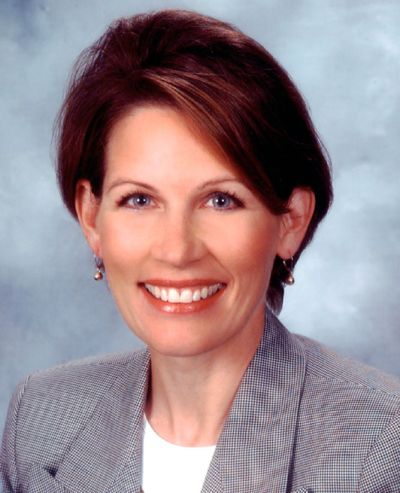
Rep. Michele Bachmann

My favorite Congresswoman stole the spotlight in Iowa when she lectured for the Family Leader Presidential Lecture Series. She’s back to the passionate arm-waving that I always liked so much.

The MP3 file is here. (17 Mb)

Shane Vander Hart from Caffeinated Thoughts has a great summary of the speech.

Excerpt:

Bachmann started her speech sharing her testimony saying she understood the Gospel for the first time at age 16 after growing up in a Lutheran Church and then she gave her life to Christ.  She said that it “changed her life forever.”  She said she had a hunger for the Word after then, and explained that the Holy Spirit “lifted the veil” from her eyes so she was then able to understand it.  She participated in YoungLife and another Bible study when in high school.  That first year in Christ was, Bachmann said, “was the defining year of my life.”

In college she participated the InterVarsity Christian Fellowship at her school, and cited Francis Schaffer’s film, How Now Shall We Live, made an impact on how she lives out her faith.  During law school at Oral Roberts University Law School she did advocacy for better homeschooling laws.  She and her husband, Marcus, homeschooled their five children in their early years.  She got involved in public schools as they did foster care for 23 kids since they were not allowed by Minnesota law to put those kids in private school or to home school them.

She noted a change in public schools where “knowledge, facts, and information” were taking a back seat to indoctrination.  She noted the 2000 Goals to Work standard implemented in the public schools that was a federal program implemented in all 50 states.  She advocated for its repeal in Minnesota – the first state to do so.  She said later this is where she got her start in politics.

She highlighted her prolife advocacy in the Minnesota Legislature – a requirement to fund prolife groups if they were going to fund Planned Parenthood and a woman’s right to know act.

[…]On marriage, she commended Iowans for booting the three Iowa Supreme Court justices up for retention last fall.  She said that Minnesota could possibly vote in favor of a Marriage Amendment now that Republicans  She noted that Congress can limit the subject matter jurisdiction for Article Three courts federally denying them an opportunity to rule on marriage. “This is the first time in recorded history that we have seen marriage in society defined as anything other than between one man and one woman.”

[…]On life she said that she and her husband has done more than just talk about life, but have tried to live it out through being sidewalk counselors and taking unwed mothers into their home.  Quoting Francis Schaeffer she, “life is the watershed issue of our time.”  Bachman proclaimed her commitment to life, “I will not give up until we give life the position it deserves in the United States and is protected from conception until natural death.”

She explained how taxes has impacted the family where in the 1950s would pay approximately 5% of their income to taxes.  She said now some families can pay up to 50% which explains why we have fewer one income families.  She noted the spending which has fueled anti-family tax policy.  She said the first thing on the House’s pro-family agenda was to rein in spending.  Regarding education reform, she noted how the Supreme Court has recently ruled that tax credits for private religious schools is constitutional.  She also said that she’d abolish the Federal Department of Education. She also called for the abolishment of the United States Tax Code.

[Note: commenter Francine notes that Michele says that this is the first time that marriage has been redefined to not be between men and women – the summary is in error about what she said]

She ends the speech with her concern for the fact that over 40% of children are beig born without a mother and father in the home, and she blames bad fiscal policies for this injustice. She makes the connection between left-wing fiscal policies and social breakdown. It’s so important that social conservatives understand that big government, high taxes, excessive regulation and massive spending are major causes of virtually all of our social problems. The breakdown of the family is what makes soul-destroying secularism possible.

There was also a press conference after the speech.

The MP3 file is here. (3 Mb)

Shane also covered the press conference.

Excerpt:

During the press conference that was held after Congresswoman Michelle Bachmann’s speech in Pella, IA for The FAMiLY Leader’s Presidential Lecture Series, she was asked to elaborate on the bill in Minnesota she helped to get passed that allowed funding for prolife organizations basically putting them on the same footing as Planned Parenthood.  During her answer she mentioned that she said that she introduced a similar bill in Congress.

She was also asked about what programs would she be open to abolishing other than the Federal Department of Education.  She listed the Department of Energy and the Department of Commerce as ones that have been discussed in Congress.  She said “anywhere we can abolish we might as well cut back and abolish.”  Saying in particular that our private sector has the capability to handle our energy needs.  She was asked about her disappointment with the House budget deal and where she would like the House leadership to put up a fight.  Bachmann said, “defunding Obamacare, this will change our country forever.”  She noted later that some may not be willing to take on budget battles in the future, she said that we have to… she said, “we have to change course.”

I have been pushing Michele Bachmann on this blog since the beginning two years ago, because she represents what I consider to be an ideal Christian woman. She is everything that I have ever hoped a Christian woman could be in my wildest, wildest dreams. I could not give any politician a more ringing endorsement. I hope with all my heart that she will some day be President of the United States.

Related posts

She explained how taxes has impacted the family where in the 1950s would pay approximately 5% of their income to taxes.  She said now some families can pay up to 50% which explains why we have fewer one income families.  She noted the spending which has fueled anti-family tax policy.  She said the first thing on the House’s pro-family agenda was to rein in spending.  Regarding education reform, she noted how the Supreme Court has recently ruled that tax credits for private religious schools is constitutional.  She also said that she’d abolish the Federal Department of Education. She also called for the abolishment of the United States Tax Code.

Audio, video and summary of the William Lane Craig vs. Sam Harris debate

Brian Auten has posted the audio of the William Lane Craig vs Sam Harris debate here. And the video of the William Lane Craig vs Sam Harris debate is posted on Youtube. My preview provides background information and lectures to help you to understand the arguments. Here is a more serious, less snarky review of the debate, which doesn’t mention the Monkey God or the Lord of the Rings. But read mine first!

(By the way, you may also be interested in my snarky, humorous summary of Lawrence Krauss’ speeches in his debate with Craig, in the preview post which featured resources for understanding Craig’s kalam argument, the fine-tuning argument and the moral argument, and in my snarky summary of Christopher Hitchens’ case against God)

SUMMARY OF THE DEBATE

This summary is not AS SNARKY as the Lawrence Krauss summary or the Christopher Hitchens summary.

Dr. Craig’s opening speech:

Introduction:

  • Harris and Craig agree on objective morality
  • What is the foundation of morality?
  • What makes certain actions right or wrong?

Two claims

  1. if God exists, then we have a sound foundation for objective moral values and duties
  2. if God does not exist, then we do not have a sound foundation for objective moral values and duties

1) Theism grounds morality

Objective moral values

Theism provides sound foundation for objective moral values
– objective moral values are grounded in God
– God is the locus and paradigm of moral value
– God is, by nature, the standard for what is right and wrong

Objective moral duties

Theism provides a sound foundation for objective moral duties
– God’s nature is expressed as commands for us
– God’s commands for us are not arbitrary
– they must be consistent with his own nature
– and they reflect his moral character
– the essence of morality in theism is to love God and also to love your neighbor

2) Atheism does not ground morality

Objective moral values

What is the basis for objective moral values on atheism?
– on atheism, human beings are accidental products of evolution
– on atheism, there is no reason to believe that human well-being is any more important than the well-being of any other animal
– Harris denies that the objective moral value is from Platonic forms
– Harris wants to ground moral values in nature
– but nature is morally neutral
– the “morality” of humans is just a set of evolved customs that help them to survive and reproduce
– this morality is just a set of conventions, it doesn’t refer to anything that has an objective existence
– quotes Michael Ruse: “morality is just an aid to survival, and any deeper meaning is illusory”
– if we were to rewind evolution and start it again, another set of conventions might have evolved
– to say that morality is about human well-being is to commit “speciesism”
– quotes Richard Dawkins: “there is no purpose, no evil, no good, nothing but pointless indifference”

What does Harris say:
– Harris redefines the word “good” to mean the well-being of humans
– Harris “solves” the problem of moral value by just asserting that HUMAN well-being is the good
– Harris isn’t talking about what is good and evil
– Harris only talks about what is conducive to human “flourishing”

Objective moral duties

What is the basis of objective moral duties on atheism?
– first, natural science tells us only what is, not what ought to be
– quotes Jerry Fodor: “science cannot tell us that we have a moral obligation to take actions to increase human flourishing”
– on the naturalistic worldview, humans are animals – and there are no OBJECTIVE moral duties
– where do moral obligations come from on atheism?
– they are just conventions that are ingrained into us by social evolution
– as human societies evolve, certain actions are unfashionable
– people who act “immorally” against their society’s conventions are just being unfashionable
– bad actions like rape and murder happen all the time in the animal kingdom
– second, Harris believes that there is no free will – all human actions are causally determined
– if there is no free will, then there is no moral responsibility
– no one is responsible for the things they do, on atheism
– on atheism, humans have no control over the actions they take, and cannot make moral choices, or be morally responsible

Conclusion:
– Harris and I mostly agree on practical ethics, but only theists have a foundation for objective moral values and duties

Dr. Harris’ opening speech:

God is not needed to ground moral values and moral duties

  • Good means maximizing human well-being for the largest number of people
  • Religion is not necessary for a “universal” morality
  • Religion is a bad foundation for “universal” morality

Facts and values:

  • Moral values are the products of human evolution
  • E.g. – Sexual jealousy is the result of biological evolution
  • And then these ideas of right and wrong are enshrined in cultural institutions like marriage
  • Religious people insert God in to explain values, when evolution is the real explanation

Moral disagreements:

  • I personal don’t agree with the ethics of the God of Abraham
  • I have no basis for an objective moral standard, but the God of Abraham fails to meet my personal preferences
  • Dr. Craig lies when he quotes me, half his quotes are of other people I quoted, not me
  • But I’m not going to say which quote he lied about

Goodness is what makes you feel happy:

  • Questions of right and wrong depend upon brains
  • Brains are natural entities
  • Science can measure well-being in brain states
  • States of affairs in which the majority of brains have high well-being

I’m a good person because I don’t like the Taliban:

  • The Taliban is bad because the majority of their brains don’t have high well-being
  • I think throwing battery acid in women’s faces is bad
  • The Taliban thinks that throwing battery acid in women’s faces is good
  • What determines right and wrong is brain states of well-being

Insults against religion = Dr. Craig:

  • religion / Dr. Craig doesn’t value evidence
  • religion / Dr. Craig doesn’t value logic
  • religion / Dr. Craig doesn’t value intellectual honesty

Dr. Craig’s first rebuttal:

1) Theism is a good foundation for moral values and duties

Harris says:
– Craig thinks that if God doesn’t exist, then good and evil would have no meaning

Craig says:
– But Craig says that he is not saying that God is required for moral semantics
– He is addressing the question of the ontological grounding

Harris says:
– The God of the Bible is mean

Craig says:
– divine command theory doesn’t require that the Bible be the set of commands
– in any case, the old testament passages can be defended in Paul Copan’s book

Harris says:
– Religion isn’t needed for universal morality

Craig says:
– the issue isn’t universality, because the Nazis could have won, and put in a universal morality
– the issue is if they had won, would there be any standard to condemn them

Harris says:
– Good and evil are related to the number of brain states of well-being

Craig says:
– Harris uses good and evil in non-moral ways
– Harris isn’t talking about moral good and moral evil
– Harris is talking about pleasure and misery
– Harris is equating moral good and moral evil with feelings of pleasure and feelings of misery
– Harris claims that the property of being good is identical with human flourishing
– it is possible that the continuum of human well-being is not identical with the moral landscape
– in order for them to be identical, there cannot be this possibility or it fails the law of identity
– you could have psychopaths with happy brain states that represent a peak in the moral landscape

Harris says:
– If we have a moral duty to do anything, we have a duty to avoid feeling miserable”

Craig:
– moral obligations arise when there is an authority who can issue binding commands
– on atheism, there is no authority who can issue binding commands
– without free will, morality makes no sense since there is no free will
– no free will means no moral duties, and no moral responsibilities

Dr. Harris’ first rebuttal:

I don’t like Hell and I don’t like suffering and I don’t like Christians:

  • There is no evidence that Hell exists
  • Think of the parents of the children of people who die in tsunamis
  • If God allows people to suffer, then he doesn’t exist, because God’s job is to make us not suffer
  • God can’t exist, because some people are born in the wrong culture, and never hear about Jesus
  • Some people pray to the Monkey God, why don’t they go to heaven?
  • What about the people in the Lord of the Rings, are they going to Hell?
  • What about people who repent just before being executed, are they going to heaven?
  • God is cruel and unjust because he lets innocent people suffer
  • God is worse than a psychopath
  • People who believe in God are evil
  • People who believe in God are narcissists
  • God commanded stuff that I don’t like, so he’s evil
  • Suppose God were evil – then people would have to do evil things
  • Religious people think that saying Latin phrases turn pancakes into the body of Elvis Presley
  • The evidence for God is actually not very good, if you avoid read any Christian scholars
  • Christianity is a cult of human sacrifice
  • The people who wrote the Bible were really stupid
  • Christians are psychopaths

Dr. Craig’s second rebuttal:

Sam Harris cannot make any judgments about moral values and moral duties on atheism
On atheism, there is no foundation for making objective moral judgments

Harris didn’t respond to anything Craig said

Harris says that Christians only believe in God to avoid Hell

Red herrings:

Craig says that people who become Christians do it because God is the good
Christians don’t pursue a relationship with God for fire insurance

The problem of evil
– not relevant to the debate topic

The problem of the unevangelized
– not relevant to the debate topic

Evil actually proves that God exists
– if evil exists, then there is an objective moral standard
– if there is an objective moral standard, then God exists

Harris has no foundation for saying that Christian beliefs are morally bad
Harris has no basis for making moral judgments

Harris’ remark that theists are psychopathic
– Harris’ remark is as stupid as it is insulting

Harris says that the Old Testament promoted
– first, there was no slavery in the Old Testament it was indentured servitude
– second, that’s not relevant to the debate topic

Harris mentions the Taliban
– but the response to the Taliban is not to say that God doesn’t exist
– the response to the Taliban is to say that they have the wrong God
– the real God never commanded them to do those things

Dr. Harris’ second rebuttal:

I’m a scientist, Craig is stupid, I’ve meditated with wise yogis and lamas, I don’t like the Taliban:

  • When I make a scientific case for morality, I didn’t really mean that it was scientific
  • You just have to assume that misery is morally evil, and happiness is morally good, even if that can’t be proved scientifically
  • I’m a scientist
  • Science is great
  • Dr. Craig is stupid
  • Dr. Craig is not a scientist
  • Science is better than religion
  • You can ground an objective standard of morality and objective moral duties and moral responsibility on arbitrary brain states of accidentally evolved biologically determined monkeys
  • Dr. Craig’s question for me about my unproven assumptions is a stupid question
  • I prayed to the Monkey God in a cave and he told me about objective morality
  • I have spent a lot of time studying meditation with wise yogis and lamas
  • I consider some people to be spiritual Jesus
  • I can imagine that Jesus was very spiritual and charismatic
  • We don’t have to use logic and reason to debate about morality, we can meditate on the Monkey God
  • i don’t like the Taliban

Dr. Craig’s third rebuttal:

Harris didn’t reply to anything I said

Harris admitted that psychopaths can occupy the peaks of the moral landscape
So on Harris’ view, you can commit unspeakable acts of cruelty and still have a brain state with well-being

Dr. Harris’ third rebuttal:

Dr. Craig is a Muslim, Dr. Craig is the Taliban, Dr. Craig is a Muslim Taliban Muslim Jihadi:

  • How many of you in the audience are Muslims
  • Muslims think that non-Muslims are going to Hell
  • Christianity and Islam are identical
  • Dr. Craig is a Muslim!
  • Dr. Craig is the Taliban!
  • Dr. Craig wants to jihad me!

Jay Smith debates Mohammed Bahmanpour on the crucifixion of Jesus

This is from Justin Brierley’s Unbelievable radio show.

Details:

The Koran claims that Jesus did not die on the cross.

Mohammed Bahmanpour of the Islamic College in London defends the Koranic view that although “it was made to appear to them” that he died, in fact he was substituted by another.

Jay Smith is a Christian evangelist to Muslims in London and brings to bear Biblical and other historical witnesses to the crucifixion.  They debate the issue and whether the Koran or the New Testament is to be trusted as a revelation of God.

Includes listener interactions with the guests.

The MP3 file is here.

Here are the opening speeches:

Mohammed:
– in Surah 4 (Quran), it says that Jesus didn’t die on a cross
– it only appeared to onlookers as though Jesus died on the cross
– muslims believe that the crucifixion really happened
– but Jesus wasn’t the one who died, it was actually Judas
– most Muslims think that Judas betrayed Jesus
– some Shiites believe that Judas died voluntarily in Jesus’ place
– the gospel of Judas seems to make Judas out to be a hero

Jay:
– the 4 gospels agree that Jesus died on a cross
– John is an eyewitness and it’s in his gospel
– Paul’s writings also echo the gospels (Romans and epistles)
– the gospel of Judas is a fourth century document
– it reflects gnostic theology, which denies that Jesus had a body
– even Surah 19 says that Jesus actually did die and rise after
– so Surah 4 and Surah 19 are internally contradictory

They take calls from callers and debate issues with each other. It’s interesting to hear the role that history and historical methods plays in each religion.

Speaking of Unbelievable, Justin has an Unbelievable conference coming up on May 14th in the UK. Details are here.