Category Archives: News

William Lane Craig lectures on naturalism at the University of St. Andrews

Lets take a closer look at a puzzle

Note: even if you have heard Dr. Craig’s arguments before, I recommend jumping to the 48 minutes of Q&A time, which starts 72 minutes in.

About Dr. William Lane Craig:

William Lane Craig (born August 23, 1949) is an American analytic philosopher, philosophical theologian, and Christian apologist. He is known for his work on the philosophy of time and the philosophy of religion, specifically the existence of God and the defense of Christian theism. He has authored or edited over 30 books including The Kalam Cosmological Argument (1979), Theism, Atheism and Big Bang Cosmology(co-authored with Quentin Smith, 1993), Time and Eternity: Exploring God’s Relationship to Time (2001), and Einstein, Relativity and Absolute Simultaneity (co-edited with Quentin Smith, 2007).

Craig received a Bachelor of Arts degree in communications from Wheaton College, Illinois, in 1971 and two summa cum laudemaster’s degrees from Trinity Evangelical Divinity School in Deerfield, Illinois, in 1975, in philosophy of religion and ecclesiastical history. He earned a Ph.D. in philosophy under John Hick at the University of Birmingham, England in 1977 and a Th.D. underWolfhart Pannenberg at the University of Munich, Germany in 1984.

Dr. Craig was in Scotland to lecture at a physics conference, but a local church organized this public lecture at the University of St. Andrews.

Here is the full lecture with Q&A: (2 hours)

Summary:

  • Naturalism defined: the physical world (matter, space and time) is all that exists
  • Dr. Craig will present 7 reasons why naturalism is false
  • 1) the contingency argument
  • 2) the kalam cosmological argument
  • 3) the fine-tuning of the universe for intelligent life
  • 4) the moral argument
  • 5) the ontological argument
  • 6) the resurrection of Jesus
  • 7) religious experience

Dr. Craig does mention an 8th argument early in the Q&A – the argument from the non-physicality of mental states (substance dualism), which is an argument that I find convincing, because a materialist conception of mind is not compatible with rationality, consciousness and moral agency.

Questions and Answers

He gets a couple of questions on the moral argument early on – one of them tries to put forward an evolutionary explanation for “moral” behaviors. There’s another question the definition of naturalism. There is a bonehead question about the non-existence of Jesus based on a Youtube movie he saw – which Craig responds to with agnostic historian Bart Ehrman’s book on that topic. There’s a question about God as the ground for morality – does morality come from his will or nature.

Then there is a question about the multiverse, which came up at the physics conference Dr. Craig attended the day before. There is a good question about the Big Bang theory and the initial singularity at time t=0. Another good question about transfinite arithmetic, cardinality and set theory. One questioner asks about the resurrection argument. The questioner asks if we can use the origin of the disciples belief as an argument when other religions have people who are willing to die for their claims. One of the questioners asks about whether the laws of nature break down at 10^-43 after the beginning of the universe. There is a question about the religious experience argument, and Craig has the opportunity to give his testimony.

I thought that the questions from the Scottish students and faculty were a lot more thoughtful and respectful than at American colleges and universities. Highly recommended.

Rediscovering Masculinity: Why Today’s Men Need to Learn from Real Life Heroes (part 3 of 3)

The following is a guest post (part 3 of 3) from Nathan Apodaca, who blogs at Merely Human Ministries and Human Defense Initiative. I previously blogged about his legal victory against California State University – San Marcos. Today we cover the fourth hero of four who taught Nathan valuable lessons about masculinity.


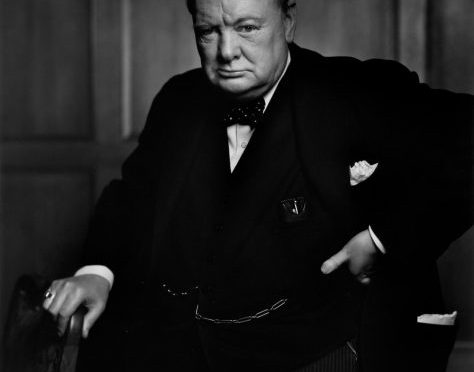
4. Winston Spencer Churchill (1874-1965)

Last, but most certainly not the least, to make the list is Winston Churchill. Born on November 30th, 1874 to an American mother and British Statesman father at Blenheim Palace, Churchill grew up steeped in privilege. Similar to Grant’s father, Lord Randolph Churchill believed that his son would never amount to much, and ridiculed both his academics as well as his early military career. Churchill spent his life living almost as if he wanted to find a way to make his father proud. He wound up far exceeding whatever expectations were set for him.

Spending his early career as a war correspondent in the 1890s, Churchill lived a lifetime of adventures and near misses with death, including becoming lost in the Egyptian desert as well as a daring escape from a South American prison after being captured in an ambush during the Boer War. Leaving the Army and having made a name for himself as a write as well as a speaker, Churchill entered politics. Possessing a stunning wit and confident manner, Churchill moved through the ranks of the British political machine. Unfortunately, his confident manner did not always serve him well, and he made multiple horrendous mistakes along the way as well as making statements that would ultimately come back to bite him.

In the early 1900s, Churchill began to see the signs of grave conflict building in Europe with the German Empire and other states. Accepting a position as First Lord of the Admiralty, (the equivalent of the American Secretary of the Navy), Churchill did much to prepare the British military for the coming World War. When war erupted in 1914, Churchill found himself in a key position to help influence the military and defense of the country. In 1915, Churchill believed he could help bring the war to a quick end by opening a second front in Turkey. This proved disastrous. The Gallipoli Campaign, so called because it primarily took place on the Gallipoli peninsula in the Dardanelles islands, proved to be a horrific disaster, with tens of thousands of British, Australian, and New Zealander soldiers killed, wounded or captured in a battlefront that had stagnated just as much as the campaigns on Europe’s Western front. Churchill took most of the blame.

Leaving his position in charge of the Navy, Churchill returned to the Army in 1916 and was deployed to the Western Front of the war in France, where he faced numerous close brushes with death, leading him to believe he was being prepared for a purpose later in life. He also acknowledged his own failings, writing to his wife Clementine “I shall have made nothing, if I had not made mistakes”.

Following the Armistice in 1918, Churchill returned to politics and his writing, becoming one of the greatest historians and biographers of the era. He helped jumpstart the Royal Air Force and is also credited as the father of the tank and helped pave the way for advances in tank and armored combat. He also continued to make mistakes in politics, finding himself very often on the wrong side of political conflicts, such as Indian Independence from Great Britian, Women’s Suffrage, economics, and supporting King Edward VIII up to his abdication of the throne and the subsequent coronation of King George VI. As Adolf Hitler and his Nazi cronies began to take power in Germany in the 1930s, Churchill loudly sounded the alarm.

Unfortunately, as biographer and historian Andrew Roberts points out, few in England at the time wanted to believe a new conflict with Germany was on the horizon. The devastation and bloodshed of the First World War was still fresh in many people’s minds. Churchill, however, looking back on his experience with fanatical militant groups in Sudan, Egypt, and South Africa, knew that the militant fanaticism of Nazi Germany would prove devastating if left unchecked. Churchill loudly, (and rightly), criticized those in the government and those in the Christian church who believed Hitler could be appeased and peace maintained by giving Hitler what he wanted.

He was soon proved right. With Blitzkreig unleashed across Europe and multiple countries soon dominated by the Nazis, Churchill stepped up to the plate to replace the disgraced former Prime Minister Neville Chamberlain. It wouldn’t be easy. Very quickly France, Belgium and the “low countries” were defeated, and the British Expeditionary Force, an army of nearly 300,000 troops, barely escaped annihilation at Dunkirk. However, Churchill’s tenacity, hard-headedness, and stubborn refusal to quit were just what the world needed. As Andrew Roberts puts it,

“When Churchill was finally made prime minister in May 1940, the British had lost the war-comprehensively, according to every metric-but there was a huge difference between losing a war and realizing that one has lost it…Winston Churchill’s primary duty in 1940 and 1941 was to prevent the British people from realizing they had lost the war, and nobody did it better, not least because he utterly refused to accept the logic of the situation himself.”

The war quickly took turns for the worst. With Britain the only opponent of Germany left in the fight at this point, Hitler began trying to bomb and starve the British people into submission. Churchill’s courageous leadership and example gave the British people what they needed to hold out in the face of disaster until the United States would enter the war in 1941. Even with disastrous outcomes on battlefronts in Africa, the Atlantic and Asia following up defeats in Europe, Churchill never wavered, and in his own words, the Allies eventually “outlived the menace of tyranny” and liberated Europe from Nazism in 1945. Because Churchill refused to give in during the darkest hour in western history, a feat lesser men, (especially his modern critics and haters), would have quickly failed. Because Churchill’s courage and leadership helped bring an end to evil not only in Nazi Germany, but later in Soviet Russia, Churchill is a man everyone can learn from, not only in his successes, but also in his (many) failures, which he himself often learned from.

Several books about Churchill are worth reading. Churchill: Walking With Destiny by Andrew Roberts is by far the very best, as well as The Splendid and the Vile by Erik Larson, and Andrew Roberts’ other, shorter book, Leadership in War.

Conclusion

Stories of great men are often mocked today by people who are largely living worthless lives themselves. When statues of men like Grant and Churchill are vandalized by young men and women who could just have easily been supporters of slavery in the 1860s and Nazism in the 1930s, it is obvious there is a severe lack of character development in today’s young people. Learning not only from the triumphs of past historical figures, but also from their failures, is one of the best and certainly one of the most important ways to grow and prepare ourselves for our own challenges we will face in life.

Rediscovering Masculinity: Why Today’s Men Need to Learn from Real Life Heroes (part 2 of 3)

The following is a guest post (part 2 of 3) from Nathan Apodaca, who blogs at Merely Human Ministries and Human Defense Initiative. I previously blogged about his legal victory against California State University – San Marcos.  Today we cover the third hero of four who taught Nathan valuable lessons about masculinity.


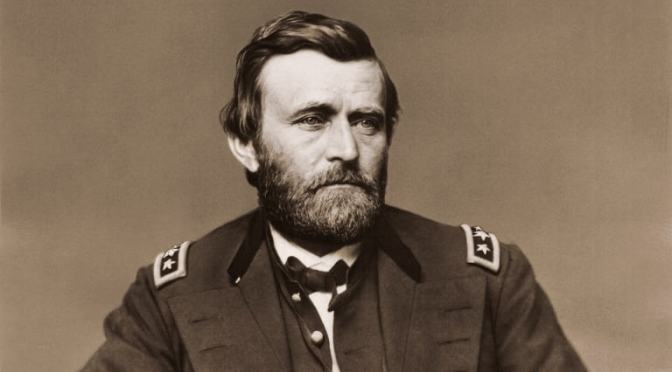
3. Ulysses S. Grant (1822-1885)

Shifting from Britain to the United States, another figure who I have found great benefit in learning from would be Ulysses Grant. For many people, Grant is almost a forgotten figure, and many consider him a failure as a General who merely “got lucky” and a failure as a President. And yet, there is much more greatness to the man than many today have been led to believe.

Born on April 1822 in Point Pleasant, Ohio, with the unflattering name of Hiram Ulysses Grant, a timid and sometimes unthinking young Grant would earn the nickname “Useless Grant” from cruel farmboys in the town, and was considered unexceptional by his father. Later, as a young adult, he was enrolled in the West Point military academy in New York, where a clerical error gave him the middle initial “S”, leading many of his classmates to call him “Sam Grant” or “Uncle Sam Grant”. Grant’s time at West Point was mediocre, but after graduation he was introduced to the sister of one of his classmates, Julia Dent, with whom he fell deeply in love.

After graduation, war erupted between the United States and Mexico. Deployed to Texas as an Army Quartermaster officer, (in charge of supplies), Grant showed incredible coolness and courage while under fire on the battlefront. It was also during this time that Grant fell in love with Mexico and the Mexican people. Disappointed in the treatment of Mexico by the United States, Grant would later become a friend to Mexico when one was sorely needed.

After the war, Grant was able to marry his beloved Julia, (much to the consternation of her slave-owning father, who despised Ulysses). However, Army life soon took Grant westward, where he was posted at Fort Humboldt, in the new state of California. Separated from Julia and their children, dealing with a painfully slow mail delivery system, and without much to do, Grant fell into a deep depression and began to drink heavily. After a drunken incident at the post, Grant resigned his Army commission to avoid being court-martialed. Returning to Missouri to be with his wife and children, Grant began nearly a decade of failed ventures and setbacks that ultimately reduced his family to poverty and humiliation. At one point, while selling firewood on the streets of St. Louis to help feed his family, he encountered a former Army colleague who asked him what he was doing on the street. “I’m solving the problem of poverty”, Grant replied.

Grant’s integrity during this time is particularly noteworthy. After being given a slave by his father in law, Grant decided he must set the man free. Taking him to the city records office, Grant was told he could gain a great deal of money if he sold the slave; money that could have greatly helped his own financial misery. Instead, Grant refused to take advantage of another man, and purchased the man’s freedom.

The decade of the 1850s was particularly hard for the Grants, and by the start of the 1860s, Grant had been reduced to working in his father’s leather goods store in Gallena, Illinois, a job he hated.

However, 1861 brought with it the storm of the American Civil War. After the humiliating defeat of Federal troops at the First Battle of Bull Run by Confederate forces, the call was put out for volunteers to form a massive Army to bring the war to a swift end. Grant, knowing there would be great need of good officers, joined the volunteers and quickly gained rank as he trained the new recruits. However, this period was also full of setbacks, and more than once Grant considered quitting the Army to return home. Still, he stayed the course, and eventually reached the rank of Brigadier General.

In 1862, Grant made a name for himself. With the Civil War developing into two distinct theaters of conflict(an Eastern and a Western Theater) Grant found himself at the forefront of the war’s Western theater. Taking a large force and coordinating his operations with the assistance of the US Navy, Grant scored two significant victories at Fort Henry and Fort Donelson in Tennessee, opening a path for follow-on troop movements into Confederate territory and earning the nickname “Unconditional Surrender” Grant. Not a bad turnaround for the man who was once called “useless” Grant as a boy.

Grant faced setbacks, however. Moving his troops south, and preparing to stage an offensive against the Confederate positions at Corinth, Mississippi, Grant was soon caught up in the largest battle ever fought in American history up to that point, the Battle of Shiloh. Finding his troops being pushed back up against their landing areas at Pittsburg Landing on the Tennessee river, Grant looked like the latest in a series of failed Union Generals. With the war in the Eastern theater taking a turn for the worst with repeated defeats at the hands of Robert E. Lee and other Confederate Generals, things looked dim.

However, Grant was a man who knew how to be defeated.

Turning around and reorganizing his troops and supplementing his Army of the Tennessee with newly arrived reinforcements, Grant turned the tide of battle and pushed Confederate forces back to their original lines, causing a Confederate retreat further south.

Grant would go on to gain recognition for his campaign to capture the Confederate bastion at Vicksburg, Mississippi in 1863, which surrendered the same day that the Union won the battle of Gettysburg and thus helped turn the tide of the war. Grant caught the eye of President Lincoln, who was desperate for a general who would take the initiative on the battlefield and actually fight out battles with Lee’s Army of northern Virginia, instead of retreating or showing timidity in the face of enemy opposition, as so many eastern theater generals had.

Becoming the General-in-Chief of the United States Army, Grant organized a series of actions that ultimately resulted in the defeat of the Confederate Armies. Still facing a multitude of setbacks during the closing acts of the war and his pursuit of Lee’s Army, Grant was finally able to secure Lee’s surrender at the little town of Appomattox Courthouse in Virginia in April of 1865, thus bringing the American Civil War to a close.

Grant’s character is of particular interest here. On the battlefield, Grant showed incredible courage and coolness under fire. When artillery shells landed near his position, Grant showed remarkable coolness and refused to cave in to fear. When his subordinates would express anxiety over the movement’s of Lee’s forces, Grant snapped “Quit focusing on what Lee is going to do. Focus on what we are going to do.” Grant showed initiative and a refusal to back down.

Lastly, Grant showed great magnanimity towards those he defeated. After Lee’s surrender at Appomattox, Grant ensured Lee’s troops were treated with dignity, by giving them food and medical care, and allowing them to return to their homes unmolested. When Grant’s troops began to break out into celebration of the surrender, Grant ordered the celebrations to be silenced, and ordered that Lee’s troops would be treated with respect and dignity as fellow soldiers and fellow Americans once again.

Grant’s wartime leadership is remarkable, but he was far from done. Following the assassination of President Abraham Lincoln, Grant found himself caught up in the political fiasco that was the Presidency of Andrew Johnson. With Johnson undoing much of the reconciliation that was so necessary to heal the divisions brought on by the Civil War, Grant stepped up to do what was right. He came to Robert E. Lee’s defense when Johnson attempted to have him tried for treason, keeping good on his promise to Lee that former Confederates who had surrendered would be treated with magnanimity, and he stood up to Johnson on multiple occasions. With white supremacist terrorism exploding in the former Confederate states Grant stepped back into his role as a leader. Elected to the Presidency in 1868 and reelected in 1872, Grant brought much needed reconciliation and peace. Helping create the U.S. Department of Justice, Grant appointed attorneys who helped bring the rule of law to the South and break up the Ku Klux Klan, and fought for the rights of the recently freed black Americans by helping ensure the passage of the 15th Amendment. Grant also worked with Christian advocacy groups to secure protections for American Indians, and helped bring reconstruction to a close and promote healing.

Just before his death in 1885, Grant completed his personal memoirs with the assistance of Mark Twain, the sales of which helped Julia Grant financially after the family experience further setbacks upon leaving the White House.

Of Grant’s legacy, the famous orator and abolitionist Frederick Douglass had this to say: “A man too broad for prejudice, too humane to despise the humblest, too great to be small at any point. In him the Negro found a protector, the Indian a friend, a vanquished foe a brother, an imperiled nation a savior.”

Several biographies of Grant are worth checking out. Ron Chernow’s Grant is by far the best, followed by Grant by Jean Edward Smith, and American Ulysses by Ronald C. White.