Category Archives: News

New study: 1 in 8 divorces is caused by student loan debt

I like to make plans in advance and calculate everything out before I try to do anything. This is the curse of being a software engineer. We’re taught to take a test-first approach to design. So, when I think about marriage, I naturally think about what tests marriage is supposed to pass, and work backwards from there to requirements for each of the spouses.

Here’s some research from CNBC that might help young people to avoid a divorce, if they respect the research in their choices.

Excerpt:

When it comes to student loan debt, “for richer, for poorer” doesn’t quite cut it.

In general, finances are the leading cause of stress in a relationship, according to a study by SunTrust Bank, but student debt takes a particularly hard toll on a marriage.

More than a third of borrowers said college loans and other money factors contributed to their divorce, according to a recent report from Student Loan Hero, a website for managing education debt.

In fact, 13 percent of divorcees blame student loans specifically for ending their relationship, the report found. Student Loan Hero surveyed more than 800 divorced adults in June.

Here is a link to the full study from Student Loan Hero.

I think in general, you can’t just do whatever you want before marrying and jump into it unprepared. Marriage involves specific requirements in order to work, such as being faithful to your spouse, and buying things that you need for the marriage enterprise, like a home, and baby stuff. It doesn’t make any sense to say “I want to get married” and then not prepare for marriage by being careful about preparing for the behaviors marriage that requires of you. Being debt-free is one of those behaviors that marriage requires of you.

So how can we be debt-free, so that the marriage will be stable? Well, one way to be debt-free is to find a way to learn skills that will allow you to get a job without going to college, like being a self-taught software engineer. One of my friends actually did that, and now he’s with a very good software company as a remote worker. But if you’re going to go to college, you can avoid debt by studying something that will get you a high-paying job when you graduate.

This 2017 article from Harvard Business Review is interesting.

It says:

Examining 46,934 resumes shared on Glassdoor by people who graduated between 2010 and 2017, the researchers looked at each person’s college major and their post-college jobs in the five years after graduation. They then estimated the median pay for each of those jobs (also using Glassdoor data) for employees with five years of experience or less. Their key finding: “Many college majors that lead to high-paying roles in tech and engineering are male dominated, while majors that lead to lower-paying roles in social sciences and liberal arts tend to be female dominated, placing men in higher-paying career pathways, on average.”

Here’s the plot, and you can click it to expand it:

Starting salaries by major, broken out by gender
Median salaries by major, broken out by gender – don’t study things at the bottom!

As you can see from the graph, it’s especially important to share the message about choosing a major, salaries and student loan debt with WOMEN, because as the graph shows, they tend to choose the wrong majors, if the goal is to pay off student loans and avoid divorce. Everyone who wants marriage to go smoothly needs to choose majors that are near the top of the graph, like nursing, chemical engineering, computer science, or mechanical engineering. It doesn’t make sense to go to college if you aren’t going to graduate in one of these high-paying fields.

As you might expect from the graph, women hold the majority of student loan debt, according to the Boston Globe, and that’s because women tend to choose majors that don’t result in good-paying jobs. And we already saw how this becomes a risk factor for divorce.

Student loans delay marriage and children

Another interesting piece of data, reported by The Consumerist, is that people with student loans tend to delay marriage, which means the couple has fewer children:

As consumers navigate life’s financial journey, they are faced with major financial milestones, like buying a home. But student loans are also delaying consumers from reaching these goals.

Survey respondents report delaying homeownership (23 percent), buying or leasing a car (23 percent), having children (10 percent) and getting married (9 percent) because of their student loan burdens.

So, it’s not just that there is an increased risk of divorce from student loans, but there’s also fewer children, which means a diminished legacy. I can’t speak for how others would see this, but for myself, I want to pass on my beliefs to as many effective, influential Christian children as I can.

Anyway, I feel obligated to post a relevant Dave Ramsey video, just to remind everyone that stewardship of money is a Christian virtue, and that being forgiven by Jesus for your sins doesn’t automatically make you good with money. It takes planning and stewardship.

This one from 2014: (H/T Robb)


When I was in high school, I was far more interested in becoming an English teacher than I was in becoming a software engineer. It was my Dad who overruled my choice of college major when I was still in high school. He had me take a first-year English course at a local university. When I saw how politicized and useless it was (they were studying all sorts of politically correct postmodern relativist stuff, instead of the Great Works, and they weren’t trying to learn any wisdom from any of it), I chose computer science. I did what was likely to avoid divorce, and likely to support having many children.
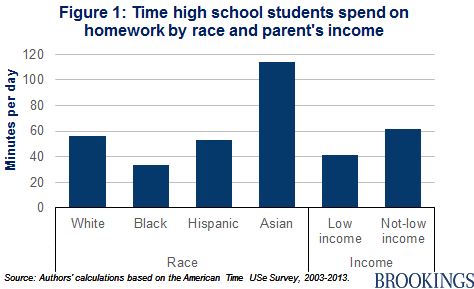
New study: black students spend far less time on homework than Asian students

The Brookings Institute is a left-wing think tank that nevertheless does some research that’s interesting to conservatives. In a recent article, they talk about a disturbing difference between children of different races. Specifically, black children do far less homework than Asian children.

Here’s the article from the Brookings Institute:

In this blog post, we will look at time spent outside of school–specifically time spent doing homework–among different racial and socio-economic groups. We will use data from the American Time Use Survey (ATUS) to shed light on those differences and then attempt to explain those gaps, using ATUS data and other evidence.

And here’s what they found:

Graph of Homework Time vs Race

So, how come Asians do so much better than blacks?

This article is written by the far-left radical Nicholas Kristof, writing in the radically-leftist New York Times. (A former newspaper)

Asians don’t blame other people for their own success of failure, they think that their outcomes are based on how hard they work:

There’s also evidence that Americans believe that A’s go to smart kids, while Asians are more likely to think that they go to hard workers… Asian-American kids are allowed no excuse for getting B’s — or even an A-. The joke is that an A- is an “Asian F.”

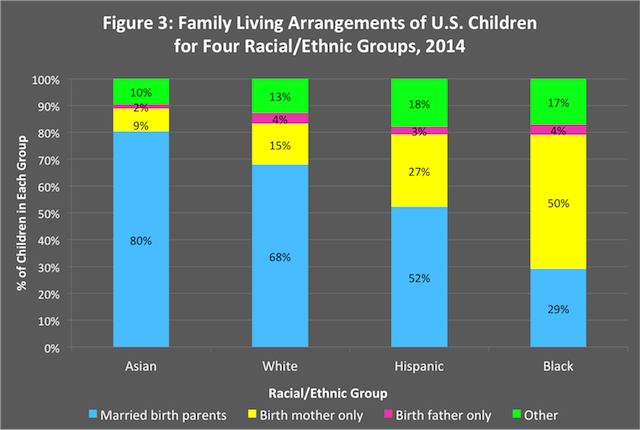
Asians also believe in keeping two biological parents in the home:

Strong two-parent families are a factor, too. Divorce rates are much lower for many Asian-American communities than for Americans as a whole, and there’s evidence that two-parent households are less likely to sink into poverty and also have better outcomes for boys in particular.

Do black women believe those things? Not the ones I’ve met.

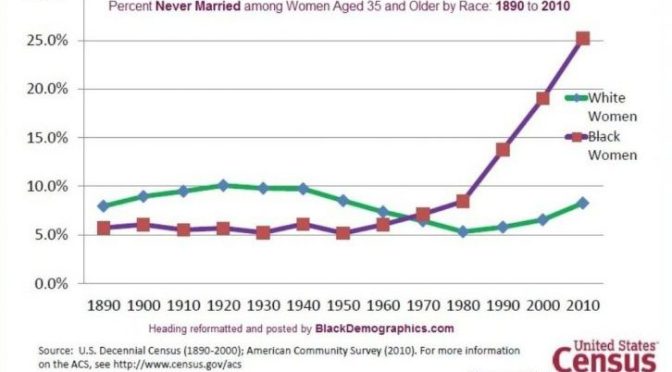
And not according to statistics:

Asians marry before they have children, so the kids have two parents

So how will we help black students to do better in school? We need two parents in every home. And school choice, obviously. We have to let black children escape the failing unionized public schools that only want to teach atheism, premarital sex, evolution, global warming alarmism, transgenderism, gay marriage, socialism, BLM and CRT instead of math, science, technology and engineering. I don’t think that public school teachers can do any math, science, engineering or technology, so how could they teach it.

Also, we need to start shaming women of all races who choose to have sex with men who are not ready for marriage. There are lots of men out  there who are willing to marry, and that should be what women are looking for most if all in a man. That change alone will probably erase most of the achievement gap between different racial groups. Does anyone have the courage to tell young women (of all races) to be more responsible with their sexual decisions? The out-of-wedlock birth rate for blacks is over 70%. This causes massive poverty and crime in the black community. Does anyone have the courage to tell blacks that they are doing this to themselves?

New study: 10,000+ Canadians die on government-run healthcare wait lists

I get into conversations with young people about what policies they think would work best. Inevitably, they support policies where the government takes money out of the pockets of people who work, and hands it out (regardless of individual choices) in the form of social programs. Their favorite government-run program is government-run health care. How is that working?

So, in Canada, they have a 100% government-run health care system. Let’s see how well it works, using this article from The Post Millennial.

Excerpt:

2019 and 2020 were tough on Canadians awaiting surgery, a procedure, scan, or an appointment with a specialist. According to government data, over 10,000 patients died on the waitlist or from excessive waiting periods.

[…]Canada is unique in the world when it comes to access to health care services. Our governments often give patients only two choices: Either sit on a government waiting list or leave the country — an ultimatum that led to far too many senseless tragedies.

It’s not just old people being allowed to die, but young people too:

Laura Hillier’s tragic case is a good example. The 18-year-old Ontario student was fighting cancer and had a bone marrow donor lined up, but passed away while waiting seven months for a bed and a surgeon to become available. The province had only rationed enough funds for five transplants per month and Laura was forced to wait. This case became famous not because of proactive government disclosure, but because the young patient’s public cry for help went viral.

Here’s a report on single-payer health care in Canada, from the Heritage Foundation. I’ll focus on the differences between their health care system and American health care.

Canadians pay slightly less in out of pocket costs:

The OECD calculates that Canadians spend 1.6 percent of GDP on out-of-pocket health spending, compared to 1.9 percent in the U.S.

[…]While these numbers are very close, they are actually getting closer. Since 1970, U.S. out-of-pocket spending as a percentage of total medical spending has been falling steadily, from 33 percent in 1970 to about 10 percent in 2017.19

Meanwhile, Canadian out-of-pocket spending has been falling much slower, so that by 2016 it totaled 15 percent of total medical spending—a higher proportion than in the U.S.20

 As a result, Statistics Canada warned in early 2020 that the percentage of Canadians experiencing large out-of-pocket burdens is growing, writing that “[b]etween 1998 and 2009…the percentage of households spending more than 10% of their total after-tax income on health care rose by 56%.”

Canadians pay more in federal and state taxes:

Federal taxation excluding social security contributions, then, comes to 28 percent of GDP in Canada, compared to just 19 percent in the U.S.—meaning 51 percent more.

[…]This excess taxation is largely a result of health spending, which has bloated provincial budgets to nearly three times the taxes of U.S. states.

Provincial taxes have grown to nearly the same level as federal taxation. Meanwhile, provincial health costs have risen to fully 37 percent of provincial budgets in 2016—up from 33 percent in 1993 – —and range as high as 42 percent.

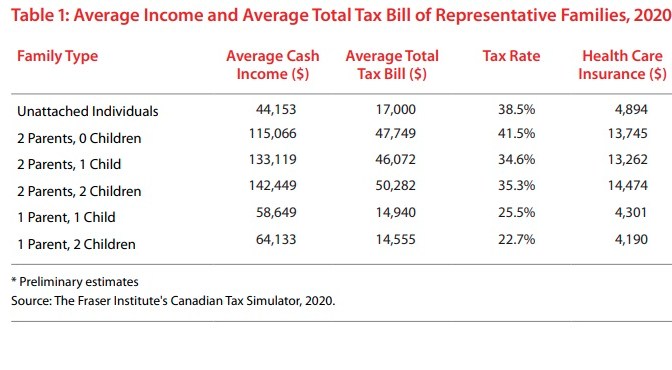
Canada’s Fraser Institute has estimated this excess tax burden from public health costs at roughly $9,000 for a household of two adults with or without children or $750 per month in additional taxes.

When I wanted an MRI I was scheduled the same week

Canadians wait far longer for treatment than Americans:

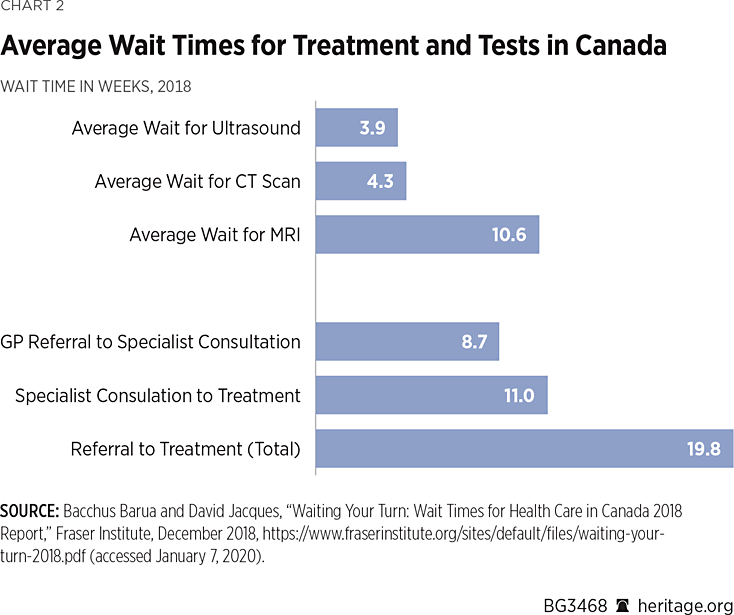
Medical waiting times have become a national crisis in Canada, and continue to worsen. The average wait time for medically necessary treatment between referral from a general practitioner and a consultation with a specialist was 8.7 weeks in 2018, 136 percent longer than in 1993. Patients then have to wait again between seeing the specialist and the actual treatment, another 11 weeks on average, 97 percent longer than in 1993.

From referral to treatment, then, it takes an average of 19.8 weeks (see Chart 2) to be treated, in addition to the original wait to see the family doctor in the first place—this for “medically necessary” treatment, not cosmetic surgery.

In contrast, nearly 77 percent of Americans are treated within four weeks of referral, and only 6 percent of Americans report waiting more than two months to see a specialist.

As for appointments, a 2017 survey of American physicians in the 15 largest U.S. cities found that it took just 24 days on average to schedule a new-patient physician appointment, including 11 days for an orthopedic surgeon and 21 days for a cardiologist.

As a result of these long waits, by one recent estimate, at any given moment, over one million Canadians—3 percent of the entire population—are waiting for a medical treatment.

These lists can average six months, and often much longer in rural areas, which tend to suffer from doctor shortages so severe that many do not even have a family doctor. Overall, 15 percent of Canadians did not have a regular health care provider in 2017.

The shortages ripple through the system; one doctor in Ontario called in a referral to the local hospital, only to be told there was a four-and-a-half year wait to see a neurologist.

In Canada, people die or become inoperable on waiting lists:

A Montreal man was finally called for his long-delayed urgent surgery two months after he had died. One 16-year-old boy in British Columbia waited three years for an “urgent” surgery, during which time his condition deteriorated so much that he became a paraplegic.

Canadians have to travel abroad to countries with functioning health care systems in order to be treated:

These cases are, unfortunately, not isolated; a survey of specialists found that average wait times exceed what is deemed clinically “reasonable” for fully 72 percent of conditions in Canada. The situation continues to worsen every year: In 1994, the average gap between clinically reasonable delay and actual delay was only four days, and by 2018 had grown to 23 days.

[…]With one million waiting, many Canadians turn in desperation to U.S. health care—the very system some U.S. policymakers propose to transform. In 2017 alone, Canadians made 217,500 trips to other countries for health care, of which 52,500 were to the U.S., paying out of pocket to skip the waiting.

Outdated equipment, outdated drugs, staff shortages:

 While the average employer-sponsored private insurance plan in Canada covers between 10,000 and 12,000 drugs, most public plans in Canada only cover 4,000. Canada has 35 percent fewer acute care beds than the U.S., and only one-fourth as many magnetic resonance imaging (MRI) units per capita—indeed, it has fewer MRI units per capita than Turkey, Chile, or Latvia.

[…]Some common treatments are simply unavailable to Canadians. For new pharmaceuticals, for example, Canada’s policy of forcing down prices so that American consumers essentially pay for Canada’s research and development has led to years-long delays for Canadian patients.

[…]Cutting corners on facilities and using outdated drugs show up in Canadian mortality rates. Thirty-day in-hospital mortality rates in Canada are 20 percent higher than in the U.S. for heart attacks, and nearly three times the U.S. level for strokes. Cancer age-standardized mortality is 10 percent higher in Canada than in the U.S.—despite far healthier lifestyles.

[…]When it comes to personnel, Canada underspends on medical staff and doctors, ranking 29th out of 33 among high-income countries for doctors per 1,000 population, accounting for a large part of those wait times. Canada has half as many specialist physicians per capita as the U.S.

[…]With such shortages and waiting lists, Canadian emergency rooms are packed. So packed that Canadians sometimes just give up and go home. Of Canadian ER visitors who are seen, 29 percent report wait times of over four hours, three times the U.S. level.

[…]Canadian seniors are 65 percent more likely to have visited the emergency room (ER) four or more times in the past year than American seniors.

Ultimately, nearly 5 percent of Canadian ER visitors end up leaving without ever being treated, giving up on a medical system that is perennially “free” but out of stock at the moment. In one study at two ERs in Alberta, 14 of the 498 walkaways were subsequently hospitalized, and one died within the week.

And keep in mind how things work in a single payer system. You pay up front through your taxes. The harder you work, the more you pay into the system. When you want treatment, you just get in line behind people who never paid one dime into the system – like all those low-skill refugees that Canada imports from Middle Eastern countries to build up the socialist voting bloc.