All posts by Wintery Knight

https://winteryknight.com/

What should Christians bring up when discussing truth with Muslims?

A conflict of worldviews

I have some experience dicussing Islam because my mother’s side of the family is all Muslim. My go-to argument has always been to confront them about the Qur’an’s claim that Jesus did not die of crucifixion. But I noticed a different argument from Laura Powell, who knows far more about this topic than I do. Do you think her approach is the best one?

She writes about it over at Gospel-Centered Discipleship:

The crux of the argument is this: The Qur’an affirms the inspiration, authority, and preservation of the New Testament Gospels;[2] yet the Qur’an also contradicts the Gospels on major theological and historical points. Therefore, the Qur’an cannot be reliable.

According to the Qur’an, the Gospel is the trustworthy, reliable revelation of God given as a guidance for mankind (Qur’an 3:3-4). These Scriptures from God were available and trustworthy when the Qur’an was revealed in the 7th century A.D., and those who had access to them were repeatedly told to obey them, judge by them, submit to their teaching, and stand fast upon them. In other words, according to the Qur’an, the Gospels are the inspired and authoritative words of God.

Qur’an 5:47 says, “And let the People of the Gospel judge by what Allah has revealed therein. And whoever does not judge by what Allah has revealed—then it is those who are the defiantly disobedient.”

Furthermore, Qur’an 5:68 states, “Say, ‘O People of the Scripture, you are [standing] on nothing until you uphold [the law of] the Torah, the Gospel, and what has been revealed to you from your Lord’” (see also 6:114; 3:3-4).

What I like about her argument is that she’s just taking the words of the Qur’an seriously, and asking the Muslims who claim to believe it what’s going on here. Why say that the gospels are unreliable today, when the Qur’an said that the gospels were reliable, yesterday.

My argument about the death of Jesus requires us to ask Muslims “where is the non-Muslim historian who thinks that Jesus did not die?” There isn’t one.

But my argument requires that the Muslim know something about historical scholarship, to know what non-Muslim historians think.Laura’s argument has wider appeal, because it doesn’t require that the Muslim have any knowledge about history – only knowledge about what their own holy book says.

She concludes with this:

What we see here is that the Qur’an teaches the inspiration, authority, and preservation of the Gospels. The Qur’an was intended as an Arabic version of the message of truth found in the Jewish and Christian Scriptures, but this presents a huge problem for Muslims because the Qur’an contradicts the Christian Scriptures on essential doctrines. Most notably, the Qur’an teaches that Jesus was not God incarnate, he did not die on a cross, and he was not raised from the dead (Qur’an 4:157; 5:116).

Here’s the dilemma for Muslims: If the Gospels are not trustworthy, then the Qur’an is false because it teaches that the Gospels are the inspired, perfectly preserved, authoritative words of God. But if the Gospels are trustworthy, then the Qur’an is false because it teaches contradictory, mutually exclusive facts about key issues. Either way, the Qur’an is false.

This, of course, is a huge problem for Muslims. The validity of Islam rests upon the reliability of the Qur’an, just as Christianity rests upon the truth of the divinity, death, and resurrection of Jesus. If the Qur’an is unreliable, then Islam is a false religion.

I like that she’s comfortable having disagreements with people. That’s not very common in the church today, in my experience.

By the way, this is the same Laura who wrote that really good article about how she found a better way to discuss her Christian worldview when she moved on from sharing her testimony. I blogged about it here.

What Americans don’t know about Canada’s single-payer health care system

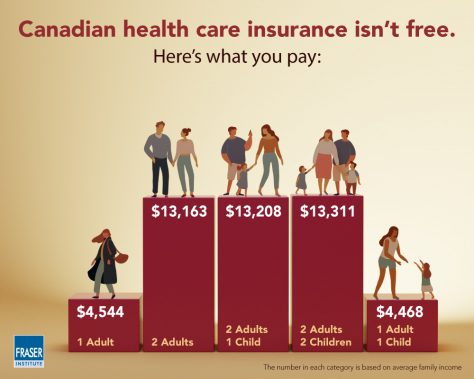
Price of healthcare per Canadian household (Source: Fraser Institute)

I post a lot of research from Canada’s Fraser Institute, but they are not the only think tank that publishes research on the efficiency and costs of single payer health care in Canada. This time, I found a report from the Heritage Foundation, where they go over quality of care, taxes, out of pocket costs, coverage, rationing, waiting lists, staff shortages, substandard equipment, and outdated drugs.

Here’s the report from the Heritage Foundation. I’ll focus on the differences.

Canadians pay slightly less in out of pocket costs:

The OECD calculates that Canadians spend 1.6 percent of GDP on out-of-pocket health spending, compared to 1.9 percent in the U.S.

[…]While these numbers are very close, they are actually getting closer. Since 1970, U.S. out-of-pocket spending as a percentage of total medical spending has been falling steadily, from 33 percent in 1970 to about 10 percent in 2017.19

Meanwhile, Canadian out-of-pocket spending has been falling much slower, so that by 2016 it totaled 15 percent of total medical spending—a higher proportion than in the U.S.20

 As a result, Statistics Canada warned in early 2020 that the percentage of Canadians experiencing large out-of-pocket burdens is growing, writing that “[b]etween 1998 and 2009…the percentage of households spending more than 10% of their total after-tax income on health care rose by 56%.”

Canadians pay more in federal and state taxes:

Federal taxation excluding social security contributions, then, comes to 28 percent of GDP in Canada, compared to just 19 percent in the U.S.—meaning 51 percent more.

[…]This excess taxation is largely a result of health spending, which has bloated provincial budgets to nearly three times the taxes of U.S. states.

Provincial taxes have grown to nearly the same level as federal taxation. Meanwhile, provincial health costs have risen to fully 37 percent of provincial budgets in 2016—up from 33 percent in 1993 – —and range as high as 42 percent.

Canada’s Fraser Institute has estimated this excess tax burden from public health costs at roughly $9,000 for a household of two adults with or without children or $750 per month in additional taxes.

When I wanted an MRI I was scheduled the same week

Canadians wait far longer for treatment than Americans:

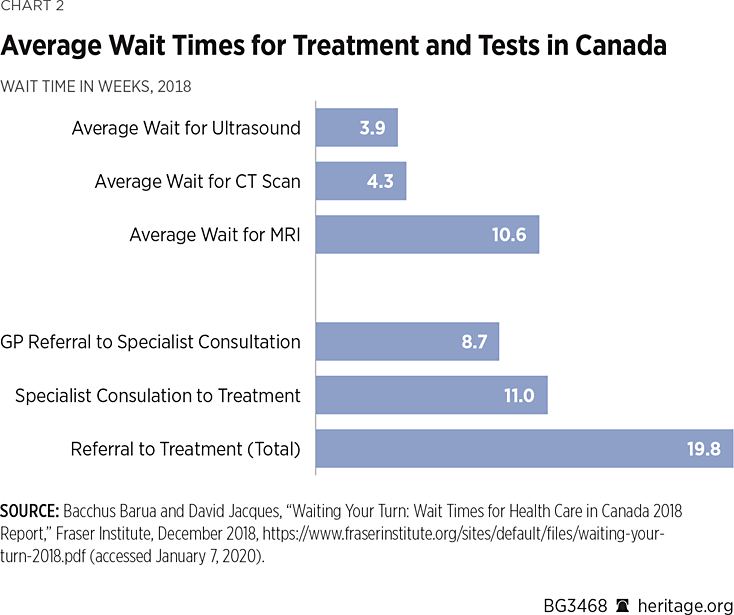
Medical waiting times have become a national crisis in Canada, and continue to worsen. The average wait time for medically necessary treatment between referral from a general practitioner and a consultation with a specialist was 8.7 weeks in 2018, 136 percent longer than in 1993. Patients then have to wait again between seeing the specialist and the actual treatment, another 11 weeks on average, 97 percent longer than in 1993.

From referral to treatment, then, it takes an average of 19.8 weeks (see Chart 2) to be treated, in addition to the original wait to see the family doctor in the first place—this for “medically necessary” treatment, not cosmetic surgery.

In contrast, nearly 77 percent of Americans are treated within four weeks of referral, and only 6 percent of Americans report waiting more than two months to see a specialist.

As for appointments, a 2017 survey of American physicians in the 15 largest U.S. cities found that it took just 24 days on average to schedule a new-patient physician appointment, including 11 days for an orthopedic surgeon and 21 days for a cardiologist.

As a result of these long waits, by one recent estimate, at any given moment, over one million Canadians—3 percent of the entire population—are waiting for a medical treatment.

These lists can average six months, and often much longer in rural areas, which tend to suffer from doctor shortages so severe that many do not even have a family doctor. Overall, 15 percent of Canadians did not have a regular health care provider in 2017.

The shortages ripple through the system; one doctor in Ontario called in a referral to the local hospital, only to be told there was a four-and-a-half year wait to see a neurologist.

In Canada, people die or become inoperable on waiting lists:

A Montreal man was finally called for his long-delayed urgent surgery two months after he had died. One 16-year-old boy in British Columbia waited three years for an “urgent” surgery, during which time his condition deteriorated so much that he became a paraplegic.

Canadians have to travel abroad to countries with functioning health care systems in order to be treated:

These cases are, unfortunately, not isolated; a survey of specialists found that average wait times exceed what is deemed clinically “reasonable” for fully 72 percent of conditions in Canada. The situation continues to worsen every year: In 1994, the average gap between clinically reasonable delay and actual delay was only four days, and by 2018 had grown to 23 days.

[…]With one million waiting, many Canadians turn in desperation to U.S. health care—the very system some U.S. policymakers propose to transform. In 2017 alone, Canadians made 217,500 trips to other countries for health care, of which 52,500 were to the U.S., paying out of pocket to skip the waiting.

Outdated equipment, outdated drugs, staff shortages:

 While the average employer-sponsored private insurance plan in Canada covers between 10,000 and 12,000 drugs, most public plans in Canada only cover 4,000. Canada has 35 percent fewer acute care beds than the U.S., and only one-fourth as many magnetic resonance imaging (MRI) units per capita—indeed, it has fewer MRI units per capita than Turkey, Chile, or Latvia.

[…]Some common treatments are simply unavailable to Canadians. For new pharmaceuticals, for example, Canada’s policy of forcing down prices so that American consumers essentially pay for Canada’s research and development has led to years-long delays for Canadian patients.

[…]Cutting corners on facilities and using outdated drugs show up in Canadian mortality rates. Thirty-day in-hospital mortality rates in Canada are 20 percent higher than in the U.S. for heart attacks, and nearly three times the U.S. level for strokes. Cancer age-standardized mortality is 10 percent higher in Canada than in the U.S.—despite far healthier lifestyles.

[…]When it comes to personnel, Canada underspends on medical staff and doctors, ranking 29th out of 33 among high-income countries for doctors per 1,000 population, accounting for a large part of those wait times. Canada has half as many specialist physicians per capita as the U.S.

[…]With such shortages and waiting lists, Canadian emergency rooms are packed. So packed that Canadians sometimes just give up and go home. Of Canadian ER visitors who are seen, 29 percent report wait times of over four hours, three times the U.S. level.

[…]Canadian seniors are 65 percent more likely to have visited the emergency room (ER) four or more times in the past year than American seniors.

Ultimately, nearly 5 percent of Canadian ER visitors end up leaving without ever being treated, giving up on a medical system that is perennially “free” but out of stock at the moment. In one study at two ERs in Alberta, 14 of the 498 walkaways were subsequently hospitalized, and one died within the week.

And keep in mind how things work in a single payer system. You pay up front through your taxes. The harder you work, the more you pay into the system. When you want treatment, you just get in line behind people who never paid one dime into the system – like all those low-skill refugees that Canada imports from Middle Eastern countries to build up the socialist voting bloc.

Is Christianity false or is it just mean and judgmental?

Have you noticed lately that there is a decided lack of atheists who argue against Christianity on factual grounds? Instead of constructing arguments against Christian theism, what I am seeing more and more of is that people try to say that Christianity makes some group feel bad, and therefore Christianity is not worthy of pursuit and engagement.

Here’s how it works. You have a person who has some sinful habit or other that they don’t want to give up, and they notice that people are judging them and saying that what they are doing is wrong. And they feel bad. And they decide to attack Christianity to make the Christians stop judging them. So how do they do it? Do they argue that the concept of God is logically incoherent? No… Do they argue that some instances of evil and suffering are gratuitous? No… Do they argue that the universe is eternal so that it had no Creator? No…

What do they do?

What they do is pick on some statement by a conservative Christian that makes them feel bad, and then claim that they are victims of meanness. And apparently, making someone feel bad is some sort of disproof of Christian theism. Why is that? It’s because we have decided as a culture that the purpose of religion is to make people feel good about themselves and to be “nice” to other people. And by “nice”, we mean not making other people feel bad about the sinfulness of their behavior. So people are making Christianity irrelevant just by assuming that the purpose of life is happiness, and that any religion that makes people unhappy can be dismissed.

Before, people thought about Christianity as something that you investigated, and that was either true or false. People understood that Christianity made claims about the external world that were either true or false. For example, Christianity claims that the universe had a beginning in the finite past. And the people who disagreed with Christianity would try to produce arguments and evidence that the universe was eternal, as with the steady-state theory or the oscillating model of the universe. And people were willing to change their behavior to match what was true, even when it made them feel less happy. But not any more.

Religion today is not about truth

I think somehow, as a society, we have internalized the following beliefs:

  • God wants me to have happy feelings
  • the purpose of religion is to give me happy feelings
  • God’s moral will for me is that I be “nice” to others
  • being nice to others means accepting whatever they want to do as “good”
  • accepting whatever anyone does makes them like me
  • when people like me, I feel happy, which is what God wants
  • there is no need for me to study God’s existence
  • God exists when I want to be comforted, and doesn’t exist when I want to sin
  • there is no need for me to study God’s character
  • God’s character is pretty much like my character, whatever I want is fine with God
  • there are no moral rules or obligations from God that apply to me
  • religions are all the same, I choose the one that makes me feel happy

So you can see that someone who believes things like this can claim to be a Christian, but would actually attack real Christians who hold to the old view of exclusive factual claims and moral judgments. The real Christians are people who have studied these questions, who know that God exists, and what he is like, and accept the Bible’s moral teachings as authoritative. So you could have a famous pastor who defends the Bible’s prohibition on sex before marriage, and have someone feel bad about being judged, and then a bunch of these “the purpose of life is happiness” people will appear and chastise that pastor for making people feel bad. And many of them will claim to be Christians, and attend church, too.

Now notice that this mob of happy-feelings people are not going argue against the pastor using the Bible, because the Bible is pretty clearly against fornication. What they’ll do instead is they’ll pick out some piece of the Bible that seems unfair, like the slaughter of some group of child-sacrificing pagans, and they’ll rail against that Bible passage in order to discredit the Bible’s authority on moral questions. And then the good conservative pastor is made to feel bad because he has broken those unwritten laws – he made someone feel bad using this evil book.

No factual claims about God’s existence were made. No historical arguments were made. No evidence was presented. The mere fact that the Bible is mean to talk about killing the poor Canaanites is used to prove that the Bible has no moral authority at all, on any issue. “It’s mean” entails that it’s false. And you can have people who read the Bible for devotions, who sing in church, and who lead worship, who think that the Bible is false because it’s mean, and it’s mean because it can be used to judge people and make them feel bad.

An example

Now consider single motherhood, as in this case.

Excerpt:

She tells her children to do as she says and not as she does.

But the words of mother of 14 Joanne Watson – who receives more than £2,000 a month in state handouts – have fallen on deaf ears.

Her 15-year-old daughter Mariah is pregnant, the father has ‘left the scene’, and the youngster is about to start living off benefits.

Mrs Watson, 40, is raising her giant brood alone after parting from her husband John, 46, three years ago, and breaking up with subsequent partner Craig le Sauvage, 35, last year.

Despite this, she has still managed to squirrel away enough cash for a £1,600 breast enhancement and a sunbed. She claims she has always encouraged her daughters to use contraception – but, inevitably, it seems they would rather follow the family tradition.

Mariah’s pregnancy comes after Mrs Watson’s oldest daughter Natasha, 22, got pregnant with her son Branford, now six, when she was 16. Her second eldest daughter Shanice, 19, also got pregnant at 16 with her 22-month-old son Marley.

Mariah says she has no concerns about becoming a teenage mother, as it seems the most natural thing in the world. Initially, she and her child will be supported by the taxpayer.

She is expected to move into a housing complex for single mothers and will receive supplementary benefit and child allowance for her baby.

The youngster, who is due to have a boy, said: ‘I’m not nervous. I’ve been around babies my whole life so I know what to expect and that I can handle it. The father isn’t involved and I don’t want him to be either. I’m really excited and think I will be a great mum.’

Now there are two responses to this from people who profess to be Christians. The first response, my response, is to make a general argument against having sex before marriage, using the latest statistics to show the harm that fatherlessness causes to children, and more evidence besides. My response is not to pick on any one person, but to set moral boundaries, to make moral judgments against the selfishness of parents, and to not celebrate and subsidize anything that will harm innocent children. I don’t want to make anyone person feel bad, I just want to say what the evidence is. However, even a general argument using evidence does make some people feel bad, so I am judged as “mean” for giving my opinion and backing it up with evidence.

But there is another response. This response comes from someone who professes to be a Christian, but they are actually a “God wants me to be happy and to be nice to people so they will like me and then we’ll all be happy” person. They would never dream of judging anyone for anything they do. And they are very angry with me for getting my moral rules out of that horrible Bible, and for using facts and evidence to make people feel bad. They believe in compassion, which is the idea that says that the moral boundaries of the Bible are false, and that we have to celebrate and subsidize any and every variation on the traditional family, regardless of the harm caused, so that the selfish adults don’t feel bad about their destructive choices.

And what do we make of a person who feels that saying “it’s wrong” is mean, because it makes a guilty person feel bad? Well, here is the truth. A person who argues against the Bible based on the happy-feelings model is no friend of God, and no friend of the victims of selfish actions. They may think that they are being a good person by affirming people who make bad decisions, but really it just encourages people to get into trouble.