All posts by Wintery Knight

https://winteryknight.com/

Robin Collins and atheist Peter Millican discuss the fine-tuning of the universe for life

You might remember Peter Millican from the debate he had with William Lane Craig. I ranked that debate as one of the 3 best I have ever seen, along with the first Craig  vs Dacey debate and the second Craig vs Sinnott-Armstrong debate.

Details:

Science has revealed that the fundamental constants and forces of the cosmos appear to be exquisitely fine-tuned to allow a universe in which life can develop. Is God the best explanation of the incredibly improbable odds of the universe we live in being a life-permitting one?

Robin Collins is a Christian philosopher and a leading advocate of the argument for God from cosmic design. Peter Millican is an atheist philosopher at Oxford University. They debate the issues.

From ‘Unbelievable?’ on ‘Premier Christian Radio’, Saturday 19th March 2016.

The debate:

As usual when the atheist is an expert, there is no snark or paraphrasing in the summary.

Summary

Brierley: What is the fine-tuning argument?

Collins: the fine-tuning is structure of the universe is extremely precisely set to allow the existing of conscious, embodied agents who are capable of moral behavior. There are 3 kinds of fine-tuning: 1) the laws of nature (mathematical formulas), 2) the constants of physics (numbers that are plugged into the equations), 3) the initial conditions of the universe. The fine-tuning exists not just because there are lots of possibilities, but there is something special about the actual state of affairs that we see. Every set of laws, parameters and initial conditions is equally improbable, but the vast majority of permutations do not permit life. The possible explanations: theism or the multiverse.

Brierley: How improbable are the numbers?

Collins: Once case is the cosmological constant (dark energy density), with is 1 part in (10 raised to 120th power). If larger, the universe expands too rapidly for galaxies and stars to form after the Big Bang. If smaller, the universe collapses in on itself before life could form. Another case is the initial distribution of mass energy to give us the low entropy we have that is necessary for life. The fine-tuning there is 1 part in (10 raised to the 10th power raised to the 123rd power).

Brierley: What do you think of the argument?

Millican: The argument is worth taking very seriously. I am a fan of the argument. The other arguments for God’s existence such as the ontological and cosmological arguments are very weak. But the fine-tuning argument has the right structure to deliver the conclusion that theists want. And it is different from the traditional design argument tended to focus on biological nature, which is not a strong argument. But the fine-tuning argument is strong because it precedes any sort of biological evolution. Although the design is present at the beginning of the universe, it is not visible until much later. The argument points to at least deism, and possibly theism. The argument is not based on ignorance, it is rooted in “the latest results from the frontiers of science” (his phrase).

Brierley: Is this the best argument from natural theology?

Collins: The cosmological argument makes theism viable intuitively, but there are some things that are puzzling, like the concept of the necessary being. But the fine-tuning argument is decisive.

Brierley: What’s are some objections to the fine-tuning argument?

Millican: The argument is based on recent physics, so we should be cautious because we maybe we will discover a natural explanation.

Brierley: Respond to that.

Collins: The cosmological constant has been around since 1980. But the direction that physics is moving in is that there are more constants and quantities being discovered that need to be fine-tuned, not less. Even if you had a grand unified theory, that would have to be have the fine-tuning pushed into it.

(BREAK)

Millican: Since we have no experience of other laws and values from other universes, we don’t know whether these values can be other than they are. Psychologically, humans are prone to seeing purpose and patterns where there is none, so maybe that’s happening here.

Brierley: Respond to that.

Collins: It is possible to determine probabilities on a single universe case, for example using multiple ways of calculating Avogadro’s number all converging on the same number makes it more probable.

Millican: Yes, I willing to accept that these constants can take on other values, (“principle of indifference”). But maybe this principle be applied if the improbability were pushed up into the theory?

Collins: Even if you had a grand theory, selecting the grand theory from others would retain the improbability.

Brierley: What about the multiverse?

Millican: What if there are many, many different universes, and we happen to be in the one that is finely-tuned, then we should not be surprised to observe fine-tuning. Maybe a multiverse theory will be discovered in the future that would allow us to have these many universes with randomized constants and quantities. “I do think that it is a little bit of a promissary note”. I don’t think physics is pointing to this right now.

Brierley: Respond to that.

Collins: I agree it’s a promissary note. This is the strongest objection to the fine-tuning argument. But there are objections to the multiverse: 1) the fine-tuning is kicked back up to the multiverse generator has to be set just right to produce universes with different constants, 2) the multiverse is more likely to produce a small universe with Boltzmann brains that pop into existence and then out again, rather than a universe that contains conscious, embodied intelligent agents. I am working on a third response now that would show that the same constants that allow complex, embodied life ALSO allow the universe to be discoverable. This would negate the observer-selection effect required by the multiverse objection.

Brierley: Respond to that.

Millican: I don’t see why the multiverse generator has to be fine-tuned, since we don’t know what the multiverse generator is. I’m not impressed by the Boltzmann brains, but won’t discuss. We should be cautious about inferring design because maybe this is a case where we are seeing purpose and design where there is none.

Brierley: Can you negate the discoverability of the universe by saying that it might be psychological?

Collins: These things are not psychological. The selected value for the cosmic microwave background radiation is fine-tuned for life and for discoverability. It’s not merely a discoverability selection effect, it’s optimal for discoverability. If baryon-photon value were much smaller, we would have known that it was not optimal. So that judgment cannot be explained by

Millican: That’s a very interesting new twist.

Brierley: Give us your best objection.

Millican: I have two. 1) Even if you admit to the fine-tuning, this doesn’t show a being who is omnipotent and omnisicient. What the fine-tuning shows is that the designer is doing the best it can given the constraints from nature. If I were God, I would not have made the universe so big, and I wouldn’t have made it last 14 billion years, just to make one small area that supports life. An all-powerful God would have made the universe much smaller, and much younger. 2) The fine-tuning allows life to exist in other solar systems in other galaxies. What does this alien life elsewhere mean for traditional Christian theology? The existence of other alien civilizations argues against the truth of any one religion.

Brierley: Respond to those.

Collins: First objection: with a finite Creator, you run into the problem of having to push the design of that creature up one level, so you don’t really solve the fine-tuning problem. An unlimited being (non-material, not composed of parts) does not require fine-tuning. The fine-tuning is more compatible with theism than atheism. Second objection: I actually do think that it is likely that are other universes, and life in other galaxies and stars, and the doctrine of the Incarnation is easily adaptable to that, because God can take on multiple natures to appear to different alien civilizations.

Other resources (from WK)

If you liked this discussion, be sure and check out a full length lecture by Robin Collins on the fine-tuning, and a shorter lecture on his very latest work. And also this the Common Sense Atheism podcast, featuring cosmologist Luke Barnes, who answers about a dozen objections to the fine-tuning argument.

William Lane Craig lectures on the evidence for the resurrection of Jesus

Here is Dr. William Lane Craig giving a long-form argument for the historical event of the resurrection of Jesus, and taking questions from the audience.

The speaker introduction goes for 6 minutes, then Dr. Craig speaks for 35 minutes, then it’s a period of questions and answers with the audience. The total length is 93 minutes, so quite a long period of Q&A. The questions in the Q&A period are quite good.

Introduction:

  • Many people who are willing to accept God’s existence are not willing to accept the God of Christianity
  • Christians need to be ready to show that Jesus rose from the dead as a historical event
  • Private faith is fine for individuals, but when dealing with the public you have to have evidence
  • When making the case, you cannot assume that your audience accepts the Bible as inerrant
  • You must use the New Testament like any other ancient historical document
  • Most historians, Christian and not, accept the basic minimal facts supporting the resurrection of Jesus

Fact #1: the burial of Jesus following his crucifixion

  • Fact #1 is supported by the early creed found in Paul’s first letter to the Corinthians (1 Cor 15)
  • Fact #1 is supported by the early Passion narrative which was a source for Mark’s gospel
  • Fact #1 passes the criterion of enemy attestation, since it praises one of the Sanhedrin
  • Fact #1 is not opposed by any competing burial narratives

Fact #2: on the Sunday following his crucifixion, Jesus’ tomb was found empty by some women

  • Fact #2 is supported by the early Passion narrative which was a source for Mark’s gospel
  • Fact #2 is implied by the early creed found in Paul’s first letter to the Corinthians (1 Cor 15)
  • Fact #2 is simple and lacks legendary embellishment, which argues for an early dating
  • Fact #2 passes the criterion of embarrassment, because it has female, not male, witnesses
  • Fact #2 passes the criterion of enemy attestation, since it is reported by the Jewish leaders

Fact #3: Jesus appeared to various people in various circumstances after his death

  • Fact #3 is supported by the early creed found in Paul’s first letter to the Corinthians (1 Cor 15)
  • Fact #3 is supported by multiple, independent reports of the events from all four gospels
  • Fact #3 explains other historical facts, like the conversion of Jesus’ skeptical brother James

Fact #4: the earliest Christians proclaimed their belief in the resurrection of Jesus

  • Fact #4 explains why the earliest Christians continued to identify Jesus as the Messiah
  • Fact #4 explains why the earliest Christians were suddenly so unconcerned about being killed

Dr. Craig then asks which hypothesis explains all four of these facts. He surveys a number of naturalistic hypotheses, such as the hallucination theory or various conspiracy theories. All of these theories deny one or more of the minimal facts that have been established and accepted by the broad spectrum of historians. In order to reject the resurrection hypothesis, a skeptic would have to deny one of the four facts or propose an explanation that explains those facts better than the resurrection hypothesis.

I listened to the Q&A period while doing housekeeping and I heard lots of good questions. Dr. Craig gives very long answers to the questions. One person asked why we should trust the claim that the Jewish leaders really did say that the disciples stole the body. Another one asked why we should take the resurrection as proof that Jesus was divine. Another asks about the earthquake in Matthew, which Mike Licona and I doubt is intended to be historical, but is more likely to be apocalyptic imagery. Dr. Craig is also asked about the Jewish scholar Geza Vermes, and how many of the minimal facts he accepts. Another questioner asked about the ascension.

You can see this evidence used in an actual debate, against a historian who disagrees with Dr. Craig. That post contains a point by point summary of the debate that I wrote while listening to it.

If you are looking for a good book to read on this topic, the best introductory book on the resurrection is “The Case for the Resurrection of Jesus” and the best comprehensive book is “The Resurrection of Jesus“.

Will the real intolerant bigot please stand up?

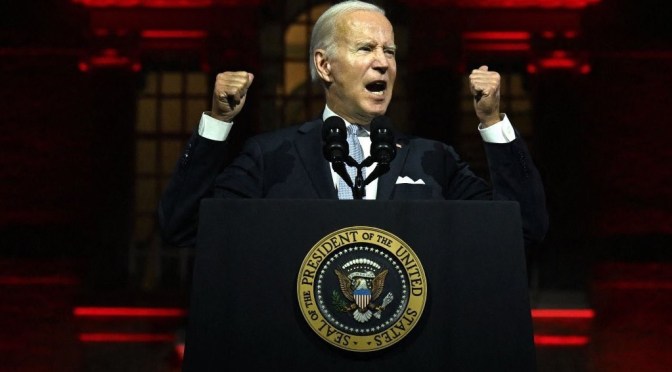
I saw that president Biden was boasting about how tolerant and compassionate secular leftists are, and how mean, intolerant and bigoted Christians and conservatives are. This is similar to Antifa burning down businesses and committing crimes, then fussing about how happily married Presbyterian couples with 5 homeschooled kids are the real threat to democracy.

Here’s an article from The Federalist:

The intolerant leftist mob is coming for Christians everywhere, and we were just the latest target in the way this past Wednesday night.

The Family Foundation of Virginia is the largest and oldest pro-family advocacy organization in Virginia. Our team and supporters were denied a meal for our beliefs when Metzger’s Bar and Butchery in Richmond, Virginia, refused to service our pre-reserved event, leaving us scrambling just moments before.

For weeks, we had planned a gathering in a private room to fellowship and update supporters on our work. About an hour and a half before the event was set to take place, one of the restaurant’s owners called our team to cancel. An employee had looked up our organization, and their wait staff refused to serve us.

This too:

Already, our database provider was purchased by a larger company called Every Action, which immediately informed us we were being discontinued as a client. That forced shift cost us tens of thousands of dollars, as it is not as easy as pivoting to another restaurant to hold an event.

Here’s another story from the Daily Caller:

Ohio middle school teacher Vivian Geraghty filed a lawsuit after allegedly being fired for refusing to violate her religious beliefs by using preferred pronouns.

Geraghty, a Christian and former teacher at Jackson Memorial Middle School, was told she was required to use two students’ new pronouns and their preferred names in class, according to the lawsuit. Geraghty was fired after refusing to do so, at which point she sued the school’s Board of Directors, principal Kacy Carter and Monica Myers, the director of curriculum, instruction, and assessment.

Everyone thinks that secular leftists are so compassionate and tolerant, but these two secular leftist women (Kacy Carter and Monica Myers) were very bold and determined in their bullying of Christian employees:

[…]Geraghty was allegedly required to explain her Christian faith and why that meant she could not comply by using the new pronouns, according to the lawsuit. Geraghty proceeded to explain that her faith did not align with changing one’s pronouns, but was quickly dismissed.

“Defendants Carter and Myers told Ms. Geraghty that ‘she would be required to put her beliefs aside as a public servant,’” the lawsuit stated. “Ms. Geraghty explained that she could not put her beliefs aside, and she did not believe she could be compelled to do so as a condition of public service.”

Geraghty was accused of “insubordination” and informed that she would no longer be allowed to teach, according to the lawsuit. Later that day, Carter told Geraghty to write a letter of resignation and was subsequently removed from the school.

I was pretty impressed that the teacher even stood up for her beliefs. Most of the people I know or know of who work in the public schools just capitulate to the secular left fascists.

I found a third story from Norway, but this time it’s not a Christian woman being bullied. It’s a lesbian!

Daily Wire reported:

A Norwegian woman could spend up to three years in prison for saying that men are not able to be lesbians.

On November 17, Tonje Gjevjon was told that she was being investigated by the police over hate speech because of a Facebook post that criticized men who said they were lesbians.

I know that in America, there’s a significant number of “conservative” Christian leaders, like David French, who are allied with the secular left on social issues. I know that David French likes to act surprised at what the secular left does to Christians. But we know what they’re going to do. We just have to pay attention to these stories, and we understand what they will do.