

One of the best introductory books on the existence of God is Detective J. Warner Wallace’s “God’s Crime Scene”. The book provides a good overview of all of the areas that suggest an intelligent agent at work in the natural world. I found a good review of the book over at Luke Nix’s “Faithful Thinkers” blog.
The book begins with an introductory chapter explaining what’s in the book, then an opening statement explaining (without taking sides) how we can investigate whether or not there is a Creator and Designer of the universe. The next 8 chapters talk about 8 areas where we can investigate:
- the origin of the universe
- evidence for design in the universe
- the origin of life
- the presence of information in the cell
- our awareness of consciousness
- our experience of free will
- objective human value and objective moral duties
- the reality of evil in the world
I’ll just grab a couple of paragraphs on a couple of those points from Luke’s review:
Chapter 1: In the Beginning
Wallace’s first piece of evidence that appears to not have an explanation inside the universe is the universe’s beginning. He presents a diverse set of arguments for the beginning of the universe. These include the philosophical evidence of the impossibility of infinite regresses, theoretical evidence of mathematics and physics, observational evidence from astronomy, thermal evidence provided by the second law of thermodynamics, quantitative evidence in the abundance of helium, and evidence of the cosmic background radiation. All these used together provide powerful evidence of the beginning of the universe, and since everything that begins to exist, must have a cause, the universe must have had a cause outside itself too.
Chapter 2: Tampering with the Evidence
The foundational conditions of the universe that allow for life’s existence include the physical laws governing the atom, the matter of the universe, and the creation of chemicals. The next layer (regional) moves closer to home: our galaxy and solar system. The shape, position, and size of our galaxy make it habitable for life; while our sun’s position, age, mass, and composition allow it to to host a planet fit for life. The third layer is the planet, itself. The earth’s relationship to the sun, atmosphere, terrestrial nature, and moon all play a role in making a place that is fit for life.
Chapter 5: Our Experience of Consciousness
In naturalistic worldviews it is common to believe that the brain and the mind are the same thing. Wallace explains that the only way that two things are the same is if they share all their attributes with no differences. He describes six attributes of the brain that are not shared by the mind. All of these distinctions build a powerful case for the two being completely different. He concludes that the brain is physical while the mind is non-physical and that the mind’s existence can only be explained “outside the room” of the universe being the product of another mind. He examines several attempts by naturalistic philosophers to explain the mind “inside the room” of the universe, but he shows how each of them fail to offer an adequate explanation.
Chapter 6: Free Will or Full Wiring
From a naturalistic perspective (one that holds there is no distinction between the mind and the brain) free will does not exist; it is an illusion much like the mind. If free will does actually exist, it points even more powerfully towards the existence of the mind, which must derive its origin from the supernatural, since it is supernatural itself. Wallace uses the concept of responsibility and the ability to choose other than we do to build his case for free will’s actual existence. Without the ability to chose something other than what we do, we cannot be held responsible, thus no one would be worthy of punishment (in the case of wrong-doing) or praise (in the case of doing right).
A while back I finished reading “God’s Crime Scene”, and I found something interesting in Chapter 6, on free will on p. 256:
In 2008, researchers from the University of Minnesota and the University of British Columbia conducted experiments highlighting the relationship between a belief in determinism and immoral behavior. They found students who were exposed to deterministic literature prior to taking a test were more likely to cheat on the test than students who were not exposed to literature advocating determinism. The researchers concluded those who deny free will are more inclined to believe their efforts to act morally are futile and are, therefore, less likely to do so.
In addition, a study conducted by researchers from Florida State University and the University of Kentucky found participants who were exposed to deterministic literature were more likely to act aggressively and less likely to be helpful toward others.” Even determinist Michael Gazzaniga conceded: “It seems that not only do we believe we control our actions, but it is good for everyone to believe it.”” The existence of free will is a common characteristic of our experience, and when we deny we have this sort of free agency, there are detrimental consequences.
I decided to look up these studies.
Here’s the abstract for first study: (2008)
Does moral behavior draw on a belief in free will? Two experiments examined whether inducing participants to believe that human behavior is predetermined would encourage cheating. In Experiment 1, participants read either text that encouraged a belief in determinism (i.e., that portrayed behavior as the consequence of environmental and genetic factors) or neutral text. Exposure to the deterministic message increased cheating on a task in which participants could passively allow a flawed computer program to reveal answers to mathematical problems that they had been instructed to solve themselves. Moreover, increased cheating behavior was mediated by decreased belief in free will. In Experiment 2, participants who read deterministic statements cheated by overpaying themselves for performance on a cognitive task; participants who read statements endorsing free will did not. These findings suggest that the debate over free will has societal, as well as scientific and theoretical, implications.
And the abstract for the second study: (2009)
Laypersons’ belief in free will may foster a sense of thoughtful reflection and willingness to exert energy, thereby promoting helpfulness and reducing aggression, and so disbelief in free will may make behavior more reliant on selfish, automatic impulses and therefore less socially desirable. Three studies tested the hypothesis that disbelief in free will would be linked with decreased helping and increased aggression. In Experiment 1, induced disbelief in free will reduced willingness to help others. Experiment 2 showed that chronic disbelief in free will was associated with reduced helping behavior. In Experiment 3, participants induced disbelief in free will caused participants to act more aggressively than others. Although the findings do not speak to the existence of free will, the current results suggest that disbelief in free will reduces helping and increases aggression.
So what to make of this?
If you’re an atheist, then you are a physical object. And like every other physical object in the universe, your behavior is determined by genetic programming (if you’re alive) and external inputs. Material objects do not have the ability to make free choices, including moral choices.
Here’s prominent atheist Jerry Coyne’s editorial in USA Today to explain why atheists can’t ground free will.
Excerpt:
And that’s what neurobiology is telling us: Our brains are simply meat computers that, like real computers, are programmed by our genes and experiences to convert an array of inputs into a predetermined output. Recent experiments involving brain scans show that when a subject “decides” to push a button on the left or right side of a computer, the choice can be predicted by brain activity at least seven seconds before the subject is consciously aware of having made it. (These studies use crude imaging techniques based on blood flow, and I suspect that future understanding of the brain will allow us to predict many of our decisions far earlier than seven seconds in advance.) “Decisions” made like that aren’t conscious ones. And if our choices are unconscious, with some determined well before the moment we think we’ve made them, then we don’t have free will in any meaningful sense.
Atheist William Provine says atheists have no free will, no moral accountability and no moral significance:
Let me summarize my views on what modern evolutionary biology tells us loud and clear — and these are basically Darwin’s views. There are no gods, no purposes, and no goal-directed forces of any kind. There is no life after death. When I die, I am absolutely certain that I am going to be dead. That’s the end of me. There is no ultimate foundation for ethics, no ultimate meaning in life, and no free will for humans, either.
(Source)
If you don’t have free will, then you can’t make moral choices, and you can’t be held morally responsible. No free will means no morality. Can you imagine trying to get into any sort of enterprise with someone who has this view of moral choices? A marriage, or a business arrangement, etc? It would be crazy to expect them to behave morally, when they don’t even think that moral choices is possible. It just excuses all sorts of bad behavior, because no one is responsible for choosing to do the right thing.
Believers in materialism are going to struggle with prescriptive morality, including self-sacrificial care and concern for others. Their worldview undermines the rationality of the moral point of view. You might find atheists acting morally for their own purposes, but their worldview doesn’t rationally ground it. This is a big problem for people who can see objective morality woven into the universe – and themselves – because they have the awareness of objective right and wrong.
Choosing to do the right thing
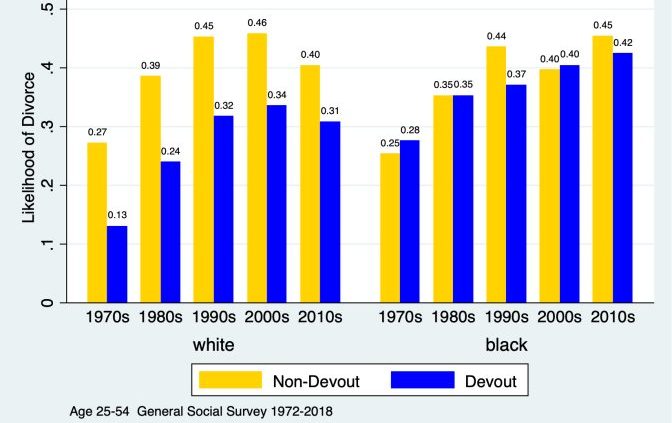
I think what atheists like to say is “I can be moral, too”. That’s not interesting. What is interesting is whether it is rational for you to be moral when doing the right thing sets you back. When I look at the adultery of Dawkins, the polyamory of Carrier, the divorces of Shermer and Atkins, etc. I am not seeing anything that really wows me about their ability to do the right thing when it was hard for them to do it. They all deny free will of course, and think that trying to resist temptation is a waste of time.
Wallace explains how the awareness of free will and moral choices caused him to turn away from atheism, in this blog post.
He writes:
As an atheist, I chose to cling to naturalism, in spite of the fact that I lived each day as though I was capable of using my mind to make moral choices based on more than my own opinion. In addition, I sought meaning and purpose beyond my own hedonistic preferences, as though meaning was to be discovered, rather than created. I called myself a naturalist while embracing three characteristics of reality that simply cannot be explained by naturalism. As a Christian, I’m now able to acknowledge the “grounding” for these features of reality. My philosophical worldview is consistent with my practical experience of the world.
I think atheists who want to be honest about their own experience of first-person consciousness, free will, moral realism, etc. will do well to just accept that theism rationally grounds all of these things, and so you should accept theism. Theism is real. If you like morality, and want to be a virtuous person, then you should accept theism.


 WINTERY KNIGHT