All posts by Wintery Knight

https://winteryknight.com/

Scott Klusendorf defends the pro-life view on the Unbelievable radio show

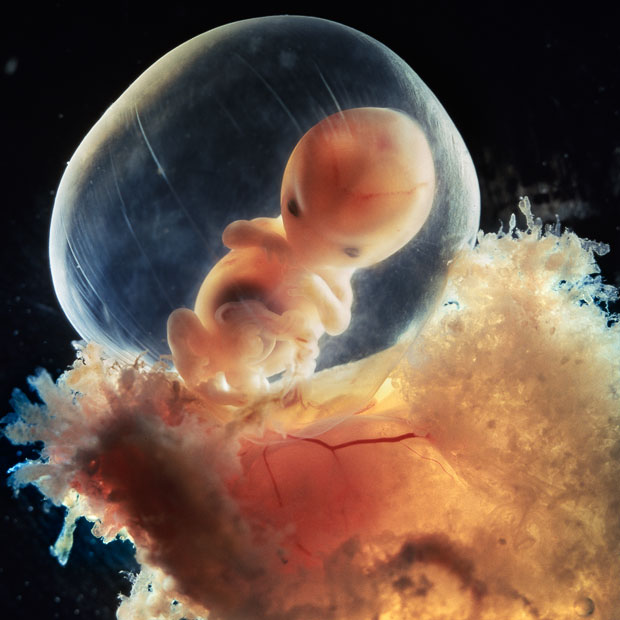
I'm Scheming Unborn Baby, and I approve of incrementalism
I’m Scheming Unborn Baby, and I approve of this debate

Here are the details:

The abortion debate reared its head again this summer after controversial tweets by Richard Dawkins made the news.

Justin hosts a discussion between Mara Clarke of the Abortion Support Network and Scott Klusendorf of the Life Training Instititute. Mara believes women need to be decide whether to terminate a pregnancy, but Scott says that all depends on whether we are dealing with a human life in the womb.

MP3 of this show:

http://cdnapi.kaltura.com/p/618072/sp/61807200/playManifest/entryId/1_ggc953xi/flavorId/1_vto2eisb/protocol/http/format/url/a.mp3?clientTag=feed:1_jlj47tkv

My snarky paraphrase of the debate (not exact):

  • Speaker introductions
  • Klusendorf: no justification for abortion is necessary if the unborn are not human
  • Klusendorf: we need to address the issue “what is the unborn?” Are the unborn human?
  • Klusendorf: SLED: size, level of development, environment, degree of dependency
  • Klusendorf: None of these things affect the value of a human being
  • Klusendorf: Even if we don’t KNOW whether the unborn is human
  • Mara: I’m not going to debate when life begins
  • Mara: Women know when life begins by feelings
  • Mara: The moral decision is “whether I can take care of this child?”
  • Brierley: When is an unborn being human?
  • Mara: I refuse to debate that – the real question is whether women want their babies or not
  • Mara: Forced pregnancy is not OK
  • Brierley: Could your justification for abortion (not wanting to care for a child) work through all 9 months?
  • Mara: Late term abortions are rare, so I don’t have to answer that question
  • Mara: Abortion should be OK through all 9 months of pregnancy because women cannot be restricted
  • Mara: Some women are poor, they need to be able to kill expensive babies at any time
  • Klusendorf: although she says she won’t debate the unborn, she does take a position
  • Klusendorf: she assumes the unborn is not human, because she says that insufficient funds is justification for abortion
  • Klusendorf: no one argues that you can kill a two year old because they cost money, because she thinks they are human
  • Klusendorf: she is begging the question by assuming the unborn are not human, but that is the issue we must resolve
  • Klusendorf: I am pro-choice on many other things, e.g. women choosing their own husbands, religion, etc.
  • Klusendorf: Some choices are wrong – Mara might be right, but she needs to make the case for the unborn not being human
  • Brierley: What is your reason for thinking that an unborn child is different from a 2-year old?
  • Mara: An unborn child is not the same as a 2-year old, in my personal opinion
  • Mara: I am not a debater, so I don’t have to provide reasoning for my assertion, I just feel it
  • Mara: Not everybody agrees with Scott, they don’t have to have a rational argument, they just need to feel differently
  • Mara: From my experience, when a woman doesn’t want to be pregnant, then she should be able to not be pregnant
  • Mara: Women shouldn’t be punished with a baby that she doesn’t want, even if she chooses to have recreational sex
  • Brierley: What do you think of women who think the unborn is human and do it anyway?
  • Klusendorf: It’s interesting that they never kill their toddlers for those reasons
  • Klusendorf: I layed out scientific and philosophical reasons for the humanity of the unborn
  • Klusendorf: Her response was “but some people disagree with you”
  • Klusendorf: People disagreed about whether slavery was wrong, or whether women should be able to vote
  • Klusendorf: that doesn’t mean there is no right answer – the right answer depends on the arguments
  • Klusendorf: if absence of agreement makes a view false, then it makes HER pro-choice view false as well
  • Klusendorf: she did make an argument for the unborn child having no rights because of the location
  • Klusendorf: she needs to explain to us why location matters – what about location confers value
  • Mara: I’m not going to let Scott frame my debate for me!!!
  • Mara: women get pregnant and they don’t want their babies! should we put them in jail!!!!
  • Klusendorf: I didn’t just give my opinion, I had science and philosophy, the issue is “what is the unborn?”
  • Mara: philosophical and scientific debates are unimportant, I am an expert in real women’s lives
  • Klusendorf: Which women? Women in the womb or only those outside the womb?
  • Mara: Only those outside the womb
  • Klusendorf: Only those outside the womb?
  • Mara: Women living outside the womb have a right to kill women inside the womb – women have bodily autonomy
  • Klusendorf: then does a pregnant woman with nausea have a right to take a drug for it that will harm her unborn child?
  • Mara: Unborn children are only valuable if they are wanted, unborn children only deserve protection if they are wanted
  • Mara: There are restrictions on abortion – you can’t get an abortion through all nine months in the US
  • Mara: There is a 24-week limit in the UK as well
  • Klusendorf: There are no restrictions on abortion that conflict with “a woman’s health” because Supreme Court said
  • Mara: where are these late term abortion clinics?
  • Klusendorf: (he names two)
  • Mara: that’s not enough!!! we need more! where is there one in Pennsylvania?
  • Klusendorf: well, there used to be Gosnell’s clinic in Pennsylvania, and you could even get an infanticide there….
  • Brierley: What about Dawkins’ view that it is moral to abort Down’s Syndrome babies?
  • Klusendorf: he is ignoring the scientific case and philosophical case for the pro-life
  • Klusendorf: the pro-life view is a true basis for human equality

What I wanted Scott to ask was whether sex-selection abortions were OK with her. Since her reasoning is “if it’s unwanted, it has no rights”, then that would mean sex-selection abortions are just fine. That’s what a UK abortion expert recently argued. And I also posted recently about how sex-selection abortions are not prosecuted in the UK. If you’re looking for a war on women, there it is.

What got me started on apologetics? William Lane Craig debate transcripts

William Lane Craig lecturing to university students

Yes, William Lane Craig debate transcripts. In fact, I still read them from time to time to keep up my skills.

Here’s one of my favorites, the Craig-Nielsen debate on grounding morality without God

Summary:

THE CRAIG-NIELSEN DEBATE: GOD, MORALITY, AND EVIL
William Lane Craig and Kai Nielsen
with annotations by William Lane Craig
February 1991, University of Western Ontario

Best part:

Finally, he raises the issue of immortality and says, “Death doesn’t undermine moral values. In fact, things that we value become all the more precious.” Well, in one sense he’s right. It’s the absence of God that undermines the objectivity of moral values, not death. But let’s suppose that there are objective moral values. What would be undermined by the lack of immortality? I think two things.

First, I think there would be no reason to adopt the moral point of view. Since you’re going to die, everyone ends up the same. It doesn’t make any difference whether you live as a Hitler or a Mother Teresa. There is no relationship between your moral living and your ultimate fate. And so in that sense, death undermines the reason for adopting the moral point of view rather that just being an egoist and living for self.

Second, there’s no basis for self-sacrifice on this point of view. Why should an atheist, who knows everything is going to end in death, do things that are morally right that go against self-interest? For example, a few years ago there was a terrible mid-winter air disaster in Washington, DC, as a plane crashed into a bridge spanning the Potomac River, spilling its passengers into the icy waters. And as the helicopters came to rescue these people, attention focused on one man who again and again passed by the rope ladder rather than be pulled to safety himself. Seven times he did this, and when they came again, he was gone. The whole nation turned its eyes to this man in respect and admiration for the noble act of self-sacrifice that he did. And yet on the atheistic view, that man wasn’t noble. He did the stupidest thing possible. He should have gone for the rope ladder first, pushed others away, if necessary, in order to survive! But to give up all the brief existence he will ever have for others he didn’t even know? Why? It seems to me, then, that it’s not simply the absence of God that undermines objective moral values, but ethical living is also undermined by the atheistic point of view because you then have no reason to adopt the moral point of view and you have no basis for acts of self-sacrifice.

By contrast, on the Christian view, where you have both God and immortality, you have the necessary presuppositions for the affirmation of objective moral values and for consistent living of the ethical life.

And another of my favorites, the Craig-Taylor debate on the ontological grounding of morality.

Summary:

Is The Basis Of Morality Natural Or Supernatural?
Richard Taylor and William Lane Craig
October 1993, Union College, Schenectady, New York

Sample Craig:

(2) I argued that moral accountability also exists under the supernaturalist view, and Professor Taylor didn’t deny the point.

(II) What about my critique, then, of naturalism? I said that naturalism doesn’t provide a sound foundation for morality, and here I made two points:

(1) On the naturalist view, objective right and wrong do not exist. Again, Professor Taylor doesn’t deny this point; he just says, “Well, to say that they’re conventional doesn’t mean they’re contemptible.” Well, granted; but it does mean they’re arbitrary, they’re non–objective. There’s no more difference between moral right and wrong than driving on the right–hand side of the road versus the left–hand side of the road. It’s simply a societal convention. And the modern evolutionist thinks these conventions are just based in socio–biological evolution. According to Michael Ruse, a professor of the philosophy of science,

The position of the modern evolutionist…is that humans have an awareness of morality…because such an awareness is of biological worth. Morality is a biological adaptation, no less than are hands and feet and teeth…. Considered as a rationally justifiable set of claims about an objective something, [ethics] is illusory. I appreciate that when somebody says, ‘Love thy neighbor as thyself,’ they think they are referring above and beyond themselves…. Nevertheless…such reference is truly without foundation. Morality is just an aid to survival and reproduction and…any deeper meaning is illusory….{26}

This is essentially the same view as Professor Taylor’s. Moral values are simply rooted in socio–biological evolution, that have passed down as certain taboos and certain commands, but they have no objective validity in terms of their moral rightness or wrongness. Professor Taylor says, “But I have a high regard for people who are truly moral and decent.” I don’t deny that. Of course he does! But the point is that in his ethics, in his philosophy, he has no basis for that affirmation. What I bring is not a new set of values—I think we pretty much hold those in common—but I’m offering a secure foundation for those values that we all want to hold dear.

You see, on Professor Taylor’s view, there really isn’t any objective morality. I think every one of us here tonight would agree that it’s wrong to kill babies and that the holocaust was morally wrong. But in his book Professor Taylor says, “The infanticide practiced by the Greeks of antiquity did not violate their customs. If we say it was nevertheless wrong, we are only saying that it is forbidden by our ethical and legal rules. And the abominations practiced by the Nazis…are forbidden by our rules, and not, obviously, by theirs.”{27} I submit that that is simply a patently false view of moral values and that naturalism, therefore, can’t provide any objective basis for right and wrong.

And another of my favorites, the Craig-Tooley debate on the problem of evil.

Summary:

A Classic Debate on the Existence of God
Dr. William Lane Craig & Dr. Michael Tooley
November 1994, University of Colorado at Boulder

Sample Craig:

(2) Christian doctrines increase the probability of the coexistence of God and the evils in the world. Let me just mention a couple of these.

(i) On the Christian view, the purpose of life is not happiness as such in this life. Rather it is the knowledge of God—which will ultimately produce true and everlasting happiness. What that means is that many evils occur in this life which might be utterly pointless with respect to producing human happiness. But they might not be pointless with respect to producing the knowledge of God. Dr. Tooley assumes when he talks about changes that would make this world a better place, that the purpose of life is basically to be happy in this life. And I certainly admit that you could make changes that might appear to make this life a better place, make it happier. But that’s not God’s purpose. So if you understand that the purpose of life is not happiness as such, I think that you can see that the existence of evil doesn’t necessarily cast any improbability upon God’s existence.

(ii) It’s also the Christian view that God’s purpose spills over into eternal life. In the afterlife God will bestow a glory and happiness upon us that is incomparable to what we’ve suffered here on earth. And the longer we spend in eternity with Him, the more the sufferings in this life shrink by comparison to an infinitesimal instant. Dr. Tooley admits in his article that it is possible that immortality could justify such evils. But, he says, it’s “very unlikely” that there is life after death. Well, I have two comments. First, I’d like him to prove that it’s unlikely that there is life after death.{26} Second, I suggest that the resurrection of Jesus gives us grounds for hoping in life after death, and I’ve attempted to justify that historically. So given these Christian doctrines, I think you can see that the existence of God and evil is not so improbable after all.

[…]

(4) Finally, I think that there is actually an argument for God from evil. It would go like this:

(i) If God does not exist, objective moral values do not exist. If there is no God, moral values are either socio-biological by-products or just expressions of personal preference.

(ii) Evil exists. That’s the premise of the atheist. There is real evil in the world.

(iii) Therefore, objective values do exist. Some things are really wrong.

(iv) Therefore, God exists.

Thus the presence of evil in the world actually demonstrates God’s existence because in the absence of God, there wouldn’t be any distinction objectively between good and evil, between right and wrong. So although evil in one sense calls into question God’s existence, in a much deeper sense, I think, it actually requires God’s existence.

So in the light of these four responses, I think that the argument from evil, as difficult and emotionally pressing as it might be, in the end doesn’t constitute a good argument against the existence of God. So I think the four arguments given against the existence of God by Dr. Tooley are inconclusive. You’ve still got my six arguments for God’s existence, and therefore I still think that on balance the evidence favors theism as the more rational worldview.

There are more debate transcripts on Craig’s Reasonable Faith web site.

Religious liberty defenders evaluate Trump’s new executive order

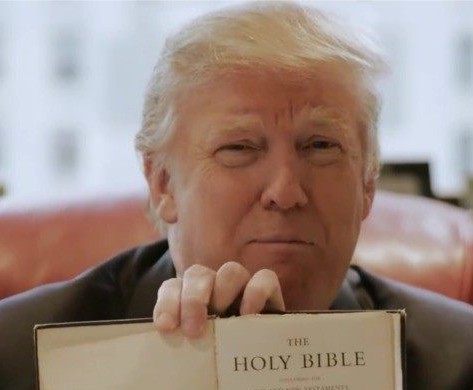
Trump holds up Bible he "received from his mother" to evangelicals
Trump holds up Bible he “received from his mother” to evangelicals

The Alliance Defending Freedom is a prominent defender of religious liberty. They fight out religious liberty cases at the highest level – the Supreme Court of the United States.

Here’s what they thought of Trump’s executive action on religious liberty:

“During his campaign, President Trump stated that the first priority of his administration would be to preserve and protect religious liberty. In speeches, he said the Little Sisters of the Poor and other people of faith will always have their religious liberty protected on his watch and will not have to face bullying from the government because of their religious beliefs. Religious voters took him at his word, giving the president a mandate to affirm and protect Americans’ first freedom.

“The current outline of the Religious Liberty Executive Order released by White House officials recalls those campaign promises but leaves them unfulfilled.

“First, no specific relief is offered to families like the Vander Boons in Michigan, who were threatened with the effective closure of their family-run business for simply expressing a religious point of view on marriage that differed from that of the federal government.

“Second, the outline directs the IRS ‘to exercise maximum enforcement discretion to alleviate the burden of the Johnson Amendment.’ But Americans cannot rely on the discretion of IRS agents, some of whom have abused that discretion for years to silence pastors and intrude into America’s pulpits. Nor does the outline do anything to prevent a future, hostile administration from wielding its power to penalize any church who dares exercise its constitutionally protected freedoms in a manner that displeases those in authority. A legislative problem like the Johnson Amendment demands a legislative solution like the Free Speech Fairness Act.

“Third, the outline indicates it will ‘provide regulatory relief for religious objectors to Obamacare’s burdensome preventive services mandate, a position supported by the Supreme Court decision in Hobby Lobby.’ The president certainly should fulfill his promise to protect the Little Sisters of the Poor, a host of Christian colleges, and others from having to choose between violating their consciences and paying crippling fines to the IRS.

Here is an article by religious liberty hero David French of the ACLJ in National Review. He makes a key point that must be understood by pastors who want to know if the coast is clear to speak about policy from a Christian perspective.

Excerpt:

Next — and this is important to understand — an executive order cannot repeal a statute, and legal restrictions on political activity by churches are statutory. They’re part of the so-called Johnson Amendment, a rarely enforced provision of the tax code that prohibits 501(c)(3) tax-exempt organizations from, as the IRS explains, “directly or indirectly participating in, or intervening in, any political campaign on behalf of (or in opposition to) any candidate for elective public office.”

The Johnson Amendment is constitutionally problematic (to put it mildly). Lyndon Johnson rammed it through Congress for the noble purpose of stopping nonprofits from supporting his primary opponent and preserving his own political hide, and it’s been on the books ever since. Though it’s rarely enforced, it hangs like the Sword of Damocles over the heads not just of churches but of every 501(c)(3) in the United States. First Amendment lawyers are desperate to find a good test case to challenge it, but the IRS’s general lack of enforcement means that the right case is elusive. So the amendment remains.

The answer to the Johnson Amendment, however, is to either repeal the statute or overturn it in court. This order does neither. In fact, a lawyer will commit malpractice if he tells a pastor or director of a nonprofit that this order allows a church or nonprofit to use its resources to support or oppose a candidate. Even if the Trump administration chooses not to enforce the law, a later administration can tear up Trump’s order and begin vigorous enforcement based on actions undertaken during the Trump administration.

Imagine, for example, that churches rely on this order to mobilize support for Trump in his 2020 reelection campaign. Imagine he loses to Kamala Harris. Then, suddenly, churches across the land would be instantly vulnerable to IRS enforcement action. Thinking they were protected, churches would find themselves in the worst of predicaments, with their rights and possibly even existences dependent on the capricious mercies of the federal courts.

Although many evangelicals bet on Trump to do something to protect religious liberty, the President has not done anything with this executive action to solve the problems. I cannot help but think that we would have been better off with someone who was more aware of the challenges, and who had a track record of battling for religious liberty in his record.

Although Trump whiffed again on religious liberty, there are several pieces of legislation that Congress could take up to solve the problem.

Here are four of them:

Perhaps we can count on Trump to sign them – if the Republicans get them passed.