Robin Collins and atheist Peter Millican discuss the fine-tuning of the universe for life

British Spitfire and German Messerschmitt Me 109 locked in a dogfight

You might remember Peter Millican from the debate he had with William Lane Craig. I ranked that debate as one of the 3 best I have ever seen, along with the first Craig  vs Dacey debate and the second Craig vs Sinnott-Armstrong debate.

Details:

Science has revealed that the fundamental constants and forces of the cosmos appear to be exquisitely fine-tuned to allow a universe in which life can develop. Is God the best explanation of the incredibly improbable odds of the universe we live in being a life-permitting one?

Robin Collins is a Christian philosopher and a leading advocate of the argument for God from cosmic design. Peter Millican is an atheist philosopher at Oxford University. They debate the issues.

From ‘Unbelievable?’ on ‘Premier Christian Radio’, Saturday 19th March 2016.

The debate:

MP3 file is available on the Unbelievable web site.

As usual when the atheist is an expert, there is no snark or paraphrasing in the summary.

Summary

Brierley: What is the fine-tuning argument?

Collins: the fine-tuning is structure of the universe is extremely precisely set to allow the existing of conscious, embodied agents who are capable of moral behavior. There are 3 kinds of fine-tuning: 1) the laws of nature (mathematical formulas), 2) the constants of physics (numbers that are plugged into the equations), 3) the initial conditions of the universe. The fine-tuning exists not just because there are lots of possibilities, but there is something special about the actual state of affairs that we see. Every set of laws, parameters and initial conditions is equally improbable, but the vast majority of permutations do not permit life. The possible explanations: theism or the multiverse.

Brierley: How improbable are the numbers?

Collins: Once case is the cosmological constant (dark energy density), with is 1 part in (10 raised to 120th power). If larger, the universe expands too rapidly for galaxies and stars to form after the Big Bang. If smaller, the universe collapses in on itself before life could form. Another case is the initial distribution of mass energy to give us the low entropy we have that is necessary for life. The fine-tuning there is 1 part in (10 raised to the 10th power raised to the 123rd power).

Brierley: What do you think of the argument?

Millican: The argument is worth taking very seriously. I am a fan of the argument. The other arguments for God’s existence such as the ontological and cosmological arguments are very weak. But the fine-tuning argument has the right structure to deliver the conclusion that theists want. And it is different from the traditional design argument tended to focus on biological nature, which is not a strong argument. But the fine-tuning argument is strong because it precedes any sort of biological evolution. Although the design is present at the beginning of the universe, it is not visible until much later. The argument points to at least deism, and possibly theism. The argument is not based on ignorance, it is rooted in “the latest results from the frontiers of science” (his phrase).

Brierley: Is this the best argument from natural theology?

Collins: The cosmological argument makes theism viable intuitively, but there are some things that are puzzling, like the concept of the necessary being. But the fine-tuning argument is decisive.

Brierley: What’s are some objections to the fine-tuning argument?

Millican: The argument is based on recent physics, so we should be cautious because we maybe we will discover a natural explanation.

Brierley: Respond to that.

Collins: The cosmological constant has been around since 1980. But the direction that physics is moving in is that there are more constants and quantities being discovered that need to be fine-tuned, not less. Even if you had a grand unified theory, that would have to be have the fine-tuning pushed into it.

(BREAK)

Millican: Since we have no experience of other laws and values from other universes, we don’t know whether these values can be other than they are. Psychologically, humans are prone to seeing purpose and patterns where there is none, so maybe that’s happening here.

Brierley: Respond to that.

Collins: It is possible to determine probabilities on a single universe case, for example using multiple ways of calculating Avogadro’s number all converging on the same number makes it more probable.

Millican: Yes, I willing to accept that these constants can take on other values, (“principle of indifference”). But maybe this principle be applied if the improbability were pushed up into the theory?

Collins: Even if you had a grand theory, selecting the grand theory from others would retain the improbability.

Brierley: What about the multiverse?

Millican: What if there are many, many different universes, and we happen to be in the one that is finely-tuned, then we should not be surprised to observe fine-tuning. Maybe a multiverse theory will be discovered in the future that would allow us to have these many universes with randomized constants and quantities. “I do think that it is a little bit of a promissary note”. I don’t think physics is pointing to this right now.

Brierley: Respond to that.

Collins: I agree it’s a promissary note. This is the strongest objection to the fine-tuning argument. But there are objections to the multiverse: 1) the fine-tuning is kicked back up to the multiverse generator has to be set just right to produce universes with different constants, 2) the multiverse is more likely to produce a small universe with Boltzmann brains that pop into existence and then out again, rather than a universe that contains conscious, embodied intelligent agents. I am working on a third response now that would show that the same constants that allow complex, embodied life ALSO allow the universe to be discoverable. This would negate the observer-selection effect required by the multiverse objection.

Brierley: Respond to that.

Millican: I don’t see why the multiverse generator has to be fine-tuned, since we don’t know what the multiverse generator is. I’m not impressed by the Boltzmann brains, but won’t discuss. We should be cautious about inferring design because maybe this is a case where we are seeing purpose and design where there is none.

Brierley: Can you negate the discoverability of the universe by saying that it might be psychological?

Collins: These things are not psychological. The selected value for the cosmic microwave background radiation is fine-tuned for life and for discoverability. It’s not merely a discoverability selection effect, it’s optimal for discoverability. If baryon-photon value were much smaller, we would have known that it was not optimal. So that judgment cannot be explained by

Millican: That’s a very interesting new twist.

Brierley: Give us your best objection.

Millican: I have two. 1) Even if you admit to the fine-tuning, this doesn’t show a being who is omnipotent and omnisicient. What the fine-tuning shows is that the designer is doing the best it can given the constraints from nature. If I were God, I would not have made the universe so big, and I wouldn’t have made it last 14 billion years, just to make one small area that supports life. An all-powerful God would have made the universe much smaller, and much younger. 2) The fine-tuning allows life to exist in other solar systems in other galaxies. What does this alien life elsewhere mean for traditional Christian theology? The existence of other alien civilizations argues against the truth of any one religion.

Brierley: Respond to those.

Collins: First objection: with a finite Creator, you run into the problem of having to push the design of that creature up one level, so you don’t really solve the fine-tuning problem. An unlimited being (non-material, not composed of parts) does not require fine-tuning. The fine-tuning is more compatible with theism than atheism. Second objection: I actually do think that it is likely that are other universes, and life in other galaxies and stars, and the doctrine of the Incarnation is easily adaptable to that, because God can take on multiple natures to appear to different alien civilizations.

Other resources (from WK)

If you liked this discussion, be sure and check out a full length lecture by Robin Collins on the fine-tuning, and a shorter lecture on his very latest work. And also this the Common Sense Atheism podcast, featuring cosmologist Luke Barnes, who answers about a dozen objections to the fine-tuning argument.

Worst president ever leaves Trump a looming economic crisis

Is Barack Obama focused on protecting the American people?

Consider this article from the Wall Street Journal, which discusses the latest CBO (Congressional Budget Office) report.

Massive budget deficits:

One lesson is that the days of easy deficit reduction are over. The annual deficit in 2016 rose for the first time in three years—by $148 billion to $587 billion. That’s 3.2% of GDP, up sharply from 2.5% last year. Mr. Obama has been able to ride falling defense spending from reduced military deployments overseas, but Pentagon outlays were flat in 2016. Military spending will probably have to increase in future years, no matter who wins Tuesday, to meet the growing challenges from Russia, China and Iran.

Looming entitlement crisis:

Mr. Obama will also leave town having failed over eight years to do anything to slow the booming burden of Social Security, Medicare and Medicaid. Outlays for those three programs grew by $75 billion last year, or about 4.2%. They now account for 10% of the entire U.S. economy, the highest level ever, and rising.

More spending on welfare programs:

The President’s main contribution has been to put Medicaid on hyperspeed by expanding its coverage through ObamaCare. CBO’s budget gnomes report that Medicaid spending has climbed by nearly 40% in a mere three years—to $368 billion in 2016. That doesn’t include what the states are obliged to chip in.

Higher taxes and more regulations (e.g. – Dodd-Frank) killed economic growth:

Another lesson is that faster economic growth is essential to a healthier fisc. One reason for the deficit rebound in 2016 is that federal revenues increased by a mere $18 billion or less than 1%. Individual income-tax receipts were flat, while corporate income taxes fell by $44 billion or 13% as business profits sagged. This is what happens when the economy sputters at about a 1% growth rate for most of a year.

Massive spending:

Growth that slow couldn’t keep up with spending that increased 4.5% or $166 billion in 2016. Federal outlays were 20.9% of the economy for the year, up from 20.4% in 2014. A Republican Congress has kept that figure down from the heights of the Obama-Nancy Pelosi stimulus, but it is now set to take off again as more Baby Boomers start collecting Social Security and Medicare. (Millennials, get ready to pay even higher taxes throughout your working life.)

Looming crisis caused by rising interest rates:

This era may be ending as a new President takes office. The Fed may raise rates in December, and bond yields have been rising. Outlays for net interest on the debt increased by $23 billion or 9% in 2016, largely due to faster inflation. But inflation is still tame. If it begins to rise, the debt-financing burden will explode with more than $14 trillion of Treasury debt outstanding, much of it short-term. In January CBO said that if interest rates are 100 basis points above their projections each year for the next decade, the Treasury will have to pay an average of more than $160 billion per year.

And it’s not just fiscal matters. Investors Business Daily adds to the list of problems that Obama will pass on to Trump.

Low wages, high unemployment:

Obama, like every Democrat running for office, claimed to be the champion of the middle class, and that instead of “trickle down” economics, he’d growth the economy from the “middle out.” Instead, middle class wages stagnated throughout Obama’s term in office, with real median household income today exactly where it was when Obama took office.

And despite Obama’s constant bragging about the “longest” stretch of private sector job growth, the 15.5 million private sector jobs added since February 2010 hasn’t even kept pace with population growth — which climbed 17.5 million over that time. As a result, more than 14 million people have dropped out of the labor force since Obama took office. In fact, without the huge decline in labor force participation under Obama, the unemployment rate would be more like 10%, rather than the official 4.9%.

Higher health care costs and more health care regulations on businesses:

ObamaCare was supposed to be Obama’s grand legacy, showing how government could be a force for good. Instead, it’s become an epic failure that will have to dealt with by the next president. The reforms Obama said would repair a “broken” health system have themselves broken it. Premiums in the newly government-run individual market are up an average 22% nationwide, and at rates of 50%, 60%, even 113% in some states — increases unheard of before ObamaCare. Insurance markets that were once vibrantly competitive are now dominated by one or two carriers. ObamaCare has made Medicaid, an already terrible health program, worse by dumping millions more into it. ObamaCare’s taxes, mandates, and regulations are suffocating businesses.

Foreign policy disasters:

A list of Obama’s foreign policy failures would fill a volume, but here are just a few: Obama in 2011 prematurely removed troops from Iraq, creating a power vacuum later filled by ISIS; he let Iran’s covert nuclear weapons program continue, starting a nuclear arms race in the Mideast; after Obama called ISIS a “jayvee team,” it grew in clout and territory as a result of Obama’s neglect; Obama’s intervention in Libya during that country’s civil war led to the country becoming a terrorist haven, with no real government; he and Hillary Clinton pushed the “reset button” with Russia’s Vladimir Putin, and Russia launched hostile actions against its neighbors in Crimea and Ukraine, and threats to the Baltic states; Obama has signaled ambivalence over protecting traditional allies in Asia, leading to China arming up and bullying it neighbors. With massive defense cuts Obama put in place, it’s safe to say the U.S. hasn’t been this weak since the nadir of the Carter years.

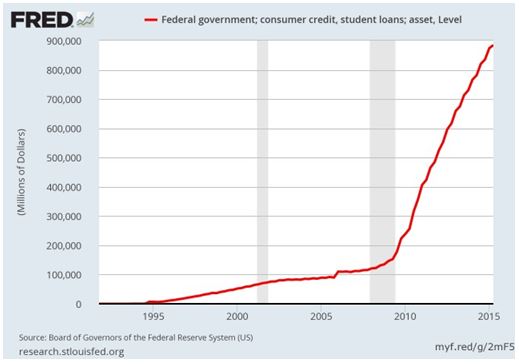
This is not even to mention the $1.3 trillion dollar student loan bubble:

Federal student loans skyrocketed under Obama

And yet another Democrat-caused mortgage lending crisis:

Another Democrat-caused mortgage lending crisis
Another Democrat-caused mortgage lending crisis is on the horizon

Democrats are always in favor of making it easy for people to borrow money, and leaving taxpayers on the hook to cover it. Are there enough people working to cover these debts? Has Obama been focused on helping to lower taxes and reduce regulations for job creators, so they can create new jobs? How will the millennials respond to being forced to pay for all the debt incurred by the man they voted for?

Michael Strauss lectures on scientific evidence for a Creator at UT Dallas

Christianity and the progress of science

The lecture: (from 2013)

Note: there is a period of 19 minutes of Q&A at the end of the lecture.

About the speaker:

His full biography is here.

Summary:

  • It used to be true that most of the great scientists were believers in God
  • But now science has advanced and we have better instruments – is it still true?
  • Today, many people believe that science has shows that the universe and Earth are not special
  • We used to believe that the Earth was the center of the universe, and Darwin showed we are not designed
  • The problem with this view is that it is based on old science, not modern science
  • Three topics: origin of the universe, fine-tuning of the universe, the Rare Earth hypothesis

Experimental evidence for the origin of the universe:

  • #1: Hubble discovered that the universe expands because of redshifting of light from distant galaxies
  • #2: Measurements of the cosmic microwave background radiation show the universe had a beginnning
  • #3: Measurements of the light element (hydrogen and helium) abundances confirm an origin of the universe
  • The best explanation for an absolute origin of space, time, matter and energy is a supernatural cause

Experimental evidence for the design of the universe:

  • #1: The amount of matter: a bit less = no stars and galaxies, a bit more = universe recollapses
  • #2: The strong force: a bit more = only hydrogen, a bit more = little or no hydrogen
  • #3: Carbon resonance level: a bit higher = no carbon, a bit lower = no carbon

Experimental evidence for galactic, stellar and planetary habitability:

  • #1: Galaxy: produces high number of heavy elements and low radiation
  • #2: Star: long stable lifetime, burns bright, bachelor star, third generation star (10 billion years must elapsed),
  • #3: Planet: mass of planet, stable orbit, liquid water, tectonic activity, tilt, moon

Naturalistic explanations:

  • Humans evolve to the point where they reach back in time and create finely-tuned universe
  • Eternally existing multiverse

Hawking and Mlodinow response to Rare Earth:

  • There are lots of planets so one must support life
  • Odds of a planet that supports life are low even with 10^22 planets

Hawking and Mlodinow proposal of M-theory multiverse:

  • There is no experimental evidence for M-theory being true
  • M-theory is not testable now and is not likely to be testable in the future
  • But science is about making testable predictions, not about blind speculation

Hawking and Mlodinow no-boundary proposal:

  • This theory requires the laws of physics to exist prior to the universe
  • But where do you get laws of physics before there is any physical world?
  • There is no experimental evidence for no-boundary proposal
  • All the evidence we have now (redshift, CMBR, H-He abundances) is for Big Bang

What science has revealed provide abundant evidence for a transcendent Creator and Designer.

Related posts