
I was having a chat with a friend of mine who just got out of a serious relationship and I was trying to pick his brain to find out everything about the woman he was intending to marry so I could see why things went wrong. He told me that she had told him over and over that “there would be no divorce” and that he found that very convincing, despite very obvious warning signs in the area of respect (which I wrote about yesterday).
Well. I was very surprised to hear this, and so I asked him whether he thought it was enough that this woman told him that “three will be no divorce”. He said yes. This woman had experienced the divorce of her own parents and she was resolved (by act of will) never to let that happen to her. He found that acceptable, but I didn’t because I know the numbers on this, and I know that children of divorced parents are more likely to divorce themselves. So the pain of divorce is no deterrent here.
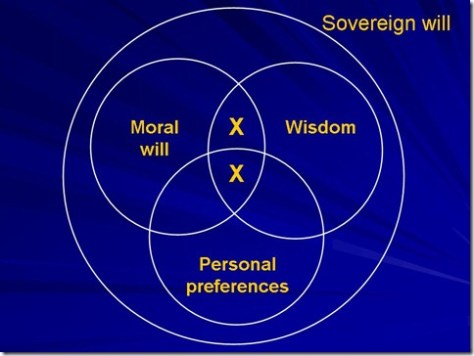
So should we believe that people can avoid a divorce just by saying they will? I told him no. And for an example, I offered a thought experiment. I said to imagine two runners on a track who are charged with completing 10 laps. One runner is a Navy SEAL like Mike Murphy, who has been trained to run miles and miles carrying a 60 pound load. In the mountains. The other is a 300-lb couch potato whose idea of exercise is reaching for the TV remote control. Suppose I ask both runners: do you intend to finish the 10 laps? Should I believe them if they both say yes?
Look, marriage is like building a house. People can say whatever they want about their prospects for success, but the will doesn’t decide here. You have to certain skills, you have to have a certain amount of money, you have to have a plan, you have to be able to read blueprints, you have to be able to hire specialists, you understand the differences between materials, etc. When you think about it, no long-term enterprise can be accomplished by act of will. Piano recitals, math exams, investing for retirement… nothing can be done by sheer act of will.
Now with that being said, let’s take a look at an example.
An example
I found this article in the Wall Street Journal way back in 2011, but it fits my conversation with my friend.
The author, Susan Gregory Thomas, lists some of the mistakes she made that led her to get a divorce in her first marriage.
This is the first thing I saw that caught my eye:
“Whatever happens, we’re never going to get divorced.” Over the course of 16 years, I said that often to my husband, especially after our children were born.
So she is trying to express an intention here, repeatedly, to her husband. I think the point here is that she did have good intentions but as we shall see that was not enough to prevent the divorce. That’s a warning to others that good intentions are not enough.
Here is the second thing:
I believed that I had married my best friend as fervently as I believed that I’d never get divorced. No marital scenario, I told myself, could become so bleak or hopeless as to compel me to embed my children in the torture of a split family. And I wasn’t the only one with strong personal reasons to make this commitment.
I noticed that a lot of people seem to think that being compatible is very important to marriage. But I don’t think that it is the most important thing. For example, you would not expect two cocaine addicts or two gambling addicts, etc. to have a stable marriage. I think marriage is more like a job interview where there are specific things that each person has to be able to do in order to make it work. So again, she’s giving a warning to others that compatibility is not a guarantee of marriage success.
And there’s more:
My husband and I were as obvious as points on a graph in a Generation X marriage study. We were together for nearly eight years before we got married, and even though statistics show that divorce rates are 48% higher for those who have lived together previously, we paid no heed.
We also paid no heed to his Catholic parents, who comprised one of the rare reassuringly unified couples I’d ever met, when they warned us that we should wait until we were married to live together. As they put it, being pals and roommates is different from being husband and wife. How bizarrely old-fashioned and sexist! We didn’t need anything so naïve or retro as “marriage.” Please. We were best friends.
Sociologists, anthropologists and other cultural observers tell us that members of Generation X are more emotionally invested in our spouses than previous generations were. We are best friends; our marriages are genuine partnerships. Many studies have found that Generation X family men help around the house a good deal more than their forefathers. We depend on each other and work together.
So here I am seeing that she rejected sex roles, parental advice, or the moral guidelines of Christianity. Again, she is discussing some of the factors that I at least think contribute to divorce. I think that she is right to highlight the fact that she was wrong to disregard the statistics on cohabitation.
So here are some of the mistakes:
- reject advice from parents
- avoid chastity
- cohabitate for EIGHT YEARS
- embrace feminism, reject complementarian sex roles
- thinking that good intentions would overcome every challenge
So, what does the research show works to have a stable marriage?
- chastity
- rejection of feminism
- regular church attendance
- parental involvement in the courting
- parents of both spouses married
- no previous divorces
Guess what? You can’t break all the rules and still succeed by sheer force of will. If you break all the rules like that woman in the story, you can’t have a working marriage. Not without repudiating everything you believed, and taking steps to undo all the damage from everything you’ve done. You can’t keep all the bad beliefs and bad habits you’ve built up and marry them to a marriage that will stand the test of time.
A good marriage is an enterprise, and it requires that your character be changed to fit the requirements. There is no way to short-circuit the preparation / selection processes by act of will. And just because your friends are getting married, that’s no reason for you to rush into it unprepared. The best way to prepare for marriage is pick people of the opposite sex and practice marriage behaviors (e.g. – listening, helping) with them – even with people you don’t intend to marry. Take an interest in their lives and practice denying yourself to help them with their problems. That’s better than making idle promises you’re not able to keep. And this works the same for men and for women. Both people need to get this right.
 WINTERY KNIGHT