Tag Archives: Trust

William Lane Craig makes sense of the doctrine of substitutionary atonement

Probably one of the most common questions that you hear from people who don’t fully understand Christianity is this question: “why did Jesus have to die?”. The answer that most Christians seem to hold to is that 1) humans are rebelling against God, 2) Humans deserve punishment for their rebellion, 3) Humans cannot escape the punishment for their rebellion on their own, 4) Jesus was punished in the place of the rebellious humans, 5) Those who accept this sacrifice are forgiven for their rebelling.

Some people think that humans are not really rebellious at all, but it’s actually easy to see. You can see it just by looking at how people spend their time. Some of us have no time for God at all, and instead try to fill our lives with material possessions and experiences in order to have happy feelings. Some of us embrace just the parts of God that make us feel happy, like church and singing and feelings of comfort, while avoiding the hard parts of that vertical relationship; reading, thinking and disagreeing with people who don’t believe the truth about God. And so on.

This condition of being in rebellion is universal, and all of us are guilty of breaking the law at some point. All of us deserve to be separated from God’s goodness and love. Even if we wanted to stop rebelling, we would not be able to make up for the times where we do rebel by being good at other times, any more than we could get out of a speeding ticket by appealing to the times when we drove at the speed limit, (something that I never do, in any case).

This is not to say that all sinners are punished equally – the degree of punishment is proportional to the sins a person commits. However, the standard is perfection. And worse than that, the most important moral obligation is a vertical moral obligation. You can’t satisfy the demands of the moral law just by making your neighbor happy, while treating God like a pariah. The first commandment is to love God, the second is to love your neighbor. Even loving your neighbor requires you to tell your neighbor the truth – not just to make them feel good. The vertical relationship is more important than the horizontal one, and we’ve all screwed up the vertical relationship. We all don’t want God to be there, telling us what’s best for us, interfering with our fun. We’re obstinate tin soldiers, as C.S. Lewis says. We don’t want to relate to a loving God if it means having to care what he thinks about anything.

So how do we get out of this mess that we are all in?

This article from Greg Koukl of Stand to Reason may help you to make sense of it – without any churchy jibber-jabber.

Excerpt:

Christians often say, “if you believe in Jesus you go to Heaven; if you don’t believe in Jesus you go to Hell”. Is that true? Well, it is true, but it doesn’t communicate a sense of the true circumstance. It’s not coherent to most people because it just seems bizarre why what one person thought about some guy who died 2000 years ago has anything to do with their eternal destiny. Whether they believe in him or not seems irrelevant to anything that might happen after we die. So we have often not been careful to communicate the sense of things.

We need to be clear so that someone rejects the real message and not some incoherent mess that some Christian has handed him that they can’t make sense of. So, I don’t say, “if you believe in Jesus you go to Heaven, and if you don’t believe you go to Hell,” because this is misleading. I’d rather try to explain it more accurately.

Many of you are familiar with the conversation I had with a fellow at Barnes and Noble in which he asked me a question. I was giving a talk there as part of the book on relativism that Dr. Frank Beckwith and I co-authored, Relativism: Feet Firmly Planted in Mid-Air. Since I was talking about it in the bookstore, he came up afterwards and started asking questions about Jesus. Instead of unloading this slogan on him, I asked him this question. Do you think that people who commit moral crimes ought to be punished? He said, “Yes.” I said, “Good, so do I.” Second question, “Have you ever committed any moral crimes?” Pause. Then he said, “Yes, I guess I have.” You know what I said to him? “So have I.”

This just took 30 seconds, right? Then I reflected back to him, “Look where we’ve come so far. We both believe that people who commit moral crimes ought to be punished. And we both believe we’ve committed moral crimes. You know what I call that? Bad news.” And it is bad news.

Most people are concerned with doing what is right. That was one of the first things he told me. “I’m Jewish. I believe in morality. I believe in God. Why do I have to believe in your Jesus?” Here is a man who has some level of commitment to the moral life. The problem is, he knows that that commitment does not guarantee that he is going to live a fully moral life and he’s aware of his own moral crimes. And so am I. Now what? That is the issue? We are guilty. That is the bad news.

This is why it is so important to get the bad news before the good news. The bad news gives meaning to the good news. I was able to talk about the fact that now we both admit we have a problem, but that there is a solution that God has ordained. Since He is the one who is offended, He is the one who can call the shots on how to fix the problem. The answer is through His Son Jesus, who provides mercy because he took the rap for our crimes. We got off. He went to jail. A modern metaphor to put it in perspective.

Now I’ve noticed that on some atheist blogs, they don’t like the idea that someone else can take our punishment for us to exonerate us for crimes that we’ve committed. So I’ll quote from this post by the great William Lane Craig, to respond to that objection.

Excerpt:

The central problem of the Penal Theory is, as you point out, understanding how punishing a person other than the perpetrator of the wrong can meet the demands of justice. Indeed, we might even say that it would be wrong to punish some innocent person for the crimes I commit!

It seems to me, however, that in other aspects of human life we do recognize this practice. I remember once sharing the Gospel with a businessman. When I explained that Christ had died to pay the penalty for our sins, he responded, “Oh, yes, that’s imputation.” I was stunned, as I never expected this theological concept to be familiar to this non-Christian businessman. When I asked him how he came to be familiar with this idea, he replied, “Oh, we use imputation all the time in the insurance business.” He explained to me that certain sorts of insurance policy are written so that, for example, if someone else drives my car and gets in an accident, the responsibility is imputed to me rather than to the driver. Even though the driver behaved recklessly, I am the one held liable; it is just as if I had done it.

Now this is parallel to substitutionary atonement. Normally I would be liable for the misdeeds I have done. But through my faith in Christ, I am, as it were, covered by his divine insurance policy, whereby he assumes the liability for my actions. My sin is imputed to him, and he pays its penalty. The demands of justice are fulfilled, just as they are in mundane affairs in which someone pays the penalty for something imputed to him. This is as literal a transaction as those that transpire regularly in the insurance industry.

It might be a good idea to also read this post on CARM, which explains the Bible verses that have led generations of Christians to believe in the doctrine of substitutionary atonement. This isn’t something that the church tells you, it’s something that comes straight out of the Bible, when you just read it alone, by yourself.

Excerpt:

Jesus did what we could not.  He took our place and bore our sins in his body on the cross (1 Pet. 2:24) and made propitiation for our sins.

  • Rom. 3:25, “whom God displayed publicly as a propitiation in His blood through faith.  This was to demonstrate His righteousness, because in the forbearance of God He passed over the sins previously committed.”
  • 1 John 2:2, “and He Himself is the propitiation for our sins; and not for ours only, but also for those of the whole world.”
  • 1 John 4:10, “In this is love, not that we loved God, but that He loved us and sent His Son to be the propitiation for our sins.”

The word propitiation “properly signifies the removal of wrath by the offering of a gift.” Propitiation properly deals with the wrath of God. The wrath of God is due to the legal requirements of punishing the sinner.  Remember, the sinner is someone who has broken the law of God; hence, the legality of punishment, and since Jesus is our propitiation and turns away the lawful wrath of God, we have further evidence that Christ’s sacrifice was to avert God’s righteous wrath against us, the sinners. Since the law of God must be met and cannot be ignored, it is proper that the law be fulfilled.  Jesus is the one who fulfilled the law and never sinned (1 Pet. 2:22).  But, he bore our sins in his body on the cross (1 Pet. 2:24) and became sin on our behalf (2 Cor. 5:21) thereby suffering the penalty of sin, which is death.

I think that the way that a person becomes a Christian is by recognizing that they really are a rebel against God, and that their own made-up standard of what they ought to be doing is insignificant, arbitrary and self-serving. The way forward lies in acknowledging that we need to have a fresh start with God – we need forgiveness. If we are going to start to do what we ought to do, then we need a change from the inside out. And there is only one person who has ever solved that problem – Jesus. He paid the price, and offers us a fresh start. That’s what Christians mean when they talk about “being saved”. They mean that Jesus solved the problem of the rift between God and man that is caused by man’s rebellion. Appropriating his sacrifice on the cross requires a genuine belief that Jesus is who he said he was, and did what he said he did. It’s easy to recognize people who genuinely trust in Jesus, because genuine trust causes the person to re-orient and re-prioritize their lives in light of that sacrifice. That’s what people mean when they talk about being “a follower of Jesus”.

Related posts

What Christian men want from Christian women… in paintings!

Chivalry and chastity are two important factors in my life. Both of these ideas are rooted in Christianity, and they give men tools for expressing themselves to women using words or gifts, instead of using touch. Both are complex disciplines to learn. Reading literature is the best way to learn, or by watching your parents get along, if you have a good father and mother (I did not!). But another way to learn is by studying the great works of art. You can learn a lot about the differences between men and women by looking at great art – and you can get some ideas on how to treat them, too.

Below are just a few of my favorite paintings. (I like the Pre-Raphaelite era especially) Each of these paintings expresses something that men want from women in a chaste and chivalrous relationship. These behaviors are great as part of a formal courtship.

Click the small images for MUCH larger images!

RECOGNITION:

Godspeed - Edmund Blair Leighton - 1900

Men should be judged by godly women based on whether they are doing what God wants them to do. Those men who are willing to put God first in their planning should be recognized as special. Standard procedure is to give committed Christian men a token with the lady’s colors that he can carry into battle.

APPROVAL:

The Accolade - Edmund Blair Leighton - 1901

Men need to be encouraged to fulfill their obligations to God by receiving the approval of godly women. Men who accomplish great things for God should receive rewards from women. Notice that the painting is portraying a public accolade.

ATTENTION:

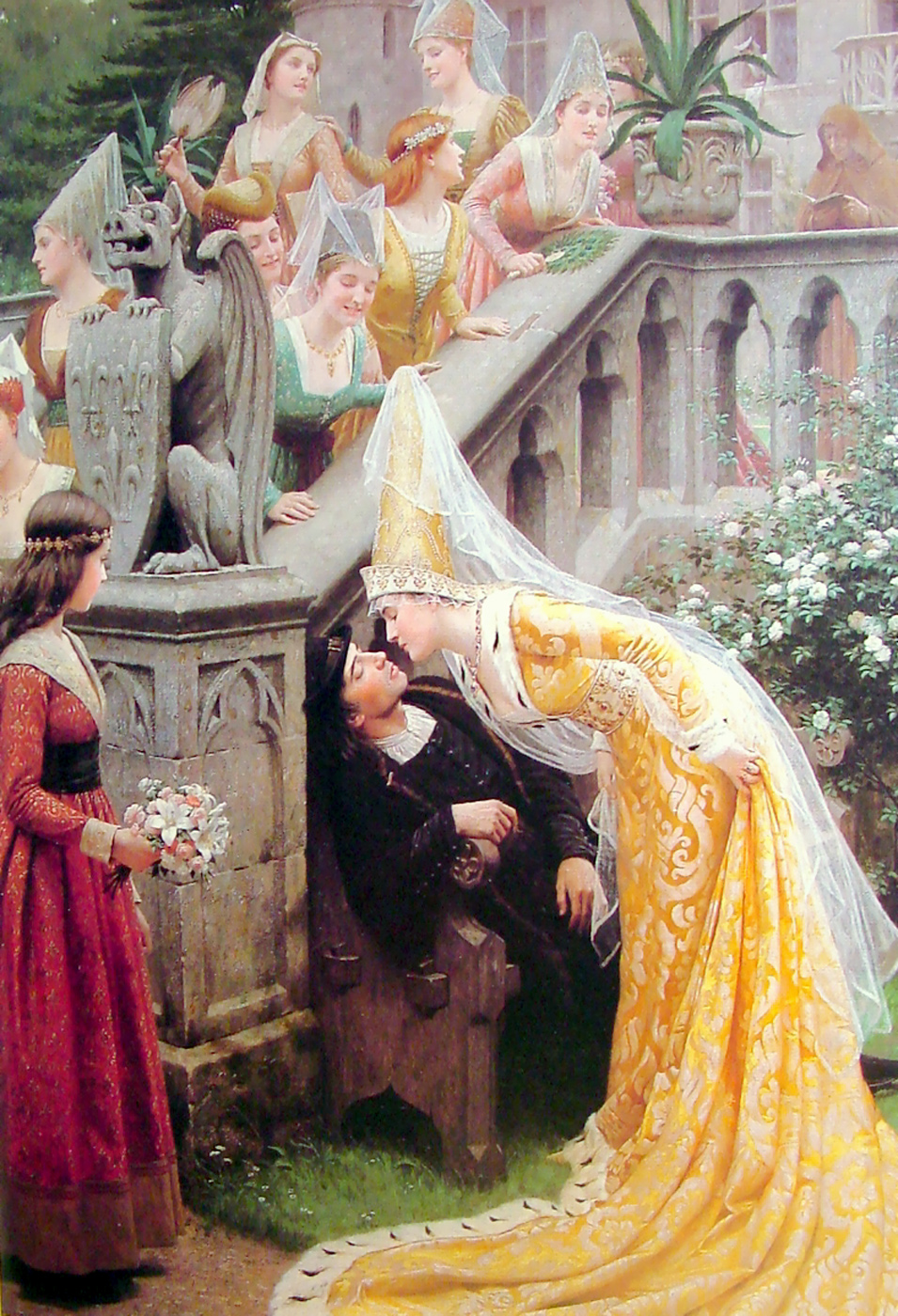
Alain Chartier - Edmund Blair Leighton - 1903

Along with her relationship with God, godly women should make time for relating to godly men, especially to her husband if she is married. This is even more important than parenting! I am a big believer in eye contact and long written essays.

UNDERSTANDING/RESPECT:

Call to Arms - Edmund Blair Leighton - 1888
Duty - Edmund Blair Leighton - 1883

Women need to understand that a man’s duty to her comes second to a man’s duty to God. Part of loving a man is letting him do the activities that he needs to do in order to flourish as a man. Treating a man as a little boy by trying to control him is a sure way to make him disengage from the relationship.

DEFERENCE/GRATITUDE:

St. George Fighting the Dragon - Raphael Sanzio - 1505

A woman should be able to drive a stick shift, fire a Springfield Arms XD accurately, do the family tax return, throw a football 20 yards, and barbecue steaks. However, when men are around, she should allow men to do things for her, even if she can do them better herself. Men should always be asked to do dangerous tasks (shoveling snow, killing spiders, etc.), and they should never be criticized by women about their performance in front of other people, only in private – and even then with gentleness.

Related posts

NDP leader Jack Layton wants consumers to pay higher prices for lower quality goods

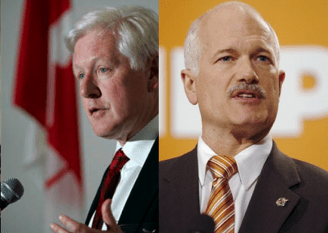
NDP leaders Bob Rae and Jack Layton

Jack Layton is opposed to free trade with other nations, and Jack Layton supports the imposition of tariffs on imported goods. Stephen Harper favors free trade and opposes tariffs, and has pushed through numerous free trade deals during his terms in office. So now we have to ask the questions: is free trade good for Canada? Is free trade good for Canadian consumers? Is free trade good for Canadian companies? Is free trade good for the poor in other countries?

Let’s start by noting that free trade is supported by virtually ALL economists, regardless of their political persuasion. Moderate economist Gregory Mankiw of Harvard University lists the policies that are accepted by virtually all economists.

Here’s Greg’s list, together with the percentage of economists who agree:

  1. A ceiling on rents reduces the quantity and quality of housing available. (93%)
  2. Tariffs and import quotas usually reduce general economic welfare. (93%)
  3. Flexible and floating exchange rates offer an effective international monetary arrangement. (90%)
  4. Fiscal policy (e.g., tax cut and/or government expenditure increase) has a significant stimulative impact on a less than fully employed economy. (90%)
  5. The United States should not restrict employers from outsourcing work to foreign countries. (90%)
  6. The United States should eliminate agricultural subsidies. (85%)
  7. Local and state governments should eliminate subsidies to professional sports franchises. (85%)
  8. If the federal budget is to be balanced, it should be done over the business cycle rather than yearly. (85%)
  9. The gap between Social Security funds and expenditures will become unsustainably large within the next fifty years if current policies remain unchanged. (85%)
  10. Cash payments increase the welfare of recipients to a greater degree than do transfers-in-kind of equal cash value. (84%)
  11. A large federal budget deficit has an adverse effect on the economy. (83%)
  12. A minimum wage increases unemployment among young and unskilled workers. (79%)
  13. The government should restructure the welfare system along the lines of a “negative income tax.” (79%)
  14. Effluent taxes and marketable pollution permits represent a better approach to pollution control than imposition of pollution ceilings. (78%)

Now let’s drill down to the research on free trade in particular.

Here’s an article from the  libertarian Cato Institute, a respected think tank.

Excerpt:

There are three important reasons voluntary exchange is good not only for the contracting parties but the world as a whole:

(1) Trade improves global efficiency in resource allocation. A glass of water may be of little value to someone living near the river but is priceless to a person crossing the Sahara. Trade delivers goods and services to those who value them most.

(2) Trade allows partners to gain from specializing in the producing those goods and services they do best. Economists call that the law of comparative advantage. When producers create goods they are comparatively skilled at, such as Germans producing beer and the French producing wine, those goods increase in abundance and quality.

(3) Trade allows consumers to benefit from more efficient production methods. For example, without large markets for goods and services, large production runs would not be economical. Large production runs, in turn, are instrumental to reducing product costs. Lower production costs lead to cheaper goods and services, which raises real living standards.

Evidence supports the idea nations more open to trade tend to be richer than those that are less open. Columbia University economist Arvind Panagariya wrote in a paper “Miracles and Debacles: Do Free-Trade Skeptics Have a Case?”: “On the poverty front, there is overwhelming evidence that trade openness is a more trustworthy friend of the poor than protectionism. Few countries have grown rapidly without a simultaneous rapid expansion of trade. In turn, rapid growth has almost always led to reduction in poverty.”

According to the Cato Institute’s 2004 report on Economic Freedom of the World, which measures economic freedom in 123 countries, the per capita gross domestic product in the quintile of countries with the most restricted trading was only $1,883 in 2002. That year’s per capita GDP in the quintile of countries with the freest trading regimes was $23,938.

Harper holds the B.A. and the M.A. in economics from the University of Calgary. He knows this stuff cold.

Here’s an article from The Heritage Foundation, another think tank. This article outlines five reasons why free trade is the best economic policy.

Here is an excerpt from one reason from the list of five:

REASON #1: Higher Standard of Living

The most compelling reason to support free trade is that society as a whole benefits from it. Free trade improves people’s living standards because it allows them to consume higher quality goods at less expensive prices. In the 19th century, British economist David Ricardo showed that any nation that focuses on producing goods in which it has a comparative advantage will be able to get cheaper and better goods from other countries in return. As a result of the exchange, both trading parties gain from producing more efficiently and consuming higher quality goods and services at lower prices.

Trade between nations is the same as trade between people. Consider what the quality of life would be if each person had to produce absolutely everything that he or she consumed, such as food, clothing, cars, or home repairs. Compare that picture with life as it is now as individuals dedicate themselves to working on just one thing–for example, insurance sales–to earn a salary with which they can freely purchase food, a car, a home, clothing, and anything else they wish at higher quality and lower prices than if they had done it themselves.

It simply makes sense for each person to work at what he or she does best and to buy the rest. As a nation, the United States exports in order to purchase imports that other nations produce more skillfully and cheaply. Therefore, the fewer barriers erected against trade with other nations, the more access people will have to the best, least expensive goods and services in the world “supermarket.”

Producers benefit as well. In the absence of trade barriers, producers face greater competition from foreign producers, and this increased competition gives them an incentive to improve the quality of their production while keeping prices low in order to compete. At the same time, free trade allows domestic producers to shop around the world for the least expensive inputs they can use for their production, which in turn allows them to keep their cost of production down without sacrificing quality.

In the end, the results benefit both producers–who remain competitive and profitable–and consumers–who pay less for a good or a service than they would if trade barriers existed.

There is no loser to free trade exchanges, otherwise the participants to the trade would not make the trade at all. Both parties gain – that’s why they choose to make the trade.

NDP candidates are not economists

NDP candidates are not known for their demonstrated knowledge and experience in economics, unlike Stephen Harper.

Excerpt:

Usually an election call means all bets are off for politicos wanting to take a Vegas vacation.

But, if you’re a New Democrat, you can be in Sin City with just days to go in the federal election campaign.

That’s where the party’s long shot candidate for the Quebec riding of Berthier-Maskinonge, Ruth Ellen Brosseau, finds herself.

Ruth works in the campus pub at Carleton University. She is not an economist.

But there’s more:

Some NDP candidates in Quebec could prove to be wild cards if they end up winning on May 2.

Several are still university students.

Charmaine Borg in Terrebonne-Blainville and Sherbrooke candidate Pierre-Luc Dusseault are both studying political science.

Actress and former camp counsellor Marie-Claude Morin in Saint-Hyacinthe-Bagot is working on a degree in social work.

Others have off-beat political backgrounds.

Alexandre Boulerice, the NDP candidate in Rosemont-La Petite-Patrie, is a member of the left-wing separatist party Quebec Solidaire.

In the Pontiac riding, the New Democrats have nominated Mathieu Ravignat. He was a Communist Party candidate in the Montreal area in 1997.

You can watch a video report on some of the NDP candidates here at Blazing Cat Fur.

How did former NDP leader Bob Rae govern in Ontario?

If you want to know what New Democrats do to an economy, you can read about how NDP leader Bob Rae wrecked the Ontario economy in the 1990s.

Excerpt:

The Liberal government had forecast a small surplus earlier in the year, but a worsening North American economy led to a $700 million deficit before Rae took office. In October, the NDP projected a $2.5 billion deficit for the fiscal year ending on March 31, 1991.[40] Some economists projected soaring deficits for the upcoming years, even if the Rae government implemented austerity measures.[41] Rae himself was critical of the Bank of Canada’s high interest rate policy, arguing that it would lead to increased unemployment throughout the country.[42] He also criticized the 1991 federal budget, arguing the Finance Minister Michael Wilson was shifting the federal debt to the provinces.[43]

The Rae government’s first budget, introduced in 1991, increased social spending to mitigate the economic slowdown and projected a record deficit of $9.1 billion. Finance Minister Floyd Laughren argued that Ontario made a decision to target the effects of the recession rather than the deficit, and said that the budget would create or protect 70,000 jobs. It targeted more money to social assistance, social housing and child benefits, and raised taxes for high-income earners while lowering rates for 700,000 low-income Ontarians.[44]

A few years later, journalist Thomas Walkom described the budget as following a Keynesian orthodoxy, spending money in the public sector to stimulate employment and productivity. Unfortunately, it did not achieve its stated purpose. The recession was still severe. Walkom described the budget as “the worst of both worlds”, angering the business community but not doing enough to provide for public relief.

[…]Rae’s government attempted to introduce a variety of socially progressive measures during its time in office, though its success in this field was mixed. In 1994, the government introduced legislation, Bill 167, which would have provided for same-sex partnership benefits in the province. At the time, this legislation was seen as a revolutionary step forward for same-sex recognition.

[…]The Rae government established an employment equity commission in 1991,[49] and two years later introduced affirmative action to improve the numbers of women, non-whites, aboriginals and disabled persons working in the public sector.

[…]In November 1990, the Rae government announced that it would restrict most rent increases to 4.6% for the present year and 5.4% for 1991. The provisions for 1990 were made retroactive. Tenants’ groups supported these changes, while landlord representatives were generally opposed.

Be careful who you vote for, Canada. We voted for Obama, and now we have a 14.5 trillion dollar debt and a 1.65 trillion deficit – TEN TIMES the last Republican budget deficit of 160 billion under George W. Bush in 2007. TEN TIMES WORSE THAN BUSH.

Related posts