Tag Archives: Theology

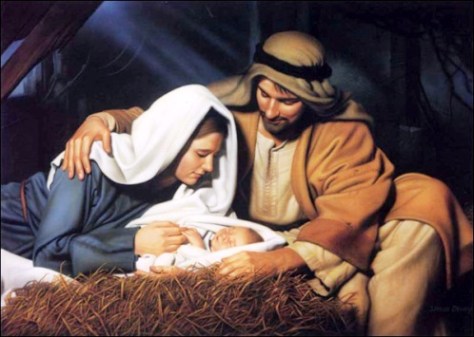
What is the meaning of Christmas? Why Celebrate Christmas?

I thought that I would try to write a post to explain Christmas as I understand it to everyone who is foggy on what it is all about. I hope I am not making any theological errors here, after all, I am just a software engineer.

Basically, we know from a variety of scientific arguments that the universe was created and fine-tuned for life by an intelligent agent that existed causally prior to the beginning of the universe, because this agent brought the universe into being. Our purpose as humans is to enter into a two-way loving relationship with this Creator/Designer of the universe. This is the only way that we can ultimately be happy and fulfilled.

The mess we were in

Now, when you look at human experience, none of us is interested in finding out about the character of this Creator/Designer, because we are afraid that if we find out too much about him then we will have our freedom to do as we please constrained by the demands of a relationship with an all-powerful, all-good being. Just knowing that such a person exists and has a character distinct from our own is enough to cause us to flee from him so that we can stay autonomous from the obligations of the moral law that he expects us to follow.

Christians believe that this universal desire to avoid an all-powerful, all-good God who will judge us is a result of bad behaviors inherited by us from the very first rebellion against God by our ancestors. Ever since that rebellion, the capability for relating to God has been lost, because we no longer have the ability to stop our rebellion against God. Christians call the first rebellion of our ancestors “The Fall of Man”.

What does this rebellion look like for us today? Well, we want to do whatever we want, in order to be happy, and to ignore God’s demands. We want to have happy feelings, including security, community and being morally good, all without a relationship with God. We want to acquire and rearrange matter for our selfish ends without acknowledging and honoring the Creator/Designer of that matter. And, of course, we would like other people to affirm, voluntarily or involuntarily, that our rebellion against God is really the height of moral goodness.

Additionally, some people imagine that God, if he exists at all, must desire our happiness. And of course when their needs are not met by this invented God, then they become even more bitter at God, and eventually decide that God could not really exist since their selfish needs are not being met by him. It never seems to occur to us humans that some pain and suffering may be permitted by God in order to turn our attention away from pleasure and security in this life, and back towards a relationship with him.

This is the mess we find ourselves in. This propensity for turning away from God and trying to pursue selfish happiness and security apart from a relationship with God is what the Bible calls “sin”. Every single one of us deserves severe punishment for refusing to pursue a genuine two-way love relationship with the God who is there. That is the mess we are in before Jesus appears to address this problem.

The birth of Jesus

I cannot say much about how Jesus solves the problem of rebellion against God, because that is really the story of Easter, and today we are dealing with the story of Christmas. But I can say that the solution to the problem requires that God step into history to communicate with his creatures and to perform actions in order to be reconciled with them. That is the message of Christmas: God is stepping into history to do something to end our rebellion. Easter is the story of what he does.

This is talked about in the Bible in John 1, for example.

John 1:1-5:

1In the beginning was the Word, and the Word was with God, and the Word was God.

2He was with God in the beginning.

3Through him all things were made; without him nothing was made that has been made.

4In him was life, and that life was the light of men.

5The light shines in the darkness, but the darkness has not understood it.

You can substitute the word “Word” there for Logos, which really means logic or reason or wisdom. This is a person with a divine nature, identified with the eternal being of God, who exists causally prior to the creation of the universe, who is going to take on an additional human nature, including a human body. (Christians believe that there is one divine “what” being and three divine “who” persons). Software engineers, you can think of Jesus having two natures as multiple inheritance in C++.

And it continues in John 1:10-14:

10He was in the world, and though the world was made through him, the world did not recognize him.

11He came to that which was his own, but his own did not receive him.

12Yet to all who received him, to those who believed in his name, he gave the right to become children of God—

13children born not of natural descent, nor of human decision or a husband’s will, but born of God.

14The Word became flesh and made his dwelling among us. We have seen his glory, the glory of the One and Only, who came from the Father, full of grace and truth.

Here the word grace doesn’t mean like a graceful ballet dancer. It means an instance of mercy received from a superior. A person (a “who”) identified with the divine being (a “what”) has decided to make us a top-down offer of mercy.

The same message of God stepping into history is found in the Christmas carols that people sing at Christmas.

Christmas carols

Here’s the best one, “O, Holy Night“, and it says:

O holy night! The stars are brightly shining.
It is the night of the dear Savior’s birth.
Long lay the world in sin and error pining,
Till He appeared and the soul felt its worth.

When we were in rebellion, we had lost our most valuable capacity – the capacity of being in a direct relationship with God. And if Jesus can accomplish his mission, then we are going to regain that capacity for a direct relationship with God.

Now look at “Hark! The Herald Angels Sing“, which one of my favorites:

Hark! The herald angels sing,
“Glory to the newborn King!
Peace on earth and mercy mild,
God and sinners reconciled.”

Basically, as I often say, there are only two kinds of people in the world. There are people who are willing to respond to the offer of a relationship with God, with all the little sacrifices and compromises that a relationship entails, and then there are people who are not willing to respond. For the people who are willing to respond, the appearance of Jesus is the best thing that could possibly happen, because now we are finally going to have a chance to deal directly with God, face-to-face, to find out what he is like, and change ourselves to be more like him, with his help.

And that is why people celebrate Christmas. It’s the anniversary of the birth of Jesus. It is the story of God stepping into history to be reconciled with his rebellious creatures. It’s the story of the divine Logos divesting himself of his glory and subjecting himself to the life of a creature in order to rescue us from our sinful, self-destructive rebellion. This love for undeserving creatures is above and beyond the call of duty. We didn’t love him, but instead he loved us first, and he loved us enough to come down here and suffer with us so that we could be reconciled with God.

MERRY CHRISTMAS!

Jeffrey Simon on Calvinism, free will and moral responsibility

I spent some time last night chatting with some of my readers on Facebook, and Jeffrey Simon was one. He wrote this essay on Calvinism versus Molinism which I thought was good enough to post. I am in agreement with Jeffrey on this issue, BUT I did include some debates featuring Calvinist James White at the bottom of the post. I just wanted to present an excerpt from his essay that makes a point that I thought would get lots of responses from Calvinists. Jeffrey is quite aggressive.

The essay is here, but you have to be his friend in order to see it.

Excerpt:

When harmonizing man’s perspective and God’s perspective, the Calvinist embraces what is known as theological fatalism.  They redefine free will and embrace compatibilism.  Essentially compatibilism says that determinism and free will are compatible, hence the name compatibilism.  In the same way that the wind blowing causes the trees to move, our desires and environment produce an effect which would be our action.  When we make a decision, we could not have chosen otherwise.  The Calvinist likes to say that we choose according to our greatest desire.  This would explain how God is in control of everything and more specifically our salvation.  How does God ensure the salvation of certain individuals? He changes their desires so they will freely choose Him.  This brings up an objection though.  If God desires that all are saved (1 Tim 2.4) and does not take pleasure in the death of the wicked (Eze. 33.11) and God “can save all whom He chooses to save”, then why are not all saved?  The Calvinist responds by making a distinction in God’s will.  While it is God’s revealed will and desire [thelo] that all men are saved, it is not His decreed will [boulomai] that all will be saved.  Essentially, God desires that all are saved and has a general love for the reprobate, but He has predestined them to Hell because His will [boulomai] trumps His desires [thelo].  Within Calvinism, there is a smaller section that claims regeneration logically precedes faith.  Because we are “dead” in our sin, we must be made alive or regenerated before believing.  How can a dead man believe and make himself alive?  In the same way that Lazarus was commanded to be raised from physical death, we are commanded to be made alive (through regeneration) from our spiritual death.

In my estimation, the main problem with Calvinism is that it embraces a causally deterministic system.  How can we freely make decisions yet God determined them for us?  It is not a mystery, but rather a contradiction.  In fact, at this point Calvinists are in agreement with naturalists because nearly all naturalists embrace compatibilism or determinism due to the fact that naturalism implies physicalism or materialism.  Now, imagine reading through the Bible with the idea that free will does not exist.  It is rather dizzying to imagine such a thing!  Dr.  William Lane Craig sums it up nicely when he says,

”Universal, divine, causal determinism cannot offer a coherent interpretation of Scripture. The classical Reformed divines recognized this. They acknowledge that the reconciliation of Scriptural texts affirming human freedom and contingency with Scriptural texts affirming divine sovereignty is inscrutable. D. A. Carson identifies nine streams of texts affirming human freedom: (1) People face a multitude of divine exhortations and commands, (2) people are said to obey, believe, and choose God, (3) people sin and rebel against God, (4) people’s sins are judged by God, (5) people are tested by God, (6) people receive divine rewards, (7) the elect are responsible to respond to God’s initiative, (8) prayers are not mere showpieces scripted by God, and (9) God literally pleads with sinners to repent and be saved (Divine Sovereignty and Human Responsibility: Biblical Perspectives in Tension, pp. 18-22). These passages rule out a deterministic understanding of divine providence, which would preclude human freedom” (The Only Wise God).

If God has determined our every thought and action, yet those nine things hold true, then it turns the Bible into a charade.  How can anything be expected of us if we can’t make decisions?  In response to this, the Calvinist may say “so what”.  It may violate our fallen sense of justice, but God can do as “He pleases and no one can hold back His hand or say to Him: ‘What have You done?’” (Dan 4.35).  God can determine us to do immoral things and hold us responsible because He is God.  In fact, in the Book of Acts when Peter and John are talking about Christ’s crucifixion, they say that God “anointed, both Herod and Pontius Pilate, along with the Gentiles and the peoples of Israel, to do whatever His hand and His purpose predestined to occur.” Even though God predestined them to crucify Christ, they were held responsible.  While this is possible it surely does not seem plausible.  Turning to the book of Judges, for example, we would find ourselves asking why God determined Israel’s rebellion so many times.  One only has to retort, so God is the author of evil, then?  If I were to pick up a stick and use it to move a rock, what moved the rock? Technically the stick moved the rock; however, no one would say that.  I moved the rock by picking up the stick and using it.  It is no different with God.  Surely those men crucified Christ, but it was really God behind the scenes.  This intrudes upon the holiness of God because He cannot stand sin (Psalm 5.4) and cannot even tempt man (Jas 1.13) yet alone causally determine evil.  Continuing, let’s take this causally deterministic system and God’s will as described by Calvinists to its logical conclusion.  First of all, as I just mentioned, the biggest problem is that God becomes the author of evil.  Second of all, there can be no “well-meant offer” of the Gospel to all persons if God has determined their destruction in hell.  In regards to God’s will, a better way, I think, to understand it would be that while God desires all men to be saved, His will is to save those who believe.  This does well with texts that say that God desires that all men are saved (1 Timothy 2:4) and does not take pleasure in the death of the wicked (Ezekiel 33:11) (and it also does not make God look hypocritical).  There are numerous texts where God exhorts people to believe, yet they reject Him.  For example, in Isaiah 5 God is disappointed with Israel because of their continuous sin and He asks what more could He have done for them.  God had provided all the means for godly living, yet Israel rejected Him.  Why would God waste His time with people whom He predestined to Hell and had no chance of salvation?  Also, if it’s God’s “secret” will to save some and damn some, then how can anyone know about it?

Is there anyone on the Calvinist side reading this who can explain how people can be responsible for sinning if they have no way to avoid it? I am not sure if a person can be responsible in that case because the only way that they can not sin is if God does something, and he chooses not to do it. It’s like giving a person a final exam but locking them out of the classroom all semester long.

Actually, I can see how that might actually be offensive to atheists, as in this debate between William Lane Craig and Edwin Curley of U of Michigan Ann Arbor.

Probably the best way to settle this is with debates. But I think that the only Calvinist who has debated on this issue is James White. So I put his debates below. I don’t think that famous Calvinists like Mark Dricoll and even Wayne Grudem defend Calvinism in formal public debates. Can anyone point out any debates that I may have missed? I want formal debates with good scholars on either side so I can make sure that my mind was made up based on evidence.

Related posts

Philip E. Johnson lectures on science, evolution and religion

I found this fun lecture by the grandfather of the big-tent intelligent design movement, Berkeley law professor Philip E. Johnson.

I’ll bet you guys have all heard of him, but you’ve never heard him speak, right? Well, I was a young man, I used to listen to Phil’s lectures and his debates with Eugenie Scott quite a bit. This is one of my favorite lectures. Very easy to understand, and boilerplate for anything else in the origins debate. This is a great lecture – funny, engaging and useful. You will definitely listen to this lecture several times if you listen to it once.

The MP3 is here. (91 minutes, 41 megabytes)

The Inherit the Wind stereotype

  • Many people get their understanding of origins by watching movies like “Inherit the Wind” (or reading science fiction)
  • The actual events of the Scopes trial are nothing like what the movie portrays
  • The law forbidding the teaching of evolution was symbolic, not meant to be enforced
  • The actual Scopes trial was a publicity stunt to attract attention to Dayton, TN to bring business to the town
  • The ACLU advertised for a teacher who would be willing to be sued
  • They found a substitute physical education teacher who would be willing to “break” the law
  • The movie is nothing like the actual events the movie is a morality play
  • The religious people are evil and stupid and ignorant and bigoted
  • The scientists and lawyers are all intelligent, romantic, and honest seekers of the truth
  • The religious people think that the Bible trumps science and science is not as reliable as the Bible
  • The movie argues that the reason why there is ANY dissent to evolution is because of Biblical fundamentalism
  • The movie presents the idea that there are no scientific problems with evolution
  • The movie says that ONLY Biblical fundamentalists who believe in 6 day, 24-hour creation doubt evolution
  • The movie says that Biblical fundamentalism are close-minded, and not open to scientific truth
  • The movie says that people who read the Bible as making factual claims are misinterpreting the Bible
  • The movie says that smart people read the Bible for comfort and feelings and arbitrary values, not for truth

Guided evolution and methodological naturalism

  • What scientists mean by evolution is that fully naturalistic, unguided, materialistic mechanisms caused the diversity of life
  • Scientists do not allow that God had any real objective effect on how life was created
  • Scientists think that nature did all the creating, and any mention of God is unnecessary opinion – God didn’t DO ANYTHING
  • Scientists operate with one overriding rule – you can only explain the physical world with physical and material causes
  • Scientists DO NOT allow that God could have done anything detectable by the sciences
  • Scientists WILL NOT consider the idea that natural, material processes might be INSUFFICIENT for explaining everything in nature
  • You cannot even ask the question about whether natural laws, matter and chance can explain something in nature
  • Intelligent causes can NEVER be the explanation for anything in nature, and you can’t even test experimentally to check that
  • Scientists ASSUME that everything can be explained with natural laws, matter and chance – no questioning of natural causes is allowed
  • Where no natural explanation of a natural phenomenon is available, scientists SPECULATE about undiscovered natural explanations
  • The assumption of naturalistic sufficiency is called “methodological naturalism”
  • To question the assumptions that natural is all there is, and that nature has to do its own creating, makes you an “enemy of science”
  • But Johnson says that naturalists are the enemies of science, because they are like the Biblical fundamentalists
  • Naturalists have a presumption that prevents them from being willing to follow the evidence where it is leading
  • Experiments are not even needed, because the presumption of naturalism overrides any experimental finding that falsifies the sufficiency of natural causes to explain some natural phenomenon

What can natural selection and mutation actually do?

  • what evolution has actually been observed to do is explain changing populations of moths and finches
  • finches with smaller or larger beaks are observed to have differential survival rates when there are droughts or floods
  • no new body plan or new organ type has been observed to emerge from these environmental pressures
  • the only kind of evolution that has been observed is evolution within types – no new genetic instructions are created
  • in textbooks, only confirming examples are presented – but what is required is a broad pattern of gradual development of species
  • if you look at the fossil record, what you see in most cases is variation within types based on changing environments
  • the real question is: can natural law and chance be observed to be doing any creating of body plans and organ types?

What kind of effect requires an intelligent cause?

  • the thing to be explained in the history of life is the functional information sequences
  • you need to have a sequence of symbols or characters that is sufficiently long
  • your long sequence of characters has to be sequenced in the right order to have biological function
  • the only thing that can create long sequences of functional information is an intelligent cause
  • intelligent design people accept micro-evolution – changes within types – because that’s been observed
  • the real thing to be explained is the first living cell’s functional information, and the creation of new function information

Critical response

The next 15 minutes of the lecture contain a critical response from a philosophy professor who thinks that there have been no developments in design arguments since Aquinas and Paley. He basically confirms the stereotypes that Johnson outlined in the first part of the lecture. I recommend listening to this, because it shows how weak the counter arguments are, and how these pseudo-intellectuals mislead unprepared students to question their Christian faith – especially dangerous since they have the power of the grading pen. Notice especially how he never mentions any arguments that Christians actually use, nor does he mention any actual science. Everything is “words, words, words” as Hamlet might say – no talking about experiments.

Here’s what he says:

1) Don’t take the Bible literally, even if the genre is propositional.

  • all opposition to evolution is based on an ignorant, fundamentalist, literal reading of the Bible
  • Christians need to reinterpret the Bible so that it is basically relaying personal preferences, and not factual information, regardless of the genre intended
  • the Bible really doesn’t communicate anything about the way the world really is
  • the Bible is just meant to suggest certain opinions and experiences which you may find fetching, or not, depending on your feelings and community
  • if Christians would just interpret the Bible as myths and opinions on par with other personal preferences, then evolution is no threat to religious belief

2) As long as you treat the design argument as divorced from evidence, it’s not very effective

  • the latest and best version of the design argument is Paley’s argument which involves no experimental data, so I’ll critique that
  • this 200-year old argument which doesn’t rely on science has serious problems, and unnamed Christians agree with me!
  • Christians should NOT try to prove God’s existence using evidence from the natural world (as Romans 1 says), and in fact it’s “Pelagianism” to even try
  • Christians should divorce their faith from logic and evidence even though the Bible says that Jesus performed miracles to supply evidence for his claims
  • Christians should not tie their faith to the best science available today, because science is always changing – what happens if we discover that the universe is eternal tomorrow?
  • What if! What if! Just because you guys have the facts on your side today, tomorrow science might prove that the universe is eternal! What would you do then?
  • It’s a good idea for me to critique the arguments of 1000-year old people who did not know anything about the cosmic fine-tuning argument – that’s fair!
  • I find it very useful to tell people that the argument from design is false without mentioning any scientific evidence of design from things like DNA and fine-tuning
  • We need to assume that the natural world is explainable using only natural causes
  • We should assume that natural causes create all life, and then rule out all experimental evidence for intelligent causes that we have today
  • As long as you accept that God is a personal opinion that has nothing to do with reality, then you can do science
  • The non-Christian process theologian Teilhard de Chardin is actually a Christian, and he accepts evolution, so quit complaining you ignorant fundies!
  • Remember when theists said God caused thunder because he was bowling in the clouds and then we found out he didn’t? Yeah well – maybe tomorrow we’ll find out that functional sequences of amino acids and proteins have natural causes! What would you do then?

3) What the Bible really says is that you should vote Democrat and allow government to redistribute wealth to the poor

  • Stop thinking about creation and start thinking about social justice! But not for stinky unborn babies

Q&A time

The lecture concludes with 13 minutes of questions.