Tag Archives: Taxes

Neil Cavuto explains basic economics to college student who wants free tuition

She has $280,000 in student loan debt for "Chinese medicine"
She has $280,000 in student loan debt for “Chinese medicine”

The video, which goes about 10 minutes. This is a must watch.

The description of the video explains the contents:

Keely Mullen, an organizer for the Million Student March movement, joined Fox Business Network anchor Neil Cavuto on the air Thursday to discuss the movement’s demands for free public college, student debt cancelation and a $15-an-hour minimum wage for student workers. In the awkward 9-minute interview, Cavuto repeatedly cited facts and figures that seemed to fluster the student.

When asked who would pick up the tab for the demands she listed, Mullen said, “The 1 percent of people who are hoarding the wealth and causing a catastrophe students are facing.”

“If the 1 percent just had their taxes raised a few years ago back to almost 40 percent then to pay for the healthcare law, they had them raised another few percentage points, then they had their deductions limited to raise another couple points — depending on the state or locality — they’re pushing over about 50 percent in taxes,” Cavuto told Mullen. “How much more do you think they should pay?”

Cavuto’s question, asked within the first two minutes of the interview, became the centerpiece of the entire discussion, as Mullen was unable to provide a clear answer.Mullen did say the rate should be raised to “enough until we have a system where not one in two families are threatened with poverty.” And when asked if she and her friends and family would pay more in taxes for her demands, she said “we already are.” However, according to Forbes, 45 percent of households pay no federal income taxes.

Cavuto asked Mullen where the money would come from should “these 1 percent hoarders” leave the country, and Mullen insisted there would always be wealthy people in the U.S. However, later in the interview, Cavuto told his guest that countries around the world, using Greece as an example, have run out of money because the top earners are fleeing.

When Cavuto asked her if she think the 1 percent could actually fund all her demands, Mullen said, “Absolutely.” However, Cavuot claimed taxing the 1 percent at 100 percent wouldn’t even fund Medicare for three years — let alone all of her demands for free services.

“They’ve done studies on this, Keeley, I don’t want to get boring here, but even if you were to take the 1 percent and take all of their money — tax it 100 percent — do you know that couldn’t keep Medicare, just Medicare, in this country going for three years?” Cavuto asked. “Did you know that?”

“Yeah, I don’t believe that,” Mullen said in response. “Yeah, I’m sorry, that just sounds completely ludicrous to me.”

Toward the end of the interview, Cavuto told Mullen taxing the 1 percent on 100 percent of their income would only yield “about one trillion” toward any entitlement program.

I took a look and found out that her father owns a million-dollar home. Also, she is studying two non-STEM subjects – political science and sociology. Both of these have some value, but they are also not the STEM areas that are in demand by employers.

By the way, Cavuto is not joking about how much money you can get by taking everything the 1% make.

The radically leftist New York Times explains how much you can get from “the rich” with a reasonably high tax rate:

To get the most accurate picture possible, throw in all the scraps of income, from the most obvious (like wages, interest and dividends) to the least (like employer contributions to health plans, overseas earnings and growth in retirement accounts). According to that measure — used by the Tax Policy Center, a joint project of the Urban Institute and the Brookings Institution — the top 1 percent includes about 1.13 million households earning an average income of $2.1 million.

Raising their total tax burden to, say, 40 percent would generate about $157 billion in revenue the first year. Increasing it to 45 percent brings in a whopping $276 billion.

The Wall Street Journal has computed the costs of Bernie Sanders’ spending plan, and it came out to $18 trillion. Getting rid of all the current outstanding student loan balances would cost $1.2 trillion alone. I’ve already talked about the consequences of raising the minimum wage for young, minority workers – they won’t be able to find the entry level jobs they need to get their careers started, so they can move up.

The real question that needs to be asked is the one that Cavuto asked – do you expect the wealthy to continue producing at the same level when you take half or all of what they make. On the student’s view, the rich would work just as hard even if you took all their money and gave it to students taking underwater basket weaving, medieval pottery and puppetry. This is the question that people on the left never ask – what are the consequences of these policies for ALL of the parties who will be affected. That’s a simple question, but apparently not something that leftist professors teach their students to ask. College is generally little narcissists learning from big narcissists, at least in non-STEM programs. It certainly is not the place to learn basic economics and basic civics.

UK Guardian claim: religious children are meaner than non-religious children

A conflict of worldviews

Here’s what the the radically secular and leftist UK Guardian had to say about a recent study:

Children from religious families are less kind and more punitive than those from non-religious households, according to a new study.

Academics from seven universities across the world studied Christian, Muslim and non-religious children to test the relationship between religion and morality.

They found that religious belief is a negative influence on children’s altruism.

“Overall, our findings … contradict the commonsense and popular assumption that children from religious households are more altruistic and kind towards others,” said the authors of The Negative Association Between Religiousness and Children’s Altruism Across the World, published this week in Current Biology.

“More generally, they call into question whether religion is vital for moral development, supporting the idea that secularisation of moral discourse will not reduce human kindness – in fact, it will do just the opposite.”

Now, whenever I read studies like this that trumpet how great secularism is, I always look more closely to see how they define the terms. Usually, what’s been done is that the study will define the “good” behavior as “leftist” behavior. For example, “punitive” might mean “judging something morally wrong”, which the secular left regards as bad. So, if your starting point is feelings of compassion, moral relativism, non-judgmentalism, then yes – religious people will look bad.

Anyway, here is a response to the Guardian’s article, and the study they cite, from statistician William Briggs.

He writes:

Here’s how to you can replicate their study at home. First, define altruism. Go on, I’ll wait.

Have a definition in mind? I’m sure it’s correct and matches everybody else’s definition in precise detail, details like no-greater-love, supreme sacrifice, kindness, patience, love, and so on, right? Well, maybe not, but never mind. Instead, think about how you would quantify your definition. Quantification makes your definition scientific. Science means unquestionable truth.

Was your answer about quantification the “Dictator game”? Like this (from the Supplementary description)?:

[C]hildren were shown a set of 30 stickers and told to choose their 10 favorite. They were then told “these stickers are yours to keep.” Children were instructed that the experimenter did not have the time to play this game with all of the children in the school, so not everyone would be able to receive stickers. Children were finally shown a set of envelopes and informed that they could give some of their stickers to another child who would not be able to play this game by putting them in one envelope and they could put the stickers they wanted to keep in the other envelope. Experimenters turned around during the child’s choice and children were instructed to inform the experimenter when they were finished. Altruism was calculated as the number of stickers shared out of 10.

Yes, this scientifically captures every possible nuance of the scientific concept of altruism, doesn’t it? Science science science science. Science. It must be science! Scientists wrote this, peer scientists reviewed it, and scientists nod sagely when reading it.

Now define “religiosity” for kids. I’ll wait again.

Have it? Ha ha! That was a trick question. The authors never assessed the “religiosity” of kids; they did it for the kids’ “caregivers” instead. How? The authors asked parents to name their religion. They also asked parents questions like “How often do you experience the ‘divine’ in your everyday life?” They took pseudo-quantified answers from these and combined them scientifically with a quantification of religious attendance and derived a complete scientific quantification of “religiosity.” This was assigned to each kid in the study.

One of my friends in academia who publishes studies with regression analysis writes:

[I] Don’t buy all of his critiques of regression analysis but he is dead on in that the operationizing of the variables in that research is poor. I would also add that the regression model is underspecified.

So that’s two scholars who deal in statistics who don’t like the study. Sociologist Dr. George Yancey also responds to the study’s methodology in detail over at The Stream.

So here are my thoughts: first of all, children typically are little monsters, and they do not understand religion enough to act consistently with it until much later. So it’s a mistake to look at the religion of the parents and assume that in most cases, the children will have accepted that and be operating from that worldview. Second, if you were judging my religiosity at age 12 by talking to my parents, I would not have been considered religious at all, except I was. Third, giving stuff away to strangers is the secular left’s definition of altruism. Earning things through work and then sharing with people you actually know is what conservatives consider “altruism”. The study didn’t ask about how many stickers the religious kids shared with their friends and family when they got home. Conservatives tend to not want to hand out goodies to strangers through some unknown intermediary like big government. We prefer to give to people we know or through private organizations we know. Government is known to waste money on nonsense.

Hypocrisy on the left

There’s a lot of hypocrisy on the secular left. On the one hand, they want to give away lots of taxpayer money to the poor, on the other hand, they personally give far less in charity to the poor. I.e. – they are very generous with other people’s money – especially when they can brag about it to others to appear generous. But in their personal lives, they are often much less generous about giving away their own money. In fact, Arthur Brooks did a study of non-religious and religious people and charitable giving, and he found that the religious people gave away much more than the non-religious people.

Take a look at this video to understand how secular leftists think about “morality” and giving away money:

So, yes – they may sound generous when they are talking about spending someone else’s money, but they themselves are not generous. And that’s not unexpected, since secular leftists believe that this life is all they have, and there is no objective moral standard, nor any accountability to a Creator / Designer when they die. How will you generate a robust notion of generosity, when your story of origins is “survival of the fittest”? You can’t.

Seven policies that conservatives oppose, because they cause poverty

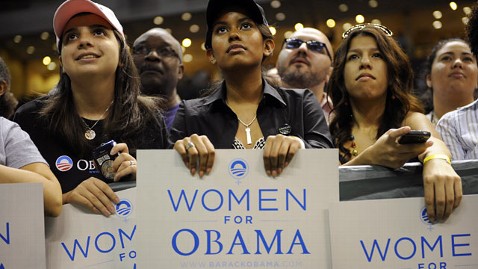
Women for bigger government, higher taxes

The list is from John Hawkins, who runs Right Wing News. It’s posted at Townhall.com, though. (H/T Lindsay)

Intro:

Keeping Americans poor in a prosperous country like America is not as easy as you think. After all, this is the “land of opportunity.” Legal immigrants pay tens of thousands of dollars and wait years for the opportunity to come legally and illegal immigrants often risk their lives just so they can get here and do menial work. This is the country that made Bill Gates, Steve Jobs and even OPRAH into billionaires and it’s a nation where you can have everything from hoverboards to medicine for your pet delivered right to your door. So when there’s so much wealth and opulence everywhere, how do you lock Americans out of that success?

No matter what you do, there will always be a few poor people around, but to really maximize those numbers there are very specific government policies abetted by a few cultural attitudes that will make all the difference.

Here’s the list of policies that make people poor:

  1. Making Sure Taxes And Regulations Are Sky High
  2. Encouraging Dependency
  3. Encouraging People To Have Babies Out Of Wedlock
  4. Demonizing Success
  5. Screwing Up The Education System
  6. Having Massive Immigration
  7. Ratcheting Up Their Expenses

I partially disagree with him on #6, where he goes after skilled immigrants. I think it’s right to go after unskilled immigrants, and immigration through family sponsors, since those people may use more social programs than they pay for in taxes. I don’t mind if they come, so long as they are barred from social programs. Failing that, we should only allow skilled immigrants to come – they pay in more than they use up.

However, if he was talking about illegal alias, and not skilled workers, I agree 100%. Everyone who is here should be here legally with a work permit, and there should be enforcement to punish employers who cheat.

Here’s the one I really like, though – the one I think my Democrat co-workers would not be surprised by:

7. Ratcheting Up Their Expenses: Of course, if you want to create more poor Americans, it’s best to tax the middle class as much as possible, but in a country where they can vote you out of office, you have to be careful about directly reaching into their wallets. So, how do you take their money without their realizing that you’re responsible?

Have the Federal Reserve print money non-stop, which drives up inflation. Over time, that reduces the purchasing power of the middle class as the cost of everything seems to creep up. It’s also important to go after cheap sources of energy like oil, coal, natural gas and nuclear power. Not only does that drive up the cost the middle class pays across the board for products, it also hits people directly when they heat and cool their homes. Exploding medical costs are also helpful and Obamacare has done an amazing job of this. Medical costs are skyrocketing for the middle class and helping to drive them towards poverty. As an extra added bonus, middle class Americans who can no longer afford to pay for their medical care because of Obamacare will also be hit with a tax penalty. If your goal is to hurt middle class Americans financially, you could not do much better than Obamacare.

There are many ways to impoverish working people more than just raising their taxes. Just make them pay more for everything by regulating and taxing the people who create the services and products that people buy.