Tag Archives: Self-sacrifice

The meaning of marriage: a lecture at Google by Tim Keller

Painting: "Courtship", by Edmund Blair Leighton (1888)
Painting: “Courtship”, by Edmund Blair Leighton (1888)

Disclaimer: I have reservations about Tim Keller. I consider him to be too liberal for my tastes, especially on scientific (intelligent design) and political/economic issues. However, I think he did a good job explaining marriage in the lecture below.

Here’s the the video:

Details:

Timothy Keller visits Google’s New York, NY office to discuss his book “The Meaning of Marriage.” This event took place on November 14, 2011, as part of the Authors@Google series.

Timothy J. Keller is an American author, speaker, preacher, and the founding pastor of Redeemer Presbyterian Church in New York City. He is the author of several books, including “The Reason for God: Belief in an Age of Skepticism.”

“The Meaning of Marriage” touches on topics that all readers can relate to, starting with the role of marriage in our culture, its history and the pessimism that is often associated with it. The Kellers also discuss the feelings of and acts of love, romantic relationships, gender roles, singleness, and the role of sex in a marriage.

I saw a lot of things in his lecture that echo my own views. One point where we agree is on not just looking for traits and virtues in the other person, but in seeing how they handle conflict and solve problems with you.  You have to give the other person things to do and see if they make progress and work cooperatively with you. The most important thing to look for is someone who sees potential in you and is committed to helping you realize it. You want someone who won’t give up on you, no matter how hard things get. There are fun and happy times in a marriage, but those come naturally – the real question is how well two people stick together to get things done when it’s hard. I definitely recommend Keller’s book on marriage, it’s such a good vision of what marriage could be.

Here’s an article entitled “You Never Marry the Right Person“, that discusses one of the points in the lecture.

Excerpt:

In generations past, there was far less talk about “compatibility” and finding the ideal soul-mate. Today we are looking for someone who accepts us as we are and fulfills our desires, and this creates an unrealistic set of expectations that frustrates both the searchers and the searched for.

[…]The Bible explains why the quest for compatibility seems to be so impossible. As a pastor I have spoken to thousands of couples, some working on marriage-seeking, some working on marriage-sustaining and some working on marriage-saving. I’ve heard them say over and over, “Love shouldn’t be this hard, it should come naturally.” In response I always say something like: “Why believe that? Would someone who wants to play professional baseball say, ‘It shouldn’t be so hard to hit a fastball’? Would someone who wants to write the greatest American novel of her generation say, ‘It shouldn’t be hard to create believable characters and compelling narrative’?” The understandable retort is: “But this is not baseball or literature. This is love. Love should just come naturally if two people are compatible, if they are truly soul-mates. “

The Christian answer to this is that no two people are compatible. Duke University Ethics professor Stanley Hauerwas has famously made this point:

Destructive to marriage is the self-fulfillment ethic that assumes marriage and the family are primarily institutions of personal fulfillment, necessary for us to become “whole” and happy. The assumption is that there is someone just right for us to marry and that if we look closely enough we will find the right person. This moral assumption overlooks a crucial aspect to marriage. It fails to appreciate the fact that we always marry the wrong person.We never know whom we marry; we just think we do. Or even if we first marry the right person, just give it a while and he or she will change. For marriage, being [the enormous thing it is] means we are not the same person after we have entered it. The primary challenge of marriage is learning how to love and care for the stranger to whom you find yourself married.

Hauerwas gives us the first reason that no two people are compatible for marriage, namely, that marriage profoundly changes us. But there is another reason. Any two people who enter into marriage are spiritually broken by sin, which among other things means to be self-centered—living lifeincurvatus in se. As author Denis de Rougemont said, “Why should neurotic, selfish, immature people suddenly become angels when they fall in love … ?” That is why a good marriage is more painfully hard to achieve than athletic or artistic prowess. Raw, natural talent does not enable you to play baseball as a pro or write great literature without enduring discipline and enormous work. Why would it be easy to live lovingly and well with another human being in light of what is profoundly wrong within our human nature? Indeed, many people who have mastered athletics and art have failed miserably at marriage. So the biblical doctrine of sin explains why marriage—more than anything else that is good and important in this fallen world—is so painful and hard.

When you are courting, don’t worry about appearances and feelings and passion so much, because that is all subject to change over time, and those things won’t help you with the real challenges you’ll face in a marriage. Worry about whether they are the kind of person who can make commitments and love other people self-sacrificially – even if they are unlovable. In the long run, their ability to read and understand issues, to care for others and serve them, to keep promises, to be respectful and supportive, to argue respectfully and reasonably, and to solve problems constructively, will all be far more important than appearances and feelings and passion.

During the courtship, give the other person things to do that challenge them and see how they handle being given responsibilities – giving a person hard things to do is a much better way to test a person than recreational nights out with recreational drinking, recreational dancing and recreational sex. Marriage means commitment and hard work, not recreation. And that’s what you should test for – the ability to work hard at the relationship and to keep promises and commitments and to communicate reasonably and to work through difficulties fairly. The most dangerous thing you want to avoid is self-centeredness. You don’t want someone who is primarily interested in minimizing your feelings, and then getting her friends to agree with her that this is legitimate for whatever reasons. You want a person who has had a hard enough life that responsibilities and obligations are natural to her, and who doesn’t try to wiggle out of self-sacrificial acts of love when she doesn’t feel like doing it. Each person needs to invest in the other, so that both can have fuel to do their job in the relationship.

Where to get help if you have a selfish, absent or abusive mother or father

Practice that makes perfect
Theology that hits the spot

Normally in my 6 PM post I like to write about something related to apologetics, because that’s when people are done with their work and have time to think about the big questions. Today, I want to say something this article about lambs in Scotland, written by Sheila Walsh in the The Stream.

She writes:

I am very fond of sheep. I grew up on the west coast of Scotland with sheep all around me, field after field of white wool and incessant crying when things seemed a little off.

[…]Of all the lessons I have learned from these defenseless, gentle animals, the most profound is the most painful. Every now and then, a ewe will give birth to a lamb and immediately reject it. Sometimes the lamb is rejected because they are one of twins and the mother doesn’t have enough milk or she is old and frankly quite tired of the whole business. They call those lambs, bummer lambs.

Unless the shepherd intervenes, that lamb will die. So the shepherd will take that little lost one into his home and hand feed it from a bottle and keep it warm by the fire. He will wrap it up warm and hold it close enough to hear a heartbeat. When the lamb is strong the shepherd will place it back in the field with the rest of the flock.

“Off you go now, you can do this, I’m right here.”

The most beautiful sight to see is when the shepherd approaches his flock in the morning and calls them out, “Sheep, sheep, sheep!”

The first to run to him are the bummer lambs because they know his voice. It’s not that they are more loved — it’s just that they believe it.

I am so grateful that Christ calls himself the Good Shepherd.

“He calls his own sheep by name and leads them out. After he has gathered his own flock, he walks ahead of them, and they follow him because they know his voice.” (John 10:3-4 NLT)

My older brother and I grew up with a mother who was very much focused on her career and earning and saving money for her retirement. We were both stuck in daycare very early after being born, so that she could go back to work right away. My older brother has shown the ill effects of our parents (especially our mother) not having any plan for us, especially morally and spiritually. He dropped out of college after failing his first year, never had a career. Although he has normal intelligence and mental health, he never could stick in any real job.

Although there were early warning signs when his grades started to drop in Grade 5, my parents never took responsibility to make a plan to solve it. Oh, they would yell and scream at him at report card time, but just for a day or two, and after that, nothing constructive. My brother decided that he could just ride out the flak my parents gave him on report card night, and keep going with his plan of having fun and being popular. My parents just forgot about it until the next report card day, because they did not want to be distracted from their careers, hobbies and retirement planning.

I had the exact same upbringing as my older brother. He actually did pretty well until Grade 5 just like me, but then our paths diverged. From Grade 5 on, his grades deterioriated. He got tired of having to study and he was more interested in the opinions of his peers and conforming to pop culture. In my case, from Grade 5 on, my grades were always high-90s. I remember taking the same classes as he did, in the same high school, with the same teachers. He got a 44 in data processing, I got a 96 with the same teacher and won the award for the entire grade. Every class I went to, the teachers would speak fondly of my older brother – he was a nice guy, very popular with his peers, good at sports, but not a very good student. How was it that I was winning awards when he had scored so poorly. Was I really his brother? How could we be so different?

The difference is that in Grade 5, he got a Gideon’s New Testament and he read it and he didn’t put it into practice, and in Grade 5, I got a Gideon’s New Testament and I read it twice and I did put it into practice. That was the difference. I had the awareness of the moral law (i.e.- wisdom) that allowed me to judge my parents and judge my peers and judge my teachers and stand alone. When you cannot rely on anyone to lead you, judging others is critical. That is what allows you to maintain appropriate boundaries and minimize the influence of friends and family who do not have any plan to grow you. Awareness of the moral law is what allows you to stop trying to please people who do not want what is best for you. On the other hand, God is always willing to give you wisdom, and you can find out all about him because he has left plenty of evidence concerning his existence and character for you to find. It is in knowing God as he really is that you can find your sense of value, purpose and meaning.

For me, Christianity was a simple matter of being willing to go along with what was true, and not insisting having fun or conforming to peer expectations. The essential characteristic of my faith, in contrast to my older brother’s lack of faith, was this – I did not mind being different, so long as I never lost a debate about what was true. My obedience to Christ has never been conditional on things going my way, on being liked, or anything like that. The only thing that mattered was being factually correct. It never bothered me what other people were doing, or what other people expected me to do, so long as as I was acting on what I knew to be true. And God helped me to find out what was true my motivating me to study, and leading me to him with good evidence, and good mentors.

How has this affected me? Well, this is the second thing I wanted to say about the bummer lamb analogy. Since I was a victim of this hands-off, me-first style of parenting, it’s caused me to be extra sensitive about being a good spiritual leader to others in the same predicament.The people I mentor can see it in the way that I treat them the exact opposite of the way that my older brother and I were treated. I care what people read. I care what courses they choose. I care what they eat. I care how they feel. I care about their finances. I care about their plans to serve God. I care about their romantic relationships. I care whether they get recognition for doing good. I care whether their life is going in the right direction. One person I mentored who once considered taking her own life wrote to me when she graduated from a STEM program, and she said this: “I wish you could have been here at my graduation. My parents only paid for this degree. You were the one who got me through it”. We have never met in person, but she is going to continue to make a huge difference for Christ and His Kingdom going forward.

I think when you have been a bummer lamb, you are extra careful to make decisions that will enable you to be a good shepherd to other lambs. Being a good shepherd does not mean being pious, spiritual, mystical, etc. Being a good shepherd does not mean making the lambs feel good about making bad decisions. Being a good shepherd means understanding what God has done to lead you, and then reflecting that love back to others in practical, self-sacrificial actions that solve actual real-world problems for other people who want to know and serve God. If you are about to jump off a cliff, the last thing you need is someone with no wisdom or experience telling you that God is OK with you doing whatever feels good to you. What you need is someone practical and competent to give you good advice, however much that advice may make you feel bad, or block your pursuit of fun.

One of my friends proof-read the draft of this post told me that it made her think of 2 Cor 1:3-5:

Praise be to the God and Father of our Lord Jesus Christ, the Father of compassion and the God of all comfort,

who comforts us in all our troubles, so that we can comfort those in any trouble with the comfort we ourselves receive from God.

For just as we share abundantly in the sufferings of Christ, so also our comfort abounds through Christ.

Nothing else I do in life matters to me as much as taking care of the people I mentor, especially the ones who are lost and lacking guidance and care. I have good health, good education, good career, and great finances. But by far the most important thing I do is following the example of the Shepherd by caring for other lambs.

Should Christians be motivated by the fear of missing out (FOMO)?

Theology that hits the spot

Dina was off from her stressful job last week, so we spent some time talking over some articles that we found on the culture. We specifically talked about what is motivating young people, so I wanted to write something about that.

FOMO: Fear Of Missing Out

Here’s a leftist New York Times article explaining where FOMO comes from:

It’s known as FOMO, or “fear of missing out,” and refers to the blend of anxiety, inadequacy and irritation that can flare up while skimming social media like Facebook, Twitter, Foursquare and Instagram. Billions of Twitter messages, status updates and photographs provide thrilling glimpses of the daily lives and activities of friends, “frenemies,” co-workers and peers.

[…]When we scroll through pictures and status updates, the worry that tugs at the corners of our minds is set off by the fear of regret, according to Dan Ariely, author of “Predictably Irrational” and a professor of psychology and behavioral economics at Duke University. He says we become afraid that we’ve made the wrong decision about how to spend our time.

[…]A friend who works in advertising told me that she felt fine about her life — until she opened Facebook. “Then I’m thinking, ‘I am 28, with three roommates, and oh, it looks like you have a precious baby and a mortgage,’ ” she said. “And then I wanna die.”

It’s like they want to run a race to do fun and exotic things with their peers, and not finish last.

Anyway, I want to begin this post with examples of FOMO behavior I have personally encountered.

FOMO Travel

Dina and I read and discussed this article by Alain de Botton in The European – notice the emphasis on travel and having fun, sophisticated experiences:

We’re continually being bombarded with suggestions about what we might do (go jet skiing, study in Colorado, visit the Maldives or see the Pyramids). We’re always hearing of the amazing things friends have done or are going to do: ‘there was this great bar we all went to …’; ‘she’s getting married in a little country church, then we’re having a picnic…’; ‘the sun was glinting on Sydney Harbour…’ There are endless hints of the allure of life in other places: an article about family-friendly restaurants in Brooklyn, a crime novel set in Trieste, the departure board at the airport with its list of places only a plane trip away: Moscow, Bangkok, Addis Ababa… The modern world makes sure we know at all times just how much we’re missing. It is a culture in which intense and painful doses of FOMO (Fear Of Missing Out) are almost inevitable.

What’s interesting is this – how does FOMO travel affect young, unmarried Christians?

Travel through missions work seems to be the FOMO activity of choice for at least a few young, unmarried Christians. One of my best friends who is married to another of my best friends told me about her missions trip to a European country. I asked her why she did it, since it meant lost savings, lost earnings, lost work experience, etc. (She gave up a year of earnings, and she had a great job in engineering). Her answer was that she did it for the adventure. I have a hard time hearing Jesus say that he was going to do something because he was bored and wanted an adventure. Especially when it’s $30,000 in costs, $60,000 of lost income, and lost work experience – per year. This was before the time of the Internet, though, when missionary work actually made sense. I just don’t think it’s worth spending that kind of money for the impact you make. The people I know who went on missionary trips just wanted to feel spiritual, look spiritual, and have a fun “life experience” vacation. One missionary told me that she was desperate to get away from her boring mid-Western roots.

If you really want to share Christ effectively with people in other countries, then you can start a blog and pay the tiny costs for it out of your earnings from your day job – that’s what I do. I get more people from Europe reading my blog than I could contact in a year of missionary work. I Skype with the people who are interested in Christianity from these countries (Scotland, Northern Ireland, England, Canada, etc.), as well. Meanwhile, I keep working my not-exciting job, so my savings increase, and my resume remains gap-less. This is good stewardship of finances, and self-denial prepares your character for the hard work of marriage and parenting. The Bible says that those who do not work should not eat. And Paul says that he built tents so that no one could accuse him of taking on missionary work for financial gain.

You can tell whether a person is sincere in their missionary intentions by looking at how responsible they’ve been in their decision-making. If a person has gone into debt paying for fun, thrilling activities like skydiving, ziplining, surfing, etc., then it’s FOMO travel. We must look past the spiritual smokescreen, and tell young people to grow up.

After all, if defending God’s honor was the missionary’s main goal, then the real battlefield would be the university.

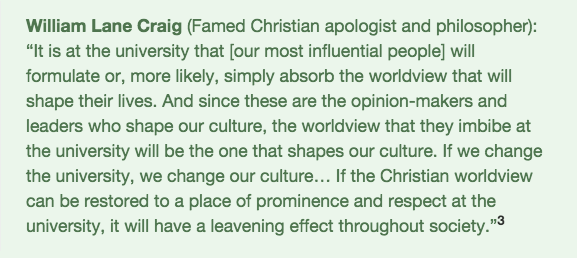
Bill Craig puts it best:

If serving God is your goal, look to the university

There is already a perfectly fine university right next door – no need to fly to Europe to find one! Remember, the university that took your faith away, or maybe the faith of someone you cared about? Yeah, it’s still there in your home town! And it’s still ruining the lives of thousands of young people. It seems to me that it’s better stewardship to stay here and work, then give money to groups like Reasonable Faith. And you can start a blog, teach in church and invite scholars to the local university, too. That costs almost nothing, and it produces better results.

What about Jesus?

Sometimes, it’s a good idea to look beyond the words of the Bible and reflect on the overall message of it at a higher level. When I look in the Bible, I see that Jesus went through a lot of suffering in obedience to God in order to secure the salvation of people who did not even like him. And it’s from this sacrifice on our behalf that his claim on our obedience comes. There are things that I don’t like to do that I do anyway because they work to serve God. Jesus life’s ambition was not to do things that were easy, or that made him happy. Experienced Christians do things that are not fun, because these things are right and because they solve the real problem.