Tag Archives: Right to Life

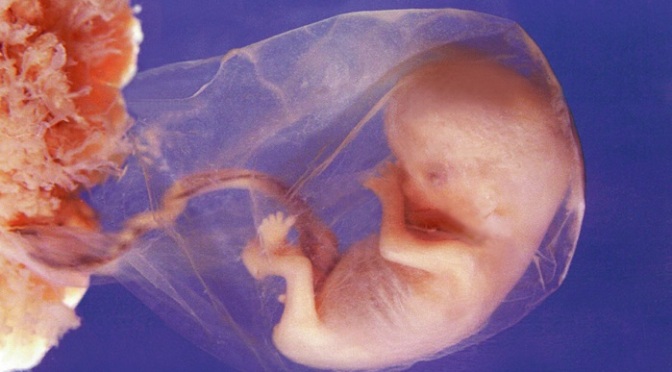
Which side of the abortion rights debate is backed by scientific evidence?

Once upon a time I didn’t know much about the case for abortion rights or the case for the right to life of unborn children. My reason for not reading much about it is that I thought that it was kind of a subjective issue. But, I started a project to read 1-2 books on every conceivable topic, including one on abortion. Lo and behold, it turned out that one side did have the backing of science.

This article from The Public Discourse explains: (links removed)

The following are typical examples—only three of the many, many we could cite. These are from standard texts by embryologists, developmental biologists, and microbiologists:

“Human life begins at fertilization, the process during which a male gamete or sperm unites with a female gamete or oocyte (ovum) to form a single cell called a zygote. This highly specialized, totipotent cell marked the beginning of each of us as a unique individual.” “A zygote is the beginning of a new human being (i.e., an embryo).” Keith L. Moore, The Developing Human: Clinically Oriented Embryology, 7th edition.

“Fertilization is the process by which male and female haploid gametes (sperm and egg) unite to produce a genetically distinct individual.” Signorelli et al., Kinases, phosphatases and proteases during sperm capacitation, Cell Tissue Research.

“Although life is a continuous process, fertilization (which, incidentally, is not a ‘moment’) is a critical landmark because, under ordinary circumstances, a new, genetically distinct human organism is formed when the chromosomes of the male and female pronuclei blend in the oocyte” (emphasis added; Ronan O’Rahilly and Fabiola Mueller, Human Embryology and Teratology, 3rd edition.

The genetically distinct part is key – this unborn child is has a different DNA signature (a human signature) than either the mother or the father. Nothing will be added or taken away from this new signature as the unborn child grows. It never changes.

More:

These authorities all agree because the underlying science is clear. At fertilization—or, more precisely, when the sperm (a male sex cell) fuses with the oocyte (a female sex cell, more commonly referred to as an egg)—each of them ceases to be, and a new entity, one that is both genetically and functionally distinct from either parent, is generated. This new entity, initially a single totipotent cell, then divides into two cells, then (asynchronously) three, then four, eight, and so on, enclosed all the while by a membrane inherited from the oocyte (the zona pellucida), which then dissolves during implantation, allowing for continued growth in the direction of maturity as a member of the species. Even prior to implantation, however, these cells and membrane function as parts of a whole that regularly and predictably develops into the more mature stages of a complex human body.

How do we know that the result of sperm-oocyte fusion is a new entity, rather than a continuation of the oocyte? We know that a new entity exists because, once the sperm penetrates the oocyte, a completely new trajectory of biological development commences. The biological activity of an oocyte is directed toward successful fertilization; the biological activity of sperm is directed toward penetration of an oocyte. The biological activity of the new entity that results when sperm and oocyte fuse, however, is directed toward nothing less than the development of a mature human organism, distinct from either parent. Further, this new entity’s activities are directed not by instructions from the mother’s body, as some people wrongly suppose, but by its own unique set of instructions, especially the blueprint for development contained in its unique genetic material. The mother’s body recognizes the zygote and then the embryo as an entity distinct from itself. In fact, the embryo must send out chemical signals to prevent the mother’s immune system from attacking it. The embryo also emits chemical signals that induce changes in the lining of the mother’s uterus to enable successful implantation.

If this embryo is provided a suitable environment, nutrition, and protection from deliberate attack, serious injury, or disease, it will develop to the mature stage of a human organism. Thus, from the zygote stage onward this distinct, new organism has all of the internal resources—in its genetic and epigenetic structure—needed to develop itself (or, rather, himself or herself, since in the human sex is determined from the very beginning) to the mature stage of a human organism. At no point after fertilization—implantation, gastrulation, birth, puberty, etc.—does a fundamental change in biological trajectory occur. These subsequent stages of development are simply the unfolding of the zygote’s inherent dynamism toward human organismal maturity. This shows that the zygote already is a human organism—a member of the species Homo sapiens—albeit at an early stage of his or her development.

So, since I like to win arguments with science, I just took the side of the debate that was backed by science. I really hate to lose debates, you know. I really like to cite scientific evidence when I’m debating.

The crime of abortion, it seems to me, is that you are depriving a human being of his or her future, because of your convenience right now. Human beings don’t have the right to take away the futures of other human beings because they want to be unburdened by the results of their own actions. We shouldn’t resort to violence in order to escape responsibility for our own actions. In almost every case, (except to save the life of the mother), killing the unborn child isn’t justified. It’s actually very scary to me that anyone would think that hurting other people was a reasonable response to one’s own diminished happiness. How did we ever get to a place in society when people don’t think that taking responsibility to care for the unborn child is morally better than killing the unborn child? It’s a baby for goodness sake. We ought to be serious about setting up our lives and controlling ourselves so that we never hurt an unborn child.
Which side of the abortion rights debate is backed by scientific evidence?

Once upon a time I didn’t know much about the case for abortion rights or the case for the right to life of unborn children. My reason for not reading much about it is that I thought that it was kind of a subjective issue. But, I started a project to read 1-2 books on every conceivable topic, including one on abortion. Lo and behold, it turned out that one side did have the backing of science.

This article from The Public Discourse explains: (links removed)

The following are typical examples—only three of the many, many we could cite. These are from standard texts by embryologists, developmental biologists, and microbiologists:

“Human life begins at fertilization, the process during which a male gamete or sperm unites with a female gamete or oocyte (ovum) to form a single cell called a zygote. This highly specialized, totipotent cell marked the beginning of each of us as a unique individual.” “A zygote is the beginning of a new human being (i.e., an embryo).” Keith L. Moore, The Developing Human: Clinically Oriented Embryology, 7th edition.

“Fertilization is the process by which male and female haploid gametes (sperm and egg) unite to produce a genetically distinct individual.” Signorelli et al., Kinases, phosphatases and proteases during sperm capacitation, Cell Tissue Research.

“Although life is a continuous process, fertilization (which, incidentally, is not a ‘moment’) is a critical landmark because, under ordinary circumstances, a new, genetically distinct human organism is formed when the chromosomes of the male and female pronuclei blend in the oocyte” (emphasis added; Ronan O’Rahilly and Fabiola Mueller, Human Embryology and Teratology, 3rd edition.

The genetically distinct part is key – this unborn child is has a different DNA signature (a human signature) than either the mother or the father. Nothing will be added or taken away from this new signature as the unborn child grows. It never changes.

More:

These authorities all agree because the underlying science is clear. At fertilization—or, more precisely, when the sperm (a male sex cell) fuses with the oocyte (a female sex cell, more commonly referred to as an egg)—each of them ceases to be, and a new entity, one that is both genetically and functionally distinct from either parent, is generated. This new entity, initially a single totipotent cell, then divides into two cells, then (asynchronously) three, then four, eight, and so on, enclosed all the while by a membrane inherited from the oocyte (the zona pellucida), which then dissolves during implantation, allowing for continued growth in the direction of maturity as a member of the species. Even prior to implantation, however, these cells and membrane function as parts of a whole that regularly and predictably develops into the more mature stages of a complex human body.

How do we know that the result of sperm-oocyte fusion is a new entity, rather than a continuation of the oocyte? We know that a new entity exists because, once the sperm penetrates the oocyte, a completely new trajectory of biological development commences. The biological activity of an oocyte is directed toward successful fertilization; the biological activity of sperm is directed toward penetration of an oocyte. The biological activity of the new entity that results when sperm and oocyte fuse, however, is directed toward nothing less than the development of a mature human organism, distinct from either parent. Further, this new entity’s activities are directed not by instructions from the mother’s body, as some people wrongly suppose, but by its own unique set of instructions, especially the blueprint for development contained in its unique genetic material. The mother’s body recognizes the zygote and then the embryo as an entity distinct from itself. In fact, the embryo must send out chemical signals to prevent the mother’s immune system from attacking it. The embryo also emits chemical signals that induce changes in the lining of the mother’s uterus to enable successful implantation.

If this embryo is provided a suitable environment, nutrition, and protection from deliberate attack, serious injury, or disease, it will develop to the mature stage of a human organism. Thus, from the zygote stage onward this distinct, new organism has all of the internal resources—in its genetic and epigenetic structure—needed to develop itself (or, rather, himself or herself, since in the human sex is determined from the very beginning) to the mature stage of a human organism. At no point after fertilization—implantation, gastrulation, birth, puberty, etc.—does a fundamental change in biological trajectory occur. These subsequent stages of development are simply the unfolding of the zygote’s inherent dynamism toward human organismal maturity. This shows that the zygote already is a human organism—a member of the species Homo sapiens—albeit at an early stage of his or her development.

So, since I like to win arguments with science, I just took the side of the debate that was backed by science. I really hate to lose debates, you know. I really like to cite scientific evidence when I’m debating.

The crime of abortion, it seems to me, is that you are depriving a human being of his or her future, because of your convenience right now. Human beings don’t have the right to take away the futures of other human beings because they want to be unburdened by the results of their own actions. We shouldn’t resort to violence in order to escape responsibility for our own actions. In almost every case, (except to save the life of the mother), killing the unborn child isn’t justified. It’s actually very scary to me that anyone would think that hurting other people was a reasonable response to one’s own diminished happiness. How did we ever get to a place in society when people don’t think that taking responsibility to care for the unborn child is morally better than killing the unborn child? It’s a baby for goodness sake. We ought to be serious about setting up our lives and controlling ourselves so that we never hurt an unborn child.

Can atheists condemn slavery as immoral? Do atheists believe that slavery is wrong?

Note: For a Christian response to the complaint that the Bible doesn’t condemn slavery, see this article and this article for slavery in the Old Testament, and this article for slavery in the New Testament. These are all by Christian philosopher Paul Copan. You can watch a lecture with Paul Copan on the slavery challenge here, and buy a book where he answers the challenge in more detail. There is also a good debate on whether the Bible condones slavery here, featuring David Instone-Brewer and Robert Price. My post is not a formal logical essay on this issue, it is more that I am outraged that atheists, who cannot even rationally ground objective morality, insist on criticizing the morality of the Bible. I think that atheists who are serious about finding the truth about these issues should check out those links, if they are interested in getting to the truth of these matters.

In other posts, I’ve argued that without an objective moral standard of what is right and wrong, any judgments about right and wrong are just individual opinions. So, when an atheist says slavery is wrong, what he really means is that he thinks slavery is wrong for him, in the same way that he thinks that,say, that chocolate ice cream is right for him. He isn’t saying what is wrong objectively, because on atheism there are no objective moral rules or duties. He is speaking for himself: “I wouldn’t own a slave, just like I wouldn’t eat broccoli – because it’s yucky!”. But he has no rational argument against other people owning slaves in other times and places, because their justification for owning slaves is the same as his justification for not owning slaves : personal preference and cultural conventions.

So do atheists oppose slavery? Do they believe in an objective human right to liberty? Well, there are no objective human rights of any kind on atheism. Human beings are just accidents in an accidental universe, and collections of atoms do not mysteriously accrue “rights”. There is no natural right to liberty on atheism. Now consider abortion, which is favored by most atheists. Like slavery, abortion declares an entire class of human beings as non-persons in order to justify preserving their own happiness and prosperity by means of violence. That’s exactly what slavery does, except abortion is worse than slavery, because you actually kill the person you are declaring as a non-person instead of just imprisoning them.

So how many atheists have this pro-abortion view that it is OK to declare unborn children  as non-persons so they can kill them?

Well, according to Gallup, the “non-religious” are the group most likely to support abortion. In fact, 68% favor legalized abortion, compared to only 19% who oppose it.

Take a look at the Gallup poll data from 2012:

Atheists are OK with the strong killing the weak
Most atheists are OK with the strong killing the weak

The Gallup numbers might actually be low, because “No religion” might include people who are spiritual, but not religious. But what about atheists alone?

As a group, atheists tend to be among the most radical supporters of legalized abortion. The Secular Census of 2012 found that 97% of atheists vote for abortion. There are almost no pro-life atheists. Why is it that atheists look at unborn children and think it’s OK to kill them? Well, let’s see what atheists scholars think about morality, and from that we’ll find out why they think abortion is morally permissible.

Atheist scholars think morality is nonsense

Atheist William Provine says atheists have no free will, no moral accountability and no moral significance:

Let me summarize my views on what modern evolutionary biology tells us loud and clear — and these are basically Darwin’s views. There are no gods, no purposes, and no goal-directed forces of any kind. There is no life after death. When I die, I am absolutely certain that I am going to be dead. That’s the end of me. There is no ultimate foundation for ethics, no ultimate meaning in life, and no free will for humans, either.

Source: http://www.arn.org/docs/orpages/or161/161main.htm

Atheists Michael Ruse says atheists have no objective moral standards:

The position of the modern evolutionist is that humans have an awareness of morality because such an awareness of biological worth. Morality is a biological adaptation no less than are hands and feet and teeth. Considered as a rationally justifiable set of claims about an objective something, ethics is illusory. I appreciate when someone says, ‘Love thy neighbor as thyself,’ they think they are referring above and beyond themselves. Nevertheless, such reference is truly without foundation. Morality is just an aid to survival and reproduction, . . . and any deeper meaning is illusory.(Michael Ruse, “Evolutionary Theory and Christian Ethics,” in The Darwinian Paradigm (London: Routledge, 1989), pp. 262-269).

Atheist Richard Dawkins says atheists have no objective moral standards:

In a universe of blind physical forces and genetic replication, some people are going to get hurt, other people are going to get lucky, and you won’t find any rhyme or reason in it, or any justice. The universe that we observe has precisely the properties we should expect if there is, at bottom, no design, no purpose, no evil and no good, nothing but blind, pitiless indifference… DNA neither knows nor cares. DNA just is. And we dance to its music. (Richard Dawkins, River Out of Eden: A Darwinian View of Life (1995))

Most atheists are like this – although some affirm objective morality, without really having a rational basis for it. In general though, when atheists use moral language to condemn God, the Bible, or Christians, it’s very important to understand that it is just theater. They are trying to use words that describe realities that they do not even believe in, usually with the goal of getting you to stop judging them for their own sin. I blogged about two examples of this before – Richard Carrier and Michael Shermer.

Let’s take a closer look at Richard Dawkins’ statement that there is “no evil and no good”.

Richard Dawkins and morality

Here’s Richard Dawkins’ view of abortion:

Richard Dawkins explains morality on atheism

But wait! He goes even further than mere abortion:

Dawkins believes in Darwinian evolution. Survival of the fittest. The strong kill the weak. Where is protection for the unborn in that narrative?

Richard Dawkins even advocates for adultery.

So, what Dawkins really believes is that morality is nonsense. But in order to get you to stop condemning abortion, adultery, infanticide and a whole host of other atheistic misbehaviors, he will try to condemn you using moral language to stop you from making moral judgments. But the goal here is to intimidate you into not judging. By his own words, he thinks that the whole notion of objective moral values and objective moral duties is just nonsense.

Who does oppose slavery?

How did slavery end?

Dinesh D’Souza explains:

Slavery was mostly eradicated from Western civilization–then called Christendom–between the fourth and the tenth century. The Greco-Roman institution of slavery gave way to serfdom. Now serfdom has its problems but at least the serf is not a “human tool” and cannot be bought and sold like property. So slavery was ended twice in Western civilization, first in the medieval era and then again in the modern era.

In the American South, Christianity proved to be the solace of the oppressed. As historian Eugene Genovese documents in Roll, Jordan, Roll, when black slaves sought to find dignity during the dark night of slavery, they didn’t turn to Marcus Aurelius or David Hume; they turned to the Bible. When they sought hope and inspiration for liberation, they found it not in Voltaire or D’Holbach but in the Book of Exodus.

The anti-slavery movements led by Wilberforce in England and abolitionists in America were dominated by Christians. These believers reasoned that since we are all created equal in the eyes of God, no one has the right to rule another without consent. This is the moral basis not only of anti-slavery but also of democracy.

And, in fact, you can see Christians pushing the culture hard against abortion today, just as we did with slavery. We also oppose frivolous divorce, and redefining marriage in a way that normalizes removing mothers and/or fathers away from their children. Defending the weak is what we do.