
This interview is getting good reviews on Facebook. I would say it is a must-see, because it will change your view of what we should be emphasizing as Christians. Please watch the lecture and then mail this post to all of your friends – we need to be challenged by this man William Lane Craig.
(H/T BirdieUpon)
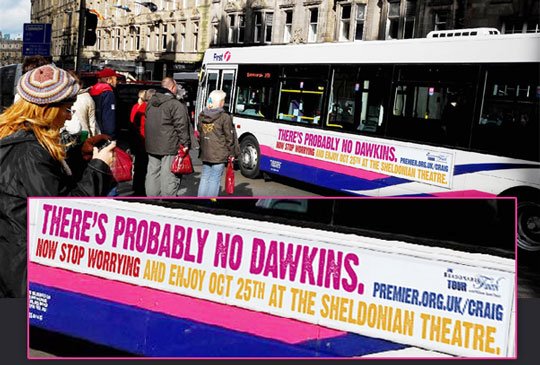
This interview occured after William Lane Craig’s debate tour of the UK, and they talk a lot about it. I think the lesson for us is that apologetics is the best evangelistic tool that Christians have, and people really do show up by the thousands to see these debates. Maybe we should do more of them? And maybe we should be encouraging young people to follow Craig’s path and become solid philosophers and debaters? And are we going to take seriously the duty to sponsor events like this? We have to ask ourselves these tough questions, and be practical and effective about defending God’s honor when it’s called into question. Having a relationship with God is not just about us getting what we want. There are things that we need to be doing to hold up our end of the relationship. Hard things. Self-sacrificial things. Things that we may not like at all. Things that work.
In Intellectual Neutral
Here’s an article that I think might be appropriate for this interview.
Excerpt:
You may see, perhaps for the first time in your life, that here is a need in your life and as a result resolve to become intellectually engaged as a Christian. This is a momentous decision. It is a step that is desperately needed in the lives of millions of American Christians today. No one has issued the challenge to become intellectually engaged more forcefully than did Charles Malik, in his inaugural address at the dedication of the Billy Graham Center on this campus. He emphasized that we as Christians face two tasks in our evangelism: saving the soul and saving the mind, that is to say, not only converting people spiritually, but converting them intellectually as well. And the Church, he said, is lagging dangerously behind with regard to this second task. Listen to what he says:
I must be frank with you: the greatest danger confronting American evangelical Christianity is the danger of anti-intellectualism. The mind in its greatest and deepest reaches is not cared for enough. But intellectual nurture cannot take place apart from profound immersion for a period of years in the history of thought and the spirit. People who are in a hurry to get out of the university and start earning money or serving the church or preaching the gospel have no idea of the infinite value of spending years of leisure conversing with the greatest minds and souls of the past, ripening and sharpening and enlarging their powers of thinking. The result is that the arena of creative thinking is vacated and abdicated to the enemy. Who among evangelicals can stand up to the great secular scholars on their own terms of scholarship? Who among evangelical scholars is quoted as a normative source by the greatest secular authorities on history or philosophy or psychology or sociology or politics? Does the evangelical mode of thinking have the slightest chance of becoming the dominant mode in the great universities of Europe and America that stamp our entire civilization with their spirit and ideas? For the sake of greater effectiveness in witnessing to Jesus Christ, as well as for their own sakes, evangelicals cannot afford to keep on living on the periphery of responsible intellectual existence.
These words hit like a hammer. Evangelicals really have been living on the periphery of responsible intellectual existence. The average Christian doesn’t realize that there is an intellectual war going on in the universities and the professional journals and the scholarly societies. Christianity is being attacked from all sides as irrational or bigoted, and millions of students, our future generation of leaders, have absorbed this viewpoint.
This is a war which we cannot afford to lose. As J. Gresham Machen warned in his article, “Christianity and Culture” in the Princeton Theological Review of 1913, on the even of the Fundamentalist Controversy, if we lose this intellectual war, then our evangelism will be immeasurably more difficult in the next generation. He wrote,
False ideas are the greatest obstacles to the reception of the gospel. We may preach with all the fervor of a reformer and yet succeed only in winning a straggler here and there, if we permit the whole collective thought of the nation to be controlled by ideas which prevent Christianity from being regarded as anything more than a harmless delusion. Under such circumstances, what God desires us to do is to destroy the obstacle at its root.
You can get the video and audio from a later version of this talk from Apologetics 315. I was present in the Wheaton College chapel when he gave the talk I excerpted above. It was moving.
We need a three part approach. We need to be intellectually engaged ourselves. We need to be intentional about marrying well and raising up young people who are intellectually engaged. And we need to study hard subjects so we can be good earners, and support the right kinds of operations. We can’t just do whatever makes us feel good, willy-nilly, and then hope that things will work out – we have to work at this.
 WINTERY KNIGHT