A common thing that I see is people trying to wall off arguments they don’t like by stating a slogan, like “you shouldn’t push your moral rules on other people” or “that’s true for you, but not for me”. Those slogans are meant to get the person out of having to be reasonable about respecting moral obligations, or having to consider how the world really works when choosing what to do.
A self-defeating (or self-refuting) statement is one that fails to meet its own standard. In other words, it is a statement that cannot live up to its own criteria. Imagine if I were to say,
I cannot speak a word in English.
You intuitively see a problem here. I told you in English that I cannot speak a word in English. This statement is self-refuting. It does not meet its own standard or criteria. It self-destructs.
The important thing to remember with self-defeating statements is that they are necessarily false. In other words, there is no possible way for them to be true. This is because they violate a very fundamental law of logic, the law of non-contradiction. This law states that A and non-A cannot both be true at the same time and in the same sense. For example, it is not possible for God to exist and not exist at the same time and in the same sense. This would violate the law of non-contradiction. So if I were to say, “God told me He doesn’t exist” you would see intuitively the obvious self-refuting nature of this statement.
Aaron goes on to explain how to deal with self-refuting statements in the article.
Have you ever heard any of those? It’s amazing how often I hear statements like that when discussing interesting things like moral issues and politics with young people. The trick to being prepared to answer these is to learn lots of them. Then you recognize them when you hear them.
I have been following Katy Faust’s work on Twitter. She runs the organization “Them Before Us”. She fights laws and policies which allow adults to put their desires above the needs of children. And especially a child’s need for a relationship with his or her mother and father. In a recent article for The Federalist, she takes on a Joshua Harris, who is attacking traditional Christian moral values.
She writes:
In a recent interview, newly ex-mega-church pastor Joshua Harris and author of the 1990s best-seller “I Kissed Dating Goodbye” remarked that the support President Trump has received from the evangelical community has been “incredibly damaging to the gospel and to the church.” I’d wager Harris is projecting something fierce.
In August, Harris announced that he and his wife Shannon were divorcing, that he no longer considers himself a Christian, and that he regrets “standing against marriage equality.” Just in case the point was lost on any of us, he followed up his announcement by posting a picture of himself eating a rainbow donut at the Vancouver Pride parade.
It’s no coincidence that Harris reversed himself on biblical teachings on sex and marriage while abandoning the core tenets of the faith.
The denial of sexual and marital norms by believers is often adjacent to a rejection of the core tenets of the faith. That’s because to arrive at these “inclusive” and “affirming” positions on marriage, Christians must exalt intoxicants such as emotion over uncompromising scripture, tradition, and natural law. Once you shift the authority from sola scriptura to sola feels, it’s only a matter of time before every other orthodox teaching finds itself on the woke chopping block.
I love this SO MUCH.
If I had to pick one conclusion that I have found to be true in 30 years of debating Christian truth claims, it would be that the normal process for becoming an atheist has nothing to do with reason or evidence. People abandon their faith in their teens, long before they have ever done any research into whether Christianity is true. And why? Because they know that their desire to be free of the moral demands of Christianity is true. And they know that their desire to be liked by their non-Christian friends is true.
Katy explains that she loves loves to discuss and debate with non-Christians and LGBT people about the issue she cares about: natural marriage and children’s rights. But she gets annoyed with Christian leaders who misunderstand the gospel.
She writes:
Whether approaching the issue from a natural law perspective where male and female complementarity features prominently, or considering the most widely ratified treaty in human history outlines a child’s right to be known and loved by their mother and father, or through the lens of scripture where God joins together man and woman in life-long union because he is seeking “godly offspring” (Malachi 2), Christian leaders have no excuse for getting marriage wrong.
Zip. Zero. Nada. Their more-tolerant-than-Jesus definition of marriage (Mark 10:6-9) is, to use Harris’ own words, incredibly damaging not only to the church, but to the most vulnerable as well.
The reality is that Christians cannot get gay marriage wrong unless they first get the gospel wrong. Progressive Christians are under the wrong impression that ours is a gospel of affirmation: the idea that God affirms everything we think and say and do and want. This misconceived notion of the gospel believes that for God to genuinely love us, he has to love everything about us.
In this self-esteem-driven, everyone-gets-a-prize culture, a God who sometimes disapproves of our thoughts and behavior (*cough* Psalm 19:14) appears to be quite a bigot. In the “Born This Way” version of the Gaga gospel, Matthew 5:29 would read, “If your right eye causes you to stumble, by all means, redefine the word ‘stumble’ because, well, I wouldn’t want you to lose an eye now, would I?”
An honest reading of scripture reveals that ours is not a gospel of affirmation. Leave aside the 613 laws of the Old Testament in which God is rigidly un-affirming as he imposes devastating consequences on his people when they misuse their words, money, bodies, land, and worship. The New Testament and the gospels are also brimming with commands to put off behaviors that displease God and put on an entirely new nature.
Katy likes to tweet a lot of stories where children who have been impacted by divorce or same-sex marriage or donor-conception or surrogacy speak about how they feel about not having a relationship with their father or mother (or both). But she also knows how to argue against adult selfishness using data.
My advice to Christians is this. If you want to have confidence when defending the Christian teaching on marriage, or defending the rights of children to a Mom and a Dad, then you need to be equipped with research, statistical evidence and stories of those who have been impacted. Being a Christian means advocating for the teachings of Jesus. Jesus cared about children, and he wanted adults to act in a way towards children that would help those children to come to know him and follow him. We should not be affirming adult selfishness when it harms the children who are made to know God.
I think one of the reasons why people like Joshua Harris are abandoning the faith is because abandoning the morality came first. And before the abandoning of morality, there was a refusal to get informed about the harm that sin does. Instead of putting in the time to look at the evidence, they just altered their worldviews in order to feel good and be liked. Well, feeling good and being liked has never been important to the Christian life. But valuing truth, defending Christian convictions with evidence, and protecting the weak from the strong is found everywhere in the New Testament.
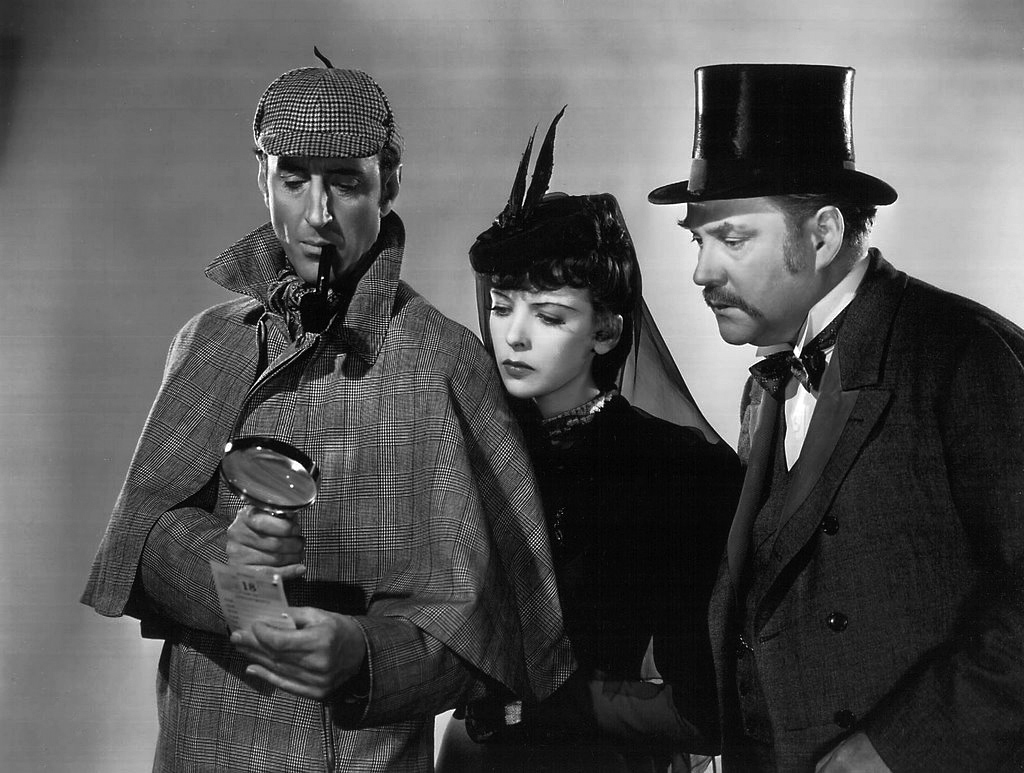
Sherlock Holmes and John Watson about to do philosophy
Let’s review what you need in your worldview in order to have a rationally grounded system of morality.
You need 5 things:
1) Objective moral values
There needs to be a way to distinguish what is good from what is bad. For example, the moral standard might specify that being kind to children is good, but torturing them for fun is bad. If the standard is purely subjective, then people could believe anything and each person would be justified in doing right in their own eyes. Even a “social contract” is just based on people’s opinions. So we need a standard that applies regardless of what people’s individual and collective opinions are.
2) Objective moral duties
Moral duties (moral obligations) refer to the actions that are obligatory based on the moral values defined in 1). Suppose we spot you 1) as an atheist. Why are you obligated to do the good thing, rather than the bad thing? To whom is this obligation owed? Why is rational for you to limit your actions based upon this obligation when it is against your self-interest? Why let other people’s expectations decide what is good for you, especially if you can avoid the consequences of their disapproval?
3) Moral accountability
Suppose we spot you 1) and 2) as an atheist. What difference does it make to you if you just go ahead and disregard your moral obligations to whomever? Is there any reward or punishment for your choice to do right or do wrong? What’s in it for you?
4) Free will
In order for agents to make free moral choices, they must be able to act or abstain from acting by exercising their free will. If there is no free will, then moral choices are impossible. If there are no moral choices, then no one can be held responsible for anything they do. If there is no moral responsibility, then there can be no praise and blame. But then it becomes impossible to praise any action as good or evil.
5) Ultimate significance
Finally, beyond the concept of reward and punishment in 3), we can also ask the question “what does it matter?”. Suppose you do live a good life and you get a reward: 1000 chocolate sundaes. And when you’ve finished eating them, you die for real and that’s the end. In other words, the reward is satisfying, but not really meaningful, ultimately. It’s hard to see how moral actions can be meaningful, ultimately, unless their consequences last on into the future.
Theism rationally grounds all 5 of these. Atheism cannot ground any of them.
Let’s take a look at #4: free will and see how atheism deals with that.
And that’s what neurobiology is telling us: Our brains are simply meat computers that, like real computers, are programmed by our genes and experiences to convert an array of inputs into a predetermined output. Recent experiments involving brain scans show that when a subject “decides” to push a button on the left or right side of a computer, the choice can be predicted by brain activity at least seven seconds before the subject is consciously aware of having made it. (These studies use crude imaging techniques based on blood flow, and I suspect that future understanding of the brain will allow us to predict many of our decisions far earlier than seven seconds in advance.) “Decisions” made like that aren’t conscious ones. And if our choices are unconscious, with some determined well before the moment we think we’ve made them, then we don’t have free will in any meaningful sense.
If you don’t have free will, then you can’t make moral choices, and you can’t be held morally responsible. No free will means no morality.
Here are some more atheists to explain how atheists view morality.
William Provine says atheists have no free will, no moral accountability and no moral significance:
Let me summarize my views on what modern evolutionary biology tells us loud and clear — and these are basically Darwin’s views. There are no gods, no purposes, and no goal-directed forces of any kind. There is no life after death. When I die, I am absolutely certain that I am going to be dead. That’s the end of me. There is no ultimate foundation for ethics, no ultimate meaning in life, and no free will for humans, either.
Richard Dawkins says atheists have no objective moral standards:
In a universe of blind physical forces and genetic replication, some people are going to get hurt, other people are going to get lucky, and you won’t find any rhyme or reason in it, or any justice. The universe that we observe has precisely the properties we should expect if there is, at bottom, no design, no purpose, no evil and no good, nothing but blind, pitiless indifference… DNA neither knows nor cares. DNA just is. And we dance to its music. (Richard Dawkins, River Out of Eden: A Darwinian View of Life (1995))
When village atheists talk about how they can be moral without God, it’s important to ask them to justify the minimum requirements for rational morality. Atheists may act inconsistently with their worldview, believing in free will, expecting praise and blame for complying with the arbitrary standards of their peer group, etc. But there is nothing more to morality on atheism that imitating the herd – at least when the herd is around to watch them. And when the herd loses its Judeo-Christian foundation – watch out. That’s when the real atheism comes out – the atheism that we’ve seen before in countries that turned their backs on God, and the moral law. When God disappears from a society, anything is permissible.



 WINTERY KNIGHT