Tag Archives: Pregnancy

If unborn babies don’t have consciousness or don’t feel pain, may we kill them?

Unborn baby scheming about pro-life apologetics

Was having a conversation by e-mail yesterday with a pro-abortion atheist, and he gave two reasons why he supported abortion in the first and second trimester. First, he said that unborn babies can’t feel pain, so it’s OK to kill them. Second, he said that unborn babies don’t have consciousness, so it’s OK to kill them. I thought it might be useful to link to something that answers both of these objections.

Frank Beckwith is the author of “Defending Life: A Moral and Legal Case Against Abortion Choice“. He wrote that book for Cambridge University Press, a top academic press. But before Cambridge University Press, Beckwith wrote four easy-to-understand essays for the Christian Research Journal. Part IV is the one that has the response to the two questions raised by my atheist friend.

Part I. The Appeal to Pity

Part II. Arguments from Pity, Tolerance, and Ad Hominem

Part III. Is The Unborn Human Less Than Human?

Part IV. When Does a Human Become a Person?

Excerpt:

Some ethicists argue that the unborn becomes fully human sometime after brain development has begun, when it becomes sentient: capable of experiencing sensations such as pain. The reason for choosing sentience as the criterion is that a being that cannot experience anything (i.e., a presentient unborn entity) cannot be harmed. Of course, if this position is correct, then the unborn becomes fully human probably during the second trimester and at least by the third trimester. Therefore, one does not violate anyone’s rights when one aborts a nonsentient unborn entity. [13]

There are several problems with this argument. First, it confuses harm with hurt and the experience of harm with the reality of harm. [14] One can be harmed without experiencing the hurt that sometimes follows from that harm, and which we often mistake for the harm itself. For example, a temporarily comatose person who is suffocated to death “experiences no harm,” but he is nevertheless harmed. Hence, one does not have to experience harm, which is sometimes manifested in hurt, in order to be truly harmed.

Second, if sentience is the criterion of full humanness, then the reversibly comatose, the momentarily unconscious, and the sleeping would all have to be declared nonpersons. Like the presentient unborn, these individuals are all at the moment nonsentient though they have the natural inherent capacity to be sentient. Yet to countenance their executions would be morally reprehensible. Therefore, one cannot countenance the execution of some unborn entities simply because they are not currently sentient.

Someone may reply that while these objections make important points, there is a problem of false analogy in the second objection: the reversibly comatose, the momentarily unconscious, and the sleeping once functioned as sentient beings, though they are now in a temporary state of nonsentience. The presentient unborn, on the other hand, were never sentient. Hence, one is fully human if one was sentient “in the past” and will probably become sentient again in the future, but this cannot be said of the presentient unborn.

There are at least three problems with this response. First, to claim that a person can be sentient, become nonsentient, and then return to sentience is to assume there is some underlying personal unity to this individual that enables us to say that the person who has returned to sentience is the same person who was sentient prior to becoming nonsentient. But this would mean that sentience is not a necessary condition for personhood. (Neither is it a sufficient condition, for that matter, since nonhuman animals are sentient.) Consequently, it does not make sense to say that a person comes into existence when sentience arises, but it does make sense to say that a fully human entity is a person who has the natural inherent capacity to give rise to sentience. A presentient unborn human entity does have this capacity. Therefore, an ordinary unborn human entity is a person, and hence, fully human.

Second, Ray points out that this attempt to exclude many of the unborn from the class of the fully human is “ad hoc and counterintuitive.” He asks us to “consider the treatment of comatose patients. We would not discriminate against one merely for rarely or never having been sentient in the past while another otherwise comparable patient had been sentient….In such cases, potential counts for everything.” [15]

Third, why should sentience “in the past” be the decisive factor in deciding whether an entity is fully human when the presentient human being “is one with a natural, inherent capacity for performing personal acts?” [16] Since we have already seen that one does not have to experience harm in order to be harmed, it seems more consistent with our moral sensibilities to assert that what makes it wrong to kill the reversibly comatose, the sleeping, the momentarily unconscious, and the presentient unborn is that they all possess the natural inherent capacity to perform personal acts. And what makes it morally right to kill plants and to pull the plug on the respirator-dependent brain dead, who were sentient “in the past,” is that their deaths cannot deprive them of their natural inherent capacity to function as persons, since they do not possess such a capacity.

These four essays are a very good introduction to common responses to pro-abortion arguments. I recommend that people get familiar with this, as once you look into it, you will see that the abortion issue can be debated with as much confidence as William Lane Craig defends Christian theism. You will have the same access to scientific evidence and rational arguments on this topic, and so you will have the upper hand. And that’s fun.

The best introductory book on the abortion / right to life issue is “The Case for Life” by pro-life debater Scott Klusendorf. The best comprehensive book is a tie between “The Ethics of Abortion” by Christopher Kaczor, and Frank Beckwith’s “Defending Life: A Moral and Legal Case Against Abortion Choice“.
Red families v. blue families: which states have the strongest families?

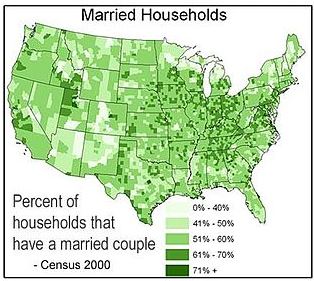
Map of marriage rate by state

This article from The Daily Signal talks about a recent study.

It says:

According to a study from the Institute for Family Studies, red counties tend to have more married adults, more children born within marriage and higher levels of children living with both biological parents than blue counties.

“The reddest counties have higher rates of family stability, which is surprising because red counties, especially in the South, tend to have higher divorce rates,” said W. Bradford Wilcox, senior fellow with the Institute for Family Studies and author of the study. “But what seems to be happening here is that non-marital childbearing has emerged as a bigger engine of family instability than divorce in America. And this brief indicates that non-marital childbearing is lower in redder counties.”

[…]Wilcox acknowledged in his report some of the most stable families do come from blue states, such as Massachusetts and Minnesota, and that, indeed, the most stable families exist in the most extreme red and blue states.

But Wilcox said the state-level data addresses only part of the equation because it does not explain the “connection between family stability and political culture” at the local level.

“At the local level, red counties typically enjoy somewhat stronger families than do blue counties on at least three measures worth considering: marriage, non-marital childbearing and family stability,” Wilcox wrote in the report.

“The bottom line: The marriage advantage in red America helps explain why children in red counties are somewhat more likely to enjoy stable families than are children in blue counties,” he added.

I’m going to guess that the reason why people in blue states have lower rates of marriage and higher out-of-wedlock birth rates is because of higher tax rates, marriage penalties at the state level, and big government welfare programs that reward single mothers. Smaller government helps economic growth and leaves money in the pockets of responsible people. It’s much easier to take the marriage track when you have more of your own money in your pocket.

I also think that Judeo-Christian values are a huge factor. People who are religious have the habit of unselfishness that is necessary to get married in the first place. Marriage is about self-sacrificially loving another sinner, and that is attractive to religious people. Marriage is not so attractive to people who think that there is no afterlife, that the purpose of life is fun, and selfishness is awesome. If you believe that this life is all there is and there is no objective morality, then there is no rational basis there for serving others when it goes against your self-interest.

Regarding that last point, about how religious people are more suited to unselfishness and cooperation, there is a new study out.

Consider this recent study from the University of Toronto, in Canada.

The abstract says:

A large literature is currently contesting the impact of religion on prosocial behavior. As a window into this discussion, I examine the close social networks of American adults and consider whether religious traditionalists are more likely than other network members to supply several basic forms of social support. Analysis of the Portraits of American Life Survey reveals three main findings. First, a majority of Americans—religious or not—count at least one perceived religious traditionalist among their close network ties. Second, American adults are more likely to receive advice, practical help, and money from ties identified as religious traditionalists than from other types of ties, a pattern that held among both kin and nonkin network ties. Finally, although perceived traditionalist network members appear especially inclined to assist highly religious people, they nevertheless offer social support to Americans across a broad spectrum of religiosity. Beyond its relevance for debates on religion and community life, this study also proposes a novel strategy to assess prosocial behavior. Asking people to recount the deeds of their network members can reduce certain self-reporting biases common to survey research and helps locate prosocial activity in concrete and meaningful social relationships.

So, people who are more religious and traditional already have the character traits to be unselfish. And what is marriage, but the promise to be unselfish, for the sake of your spouse, and eventually, for the sake of your kids?

New study: women seeking to have a child should start before age 32

Brain vs Heart, from: theawkwardyeti.com

Dina sent me this sobering piece of research from the New Scientist which is perfect for all the young feminists who have been taught in college that marriage should be put off, and women can easily get pregnant after age 40.

Excerpt:

It’s a question many people will ask themselves at some point in their lives: when should I start a family? If you know how many children you’d like, and whether or not you would consider, or could afford, IVF, a computer model can suggest when to start trying for your first child.

Happy with just one? The model recommends you get started by age 32 to have a 90 per cent chance of realising your dream without IVF. A brood of three would mean starting by age 23 to have the same chance of success. Wait until 35 and the odds are 50:50 (see “When to get started”).

The suggestions are based on averages pulled from a swathe of data so don’t give a personal prediction. And of course, things aren’t this simple in real life – if only family size and feelings about IVF were the only factors to consider when planning a family. But the idea behind the model is to help people make a decision by condensing all the information out there into an accessible form.

“We have tried to fill a missing link in the decision-making process,” says Dik Habbema at Erasmus University in Rotterdam, the Netherlands, one of the creators of the model. “My son is 35 and many of his friends have a problem deciding when to have children because there are so many things they want to do.”

It’s a scenario that will be familiar to many; the age at which people have their first child has been creeping up over the last 40 or so years. For example, the average age at which a woman has her first child is 28 in the UK and has reached 30 in Italy, Spain and Switzerland. In the US, the birth rate for women in their 20s has hit a record low, while the figures for those over 35 have increased over the last few decades.

The decision is more pressing for women thanks to their limited supply of eggs, which steadily drop in quantity and quality with age. Female fertility is thought to start declining at 30, with a more significant fall after the age of 35.

[…]The new model incorporates data from studies that assess how fertility naturally declines with age. The team took information on natural fertility from population data collected over 300 years up to the 1970s, which includes data on 58,000 women.

I have often tried to talk to young women about the need to get their lives in gear. I advise them to work summers during high school, obtain a STEM degree in university, minimize borrowing money by going to community college for the generic prerequisites, don’t have premarital sex, get a job related to their STEM field straight out of college, pay off their debts, move out of their parents’ house, start investing from the first paycheck, marry between age 25-30, and then start having children after the first two “stabilizing” years of marriage. This is sound advice, rooted in my careful reconnaissance of the things that human beings care about and need in their old age. This advice is not bullying, it comes from reading many, many relevant papers. It comes from putting the knowledge gained from reading the papers into practice, and seeing results where appropriate.

I am giving you the numbers. Straight out of a peer-reviewed study. Don’t follow your heart. Don’t listen to your friends. Follow the science. Make your decisions within the boundaries of reality. God will not save you from foolish decisions.

Related posts