
Tag Archives: Love

Are atheists able to perform the greatest moral duty?

Goodness Without God: is it possible?

J. Warner Wallace looks at what Jesus says the most important commandment is, and then asks whether atheists can be justified morally if Jesus is right.

He writes:

I was an atheist for the first thirty-five years of my life. While I was a committed (and often aggressive) non-believer, most people who knew me would probably have described me as a “nice guy”. My behavior wasn’t all that different than many of my Christian friends. I worked with many other atheist police officers. We were often suspicious of the Christians in our midst and the people we arrested who claimed to be Christians. Even as atheists we were familiar with Jesus’ directive to “love your neighbor as yourself.” My partner, Tim, used to say, “If there is a good God and a good Heaven, I think I will be there when it’s all over. I’m a good person. I try to ‘do the right thing’. I’m not a bad guy; I put bad people in jail. So I’m not worried about it.” Tim held a “works based” moral worldview and he was sure his good deeds would earn him a spot in Heaven if he was wrong about the existence of God. But Tim (and I) were unfamiliar with Jesus’ teaching in its full context, and now, years later as a Christian, I’ve come to understand why the first part of the “Greatest Command” is even more important than the second.

When approached by a skeptic, Jesus affirmed the greatest commandments of God in the following way:

Matthew 22:35-40
One of them, a lawyer, asked Him a question, testing Him, “Teacher, which is the great commandment in the Law?” And He said to him, “‘You shall love the Lord your God with all your heart, and with all your soul, and with all your mind.’ This is the great and foremost commandment. The second is like it, ‘You shall love your neighbor as yourself.’ On these two commandments depend the whole Law and the Prophets.”

Most unbelievers recognize the value of the second half of this command (“You shall love your neighbor as yourself”) but deny the value of the first part (“‘You shall love the Lord your God with all your heart, and with all your soul, and with all your mind.”) There’s a reason, however, why Jesus listed these two commands in this specific order. The first command (loving God) is the “great and foremost commandment” because it is required to achieve the second command (loving others). You can’t truly do the right thing unless you understand the relationship between these two commands:

Read the rest at Cold Case Christianity.

I’ve made the same point here many times, but I have never been an atheist and I don’t make the point in the same winsome way that Wallace does.

I think his post is worth sending along to any atheists you may know who think themselves justified. I think it is a mistake for people to derive their own version of morality based on the time and place where they are, and then think that picking and choosing the parts they like will justify them with God. Remember, a recent survey of atheists found that 97% of them favor abortion rights. I think this is consistent with the atheist view that there are no human rights, including a right to life. Moreover, in my experience, I have found that most atheists have no problem with the government stomping all over the consciences of Christians when it comes to things like gay rights. It’s important to show them that there is a standard independent of their personal opinions, justifications and rationalizations. And that they don’t measure up to it. You can make up your own morality all you want,

Why doesn’t God make his existence more obvious to people?

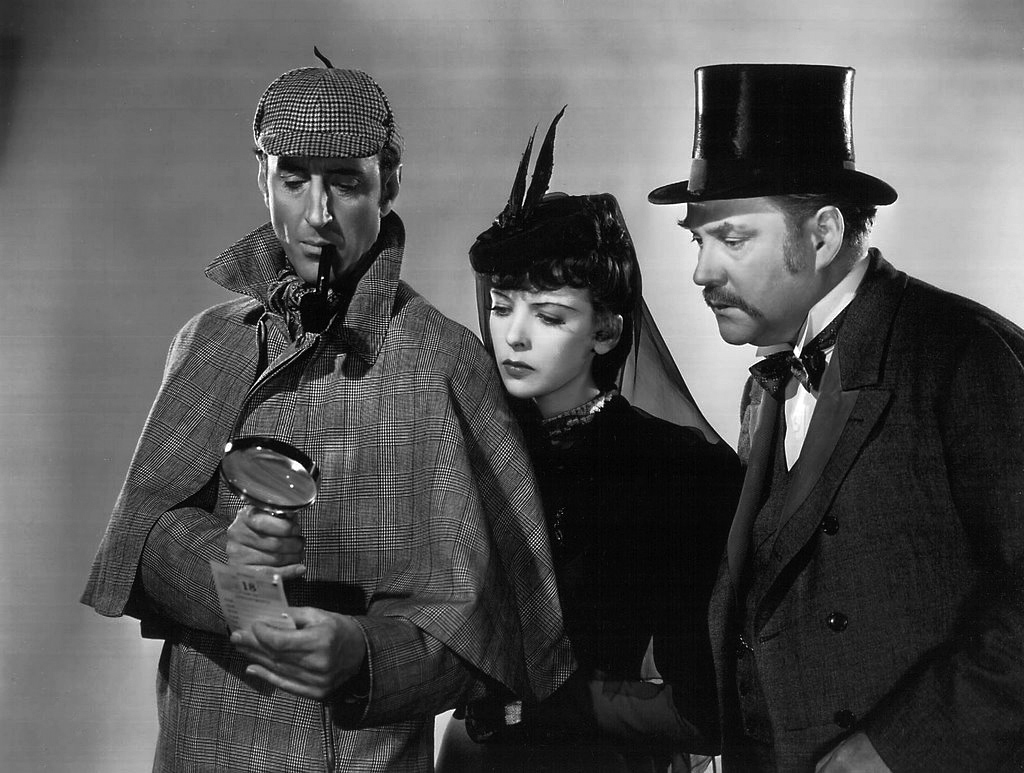
Sherlock Holmes and John Watson about to do philosophy

Have you ever heard someone say that if God existed, he would give us more evidence? This is called the “hiddenness of God” argument. It’s also known as the argument from “rational non-belief”.

Basically the argument is something like this:

  1. God is all powerful
  2. God is all loving
  3. God wants all people to know about him
  4. Some people don’t know about him
  5. Therefore, there is no God.

In this argument, the atheist is saying that he’s looked for God real hard and that if God were there, he should have found him by now. After all, God can do anything he wants that’s logically possible, and he wants us to know that he exists. To defeat the argument we need to find a possible explanation of why God would want to remain hidden when our eternal destination depends on our knowledge of his existence.

What reason could God have for remaining hidden?

Dr. Michael Murray, a brilliant professor of philosophy at Franklin & Marshall College, has found a reason for God to remain hidden.

His paper on divine hiddenness is here:
Coercion and the Hiddenness of God“, American Philosophical Quarterly, Vol 30, 1993.

He argues that if God reveals himself too much to people, he takes away our freedom to make morally-significant decisions, including responding to his self-revelation to us. Murray argues that God stays somewhat hidden, so that he gives people space to either 1) respond to God, or 2) avoid God so we can keep our autonomy from him. God places a higher value on people having the free will to respond to him, and if he shows too much of himself he takes away their free choice to respond to him, because once he is too overt about his existence, people will just feel obligated to belief in him in order to avoid being punished.

But believing in God just to avoid punishment is NOT what God wants for us. If it is too obvious to us that God exists and that he really will judge us, then people will respond to him and behave morally out of self-preservation. But God wants us to respond to him out of interest in him, just like we might try to get to know someone we admire. God has to dial down the immediacy of the threat of judgment, and the probability that the threat is actual. That leaves it up to us to respond to God’s veiled revelation of himself to us, in nature and in Scripture.

(Note: I think that we don’t seek God on our own, and that he must take the initiative to reach out to us and draw us to him. But I do think that we are free to resist his revelation, at which point God stops himself short of coercing our will. We are therefore responsible for our own fate).

The atheist’s argument is a logical/deductive argument. It aims to show that there is a contradiction between God’s will for us and his hiding from us. In order to derive a contradiction, God MUST NOT have any possible reason to remain hidden. If he has a reason for remaining hidden that is consistent with his goodness, then the argument will not go through.

When Murray offers a possible reason for God to remain hidden in order to allow people to freely respond to him, then the argument is defeated. God wants people to respond to him freely so that there is a genuine love relationship – not coercion by overt threat of damnation. To rescue the argument, the atheist has to be able to prove that God could provide more evidence of his existence without interfering with the free choice of his creatures to reject him.

Murray has defended the argument in works published by prestigious academic presses such as Cambridge University Press, (ISBN: 0521006104, 2001) and Routledge (ISBN: 0415380383, 2007). The book chapter from the Cambridge book is here. The book chapter from the Routledge book is here.

Positive arguments for Christian theism

Two Jennifer Roback Morse lectures on love, sex, economics and marriage

Dr. Jennifer Roback Morse

Here’s a quick bio of the person who is in the image above:

Dr. Jennifer Roback Morse, Senior Fellow in Economics at the Acton Institute and regular contributor toNational Review Online and The National Catholic Register, received her Ph.D. in economics from the University of Rochester. Until recently, she was a Research Fellow at the Hoover Institution. She has been on the faculty of Yale University and George Mason University, and is the author of Love and Economics: Why the Laissez-Faire Family doesn’t work.

And here are two lectures from the great Dr. Jennifer Roback Morse. One of my favorite scholars to listen to, and a great debater, as well.

Lecture one: Love and Economics

(June 13, 2014) Dr J traveled to Phoenix to participate in Alliance Defending Freedom’s Blackstone Legal Fellowship, where she gave two talks. This is the first one, “Love and Economics,” on what marriage is and why we need it–stay tuned for the next one!

The MP3 file is here.

Lecture two: Defending Marriage

(June 13, 2014) Dr J traveled to Phoenix to participate in Alliance Defending Freedom’s Blackstone Legal Fellowship, where she gave two talks. This is the second one, “Defending Marriage,” on why marriage matters and what has happened and will happen as it gets more and more redefined by the progress of the sexual revolution.

The MP3 file is here.

I was listening to these late at night, and when she said “you know Catholics aren’t good with Bible verses” at the beginning of lecture two, I howled with laughter. I’m sure the property manager is going to let me know not to howl with laughter after midnight. Oh well – it was hilarious. She is Catholic. I howled again when made a comment about chaste people over the age of 30, like me. It’s just FUN to listen to, but these are serious subjects.

By the way, she debates on these issues as well. And she’s really good at it.

Or something to read?

For those who prefer to read something, here is an article by marriage-defender Dr. Jennifer Roback Morse about how divorce courts challenge marriage.

Excerpt:

Easy divorce opens the door for an unprecedented amount of government intrusion into ordinary people’s lives. This unacknowledged reality is the subject of Taken Into Custody, by Stephen BaskervilleWith penetrating insight, the political scientist exposes the truly breathtaking consequences of no-fault divorce for the expansion of state power and the decline of personal autonomy.

First, no-fault divorce frequently means unilateral divorce: one party wants a divorce against the wishes of the other, who wants to stay married. Kim Basinger dumped Baldwin for no particular reason, unleashed the power of the Los Angeles Family Court system to inflict pain on him and, in the process, inflicted untold damage on their child. Second, the fact that one party wants to remain married means that the divorce has to be enforced. Baldwin wanted to stay married and to continue to be a husband and father. Yet, the coercive and intrusive machinery of the state must be wheeled into action to separate the reluctantly divorced party from the joint assets of the marriage, typically the home and the children.

Third, enforcing the divorce means an unprecedented blurring of the boundaries between public and private life. People under the jurisdiction of family courts can have virtually all of their private lives subject to its scrutiny. If the courts are influenced by feminist ideology, that ideology can extend its reach into every bedroom and kitchen in America. Baldwin ran the gauntlet of divorce industry professionals who have been deeply influenced by the feminist presumptions that the man is always at fault and the woman is always a victim. Thus, the social experiment of no-fault divorce, which most Americans thought was supposed to increase personal liberty, has had the consequence of empowering the state.

Some might think the legacy of no-fault divorce is an example of the law of unintended consequences in operation. That assumes its architects did not intend for unilateral divorce to result in the expansion of the state. But Baskerville makes the case in this book—as well as his 2008 monograph, “The Dangerous Rise of Sexual Politics,” in The Family in America—that at least some of the advocates of changes in family law certainly have intended to expand the power of the state over the private lives of law-abiding citizens.

It’s important for people to understand the real reasons why people are not getting married, so that we can do something to encourage them to marry that really fixes the problem. If you don’t understand the threats that men are seeing with respect to marriage, it might be a good idea to take a look at this essay by Stephen Baskerville, hosted by the Christian Touchstone magazine. It’s a summary of the book that Dr. Morse reviewed. I consider that book “Taken Into Custody” to be a must-read for anyone contemplating marriage.