
Tag Archives: Laziness

Why do so many people vote for the Democrat party?

ECM sent me this article from National Review that explains why so many people vote Democrat.

Excerpt:

First, we should recognize that the War on Poverty is now a huge budget item. According to calculations by the Congressional Research Service and the Senate Budget Committee, taxpayers coughed up over $1 trillion in federal and state-provided benefits in 2011. These benefits flow to tens of millions of voters and cover the waterfront, offering low-income Americans everything from cash assistance to food, housing, and medical care, not to mention help with education, transportation, home-heating costs, and child care. Spending on these programs has soared more than 40 percent since 2007. That’s an unsustainable trajectory.

Then we get some facts from a Wall Street Journal article on the topic:

  • The percentage of the American labor force drawing disability benefits from the government has doubled since 1992, from 3 percent to 6 percent. They further note: “The number of workers qualifying for disability since the recession ended in 2009 has grown twice as fast as private employment.”
  • During the last four years, the Obama administration’s aggressive promotion of the food-stamp program has increased the number of recipients by 18.5 million.
  • Unemployment insurance that lasted no longer than 55 weeks in 1980 and 72 weeks in 1992 now can last 99 weeks. Some 40 percent of unemployed workers have been out of work for more than half a year.

And how does it affect voting?:

The Battleground Polls conducted by the Tarrance Group on behalf of George Washington University and Politico make this level of detail readily available. The poll helpfully divides its sample of likely voters into, among other things, those who self-identify as either “low income” or “middle class.”

So, what do we know about these voters?

  • Those who self-identify as “low income” are more likely to be unemployed, frustrated over the state of the economy, and pessimistic over the general direction of our country than are those with higher incomes. Yet the Battleground Poll indicates they are more Why do people likely than those who identify as middle class to believe the country is heading in the right direction (42 percent vs. 35 percent).
  • Do welfare benefits insulate these voters from the sort of economic concerns that plague middle-class voters? Apparently so. Compared with their middle-class counterparts, far fewer low-income voters cite pocketbook issues as their number-one concern (53 percent vs.74 percent). Middle-class voters are, almost by definition, far more likely to pay taxes than low-income voters. Unsurprisingly, they are much more likely to list the economy and the level of spending and deficits as their most important concern (28 percent and 17 percent, respectively) than low-income Americans. Among the latter group, only 20 percent say the economy is most important, and a mere 7 percent worry about spending and deficits. Again, this is not surprising, considering that, for most low-income Americans, government benefits come with no strings attached, and at little or no cost in taxes.
  • In contrast, low-income Americans cite Medicare, Social Security, and education benefits as their number-one issue (29 percent in all) more than twice as frequently as do middle-class voters (only 13 percent).
  • If the receipt of welfare benefits affects voters’ views of the economy and alters the equation they use to judge candidates, one would expect them to give the president high marks for how he has handled the most stagnant and underperforming economy in over half a century. And, indeed, that is the case. By a margin of 51 percent to 37 percent low-income voters prefer Obama over Romney on this measure. They prefer Obama by an even more lopsided margin, 55 percent to 37 percent, on the issue of jobs. In contrast, Romney wins big among middle-class voters on these concerns (56 percent to 41 percent on handling the economy, and 54 percent to 43 percent on jobs).

These people aren’t voting for any high and noble reason. They want money. It’s just greed. Greed is why people vote Democrat.

Elusive Wapiti adds:

It makes sense, really. The 47% vote their pocketbook too… the issue comes from the pocketbook being oriented in the opposite direction. Government largesse fills their wallet, whilst draining the bankbooks of the 53%. They are the “zero liability” voter; they are insulated from the costs of the programs and candidates they vote for… but they are understandably quite concerned with ensuring the payouts continue.

You need to get out there today and vote for Mitt Romney to stop the downward spiral into dependency and bankruptcy that we can see in countries like Greece, Spain and Italy. We can see it happening over there, don’t let it happen here.
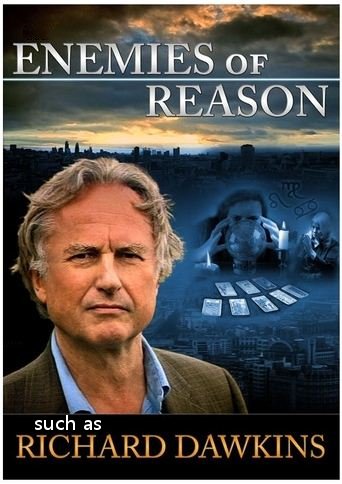
Does atheism mean “a lack of belief in God”?

First, let’s see check with the Stanford University Encyclopedia of Philosophy.

Excerpt:

‘Atheism’ means the negation of theism, the denial of the existence of God.

Stanford University is one of the top 5 universities in the United States, so that’s a solid definition. To be an atheist is to be a person who makes the claim that, as a matter of FACT, there is no intelligent agent who created the universe. Atheists think that there is no God, and theists think that there is a God. Both claims are objective claims about the way the world is out there, and so both sides must furnish forth arguments and evidence as to how they are able to know what they are each claiming.

Philosopher William Lane Craig has some thoughts on atheism, atheists and lacking belief in God in this reply to a questioner.

Question:

In my discussions with atheists, they  are using the term that they “lack belief in God”. They claim that this is different from not believing in God or from saying that God does not exist. I’m not sure how to respond to this. It seems to me that its a silly word-play and is logically the same as saying that you do not believe in God.
What would be a good response to this?
Thank you for your time,

Steven

And here is Dr. Craig’s full response:

Your atheist friends are right that there is an important logical difference between believing that there is no God and not believing that there is a God.  Compare my saying, “I believe that there is no gold on Mars” with my saying “I do not believe that there is gold on Mars.”   If I have no opinion on the matter, then I do not believe that there is gold on Mars, and I do not believe that there is no gold on Mars.  There’s a difference between saying, “I do not believe (p)” and “I believe (not-p).”   Logically where you place the negation makes a world of difference.

But where your atheist friends err is in claiming that atheism involves only not believing that there is a God rather than believing that there is no God.

There’s a history behind this.  Certain atheists in the mid-twentieth century were promoting the so-called “presumption of atheism.” At face value, this would appear to be the claim that in the absence of evidence for the existence of God, we should presume that God does not exist.  Atheism is a sort of default position, and the theist bears a special burden of proof with regard to his belief that God exists.

So understood, such an alleged presumption is clearly mistaken.  For the assertion that “There is no God” is just as much a claim to knowledge as is the assertion that “There is a God.”  Therefore, the former assertion requires justification just as the latter does.  It is the agnostic who makes no knowledge claim at all with respect to God’s existence.  He confesses that he doesn’t know whether there is a God or whether there is no God.

But when you look more closely at how protagonists of the presumption of atheism used the term “atheist,” you discover that they were defining the word in a non-standard way, synonymous with “non-theist.”  So understood the term would encompass agnostics and traditional atheists, along with those who think the question meaningless (verificationists).  As Antony Flew confesses,

the word ‘atheist’ has in the present context to be construed in an unusual way.  Nowadays it is normally taken to mean someone who explicitly denies the existence . . . of God . . . But here it has to be understood not positively but negatively, with the originally Greek prefix ‘a-’ being read in this same way in ‘atheist’ as it customarily is in . . . words as ‘amoral’ . . . . In this interpretation an atheist becomes not someone who positively asserts the non-existence of God, but someone who is simply not a theist. (A Companion to Philosophy of Religion, ed. Philip Quinn and Charles Taliaferro [Oxford:  Blackwell, 1997], s.v. “The Presumption of Atheism,” by Antony Flew)

Such a re-definition of the word “atheist” trivializes the claim of the presumption of atheism, for on this definition, atheism ceases to be a view.  It is merely a psychological state which is shared by people who hold various views or no view at all.  On this re-definition, even babies, who hold no opinion at all on the matter, count as atheists!  In fact, our cat Muff counts as an atheist on this definition, since she has (to my knowledge) no belief in God.

One would still require justification in order to know either that God exists or that He does not exist, which is the question we’re really interested in.

So why, you might wonder, would atheists be anxious to so trivialize their position?  Here I agree with you that a deceptive game is being played by many atheists.  If atheism is taken to be a view, namely the view that there is no God, then atheists must shoulder their share of the burden of proof to support this view.  But many atheists admit freely that they cannot sustain such a burden of proof.  So they try to shirk their epistemic responsibility by re-defining atheism so that it is no longer a view but just a psychological condition which as such makes no assertions.  They are really closet agnostics who want to claim the mantle of atheism without shouldering its responsibilities.

This is disingenuous and still leaves us asking, “So is there a God or not?”

So there you have it. We are interested in what both sides know and what reasons and evidence they have to justify their claim to know. We are interested in talking to people who make claims about objective reality, not about themselves, and who then go on to give reasons and evidence to support their claims about objective reality. There are atheists out there that do make an objective claim that God does not exist, and then support that claim with arguments and evidence. Those are good atheists, and we should engage in rational conversations with them. But clearly there are some atheists who are not like that. How should we deal with these “subjective atheists”?

Dealing with subjective atheists

How should theists respond to people who just want to talk about their psychological state? Well, my advice is to avoid them. They are approaching religion irrationally and non-cognitively – like the person who enters a physics class and says “I lack a belief in the gravitational force!”.  When you engage in serious discussions with people about God’s existence, you only care about what people know and what they can show to be true. We don’t care about a person’s psychology.

Dealing with persistent subjective atheists

What happens when you explain all of that to a subjective atheist who continues to insist that you listen to them repeat over and over “I lack a belief in God, I lack a belief in God”? What if you tell them to make the claim that God does not exist, and then support it with arguments and evidence, but instead they keep leaving comments on your blog telling you again and again about their subjective state of mind: “I lack a belief in cupcakes! I lack a belief in icebergs!” What if they keep e-mailing you and threatening to expose you on Twitter for refusing to listen to them, or denounce you via skywriting: “Wintery Knight won’t listen to me! I lack a belief in crickets!”. I think at this point you have to give up and stop talking to such a person.

And that’s why I moderate and filter comments on this blog. There are uneducated people out there with access to the Internet who want attention, but I am not obligated to give it to them. And neither are you. We are not obligated to listen to abusive people who don’t know what they are talking about. I do post comments from objective atheists who make factual claims about the objective world, and who support those claims with arguments and evidence. I am not obligated to post comments from people who refuse to make objective claims or who refuse to support objective claims with arguments and evidence. And I’m not obligated to engage in discussions with them, either.

Positive arguments for Christian theism

Coward Richard Dawkins flees from yet another debate, this time in Scotland

Will this fundamentalist Imam ever debate his religion?
Will this fundamentalist charlatan ever debate?

(Image from Glenn Peoples)

Richard Dawkins has decided to visit Scotland, and the Free Church of Scotland (the so-called “Wee Frees”) decided to challenge him to a debate. (H/T Dina)

Excerpt:

The Free Church of Scotland has challenged Richard Dawkins, the world-famous atheist, to a debate on his next visit to the Outer Hebrides.

Professor Dawkins is headlining Faclan, the Hebridean Book Festival, on the Isle of Lewis where he is scheduled to promote his book the God Delusion on Friday 2 November.

Despite calls of a boycott from a member of the Lord’s Day Observance Society, Stornoway Free Church minister Reverend Iver Martin (pictured below), who is minister of one of the biggest congregations on the island, said he welcomed the visit as an opportunity for debate.

[…]“The Free Church of Scotland endorses freedom of discussion and the exchange of argument.

“However, with Richard Dawkins presenting a particularly one-sided narrative, I would hope that there would be opportunity for fair, even handed, reasoned debate at which both sides of the theistic argument can be heard.”

Would Richard Dawkins, champion of militant fundamentalist atheism, rise to the challenge of debating his views in a public forum?

Of course not: (H/T Dina)

A Scottish Church leader has labeled evolutionary biologist and famed atheist Richard Dawkins a “snob” over his decision to turn down a debate on religion. Dawkins has refused a debate invitation for the faith-themed Faclan Hebridean Book Festival in Scotland in November.

The Rev David Robertson, a Free Church minister in Dundee, responded to Dawkins’ decision to avoid debate by saying that he does not believe the atheist to be a “coward,” but sees him as a “elitist snob, who once told me he would consider debating with me if I was the Archbishop of Canterbury, the Pope or Chief Rabbi.”

Robertson added: “Dawkins considers, like so many of his fellow new atheists, that there is no debate and they, and they alone, have the truth. Ironically, such arrogance and intolerance of others is the very definition of the fundamentalism that Dawkins professes to hate. I suspect that Richard Dawkins’ problem is that he is not a good debater.”

Yes, that’s it exactly. He cannot bear to hear other viewpoints other than his own. He is not intelligent enough to prove what he asserts in private to a skeptical audience in public. That’s why he doesn’t debate in public. He would prefer to preach in private to those who accept his dogma, and to receive their praise and adulation – and their money!

If Dawkins did agree to have his ideas tested in a debate, it would be a good thing if whoever was doing the testing asked him why he affirms the moral goodness of adultery and infanticide, as well as asking him what he means by his desire to “destroy Christianity“, especially given that he refuses to debate with Christians like William Lane Craig. Does he mean something similar to what his fellow atheists like Stalin and Mao meant, i.e. – mass murder? Or does he mean something else? It would be a good question to ask, anyway.

I don’t want anyone to think that atheism is some sort of immature, non-cognitive tantrum that consists largely of insulting Christians and giggling like children who have discovered a new curse word. There are serious atheistic scholars, and they do debate. Richard Dawkins is not a serious scholar, and he does not debate his views. He is therefore very much like those sweating, foam-flecked televangelists you see bloviating on the telly on Sunday mornings. All bluster, no substance.