
Tag Archives: Hydrogen

Can naturalism account for the origin of the 20 amino acids in living systems?

The origin of life

There are two problems related to the origin of the first living cell, on atheism:

  1. The problem of getting the building blocks needed to create life – i.e. the amino acids
  2. The problem of creating the functional sequences of amino acids and proteins that can support the minimal operations of a simple living cell

Normally, I concede the first problem and grant the atheist all the building blocks he needs. This is because step 2 is impossible. There is no way, on atheism, to form the sequences of amino acids that will fold up into proteins, and then to form the sequences of proteins that can be used to form everything else in the cell, including the DNA itself. But that’s tomorrow’s topic.

Today, let’s take a look at the problems with step 1.

The problem of getting the building blocks of life

Now you may have heard that some scientists managed to spark some gasses to generate most of the 20 amino acids found in living systems. These experiments are called the “Miller-Urey” experiments.

The IDEA center has a nice summary of origin-of-life research that explains a few of the main problems with step 1.

Miler and Urey used the wrong gasses:

Miller’s experiment requires a reducing methane and ammonia atmosphere,11, 12 however geochemical evidence says the atmosphere was hydrogen, water, and carbon dioxide (non-reducing).15, 16 The only amino acid produced in a such an atmosphere is glycine (and only when the hydrogen content is unreasonably high), and could not form the necessary building blocks of life.11

Miller and Urey didn’t account for UV of molecular instability:

Not only would UV radiation destroy any molecules that were made, but their own short lifespans would also greatly limit their numbers. For example, at 100ºC (boiling point of water), the half lives of the nucleic acids Adenine and Guanine are 1 year, uracil is 12 years, and cytozine is 19 days20 (nucleic acids and other important proteins such as chlorophyll and hemoglobin have never been synthesized in origin-of-life type experiments19).

Miller and Urey didn’t account for molecular oxygen:

We all have know ozone in the upper atmosphere protects life from harmful UV radiation. However, ozone is composed of oxygen which is the very gas that Stanley Miller-type experiments avoided, for it prevents the synthesis of organic molecules like the ones obtained from the experiments! Pre-biotic synthesis is in a “damned if you do, damned if you don’t” scenario. The chemistry does not work if there is oxygen because the atmosphere would be non-reducing, but if there is no UV-light-blocking oxygen (i.e. ozone – O3) in the atmosphere, the amino acids would be quickly destroyed by extremely high amounts of UV light (which would have been 100 times stronger than today on the early earth).20, 21, 22 This radiation could destroy methane within a few tens of years,23 and atmospheric ammonia within 30,000 years.15

And there were three other problems too:

At best the processes would likely create a dilute “thin soup,”24 destroyed by meteorite impacts every 10 million years.20, 25 This severely limits the time available to create pre-biotic chemicals and allow for the OOL.

Chemically speaking, life uses only “left-handed” (“L”) amino acids and “right-handed” (“R)” genetic molecules. This is called “chirality,” and any account of the origin of life must somehow explain the origin of chirality. Nearly all chemical reactions produce “racemic” mixtures–mixtures with products that are 50% L and 50% R.

Two more problems are not mentioned in the article. A non-peptide bond anywhere in the chain will ruin the chain. You need around 200 amino acids to make a protein. If any of the bonds is not a peptide bond, the chain will not work in a living system. Additionally, the article does not mention the need for the experimenter to intervene in order to prevent interfering cross-reactions that would prevent the amino acids from forming.

Usually when you hear the origin of life debated, they sort of skirt about the problem of where the amino acids come from, but there is no reason not to make that an issue. The naturalist has to explain how the first living cell could come about naturalistically.

Further study

One of my favorite resources on the origin of life is this interview from the University of California with former atheist and origin of life researcher Dean Kenyon. Kenyon, a professor of Biology at San Francisco State University, wrote the textbook on “chemical evolution”, which is the view that chemicals can arrange themselves in order to create the first living cell, without intervention.

This interview from the University of California with another origin of life researcher, Charles Thaxton, is also one of my favorites.

You’ll need Quicktime to see the videos, or buy the videos from ARN. (Kenyon, Thaxton) I have both of them – they rock!
Nobel prize award for accelerating universe is relevant to Christian apologetics

First, the story – and then we’ll see how the accelerating universe relates to the existence of God.

Excerpt:

Three astrophysicists who discovered that the universe’s expansion is accelerating rather than decelerating, as had been expected, win the Nobel Prize in physics.

Adam Riess was sure he’d spotted a blatant error in his results. It was 1997, and the young post-doc’s measurements of distant, exploding stars implied that the universe was expanding at a faster and faster rate, instead of slowing down, as he had expected.

It wasn’t an error at all. Instead, what was at fault were some basic assumptions about the workings of the universe.

On Tuesday, the Johns Hopkins University astrophysicist received the Nobel Prize in physics for the revolutionary discovery and its implications, along with team leader Brian Schmidt of Australian National University and astrophysicist Saul Perlmutter of UC Berkeley and Lawrence Berkeley National Laboratory, who had reached the same conclusion independently.

At the time of their work, astrophysicists believed that the rate of expansion of the universe — set in motion by the Big Bang 13.7 billion years ago — would be slowing down as matter was pulled together by gravity. The goal at the time was to figure out how rapid the deceleration was.

What the two teams found instead was that the expansion of the universe was accelerating — an observation that could best be explained by the existence of a mysterious “dark energy” that pushes matter farther and farther apart.

Many scientists had thought that, just as the universe started with the Big Bang, it would end with a Big Crunch — with gravity pulling all the matter in the universe inward.

Does anyone remember that week that I wrote those posts about “Why I am not a… <insert some religion here>”? I explained why I was not all kinds of different religions and denominations, including Roman Catholicism, Calvinism, Hinduism, Judaism, Islam, etc. Everyone was offended and we fought about it. Ah, I remember it well.

Well, recall the evidence I used to defeat Hinduism.

Excerpt:

Why I am not a Hindu

  1. Hindu cosmology teaches that the universe cycles between creation and destruction, through infinite time.
  2. The closest cosmological model conforming to Hindu Scriptures is the eternally “oscillating” model of the universe.
  3. The “oscillating” model requires that the universe exist eternally into the past.
  4. But the evidence today shows the the universe, and time itself, had a beginning at the big bang.
  5. The “oscillating” model requires that the expansion of the universe reverse into a collapse, (= crunch).
  6. In 1998, the discovery of the year was that the universe would expand forever. There will be no crunch.
  7. Therefore, the oscillating model is disconfirmed by observations.
  8. The oscillating model also faces theoretical problems with the “bounce” mechanism.

So that’s one reason why I am not a Hindu.

(The absolute origin of the universe out of nothing is also incompatible with Buddhism, Mormonism, etc. because they also require an eternally existing universe)

Notice anything? That’s right! I used this discovery, which was named the discovery of the year at the time, to argue that the universe would expand forever, thus contradicting the Hindu cosmology, which oscillates in cycles of existence and non-existence.

I think it’s important that you guys realize that when it comes to Christianity, we need to not mess around with church, Bible-y stuff. Bring the Nobel-prize-winning data and win the debate decisively. Leave no doubt. Do not use Christianese. Do not sing praise hymns. Do not cite Bible verses. You want to use the Nobel-prize-winning science. You want what works.

You can find some more refutations of other world religions here.

And it works on atheism

I think it’s important for all of you to be familiar with the scientific evidence for the Big Bang. It will help you with your cosmological argument, and it will help you to refute many, many other religions that require eternal universes, including atheism.

I wrote about how the Big Bang theory falsifies atheism before.

Excerpt:

According to the Secular Humanist Manifesto, atheism is committed to an eternally existing universe, (See the first item: “Religious humanists regard the universe as self-existing and not created.”). If something non-material brought all existing matter into being, that would be a supernatural cause, and atheists deny that anything supernatural exists. The standard Big Bang theory requires that all the matter in the universe come into being out of nothing. The Big Bang has been confirmed by experimental evidence such as redshift measurements, light element abundances and the cosmic microwave background radiation. This falsifies eternal models of the universe, which are required by atheist Scriptures.

You all need to know about the experimental evidence that confirms the Big Bang creation out of nothing.

Video interview of Charles Thaxton on the origin of life

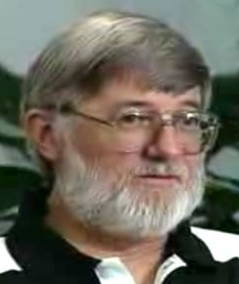
Charles Thaxton
Charles Thaxton

When I was a younger man, just starting full-time work with a hot Internet start-up in the big city, my biggest interest was in the origin of life. I liked to listen to debates about it (e.g. – Walter Bradley versus Robert Shapiro, etc.) and lectures and interviews. Two of my favorite interviews are from the University of California series on Origins, featuring Charles Thaxton and Dean Kenyon.

I found the one with Charles Thaxton in miniature form on Youtube.

About Charles Thaxton:

Charles Thaxton received his Ph.D. in physical chemistry from Iowa State University. He completed two post-doctoral programs, one in history of science at Harvard University and the second in the molecular biology laboratories of Brandeis University.

He has specialized in the origin of life and in science’s relationship with Christianity through history.

He is co-author of The Mystery of Life’s Origin and also The Soul of Science. He is Academic Editor of the high school biology book Of Pandas and People. He has contributed significant chapters to the books God and Culture and The Creation Hypothesis.

He has published technical articles in Journal of Inorganic Chemistry, Journal of Scientific Instruments, and Journal of Cell Biology.

He has lectured widely in American universities including Princeton University, Yale University, University of Michigan, University of Delaware, Rice University, Texas Universtiy, Johns Hopkins University, Vanderbilt University, and Harvard Law School.

He has lectured outside the country at the Korean Advanced Institute of Science, the Russian Academy of Science, and in various universities in Mongolia, Romania, Poland, Hungary, and the former Czechoslovakia.

He has held appointments at Slovak Technical University in Bratislava, Czechoslovakia, the Biomathematical Institute in Craiova, Romania, and at Charles University in Prague, where he was a Templeton scholar in the department of natural sciences.

He is a member of American Chemical Society, American Association for the Advancement of Science, and Fellow of American Institute of Chemistry, American Scientific Affiliation, and Discovery Institute.

He and his wife Carole homeschooled two sons, both of whom are college graduates. He is a survivor of two bouts of cancer, which left him with one leg and one lung. He and his wife reside near Atlanta, Georgia, where they teach homeschooled teens at Konos Academy. He also is writing two books, punctuated by speaking stints.

Here’s the lecture I liked so much featuring Charles Thaxton:

And here are the questions:

1. How did you first get interested in the origin of life?
2. How did you come to write The Mystery of Life’s Origin with Walter Bradley and Roger Olsen?
3. Was there an advantage to having the three of you collaborate on the project?
4. What is the primary argument of your book, The Mystery of Life’s Origin?
5. Have scientists come close to developing a plausible naturalistic explanation to the origin of life or do you still consider the origin of life to be a mystery?
6. Do you see a particular irony in the timing of Stanley Miller’s experiments and the discovery of DNA by Watson and Crick?
7. How does the emergence of modern genetics tie in with the Darwinian scenario of life going from simple to complex?
8. What are the major problems with origin of life simulation experiments?
9. Isn’t it rather impressive that amino acids were produced in the Miller experiments?
10. How close is the development of amino acids to the threshold of life?
11. What are the steps involved in producing proteins from amino acids?
12. Why are amino acids isolated during this process?
13. How can the investigator affect the outcome of a simulation experiment?
14. How did you evaluate the different chemical evolution experiments?
15. Are the initial conditions in the simulation experiments plausible?
16. What did the earth’s early atmosphere contain?
17. Will the simulation experiments work with this atmosphere?
18. There seems to be an underlying assumption that the origin of life resulted without any intelligent input whatsoever yet the simulation experiments appear to rely upon intelligent guidance. Could you comment on this irony?
19. Are there any natural processes that would have filtered out destructive ultraviolet light?
20. What additional steps beyond creating amino acids would be required to develop life?
21. What is so difficult about making proteins or nucleic acids?
22. In addition to the energy problem in protein synthesis isn’t there a sequencing problem?
23. Are DNA sequences analogous to a written language?
24. Has Hubert Yockey made similar claims?
25. In The Mystery of Life’s Origin you refer to order, randomness, and specified complexity. Could you give us an overview of these concepts?
26. What do you think the presence of specified complexity in a living system indicates about its origin?
27. In inferring the necessity of intelligence to produce life haven’t you ventured from the realm of science to religion?
28. Could you summarize the reasons why you believe intelligence was involved in the origin of life?
29. What are the major objections to your current point of view?
30. How was The Mystery of Life’s Origin received by the scientific community?
31. What was Dean Kenyon’s response to your critiques of his book, Biochemical Predestination?
32. What was Dean Kenyon’s response to The Mystery of Life’s Origin?
33. Were you a bit apprehensive about meeting Kenyon after writing a book which was quite critical of his views in Biochemical Predestination?
34. Are self-organizational theories plausible?
35. Would you comment on the work done by Prigogine and Eigen?
36. What is your assessment of RNA scenarios?
37. What other problems do you see with an RNA world?

This is an argument you never hear in William Lane Craig debates, but it’s worth knowing well.

Related posts