Tag Archives: Fundamentalism

Is Anders Breivik a Christian? Does he even believe in God?

I also found this article posted on Evolution News.

Excerpt:

To be sure, Breivik identifies himself as “100% Christian” in his manifesto (p. 1403), and he certainly talks incessantly about defending “Christian” civilization. But he also makes clear that his Christianity is a simply pose adopted for political reasons. Answering why he chose to align himself with a group supposedly espousing “Christian values,” he states: “My choice was based purely [on] pragmatism.” (p. 1380) He goes on to explain that “Christianity” has far more “mass appeal” than nationalism, white supremacy, or a revival of paganism, and so it is a more effective “banner” under which to build his movement. (p. 1381) In sum, Breivik views religion like Machiavelli viewed religion–as a political tool. It’s worth noting that Machiavelli’s The Princeis listed by Breivik as one of his favorite books. (p. 1407)

As for his own religious beliefs and practices, Breivik frankly admits: “I’m not going to pretend I’m a very religious person as that would be a lie. I’ve always been very pragmatic and influenced by my secular surroundings and environment.” (p. 1344, emphasis added) Indeed, Breivik acknowledges that he used to believe that “Religion is a crutch for weak people. What is the point in believing in a higher power if you have confidence in yourself!? Pathetic.” He continues: “Perhaps this is true for many cases. Religion is a crutch for many weak people and many embrace religion for self serving reasons as a source for drawing mental strength (to feed their weak emotional state f[or] example during illness, death, poverty etc.). Since I am not a hypocrite, I’ll say directly that this is my agenda as well.” (p. 1344, emphasis added) In other words, at best he views his embrace of religion as a psychological crutch to give him strength for his horrific activities. Although he adds that he has not yet actually prayed to God for strength, he expects that he may do so when he goes on his murderous rampage: “If praying will act as an additional mental boost/soothing it is the pragmatical thing to do. I guess I will find out… If there is a God I will be allowed to enter heaven as all other martyrs for the Church in the past.” (p. 1345) Note the “if” in his statement about whether God exists. Breivik himself doesn’t even appear to believe in God. He frequently identifies himself as a “cultural Christian,” a term which he defines at one point as the same thing as a “Christian atheist.” (p. 1360)

Unsurprisingly, Breivik’s idea of “cultural Christianity” has little to do with Christianity as most people would understand that term. For example, Breivik makes clear that to join his movement for cultural Christianity “[i]t is not required that you have a personal relationship with God or Jesus.” (p. 1361) Indeed, Breivik would like to expand “Christianity” to include those who worship the Norse pagan god Odin. Breivik calls for the Christian church to be “re-create[d]… as a nationalistic Church which will tolerate and allow (to a very large degree) native cultures/heritage/thought systems such as Odinism.” (p. 1361) And despite using the adjective “cultural,” Breivik’s “cultural Christianity” doesn’t leave much room for Christians to actually influence society apart from social rituals. Indeed, Breivik emphasizes that he wants a secular European state where “[t]he Church and church leaders will not be allowed to influence non-cultural political matters in any way. This includes science, research and development and all non-cultural areas which will benefit Europe in the future. This will also include all areas relating to procreation/birth/fertility policies and related issues of scientific importance (reprogenetics).” (p. 1137, emphasis added)

As can be seen, Breivik harbors a special concern that Christians not be able to influence issues related to science and pubic policy “in any way.” Why?

Because he sees biological science–not traditional religion–as the ultimate savior of society. In his view, advances in biology will makes possible a vigorous new form of Social Darwinism that will save the Nordic race through positive eugenics.

I’m a fairly serious evangelical Christian, and I disagree with everything this madman believes. I wonder why the media was so anxious to paint him as some sort of authentic Christian, when he isn’t one? Authentic Christians take seriously Jesus’ command to “love your enemies”, but I guess that’s not something that people in the media would know about. There is a double standard in the secular left media. They certainly were not willing to label Major Nidal Malik Hasan as an authentic Muslim, even though he was shouting “Allahu Akbar!” as he shot down American troops.

I wonder what God thinks about people in the mainstream media who slam Christians by distorting facts? I’m guessing that he doesn’t like them. I’m guessing that he doesn’t like the way they gloss over the persecution of Christians, either. But that’s a decision they seem willing to make. Just because a mouse is in the cookie jar, it doesn’t make that mouse a cookie.

And one last point. I take it personally when this nut runs around smearing the word knight with his crazy rantings. Last week, I had the pleasure of ordering a lovely bouquet of white roses for a young lady I admire very much. I cleaned up my sports car and put the flowers carefully into the trunk, then drove over there at top speed to present the flowers to her with some other gifts. I wanted to encourage her for doing the many good things that she does. The word “knight” refers to someone who acts chivalrously, gently, mercifully and gallantly. Knights protect and nurture innocent people.

Related posts

Denyse O’Leary explains why theists are lacking courage

From Uncommon Descent. Denyse O’Leary answers the question I posed in my previous post: why do otherwise intelligent, ambitious, qualified Christians shy away from answering questions about their faith?

Excerpt:

Christians confront a deep double standard, to which Darwinism has greatly contributed, by which the atheist position is considered the normal “secular”one and the Christian or other theist position a sort of disloyalty to the public good.

[…] Secular materialists use fashionable words like “skeptical” to describe themselves, when they are not skeptical at all. That confuses discourse and enables remarkably fatuous people to shape public opinion. While working on The Spiritual Brain, I confronted an astonishing fact: The secular materialist would accept any materialist premise, no matter how implausible, to support his view. In fact, I sometimes ask, is there any proposition fronted in the name of, say, Darwinism (as I did here, that you regard as absurd? I often get blank looks or protests that Darwinism is science and there are no such propositions, and an immediate change of subject. Well, when we hear that, at least we know who we are dealing with.

The Christian/theist labours under no such disability. He can accept a materialist explanation when it fits the facts, but not otherwise. But by acting this way, he becomes – in the eyes of the secular atheist – untrustworthy. He can’t be relied on to just shout the party line.

The upshot is that, the Christian risks more, speaking out, and is far more responsible for the need to have intelligent ideas. It’s much safer for Christians to bury themselves in fluffy Christian books and sweat off the flab in Christian weight loss programs, and little by little accommodate themselves to the reigning orthodoxy. After a couple of decades, they don’t even know.

So basically, I understand her to say that the the “skeptics” are actually so committed to the presupposition of naturalism that they are aggressive and close-minded. Their materialism is functioning as a sort of fundamentalism, much like you would find with Islamic radicals. A Christian can look at some new phenomenon in nature and ask the question: is it explained by materialism or is an intelligence required? But the materialist has to presume the answer before looking at the evidence – so they are close-minded to evidence, because of their non-scientific philosophy of materialism.

There are two ways to have a discussion about nature. You can ask a question and then compare evidence for various hypotheses. That’s the non-fundamentalist approach. That’s the approach used by Christians. The naturalist approach is to not allow questions to be asked and to attack the character of the person asking the question. That’s the fundamentalist approach.

And that’s where the fear and intimidation comes in. Who wants to debate with someone who is not open to having their religious pre-supposition validated against the evidence? You’re just going to get fired, censored, arrested or worse. That’s the way it is with fundamentalists like naturalist extremists and Islamic extremists. All kinds of nastiness to others is possible when you are a true believer. Denyse’s point is that the intimidation drives theists to avoid these discussions, and that leads to their decision to just focus on other things like careers and weight loss and fluff.

Related posts

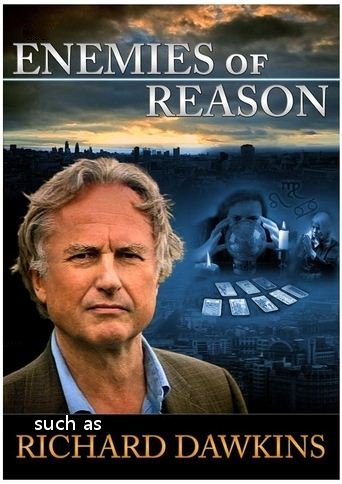
UK Telegraph on Richard Dawkins’ cowardly refusal to debate William Lane Craig

Will Richard Dawkins debate William Lane Craig?

(Image stolen from Glenn Peoples)

Cowardly Richard Dawkins refuses to debate William Lane Craig on this latest UK tour. (H/T Mary)

Excerpt:

Richard Dawkins has made his name as the scourge of organised religion who branded the Roman Catholic Church “evil” and once called the Pope “a leering old villain in a frock”.

But he now stands accused of “cowardice” after refusing four invitations to debate the existence of God with a renowned Christian philosopher.

A war of words has broken out between the best selling author of The God Delusion, and his critics, who see his refusal to take on the American academic, William Lane Craig, as a “glaring” failure and a sign that he may be losing his nerve.

Prof Dawkins maintains that Prof Craig is not a figure worthy of his attention and has reportedly said that such a contest would “look good” on his opponent’s CV but not on his own.

An emeritus fellow of New College, Oxford, Prof Dawkins last year supported a plan to charge Pope Benedict XVI with crimes against humanity for his alleged involvement in the cover-up of sex abuse by Catholic priests.

Prof Craig is a research Professor of Philosophy at Talbot School of Theology, in California, and the author of 30 books and hundreds of scholarly articles on Christianity.

He has debated with leading thinkers including Daniel Dennett, A.C.Grayling, Christopher Hitchens, Lewis Wolpert and Sam Harris.

Prof Craig is due to visit Britain in October this year. Four invitations to take part in public debates were sent to Prof Dawkins from The British Humanist Association, The Cambridge Debating Union, the Oxford Christian Union and Premier Radio.

Prof Dawkins declined them all.

[…]Some of Prof Dawkins’s contemporaries are not impressed. Dr Daniel Came, a philosophy lecturer and fellow atheist, from Worcester College, Oxford, wrote to him urging him to reconsider his refusal to debate the existence of God with Prof Craig.

In a letter to Prof Dawkins, Dr Came said: “The absence of a debate with the foremost apologist for Christian theism is a glaring omission on your CV and is of course apt to be interpreted as cowardice on your part.

“I notice that, by contrast, you are happy to discuss theological matters with television and radio presenters and other intellectual heavyweights like Pastor Ted Haggard of the National Association of Evangelicals and Pastor Keenan Roberts of the Colorado Hell House.”

Prof Craig, however, remains willing to debate with Prof Dawkins. “I am keeping the opportunity open for him to change his mind and debate with me in the Sheldonian Theatre in Oxford” in October, he said.

Read it all. And please forward this to EVERYONE you know.

Dawkins mentions that he “already debated Craig” in that lame, worthless Mexico event where all the speakers got 2 minutes for their speeches, and one minute rebuttals. That was not a formal academic debate, that was a spectacle. I want a formal debate so Craig can put this blowhard in his place like he did with Hitchens, Harris, and Dennett. I want this nonsense about atheism being a  rational, moral worldview to end NOW. And by now, I mean yesterday.

Why won’t Dawkins debate Craig?

Let’s re-cap Dawkins’ reasons in point form: (with my comments in parentheses)

  • Dawkins claims that he is willing to debate high-ranking clergymen (but Craig is a scholar, not a clergyman)
  • Dawkins claims that Craig is a creationist (but Craig supports his kalam cosmological argument with the Big Bang)
  • Dawkins claims that Craig’s only claim to fame is that he is a professional debater (but see Craig’s CV and publications below, which is far more prestigious than Dawkins)
  • Dawkins claims that he’s too busy (busy cowering in fear hugging his Darwin doll for comfort)

Let’s review William Lane Craig’s qualifications:

William Lane Craig is Research Professor of Philosophy at Talbot School of Theology in La Mirada, California.

Dr. Craig pursued his undergraduate studies at Wheaton College (B.A. 1971) and graduate studies at Trinity Evangelical Divinity School (M.A. 1974; M.A. 1975), the University of Birmingham (England) (Ph.D. 1977), and the University of Munich (Germany) (D.Theol. 1984). From 1980-86 he taught Philosophy of Religion at Trinity… In 1987 they moved to Brussels, Belgium, where Dr. Craig pursued research at the University of Louvain until assuming his position at Talbot in 1994.

He has authored or edited over thirty books, including The Kalam Cosmological Argument; Assessing the New Testament Evidence for the Historicity of the Resurrection of Jesus; Divine Foreknowledge and Human Freedom; Theism, Atheism and Big Bang Cosmology; and God, Time and Eternity, as well as over a hundred articles in professional journals of philosophy and theology, including The Journal of Philosophy, New Testament Studies, Journal for the Study of the New Testament, American Philosophical Quarterly, Philosophical Studies, Philosophy, and British Journal for Philosophy of Science.

Craig’s CV is here.

Craig’s list of publications is here.

Here are some of Craig’s most recent publications:

From 2007:

  • Ed. with Quentin Smith. Einstein, Relativity, and Absolute Simultaneity. Routledge Studies in Contemporary Philosophy. London: Routledge, 2007, 302 pp.
  • “Theistic Critiques of Atheism.” In The Cambridge Companion to Atheism, pp. 69-85. Ed. M. Martin. Cambridge Companions to Philosophy. Cambridge University Press, 2007.
  • “The Metaphysics of Special Relativity: Three Views.” In Einstein, Relativity, and Absolute Simultaneity, pp. 11-49. Ed. Wm. L. Craig and Quentin Smith. Routledge Studies in Contemporary Philosophy. London: Routledge, 2007.
  • “Creation and Divine Action.” In The Routledge Companion to Philosophy of Religion, pp. 318-28. Ed. Chad Meister and Paul Copan. London: Routledge, 2007.

From 2008:

  • God and Ethics: A Contemporary Debate. With Paul Kurtz. Ed. Nathan King and Robert Garcia. With responses by Louise Antony, Walter Sinnott-Armstrong, John Hare, Donald Hubin, Stephen Layman, Mark Murphy, and Richard Swinburne. Lanham, Md.: Rowman & Littlefield, 2008.
  • “Time, Eternity, and Eschatology.” In The Oxford Handbook on Eschatology, pp. 596-613. Ed. J. Walls. Oxford: Oxford University Press, 2008.

From 2009:

  • Ed. with J. P. Moreland. Blackwell Companion to Natural Theology. Oxford: Blackwell.
  • “The Kalam Cosmological Argument.” With James Sinclair. In Blackwell Companion to Natural Theology. Ed. Wm. L. Craig and J. P. Moreland. Oxford: Blackwell.
  • “In Defense of Theistic Arguments.” In The Future of Atheism: Alister McGrath and Daniel Dennett in Dialogue. Ed. Robert Stewart. Philadelphia: Fortress Press.

Forthcoming:

  • “The Cosmological Argument.” In Philosophy of Religion: Classic and Contemporary Issues. Ed. Paul Copan and Chad Meister. Cambridge: Blackwell.
  • “Cosmological Argument”; “Middle Knowledge.” In The Cambridge Dictionary of Christian Theology. Ed. G. Fergusson et al. Cambridge: Cambridge University Press.
  • “Divine Eternity.” In Oxford Handbook of Philosophical Theology. Ed. Thomas Flint and Michael Rea. Oxford: Oxford University Press.

Richard Dawkins is eminently qualified to debate uninformed clergymen, but he has too much at stake (in terms of book royalties) to disappoint his loyal horde of foam-flecked fundies by debating a professional scholar who has debated hundreds of times, against the top non-Christian scholars, in hundreds of universities, including Harvard, Cambridge and Oxford.

The Craig-Hitchens debate

This debate was moderated by HUGH HEWITT, host of the nationally-syndicated Hugh Hewitt Show.

This is just an example of what these debates typically look like. No one gets hurt, so what is Dawkins afraid of?

Who is linking to this post?

Related posts