Tag Archives: Fundamentalism

Younger evangelicals put happiness and popularity over morality

Here’s an interesting post by Mark Tooley in the American Spectator.

Excerpt:

A new generation of evangelical elites is imploring evangelicals to step back from the culture wars. Mostly they want to escape polarizing strong stances on same-sex marriage and abortion, and perhaps also contentious church-state issues, like the Obamacare contraceptive mandate.

Purportedly the evangelical church is failing to reach young, upwardly mobile professionals because evangelicals, who now broadly comprise perhaps one third of all Americans, are seen as reactionary and hateful. On their college campuses, at their coffee shops, and in their yoga classes, among other venues, some outspoken hip young evangelicals want a new public image for their faith.

[…]A popular young evangelical blogger echoing Merritt’s theme is Rachel Evans, who conveniently grew up in the Tennessee small town famous for the Scopes Monkey Trial. Her 2010 book was Evolving in Monkey Town: How a Girl Who Knew All the Answers Learned to Ask the Questions. “We are tired of the culture wars,” she explained in a recent interview. “We are tired of politics.” Lamenting the church’s preoccupation with “shame and guilt,” she urged evangelicals to reconsider their opposition to same-sex unions.

The post has a nice history of how evangelicals have always been involved in moral and political issues, and it’s worth reading. But I want to make a different point below.

What’s at the root of this movement to back away from moral issues? Here’s what I think is the problem. When you advocate for moral causes like protecting the unborn, or school choice, or freeing the slaves, a bunch of people are not going to like you. Christians in the time of Jesus knew that being bold about their Christian convictions would make a lot of people think bad things about them – they expected it. But young evangelicals have gotten the idea that being a Christian should not involve any sort of unhappiness and unpopularity. They wouldn’t have learned this from the Bible, because the Bible emphasizes suffering and unpopularity as part of the normal Christian life. It is their experience of church (and the hedonistic culture around them) that is likely to reinforce that view.

What young evangelicals learn in many churches is that religion is something that is centered on the Bible and the church building – it is not something that flows into real life. They learn that you can’t find out anything about God from the Big Bang, the DNA, the fossil record, or even from the peer-reviewed research on abortion, divorce, or gay marriage. They learn from the Bible that helping the poor is good, but then they never pick up an economic textbook to see which economic system really helps the poor. What you learn about in church is that religion is private and has no connection to reality whatsoever. This fits in with their view that Christianity should make them happy, because they’ve learned that it doesn’t involve any studying to connect the Bible to the real world.

What follows from having a view that Christianity only lives in the Bible and church, and not out there in the real world of telescopes and microscopes? Well, most young evangelicals interpret what their pastor is telling them as “our flavor of ice cream” or “our cultural preference”. They don’t link Christianity to the real world, they don’t think that it’s true for everyone. They think that you just accept what the Bible says on faith, and that’s all. No reasons can be given to non-Christians outside of just asking them to accept the Bible. Younger evangelicals believe that there are no facts that confirm or disprove Christianity – it’s just a blind belief. Young evangelicals think that their faith doesn’t have to be complemented with careful study of how things work in the real world.

What is the result of this anti-intellectual compartmentalization of faith? The result is that young evangelicals will balk at the idea of telling someone that they are going to Hell if they don’t believe in Jesus. They will balk at the idea that feminism is to blame for the destruction of the family. They will balk at the idea that the best way to help the poor is to push for free market capitalism. They will balk at the idea that it is wrong to kill unborn children. They will balk at the idea that disarmament and pacifism embolden terrorists and tyrants to attack peace-loving people. They will balk at the idea that traditional marriage is better for society and children. They will balk at the idea that man-made catastrophic global warming is not supported by science. They lack courage because they first lack knowledge. They don’t know how to make the case using hard evidence. They don’t learn that hard evidence is important in church.

If the purpose of religion is to have happy feelings and be liked, then studying the real world to find out whether the Bible is true is bad religion. If religion is divorced from reality, then it’s just a personal preference influenced by how a person was raised. No young evangelical is going to lift a finger to take bold moral stands if they think their worldview is just one option among many – like the flavors of ice cream in the frozen section of the grocery store. They have to know that what they are saying is true – then they will be bold. An example: there was a time when people believed that God did not create the first living cell, because it was just a simple lump of protoplasm that could easily come about by accident. Now we know better, and we can boldly make the case for intelligent design based on hard evidence – if we put in the time to study the evidence. And it is the same for everything – from theological claims, to moral claims, to social claims, to economic claims, to foreign policy claims. It doesn’t matter if people call you names when you have the facts to support unpopular claims, and that’s why public, authentic Christianity is built on facts. Non-Christians being offended by your claims doesn’t change the way the world is.

We have to turn away from our own ignorance, laziness and cowardice if we hope to have the ability to stand up for our beliefs in public. Christianity is not about being happy and feeling good and being liked by others. In a society that is increasingly secular and relativistic, studying outside the Bible necessarily precedes an authentic Christian life. There is no shortcut. We might have been able to get away with fideism 50 years ago, but not anymore. Not now.
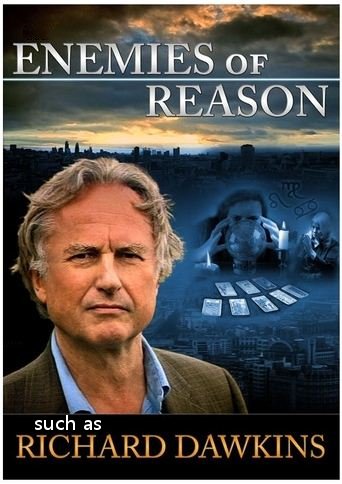
Coward Richard Dawkins flees from yet another debate, this time in Scotland

Will this fundamentalist Imam ever debate his religion?
Will this fundamentalist charlatan ever debate?

(Image from Glenn Peoples)

Richard Dawkins has decided to visit Scotland, and the Free Church of Scotland (the so-called “Wee Frees”) decided to challenge him to a debate. (H/T Dina)

Excerpt:

The Free Church of Scotland has challenged Richard Dawkins, the world-famous atheist, to a debate on his next visit to the Outer Hebrides.

Professor Dawkins is headlining Faclan, the Hebridean Book Festival, on the Isle of Lewis where he is scheduled to promote his book the God Delusion on Friday 2 November.

Despite calls of a boycott from a member of the Lord’s Day Observance Society, Stornoway Free Church minister Reverend Iver Martin (pictured below), who is minister of one of the biggest congregations on the island, said he welcomed the visit as an opportunity for debate.

[…]“The Free Church of Scotland endorses freedom of discussion and the exchange of argument.

“However, with Richard Dawkins presenting a particularly one-sided narrative, I would hope that there would be opportunity for fair, even handed, reasoned debate at which both sides of the theistic argument can be heard.”

Would Richard Dawkins, champion of militant fundamentalist atheism, rise to the challenge of debating his views in a public forum?

Of course not: (H/T Dina)

A Scottish Church leader has labeled evolutionary biologist and famed atheist Richard Dawkins a “snob” over his decision to turn down a debate on religion. Dawkins has refused a debate invitation for the faith-themed Faclan Hebridean Book Festival in Scotland in November.

The Rev David Robertson, a Free Church minister in Dundee, responded to Dawkins’ decision to avoid debate by saying that he does not believe the atheist to be a “coward,” but sees him as a “elitist snob, who once told me he would consider debating with me if I was the Archbishop of Canterbury, the Pope or Chief Rabbi.”

Robertson added: “Dawkins considers, like so many of his fellow new atheists, that there is no debate and they, and they alone, have the truth. Ironically, such arrogance and intolerance of others is the very definition of the fundamentalism that Dawkins professes to hate. I suspect that Richard Dawkins’ problem is that he is not a good debater.”

Yes, that’s it exactly. He cannot bear to hear other viewpoints other than his own. He is not intelligent enough to prove what he asserts in private to a skeptical audience in public. That’s why he doesn’t debate in public. He would prefer to preach in private to those who accept his dogma, and to receive their praise and adulation – and their money!

If Dawkins did agree to have his ideas tested in a debate, it would be a good thing if whoever was doing the testing asked him why he affirms the moral goodness of adultery and infanticide, as well as asking him what he means by his desire to “destroy Christianity“, especially given that he refuses to debate with Christians like William Lane Craig. Does he mean something similar to what his fellow atheists like Stalin and Mao meant, i.e. – mass murder? Or does he mean something else? It would be a good question to ask, anyway.

I don’t want anyone to think that atheism is some sort of immature, non-cognitive tantrum that consists largely of insulting Christians and giggling like children who have discovered a new curse word. There are serious atheistic scholars, and they do debate. Richard Dawkins is not a serious scholar, and he does not debate his views. He is therefore very much like those sweating, foam-flecked televangelists you see bloviating on the telly on Sunday mornings. All bluster, no substance.

Gay marriage: John Piper won’t endorse traditional marriage amendment

From the Minneapolis Star Tribune, headline: “Key Minnesota pastors opt out of marriage fight.”

Excerpt:

Two key conservative evangelical leaders in Minnesota are not endorsing the marriage amendment or directing followers to vote for it, marking the first time during debate over the measure that major faith leaders have not encouraged members to take a stand on the issue.

Influential preacher and theologian the Rev. John Piper came out against gay marriage during a sermon Sunday but did not explicitly urge members of his Minneapolis church to vote for the amendment.

The Rev. Leith Anderson, former Minnesota Gov. Tim Pawlenty’s longtime pastor, also said this week he does not plan to take a public side on the amendment, which would change the state Constitution to define marriage as a union between a man and a woman.

Religious observers say the lack of formal backing from the two influential figures could signal that evangelical leaders in Minnesota are taking a less active role in supporting the amendment — a marked departure from evangelicals in dozens of other states where similar amendments have passed.

“Don’t press the organization of the church or her pastors into political activism,” Piper said during his sermon, posted on Bethlehem Baptist Church’s website.

[…]Piper had been under pressure from conservative groups to weigh in on the amendment, according to his spokesman David Mathis, adding that Piper did not hold back over concerns the church could lose its tax-exempt status.

“Basically our position is, we’re not taking one as a church,” Mathis said.

John Piper has no opinion about whether the state of Minnesota legalizes gay marriage or not – he doesn’t want to get involved in politics. He is famous for pushing “Christian Hedonism” in his books, and also believes in predestination.

My advice for pastors who are pro-marriage

I think that it is important for pastors who want to take conservative positions and really have an effect on the real world to base their positions on logical arguments and evidence. Many pastors seem to just read what the Bible says to people in their churches, but they don’t really think about how the Bible applies to public policy. They don’t really think that the Bible has any bearing outside of the church – this is called subjectivism, and in Christian circles, it is closely tied to fideism.

Pastors who pass on studying apologetics often find themselves having to back away from what the Bible says in public, because they are afraid of being labeled bigots. If your views on moral questions are just held on faith, then it’s hard to tell people that public policy should be based on private faith. It’s like condemning people to Hell because they don’t like the same flavor of ice cream as you. It is much easier to tell someone that smoking is bad for their health though. Why? Because if you put the work in, you can use arguments and evidence, and it’s easy to be bold when you have arguments and evidence. But it takes work to build your case.

Neil and other people are telling me that Piper has stated his view against gay marriage in a sermon, and he cites Bible verses. My problem with this is that Piper’s sermon only applies to people who are inerrantists – who think that the Bible is authoritative. If Piper really opposed gay marriage, then he would support the marriage amendment, and he would persuade people in his state – not just his choir and congregation – using arguments and evidence that people in his state find convincing.

Here’s my argument:

1) If Piper sincerely opposes gay marriage, then he doesn’t want gay marriage to be legalized
2) To stop gay marriage from being legalized, the marriage amendment must pass
3) To pass the marriage amendment, the majority of Minnesotans must vote for it
4) The majority of Minnesotans are not Biblical inerrantists who are persuaded by Piper’s sermon and his citing of Bible verses
5) Piper’s flock cannot persuade the majority of Minnesotans with Piper’s sermon and his citing of  Bible verses
6) Therefore, Piper will have to have some way to persuade these non-inerrantist Minnesotans, if he sincerely opposes gay marriage

If your friend is on fire, you do not preach a sermon and quote the Bible to him. You throw a bucket of water on him – that’s what works. If you really want something to happen, you do what works. Preaching sermons with Bible verses to your flock and then declining to support the marriage amendment in public with evidence and arguments that appeal to the majority of Minnesota voters is not going to stop gay marriage. There are other pastors, like Wayne Grudem and Mark Driscoll who do study the research that bears on these sorts of issues and they do use evidence to persuade others – even non-Christians. They have arguments and evidence – they are bold and they do not care about sounding nice. Grudem even writes about politics and urges Christians to be involved in specific policies and legislation.

The secular left is very happy with pastors who don’t make any arguments or cite any evidence in public. They are easily marginalized and then non-Christians have NO REASON AT ALL to vote with us on social issues. It even has an effect on Jews and other religions, because they are told by the media “the only reason to oppose gay marriage is religious bigotry”. It’s similar to how Darwinists can marginalize opposition to evolution by pointing to fideistic pastors and then claiming that the only opposition to evolution is religious, not scientific. The pastors who refuse to study and make public arguments and cite research papers play right into this. They make it easy for non-Christians to vote against us because this is just “our view”. It’s not true of the real world. It’s just Bible verses. It’s not Bible verses supported by evidence.

Many pastors also kept silent during the time of slavery and Nazism, and said that they didn’t want to get involved in politics or approve specific legislation. Presumably, they expressed their personal opinions to their church choirs behind closed church doors, citing Bible verses which slave-owners and Nazis would not find convincing. But they thought that this was the best they could do since “you can’t argue anyone into the Kingdom of God” and “Jesus isn’t a Republican or a Democrat”. Not every pastor is going to be bold like a William Wilberforce or a Dietrich Bonhoeffer, and make their case in public.

The continuous refusal to engage in the public square with reasons and evidence is not good for Christianity. In fact, we may even lose our religious liberty when we only speak about Bible verses to the church choir behind closed church doors.

Look at what happened in Canada where gay marriage is legal:

In what they are touting as a “world first,” a Quebec homosexual activist group has launched a “registry of homophobic acts” with support and funding from the Quebec Government’s Justice Department.  Standing alongside Montreal Police Chief Johanne Paquin and Commander Alain Gagnon, the leadership of the group Gai Ecoute launched the anonymous tipster registry at a press conference today.

Included in the definition of actions classified as “homophobic” and deemed worthy of reporting to the registry are: “any negative word or act toward a homosexual or homosexuality in general: physical abuse, verbal abuse, intimidation, harassment, offensive graffiti, abuse, injurious mockery, inappropriate media coverage and discrimination.”

A press release from the group says that anyone who has experienced or witnessed an act of homophobia “must” report it to the registry of homophobic acts.

And here’s what happened in Denmark where gay marriage is legal:

Homosexual couples in Denmark have won the right to get married in any church they choose, even though nearly one third of the country’s priests have said they will refuse to carry out the ceremonies.

The country’s parliament voted through the new law on same-sex marriage by a large majority, making it mandatory for all churches to conduct gay marriages.

Giving sermons in church is safe. But speaking out against gay marriage in public on public policy is not completely safe. If pastors pass on making arguments and producing objective evidence and pointing to current events now – when it is still relatively safe to do so – then we mustn’t shed a tear when the next piece of legislation forces pastors to have to perform gay wedding ceremonies in their churches.  Knowledge and practical wisdom are needed to be a good faithful pastor, I think. By being unable to speak out persuasively on moral issues, we leave ourselves open to the things that happen in Canada and Denmark… and around the world. We shouldn’t wait too long before we make our stand – voting “present” is not a good idea.

UPDATE: People are asking me what arguments Piper should be using instead of the sermons and Bible verses, which have limited appeal to the majority of Minnesota voters.

In order to influence the culture as a whole, Piper would have to use arguments like these:

Philosophical:
http://papers.ssrn.com/sol3/papers.cfm?abstract_id=1722155

Evidential:
http://www.thepublicdiscourse.com/2012/06/5640

Human rights:
http://www.law.harvard.edu/students/orgs/jlpp/Vol30_No3_Severinoonline.pdf

If Piper’s goal is to DO GOOD at a practical level, then he has to use public square arguments that are convincing to people who do not accept a very very conservative view of the Bible (which I accept). He has to decide whether Christianity is something subjective and private (about him and his life, and maybe the people who hear his sermons in his church) or public and practical (about society and law). Right now, he is enjoying the liberties that exist because the foundation of the United States is Judeo-Christian, but he has to do his part in public using secular arguments and evidence to protect those foundations, or they could be taken away.

If Piper wants children to *actually* have a mother and a father, and wants Christians to *actually* retain their religious liberty and freedom of conscience, then he will have to GO PUBLIC and use PUBLIC means of persuasion. If every single person in his church agreed with him, and every fundamentalist Christian in Minnesota agreed with him, that would still not be enough to defend marriage.

Related posts