
Tag Archives: Feelings

Why don’t men go to church anymore? The decline of male church attendance

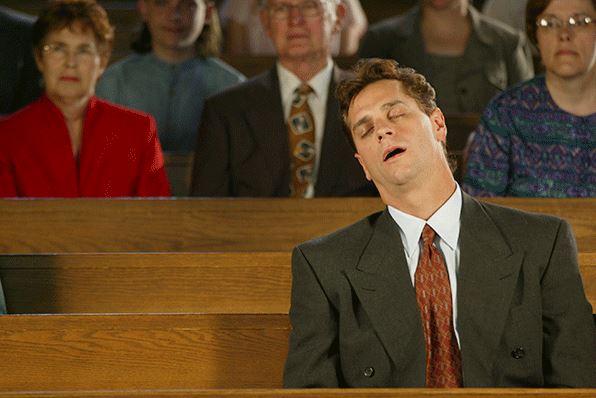
Church sucks, that's why men are bored there
Church sucks, that’s why men are bored there

I most recently spent half a year at a PCA church, and then another half a year at a Southern Baptist church. I attended Sunday services as well as Wednesday night Bible study. I am now looking for a new church. For now, I just look around for a sermon I like and listen to that. In this post, I’ll explain why I think men don’t like church.

There are three areas where churches fail to attract men:

    1. Apologetics
    2. Feminism, sex and marriage
    3. Policy and current events

Apologetics

The PCA church discouraged me from becoming a member of the church because they said that conversion to Christianity due to reason and evidence was contrary to their teachings, and a “red flag”. Their words. I didn’t try to fight them on it, because they are Reformed Presbyterian, and this is their actual view. Their approach to apologetics was “pre-suppositional”, which is to say, they try to convince people to become Christians by asking them to assume that the Bible is infallible, without any argumentation or evidence. Naturally, this doesn’t work, so they aren’t trained to answer any serious questions from non-Christians. (1 Pet 3:15-16)

The Reformed Baptist SBC church is led by people like Russell Moore and Al Mohler, who take the “magic words” approach to evangelism. I.e. – they think that people become Christians just by speaking Bible verses out of context to them. So, when the atheist asks “do you have any evidence for God’s existence?” or “do you have any evidence for Jesus’ resurrection?”, their response is to quote Bible verses to the atheist, which have nothing to do with those topics. Christianity has lost so much influence in the culture under their approach, which is not even Biblical. (Mat 12:38–41)

These approaches to evangelism are not used in any other area of human endeavor. No one replies to questions about auto mechanics, or software engineering, or gardening, or cooking, by spouting Bible verses. In literally every other area of human endeavor, the laws of logic and supporting evidence are seen as assets when making claims to know something about the world to someone who disagrees with you.

Feminism, Sex and Marriage

First wave feminism simply asked for women to be given the same liberty and opportunity as men. That was good. But later versions of destroyed all distinctions between men and women. By destroying femininity, feminism directed women away from the traditional life plan of marriage, children and home-making.

Feminism changed how women voted. Today, about 75% of young, unmarried women vote for policies like taxpayer-funded birth control, taxpayer-funded abortion, no-fault divorce, affirmative action for women in schools and in the workplace, taxpayer-funded daycare, public schools, single-mother welfare, social security, etc. These policies and programs raised tax rates, and grew government, making it easier for women to have children without having to choose a marriage-ready man she wasn’t attracted to. Instead, she could choose men she was attracted to, and just use government programs as a substitute provider if it didn’t “work out”. Thanks to feminism, we have a 42% out-of-wedlock birth rate, and it’s rising. Few female college graduates are debt-free. About 5% of women emerge from college as virgins.

Under feminism, the traditional male roles and virtues were deemed “sexist”. Women were shamed for choosing early marriage, large families, and stable men who were good at being husbands and fathers. Instead, women today chose men based on appearance. They spend their 20s and early 30s giving men who will not commit to them premarital sex. The men who are getting sex thrown at them have no interest in Judeo-Christian values, chastity, fidelity, commitment or raising children. Women mistake the men’s willingness to have sex and cohabitate as signs that they are close to marriage. But in fact, chasing the hot bad boys just eats up the chastity, youth and beauty that could have made them interesting to the marriage-minded men they scorned. Later on, they realize that they’ve wasted their 20s on bad boys, but by then they are not attractive for marriage.

What has the response been to feminism from pastors and churches? They accept the anti-male, anti-marriage policies, that came out of feminism. They accept the promiscuity, and the marriage-delaying that came from feminism. Today, pastors just try to bully the men who were passed over to marry the women who had previously rejected them, despite the higher risk of divorce caused by the women’s past behavior.

Policy and current events

Most pastors are anti-intellectual, and they believe that this is a virtue, since they are focused narrowly on what the Bible explicitly says. Because of this, they aren’t able to understand which laws and policies allow Christianity and Christian families to flourish. I agree that what the Bible speaks about is of the highest importance. But we need to understand how to achieve the goals that the Bible states, as well as how to counter the forces that threaten the achievement of those goals.

For example, Christianity thrives when marriage thrives. Christianity is passed on from parents to children. Anything that threatens marriage, or interferes with parental authority, weakens the influence of Christianity. So, policies like higher taxes, no-fault divorce, SOGI laws, all harm the Christian family, while policies like lower taxes, protections for Christian businesses, protection for Christian schools (statements of faith, moral codes), etc. are all good for Christian families. But most pastors never talk about policies or laws, because they don’t think about how to defend the Christian worldview, how to educate Christian children, how to promote marriage, how promote Christian moral values in the public square. Even protecting the right to life of unborn children is ignored.

As the churches lose relevance, it becomes tempting for pastors to accept what the secular left promotes as good and true and beautiful. The big one is pastors pushing for redistribution of wealth by the secular government as a solution to “poverty”, even though the Bible only sanctions voluntary charity. This diminishes the cultural relevance of the church and elevates the secular government. SBC leaders like Russell Moore champion amnesty for refugees and unskilled illegal immigrants, not realizing how it will harm Christian institutions and values down the road to import large numbers of people who will eventually vote for policies like higher taxes, bigger government, etc.


How to avoid choosing a charming, deceitful narcissist for a spouse

Here's some helpful advice for women about choosing a man
Here’s some helpful advice for women about choosing a man

For fun, I’ve decided to publish the 2000-word first draft that I normally send to my 6 female editors, because sometimes it’s fun to let people know what I *really* think about things before my editors force me to make it more palatable.

We got a comment a while back that I thought was worth a response.

Let’s start with the comment:

My husband was a Narcissist. He slept all over the county and never worked a day in this marriage. Plus, He couldn’t decide if he was straight or gay. After my son finally left home I filed for divorce. I wish I did it sooner. Now he claims to be born again and wants to stay together. When is enough, enough?

We don’t know if this woman was a Christian, was chaste, and whether the man she chose was Christian or was chaste. All we know is that the man she chose was attractive enough to easily find other women who would have sex with him despite the fact that he was married. Whatever he has, it’s something that causes women who are not married to him to have sex with him. That’s who the divorced woman chose to marry. His “charm” wasn’t from his moral character or his deep knowledge of Christian theology and apologetics.

My first response to this was to put the responsibility on the person who had chosen the bad husband. After all, I reasoned, everyone who takes a massive step like marriage is obligated to investigate who it is they are marrying.

But when I said that, I got some responses from women that said that she wasn’t responsible for her poor choice of man, and that she was an innocent victim of his magical charming powers.

Here’s Lee:

A lot of time people don’t show their worst qualities until the relationship is firmly in place, and it starts coming out slowly. It’s not always as clear cut as a woman stupidly choosing an unsuitable husband who acted unsuitable from the get-go. I mean yeah, sometimes it’s obvious early on and the woman is just stupid/ blind/broken/other. But we should be careful to not assume, and careful to not make harsh judgments from our ignorance.

If dangers like infidelity are not “obvious” then it’s not the woman’s fault that she didn’t detect it. Apparently there is no way for the woman to detect it if it’s not obvious, so she’s not responsible.

And Mary:

Narcissists are skilled at charming and persuading people that they’re really great. And they’re skilled at convincing others that their misgivings are irrational fears. Unfortunately,there are a lot of people like that. Not saying that people (men AND women, btw!) don’t just sometimes choose stupidly, for bad reasons like “hotness” and excitement. But narcissists are a whole other kettle of fish. They can come out with a completely different personality once they’ve snagged their prey.

If a bad person is “skilled at charming”, then their victim has no way of evaluating them accurately. Basically, deciding who to marry is just an activity where you talk, and decide how you feel about that person’s talk. If the person is charming, then they make you feel good, and it’s rational to marry them. A lot of women express this as “I want a man who is confident”. It’s never been explained to me how “confidence” is any evidence that the man has an ability and a past pattern of self-control and fidelity.

And Sara:

Probably because narcissists can be very charming at first and easily win people over.

[…] What I was trying to say and the article pointed out is the power of narcissists is they can put people, especially women, under a spell of sorts. They are just so slick and charming that common sense goes right out the window. They don’t think to verify all these things that seem obvious because they are so captivated.

All that’s necessary to detect a charming narcissist is “common sense”. His suitability to do husband and father roles should be “obvious” from what he says and how he makes her feel.

So, let’s take a look at some tips for avoiding these charming narcissists who can convince you to marry them just with their words and the feelings they cause.

How to avoid marrying a charming narcissist who cheats on you

Here is some advice on how to avoid marrying a charming narcissist.

1. Evaluate a person based on objective evidence instead of how they make you feel with their words

There are a lot of lies coming out of the artists, actors, celebrities, etc. in this secular leftist culture that basically say that marriage is all about you and your feelings. If you prepared for marriage by watching movies made by pedophiles in Hollywood, and listening to music made by promiscuous musicians, and reading self-help fiction written by divorced spinsters, then you are not ready to detect a charming narcissist. Marriage is a practical enterprise, with distinct roles for husbands and wives that must be performed regardless of how either spouse feels. You need to understand and evaluate what behaviors are expected of husbands and wives in a marriage, and then look for evidence that the person you want to marry can perform those behaviors.

For example, if the behavior is fidelity, then the person should be able to demonstrate chastity and self-control during the courtship, and produce references from past girlfriends / boyfriends, and have written about chastity and self-control using research sources to explain the connection between premarital sex and marital instability. If you’re choosing with your feelings, and you haven’t done an analysis of marriage roles, and partner abilities, you’re headed for a disaster.

Just so you know, when I said this to some of the pro-irresponsibility, non-judgemental women I know, their response was to laugh in my face at the idea of asking someone’s previous partners about whether they were chaste and self-controlled. And this is why people are taken by surprise by the charming talk of narcissists. Feelings-oriented people today laugh at the idea of doing any evaluation, preferring to rely on their feelings. A lot of the failure to choose wisely is just down to people not understanding how the world works, then trying to manufacture a psycho-babble rationalization of why they screwed up.

When you’re hiring someone, you do a job interview, you test their skills, you contact their references, you do a drug test, a credit check, a criminal record check. And you have other skilled people sit in on the interviews and tests, in order to make sure that the person can really do the job they are being interviewed for. The marriage evaluation should include everything that the job interview includes as a minimum. Marriage is at least as complicated as choosing to hire someone for a job. If you aren’t doing the bare minimum of evaluating their education, career and finances, then you are setting yourself up for failure.

2. Learn what it takes to make morality rational, and then determine if your candidate is capable of being moral

Because marriage deals so much with moral obligations, it’s incumbent on you to read extensively on moral issues. You yourself should have developed worldview (through study and debate) that rationally grounds the minimum requirements for moral values and duties: 1) free will, 2) consciousness, 3) objective moral values, 4) objective moral duties, 5) a divine judge, 6) life after death. Why? Because doing the right thing isn’t something that you always feel like doing. When doing the right thing goes against your feelings, you will need to have a reason to act against your own self-interest. And that reason is going to be because the world is the sort of place where morality is real, and independent of your feelings, where you are a free moral agent, and where is a divine judge and an afterlife.

At the center of the ability to rationally ground morality is the ability to know God is real rationally, and to defend his existence using objective evidence and logical arguments. If you don’t know whether God exists based on logic and evidence, how will you evaluate whether someone else knows it? If you can’t rationally ground doing the right thing when it goes against your interest, then you won’t be able to know how to ask questions and investigate in order to decide whether someone else is moral or not.  Marrying someone who doesn’t believe in a moral lawgiver and a moral judge after death is as prudent to going into a city dump eating all your meals from what you find there.

In the specific case of fidelity, it’s important to remember that some people have goals and an understanding about how poor choices right now will make those goals more difficult to obtain. It’s easy to say that you want your spouse to be faithful. But what’s really needed is to measure what they are really trying to achieve in life, and whether they understand how infidelity would affect those plans. If you can’t see from their past decisions that they KNOW that 1) marriage and family are important enough to sacrifice for and 2) that they understand and apply the research that shows what decisions helps to make a marriage last (e.g. – no premarital sex), then, they don’t really have the goals and the information that you want in a marriage partner.

Why did the lead vocalist of a Christian rock band abandon belief in God?

A conflict of worldviews

Carla told me about this celebrity singer who decided to leave Christianity. Since we’ve had a few high profile departures, I thought it might be worth giving my very controversial view on Christian musicians, artists, athletes and celebrities. I’ve always been suspicious of celebrities claiming to be Christians and there’s a very simple reason why.

Anyway, here is the story from Christian Post.

It says:

Jon Steingard, the Canadian Christian rock band Hawk Nelson’s lead vocalist, has declared on social media that “I no longer believe in God,” explaining “it didn’t happen overnight.”

[…]“After growing up in a Christian home, being a pastor’s kid, playing and singing in a Christian band, and having the word ‘Christian’ in front of most of the things in my life — I am now finding that I no longer believe in God.”

He has three objections, the first being the problem of evil, the second being Old Testament violence, and finally the doctrine of the atonement:

“If God is all loving, and all powerful, why is there evil in the world? Can he not do anything about it? Does he choose not to?”

[…]”Why does he (God) say not to kill, but then instruct Israel to turn around and kill men women and children to take the promised land?” and “Why does Jesus have to die for our sins (more killing again)?”

[…]I am not looking for a debate at all — just a chance to share my story in the hopes some good can come from it.

He mentions having his “heart changed”, and that’s how most people these days approach religion. Whether they accept it or not depends on their feelings, experiences, and peer approval. Their Christian worldview isn’t compelled by logic and evidence. They have a non-STEM approach to religion. If they like it, they keep it. And this is why so many people who are raised in the church give it up in high school and college. They feel that Christianity isn’t truth in the same way as math, science, engineering or history. Christianity, they are taught, is about their family, their feelings, their community. If it feels good, and helps them fit in, they keep it. But when they get to high school or college, they find things to do that are more fun, feel better, make them look smarter, and make their new friends like them more.

Regarding his three objections. For the problem of evil, William Lane Craig answers that in “Hard Questions, Real Answers”, or more technically in “Philosophical Foundations for a Christian Worldview”. For the Old Testament challenge, Paul Copan answers that in “Is God a Moral Monster?” The third objection is just philosophical theology. William Lane Craig has written on the logic of the doctrine of penal substitutionary atonement, for example, and found parallels in the insurance business. These topics are debated in formal academic debates, but Mr. Lead Vocalist probably won’t find the answers by watching TV and asking his artist friends.

By the way, the Christian Post article notes that he was objecting to the moral demands of the Christian life prior his atheism:

In 2015, talking about the song “Live Like You’re Loved” from Hawk Nelson’s album Diamonds, Steingard told The Christian Post that it was “inspired by growing up and learning the dos and don’ts of Christianity and how to be a good Christian.”

[…]“I just had an epiphany … all this running around and trying to do everything exactly right, these are not the things that bring us closer to God. Our relationship with God is already secured with what was done on the cross. What if we went into life with confidence of knowing we are already loved?”

Lyrics to “Live Like You’re Loved” include: “So go ahead and live like you’re loved, it’s OK to act like you’ve been set free / His love has made you more than enough so go ahead and be who he made you to be / And live like you’re loved.”

He had an epiphany. Doing what the Bible teaches isn’t how you love God. No, no. You just follow your heart, and God will love you for that. That’s so convenient and very popular in the feminized church today. But it’s also exactly the opposite of what the Bible teaches:

1 John 5:1-3:

1 Whoever believes that Jesus is the Christ is born of God, and whoever loves the Father loves the child born of Him.

2 By this we know that we love the children of God, when we love God and observe His commandments.

3 For this is the love of God, that we keep His commandments; and His commandments are not burdensome.

I don’t know his personal life, but I know a lot of Christians who went nuts in college drinking and having sex, and then subsequently found “reasons” for thinking Christianity was false.

I meet so many Christians whose entire reading life consists of reading fiction, romance novels and popular female preachers. Instead of learning how to engage against challenges to the faith like socialism, feminism, atheism, etc. we’re more focused on entertaining ourselves, and trying to be liked. Not only is this narcissistic, it also doesn’t result in a stable and influential Christian life.

Most of the adult Christians I know today slipped into the wild life of atheism as soon as they left home. They came back to the faith later, but they’re still politically liberal and they have a non-cognitive understanding of Christianity. They may have returned to the faith and church, but it’s still all about their feelings, experiences and peer approval. They aren’t working for God, they’re making God work for them.

This is the exact opposite of my experience of Christianity. I wasn’t raised in a Christian home. I wasn’t raised in a church. I don’t sing songs. I don’t have fun. I am not trying to be popular. I don’t drink. I’m a virgin. I have multiple STEM degrees. I work in a STEM field. I read evidential apologetics. I engage in debates with non-Christians. I’m a non-white immigrant. My view of Christianity is masculine, not feminine. It’s effective, not emotional.

Christian scholars are more important than “Christian” entertainers

I don’t think that Christians should waste their time on Christian entertainers and celebrity preachers. And I’m going to lump in pastors and preachers who focus on feelings and experiences into that group. If you’re going to pick someone to look up to as a Christian, then choose people who have put in the time to study the truth claims of the Christian worldview enough to defend them to other scholars, using arguments and evidence.

I admire people like William Lane Craig, Stephen C. Meyer, Michael Licona who actually debate non-Christians on university campuses and other public forums. In contrast, an entertainer isn’t usually qualified to defend truth claims in public settings. Defending Christian truth claims is a low priority for most Christian entertainers and celebrities. Don’t be like them.

Positive arguments for Christian theism