Tag Archives: Families

Should parents or the state be responsible for educating children?

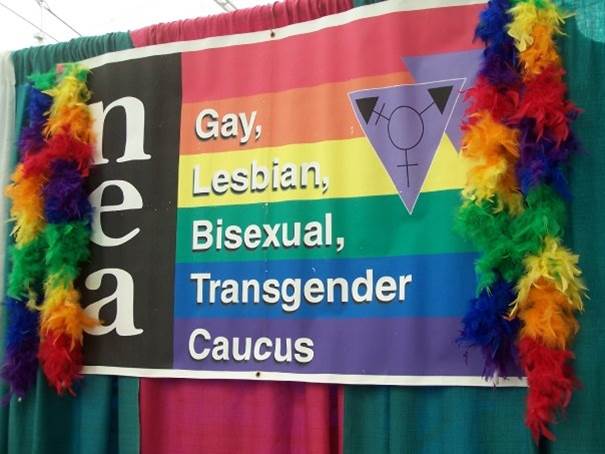
National Education Association

This article from the Public Discourse is interesting because it shows the very different views that big government people have of marriage and family.

It starts by talking about laws in North America, especially in more liberal areas:

The view of marriage as a mere creature of the state to be redefined at will goes hand in hand with the idea that children “belong” primarily to the state, which then delegates (limited) childrearing authority to whomever the state defines as the child’s parents.

[…]We also see the state encroaching on parental authority in order to enforce the new orthodoxy regarding sexual orientation and gender identity. “Equality” requires teaching that all family forms are equally good, and public schools do this by introducing “diversity-oriented” activities and readings – including books like Mommy, Momma and Me – across the curriculum.

California, New Jersey and the District of Columbia have made it illegal to give counseling to minors who have sexual-identity issues that in any way discourages them from fostering those tendencies, regardless of whether or not the child would like to receive such counseling, and regardless of whether or not those issues seem to stem from earlier traumas such as sexual abuse. Similar bills are pending in fifteen other states. School guidance counselors are also frequently connected with Gay-Straight Alliances and similar organizations, often placing confused teenagers in contact with such organizations without the consent or even knowledge of the parents.

In a particularly sad Massachusetts case, which I learned about from the parents involved, a teenager was sent by his guidance counselor to a gay youth organization. The organization then turned him against his family and encouraged him to stop seeing the therapist he had been seeing since childhood to deal with the effects of abuse by an older bully in school. As things escalated he was effectively kidnapped by the school guidance counselor and then taken from his home by the Department of Children and Families, without the parents ever having even been accused of abuse or neglect. The boy was eventually returned home after a second social worker investigated the case and deemed the parents to be exceptionally responsible and loving.

There is reason to believe that what happened to this family was not an isolated incident. At their booth at the Massachusetts Gay Youth Pride Parade, Department of Children and Families officials boasted about how they routinely manipulate standard processes to remove children with sexual-identity issues from the homes of conservative and Christian parents.

Does that sounds OK to you? I know that in my case that would not be OK, because one of the main reasons why I am interested in marriage is so that my children will get their values from their parents, and not from, for example, the convicted child pornographer who wrote the gay-friendly curriculum in Ontario, Canada. If I have a choice between me and their mother, and this very liberal Minister of Education, then I choose us.

How far would the secular leftists go to stop me and my future wife from educating our kids? Well, it’s always useful to look at what the secular left has done in countries where there is less of a Christian influence.

For example, the Public Discourse article talks about Germany and Sweden:

The story of the Romeike family highlights the injustice of this situation. Uwe and Hannelore Romeike, along with their five children, lived in a southwest German town called Bietigheim-Bissinge, where their three oldest children attended the public schools. All was well until the parents began to noticedistressing changes in their children. After further investigation, Mr. Romeike was appalled to find that their son Daniel’s health textbook used foul language to refer to sexual acts, and was concerned more generally that the values conveyed in his children’s classes and readings conflicted with the Christian moral and religious values he and his wife strove to pass on to their children at home.

In response, the Romeikes pulled their children out of the public schools and began educating them at home. A protracted battle with state authorities ensued, including police attempts to enter the Romeikes’ home and bring the children to school by force, along with onerous fines adding up to 7,000 Euros. Fearing imprisonment and loss of custody of their children, the Romeikes moved to the United States where they would be free to educate their children as they thought best. Although their request for asylum was denied—a bad sign with regard to respect for parental rights on the part of the current United States government—they were granted permission to remain indefinitely in the country shortly before their scheduled deportation in 2014.

The Johansson family in Sweden—where homeschooling has also been illegal since 2010—was not so fortunate. In 2009, when seven-year-old Domenic Johansson and his parents were on an airplane about to leave Sweden permanently for India (his mother’s home country), armed Swedish police entered the plane and took Domenic into custody on the grounds that he was homeschooled, despite the facts that school was not in session and that homeschooling was still legal at the time. Social workers also claimed that the presence of some cavities in Domenic’s baby teeth constituted evidence of physical neglect.

Since then, Domenic has lived in a foster home, with state-supervised parental visitation for a mere hour every five weeks. A Swedish court definitively terminated the Johanssons’ parental rights in 2012, primarily on the basis that their “isolation” of Domenic from other children his own age was psychologically harmful. The European Court of Human Rights upheld the decision in January 2015, but the Johanssons have not given up hope. They are bringing a new case to the Swedish courts in the hopes of finally being reunited with their now twelve-year-old son. Dozens of other Swedish families have fled the country in order to be able to homeschool their children.

The article mentions Bill 10, which was passed in Alberta, the most conservative province in Canada. That bill, “disallows parents from exempting their children from classroom discussions of homosexuality, and which requires all schools, including faith-based schools, to allow pro-homosexual student clubs like gay-straight alliances.” Does that sound OK with you? Because I can promise you that the Ontario child pornographer Minister of Education is 100% on board with it. He loves that anything that gets your kids thinking about sex at earlier and earlier ages. He’s a secular leftist. Strong families and respect for parental authority put the brakes on his agenda. But he is all for having the schools push sex on young children, and without informing parents. And this big-government education system is all taxpayer-funded. The taxes are mandatory, and there is NO opt-out.

Christians and social justice: is redistribution of wealth good for the poor?

Discovery Institute fellow Jonathan Witt pens this article in the American Spectator on the Gospel, business and social justice.

Excerpt:

The third term, social justice, is unlike the other two in its having a justifiable raison d’être. It stretches back to 19th century Catholic social thought and was used in the context of nuanced explorations of law, ethics, and justice. Unfortunately, this nuance and precision usually falls away in popular usage, and the term has been co-opted by the left to imply that ordinary justice is a mere tool of the ruling elite, with the real deal being “social justice.”

This impoverished meaning needs to be addressed. If a society extends justice to the rich and well-connected but allows the poor to be bullied and swindled by corrupt players inside and outside of the government, the problem isn’t unsocial justice but a lack of justice. If the poor in many developing nations can’t get access to credit or the courts because they can’t register their businesses, and they can’t register their businesses because they don’t have the bribe money and connections to navigate a byzantine regulatory maze, the problem is injustice, plain and simple. Such a society doesn’t need a social brand of justice any more than a poor neighborhood without stores needs a social grocery store. The neighborhood needs an ordinary grocery store, and the unjust society needs basic justice. Grocery stores and justice are already intrinsically social.

More than accurate semantics is at stake here. Often the popular call for “social justice” boils down to an ill-conceived call for coercive wealth transfers — for instance, getting rich countries to transfer more of their tax revenues to the governments of poor countries as foreign aid. It’d be nice if this approach actually helped the poor, since we’ve been using it for the past 60 years. Unfortunately, the statistical and narrative testimony on this strategy hovers between mixed and scandalous.

The reasons for this are complex but not so complex as to excuse the status quo. Much of the aid money gets quietly funneled into the pockets of corrupt politicians. In other cases the aid money reaches its intended target but, since the aid money is fungible, it still supports bad actors. It does so by freeing a regime of the political necessity of paying for the schools, road projects and emergency relief already covered by the foreign assistance. This, in turn, allows the regimes to spend more of their tax revenues for enhancing their own wealth and power.

Worse, the small fraction of aid money that actually reaches its intended destination often puts indigenous producers out of business, since it’s difficult to compete against free goods from abroad. Haiti’s rice farmers, for instance, once exported rice, but today their livelihoods have been all but wiped out by subsidized U.S. rice dumped on the country as foreign aid.

Add to all of this international “social justice” the devastating cultural effects of America’s welfare state. The neighborhoods flooded with 50 years of this domestic “social justice” now face far higher levels of criminal injustice and anti-social behavior than before the justice arrived.

Much of the problem stems from welfare’s effect on the institution of the family. The percentage of children being raised by both of their biological parents in America’s poorest neighborhoods used to be low and fairly comparable to what was found in middle and upper class neighborhoods, but the Great Society programs of the 1960s changed that.

As George Gilder put it in Wealth and Poverty, the underclass husband and father was “cuckolded by the compassionate state,” a violation which has incited “that very combination of resignation and rage, escapism and violence, short horizons and promiscuous sexuality that characterizes everywhere the life of the poor.”

Yale University sociologist Elijah Anderson put it almost as bluntly in a 1989 journal article: “It has become increasingly socially acceptable for a young woman to have children out of wedlock — significantly, with the help of a regular welfare check.”

The plain testimony of history is that the left’s strategy for saving the poor has been a tragic failure. It has stifled development in poor countries, bred a fatherless underclass in the United States, and all but bankrupted the European Union. Cloaking all of this in the guise of “social justice” serves only to perpetuate the tragedy.

It turns out that the very people who cry the loudest about wanting to help the poor – by redistributing wealth from those who produce to those who don’t – are the ones who incentivize people to make decisions that will make them poorer and expose them to more violence. Sure, there is a certain amount of uncertainty in life, but when you reward failure and punish success, you get more takers and fewer makers. The alternative to taxation and redistribution is to leave wealth in the hands of the individuals and businesses and trust them to make the decision about sharing. When businesses pay less in taxes, they expand – and more people start up new businesses, because they are attracted by the chance to make higher profits. Although letting individuals and business keep their own money is frowned on by the secular left, that’s because they themselves project their tendency not to give to charity and create jobs onto everyone else. They don’t understand charity and entrepreneurialism, that’s why they take money away from people who work and who create wealth.

I do want to say one other thing. I find it troubling when Christians present themselves to me as being social conservative, and fiscally liberal. There is no such thing as a social conservative and a fiscal liberal. If a person demands that the state provide cheese sandwiches to the children of single mothers in public schools, then  it creates more of an incentive to become a single mother, and less of an incentive to marry. That redistribution lowers the cost of single motherhood and raises the cost of marriage. It has been shown that single motherhood is the leading cause of child poverty – so why would we put into place incentives that encourage people to not make good decisions about sex? Why subsidize people who refuse to exercise self-control in sexual matters? Why make it encourage people to inflict fatherlessness on their own innocent children? Marriage is correlated with increased safety for women and children. Lowering the moral standards and paying people to make mistakes isn’t good for them. And it’s not good for their children.

The more you tax those who produce, the fewer of them you get. And the more you subsidize those who collect, the more of them you get. When men see themselves as slaves of the state – working only to be plundered – they stop working and they stop marrying. Why would a man work to feed the children of someone who could not even bother to get married before having babies? Why would a man get married knowing that half of what he earns will go to the state? Let families keep more of their own money, so that families are empowered – and not government. Let families keep their own money so they decide how to spend it, instead of depending on government. Let single mothers have to face the cost of their decisions. Let them ask charities for help, not the government. When people have to ask their neighbors for help, they know that they have done wrong, and that the money they get came from someone who worked for it. That is not there when government taxes and writes them a no-guilt check. Then it’s an entitlement, and they don’t learn their lesson.

Instead, let individuals and businesses make the decision to help those who they think are truly willing to try to improve their lot in life. Those are the ones who need support. When you leave wealth distribution to the government, no one is there to make those moral judgments. And it’s worse than that. When government takes over industries like health care, they are often supported by naive pro-lifers who think that wealth redistribution is compassion. But a secular government has no interest in women who stay home to raise their children – they want women to get out into the work force and pay income taxes. A single-payer health care system is always going to be pro-abortion for that reason. And any pro-lifer who votes “with their heart” for single-payer health care is a fool. They are, in effect, pro-abortion. Think before you vote.

Should Christians support social justice? Is wealth redistribution good for the poor?

Discovery Institute fellow Jonathan Witt pens this article in the American Spectator on the Gospel, business and social justice.

Excerpt:

The third term, social justice, is unlike the other two in its having a justifiable raison d’être. It stretches back to 19th century Catholic social thought and was used in the context of nuanced explorations of law, ethics, and justice. Unfortunately, this nuance and precision usually falls away in popular usage, and the term has been co-opted by the left to imply that ordinary justice is a mere tool of the ruling elite, with the real deal being “social justice.”

This impoverished meaning needs to be addressed. If a society extends justice to the rich and well-connected but allows the poor to be bullied and swindled by corrupt players inside and outside of the government, the problem isn’t unsocial justice but a lack of justice. If the poor in many developing nations can’t get access to credit or the courts because they can’t register their businesses, and they can’t register their businesses because they don’t have the bribe money and connections to navigate a byzantine regulatory maze, the problem is injustice, plain and simple. Such a society doesn’t need a social brand of justice any more than a poor neighborhood without stores needs a social grocery store. The neighborhood needs an ordinary grocery store, and the unjust society needs basic justice. Grocery stores and justice are already intrinsically social.

More than accurate semantics is at stake here. Often the popular call for “social justice” boils down to an ill-conceived call for coercive wealth transfers — for instance, getting rich countries to transfer more of their tax revenues to the governments of poor countries as foreign aid. It’d be nice if this approach actually helped the poor, since we’ve been using it for the past 60 years. Unfortunately, the statistical and narrative testimony on this strategy hovers between mixed and scandalous.

The reasons for this are complex but not so complex as to excuse the status quo. Much of the aid money gets quietly funneled into the pockets of corrupt politicians. In other cases the aid money reaches its intended target but, since the aid money is fungible, it still supports bad actors. It does so by freeing a regime of the political necessity of paying for the schools, road projects and emergency relief already covered by the foreign assistance. This, in turn, allows the regimes to spend more of their tax revenues for enhancing their own wealth and power.

Worse, the small fraction of aid money that actually reaches its intended destination often puts indigenous producers out of business, since it’s difficult to compete against free goods from abroad. Haiti’s rice farmers, for instance, once exported rice, but today their livelihoods have been all but wiped out by subsidized U.S. rice dumped on the country as foreign aid.

Add to all of this international “social justice” the devastating cultural effects of America’s welfare state. The neighborhoods flooded with 50 years of this domestic “social justice” now face far higher levels of criminal injustice and anti-social behavior than before the justice arrived.

Much of the problem stems from welfare’s effect on the institution of the family. The percentage of children being raised by both of their biological parents in America’s poorest neighborhoods used to be low and fairly comparable to what was found in middle and upper class neighborhoods, but the Great Society programs of the 1960s changed that.

As George Gilder put it in Wealth and Poverty, the underclass husband and father was “cuckolded by the compassionate state,” a violation which has incited “that very combination of resignation and rage, escapism and violence, short horizons and promiscuous sexuality that characterizes everywhere the life of the poor.”

Yale University sociologist Elijah Anderson put it almost as bluntly in a 1989 journal article: “It has become increasingly socially acceptable for a young woman to have children out of wedlock — significantly, with the help of a regular welfare check.”

The plain testimony of history is that the left’s strategy for saving the poor has been a tragic failure. It has stifled development in poor countries, bred a fatherless underclass in the United States, and all but bankrupted the European Union. Cloaking all of this in the guise of “social justice” serves only to perpetuate the tragedy.

It turns out that the very people who cry the loudest about wanting to help the poor – by redistributing wealth from those who produce to those who don’t – are the ones who incentivize people to make decisions that will make them poorer and expose them to more violence. Sure, there is a certain amount of uncertainty in life, but when you reward failure and punish success, you get more takers and fewer makers. The alternative to taxation and redistribution is to leave wealth in the hands of the individuals and businesses and trust them to make the decision about sharing. When businesses pay less in taxes, they expand – and more people start up new businesses, because they are attracted by the chance to make higher profits. Although letting individuals and business keep their own money is frowned on by the secular left, that’s because they themselves project their tendency not to give to charity and create jobs onto everyone else. They don’t understand charity and entrepreneurialism, that’s why they take money away from people who work and who create wealth.

I do want to say one other thing. I find it troubling when Christians present themselves to me as being social conservative, and fiscally liberal. There is no such thing as a social conservative and a fiscal liberal. If a person demands that the state provide cheese sandwiches to the children of single mothers in public schools, then  it creates more of an incentive to become a single mother, and less of an incentive to marry. That redistribution lowers the cost of single motherhood and raises the cost of marriage. It has been shown that single motherhood is the leading cause of child poverty – so why would we put into place incentives that encourage people to not make good decisions about sex? Why subsidize people who refuse to exercise self-control in sexual matters? Why make it encourage people to inflict fatherlessness on their own innocent children? Marriage is correlated with increased safety for women and children. Lowering the moral standards and paying people to make mistakes isn’t good for them. And it’s not good for their children.

The more you tax those who produce, the fewer of them you get. And the more you subsidize those who collect, the more of them you get. When men see themselves as slaves of the state – working only to be plundered – they stop working and they stop marrying. Why would a man work to feed the children of someone who could not even bother to get married before having babies? Why would a man get married knowing that half of what he earns will go to the state? Let families keep more of their own money, so that families are empowered – and not government. Let families keep their own money so they decide how to spend it, instead of depending on government. Let single mothers have to face the cost of their decisions. Let them ask charities for help, not the government. When people have to ask their neighbors for help, they know that they have done wrong, and that the money they get came from someone who worked for it. That is not there when government taxes and writes them a no-guilt check. Then it’s an entitlement, and they don’t learn their lesson.

Instead, let individuals and businesses make the decision to help those who they think are truly willing to try to improve their lot in life. Those are the ones who need support. When you leave wealth distribution to the government, no one is there to make those moral judgments. And it’s worse than that. When government takes over industries like health care, they are often supported by naive pro-lifers who think that wealth redistribution is compassion. But a secular government has no interest in women who stay home to raise their children – they want women to get out into the work force and pay income taxes. A single-payer health care system is always going to be pro-abortion for that reason. And any pro-lifer who votes “with their heart” for single-payer health care is a fool. They are, in effect, pro-abortion. Think before you vote.