
Tag Archives: Experiment

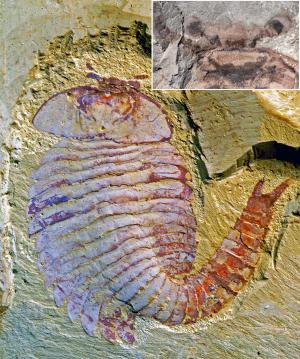
Nature publishes discovery of fossil with complex brain dated just after the Cambrian explosion

New fossil discovery shows advanced brain structures

Casey Luskin writes about it at Uncommon Descent.

Excerpt:

Over at PhysOrg.com, there’s a study being reported highlighting a 520 million year old fossil arthropod with a highly-developed brain. So soon in evolutionary time, and an already developed brain??? (To go beside the very complex eye of the Trilobites)

Here’s what one scientist said:

“No one expected such an advanced brain would have evolved so early in the history of multicellular animals,” said Strausfeld, a Regents Professor in the UA department of neuroscience.

Sorry, Darwinists, but IDers would expect it.

Let’s keep track of the problems that this good scientific discovery creates for naturalists.

Problem #1: Darwinism does not support rapid change from single-celled organisms just before the Cambrian explosion to complex brains just after the Cambrian explosion. Darwinian evolution has to go gradually from simple to complex.

Now for some more:

And, to add insult to injury for our Darwinist brethren, here’s this confirmation of “genetic entropy” and Behe’s QRB “rule”:

“The shape [of the fossilized brain] matches that of a comparable sized modern malacostracan,” the authors write in Nature. They argue the fossil supports the hypothesis that branchiopod brains evolved from a previously complex to a more simple architecture instead of the other way around.

So, that’s another problem.

Problem #2: Darwinism does not support going from more complex to less complex organisms, in general. This is especially true for complex biological systems like brains. Darwnists must explain how complex brains can be built from simpler parts through a long sequence of likely mutations. 

And more:

Here’s how the article ends:

The fossil supports the idea that once a basic brain design had evolved, it changed little over time[Translation: ID is completely correct!!!], he explained. Instead, peripheral components such as the eyes, the antennae and other appendages, sensory organs, etc., underwent great diversification and specialized in different tasks but all plugged into the same basic circuitry. “It is remarkable how constant the ground pattern of the nervous system has remained for probably more than 550 million years,” Strausfeld added. “The basic organization of the computational circuitry that deals, say, with smelling, appears to be the same as the one that deals with vision, or mechanical sensation.”

Yet another problem.

Problem #3: Darwinism does not work if organisms are observed to remain changeless and static over time. Darwinism requires change over time from simple to complex. Backwards change or no change falsifies Darwinism.

Read the whole post.

It’s just another prediction of Darwinian orthodoxy falsified by experimental evidence published in the top scientific peer-reviewed journal. Will this cause Darwinians to revise their theory to fit the evidence? Not likely. Their motivations for clinging to naturalism, the religion that undergirds Darwinism, are entirely beyond correction by evidence.

I wonder what people like P.Z. Myers and Larry Moran do when their religion comes into conflict with scientific evidence? Do they bitterly cling to their mythology from the 19th century? Or do they adjust their worldview to be in line with the progress of science?

Let Richard Dawkins explain evolution and the role of evidence:

“My argument will be that Darwinism is the only known theory that is in principle capable of explaining certain aspects of life. If I am right it means that, even if there were no actual evidence in favour of the Darwinian theory (there is, of course) we should still be justified in preferring it over all rival theories.” — p. 287, Blind Watchmaker” (1986)

Or Richard Lewontin:

“Our willingness to accept [naturalistic]  scientific claims that are against common sense is the key to an understanding of the real struggle between science and the supernatural. We take the side of science in spite of the patent absurdity of some of its constructs, in spite of its failure to fulfill many of its extravagant promises of health and life, in spite of the tolerance of the scientific community for unsubstantiated just-so stories, because we have a prior commitment, a commitment to materialism. It is not that the methods and institutions of science somehow compel us to accept a material explanation of the phenomenal world but, on the contrary, that we are forced by our own a priori adherence to material causes to create an apparatus of investigation and a set of concepts that produce material explanations, not matter how counterintuitive, no matter how mystifying to the uninitiated. Moreover, that materialism is absolute, for we cannot allow a divine foot in the door.” (Richard Lewontin in New York Review of Books, January 9, 1997, p. 28)

Last month, we saw a peer-reviewed published paper that falsified the Darwinian predictions about junk DNA. Recently, the Darwnists were proven wrong again about vestigial organs. Before that, we had another discovery of oxygen on the early Earth’s atmosphere, which blocks naturalistic origin of life scenarios. Did these scientific discoveries stop the worship of the Flying Spaghetti Monster by the Darwinian faithful? Of course not. And they don’t want to debate it with you, either.

Naturalists don’t want to have to explain why they are always believing things that are falsified by the progress of science. Naturalists fought the Big Bang tooth and nail, trying to save their eternal universe from the progress of science. Naturalists invented the now discredited oscillating model of the universe in order to “explain” the evidence for a cosmic beginning. Naturalists invented the unobservable, untestable multiverse to “explain” the cosmic fine-tuning. Unobservable aliens were posited in order to “explain” the origin of life so soon after the cooling of the Earth. Precursor fossils are invented without evidence in order to “explain” the Cambrian era explosion in biological complexity. And so on.

Evidence doesn’t matter to people who are motivated by naturalistic faith. Like belief in a flat-Earth, the delusion of naturalism is not accountable to scientific evidence. They believe what they want to believe. It’s not up for debate. For some people like Richard Dawkins, a prior lifestyle commitment makes theism (and the moral law!) an impossibility a priori. But rational people know that believing something just so that your actions are “justified” doesn’t make what you believe true.

Speaking of Richard Dawkins, if you haven’t seen the video of that coward being “Eastwooded” by William Lane Craig, here’s the link. Dr. Craig has obviously seen a lot of Clint Eastwood movies, and he manages to work in about a half-dozen Clint Eastwood lines into a careful philosophical and scientific refutation of Dawkins’ faith-based atheist delusions. I don’t mind if Dawkins wants to have his religious beliefs for comfort in the privacy of his home or church, but I don’t think that we should be making policy off of his subjective preferences. In the public square we need to be guided by public evidence – like the evidence from science.

Antarctic sea ice now at the highest level ever recorded

From Forbes magazine.

Excerpt:

Antarctic sea ice set another record this past week, with the most amount of ice ever recorded on day 256 of the calendar year (September 12 of this leap year). Please, nobody tell the mainstream media or they might have to retract some stories and admit they are misrepresenting scientific data.

Here’s the raw data from UIUC.

Now back to the Forbes article:

National Public Radio (NPR) published an article on its website last month claiming, “Ten years ago, a piece of ice the size of Rhode Island disintegrated and melted in the waters off Antarctica. Two other massive ice shelves along the Antarctic Peninsula had suffered similar fates a few years before. The events became poster children for the effects of global warming. … There’s no question that unusually warm air triggered the final demise of these huge chunks of ice.”

NPR failed to mention anywhere in its article that Antarctic sea ice has been growing since satellites first began measuring the ice 33 years ago and the sea ice has been above the 33-year average throughout 2012.

Indeed, none of the mainstream media are covering this important story. A Google News search of the terms Antarctic, sea ice and record turns up not a single article on the Antarctic sea ice record. Amusingly, page after page of Google News results for Antarctic sea ice record show links to news articles breathlessly spreading fear and warning of calamity because Arctic sea ice recently set a 33-year low.

Sea ice around one pole is shrinking while sea ice around another pole is growing. This sure sounds like a global warming crisis to me.

But that only accounts for “melting” polar ice caps – what about those cute little polar bears who have no ice to stand on and who are in danger of falling into the water and going extinct, because polar bears can’t swim???!!1?!1!ELEVENTY-ONE!?

From the Globe and Mail. (H/T Neil)

Excerpt:

The debate about climate change and its impact on polar bears has intensified with the release of a survey that shows the bear population in a key part of northern Canada is far larger than many scientists thought, and might be growing.

The number of bears along the western shore of Hudson Bay, believed to be among the most threatened bear subpopulations, stands at 1,013 and could be even higher, according to the results of an aerial survey released Wednesday by the Government of Nunavut. That’s 66 per cent higher than estimates by other researchers who forecasted the numbers would fall to as low as 610 because of warming temperatures that melt ice faster and ruin bears’ ability to hunt. The Hudson Bay region, which straddles Nunavut and Manitoba, is critical because it’s considered a bellwether for how polar bears are doing elsewhere in the Arctic.

The study shows that “the bear population is not in crisis as people believed,” said Drikus Gissing, Nunavut’s director of wildlife management. “There is no doom and gloom.”

[…]The debate over the polar-bear population has been raging for years, frequently pitting scientists against Inuit. In 2004, Environment Canada researchers concluded that the numbers in the region had dropped by 22 per cent since 1984, to 935. They also estimated that by 2011, the population would decrease to about 610. That sparked worldwide concern about the future of the bears and prompted the Canadian and American governments to introduce legislation to protect them.

But many Inuit communities said the researchers were wrong. They said the bear population was increasing and they cited reports from hunters who kept seeing more bears.

So the ice isn’t melting on one of the poles, and the polar bears aren’t going extinct from drowning. Hmmmn.

Actually, if this data can be spun as a global cooling crisis, and then the socialists can continue pushing for more government regulation of the free market, more abortions and higher gas prices. All that has to be done is for the media to explain that it was always global cooling that we needed to fear. Like in that George Orwell novel “1984”, with the continuous war in Eastasia or Eurasia. Only this time, it could be real.

Related posts

New peer-reviewed paper in Nature falsifies Darwinian junk DNA prediction

First, let’s see what Darwinian evolutionists say about junk DNA, before we look at what the experiments show.

Here’s biologist John Timmer to explain the orthodox Darwinian view of DNA from 2007:

Personally, I fall into the “it’s all junk” end of the spectrum. If almost all of these sequences are not conserved by evolution, and we haven’t found a function for any of them yet, it’s hard to see how the “none of it’s junk” view can be maintained. There’s also an absence of support for the intervening view, again because of a lack of evidence for actual utility. The genomes of closely related species have revealed very few genes added from non-coding DNA, and all of the structural RNA we’ve found has very specific sequence requirements. The all-junk view, in contrast, is consistent with current data.

Got that? According to Darwinists, DNA is almost entirely junk – this is what is consistent with the view that creatures have evolved through a process of random mutation and selection. The estimates that I’ve seen from evolutionary biologists range from 95% to 99% junk. Now let’s compare the religion with the lab experiments and separate myth from fact.

Now let’s compare that with intelligent design theorist William Dembski’s view of “junk” DNA, from 1998:

Even if we have a reliable criterion for detecting design, and even if that criterion tells us that biological systems are designed, it seems that determining a biological system to be designed is akin to shrugging our shoulders and saying God did it. The fear is that admitting design as an explanation will stifle scientific inquiry, that scientists will stop investigating difficult problems because they have a sufficient explanation already.

But design is not a science stopper. Indeed, design can foster inquiry where traditional evolutionary approaches obstruct it. Consider the term “junk DNA.” Implicit in this term is the view that because the genome of an organism has been cobbled together through a long, undirected evolutionary process, the genome is a patchwork of which only limited portions are essential to the organism. Thus on an evolutionary view we expect a lot of useless DNA. If, on the other hand, organisms are designed, we expect DNA, as much as possible, to exhibit function. And indeed, the most recent findings suggest that designating DNA as “junk” merely cloaks our current lack of knowledge about function… Design encourages scientists to look for function where evolution discourages it.

Now let’s look at the experimental evidence and see whose prediction was right.

Evolution News reports on a new peer-reviewed paper published in Nature, the top peer-reviewed science journal. (H/T ECM)

Excerpt:

A groundbreaking paper in Nature reports the results of the Encyclopedia of DNA Elements (ENCODE) project, which has detected evidence of function for the “vast majority” of the human genome. Titled “An integrated encyclopedia of DNA elements in the human genome,” the paper finds an “unprecedented number of functional elements,” where “a surprisingly large amount of the human genome” appears functional. Based upon current knowledge, the paper concludes that at least 80% of the human genome is now known to be functional:

The Encyclopedia of DNA Elements (ENCODE) project has systematically mapped regions of transcription, transcription factor association, chromatin structure and histone modification. These data enabled us to assign biochemical functions for 80% of the genome, in particular outside of the well-studied protein-coding regions. Many discovered candidate regulatory elements are physically associated with one another and with expressed genes, providing new insights into the mechanisms of gene regulation.

(The ENCODE Project Consortium, “An integrated encyclopedia of DNA elements in the human genome,” Nature, Vol. 489:57-74 (September 6, 2012) (emphasis added))

If you doubt Evolution News, we can always turn the ultra-leftist Los Angeles Times, reporting on the same study. (H/T Wes from Reason to Stand)

Excerpt:

The $123-million effort involved more than 400 scientists and more than 1,600 experiments during five years of work. If presented graphically, the data generated so far would cover a poster 30 kilometers wide and 16 meters high, Birney has estimated.

This is still just a start — akin to “grainy images beamed back to Earth by the first satellite,” said Dr. Eric Green, director of the National Human Genome Research Institute, which funded ENCODE. But already, it’s throwing up surprises.

Strikingly, the data overturn old ideas that the bulk of DNA in our cells is useless — albeit inoffensive — junk just carried along for the evolutionary ride. Back in 2003 when the human genome was published, scientists estimated that less than 2% of it carries instructions for making proteins, and many of them thought the rest didn’t do very much.

But the new analysis shows that more than 80% of the human genome is active in at least one biological process that the ENCODE team measured. Nearly every part of it could end up being active when the data are more complete.

Here’s the ultra-left-wing New York Times, confirming the statement I made earlier about the dogma of the Darwinians:

The discoveries were published on Wednesday in six papers in the journal Nature and in 24 papers in Genome Research and Genome Biology. In addition, The Journal of Biological Chemistry is publishing six review articles, and Science is publishing yet another article.

[…]The thought before the start of the project, said Thomas Gingeras, an Encode researcher from Cold Spring Harbor Laboratory, was that only 5 to 10 percent of the DNA in a human being was actually being used.

The big surprise was not only that almost all of the DNA is used but also that a large proportion of it is gene switches. Before Encode, said Dr. John Stamatoyannopoulos, a University of Washington scientist who was part of the project, “if you had said half of the genome and probably more has instructions for turning genes on and off, I don’t think people would have believed you.”

It’s just another prediction of Darwinian orthodoxy falsified by experimental evidence published in the top scientific peer-reviewed journal. Will this cause Darwinians to revise their theory to fit the evidence? Not likely. Their motivations for clinging to naturalism, the religion that undergirds Darwinism, are entirely beyond correction by evidence.

I wonder what people like P.Z. Myers and Larry Moran do when their religion comes into conflict with scientific evidence from lab experiments? Do they bitterly cling to their mythology from the 19th century? Or do they adjust their worldview to be in line with the progress of science?

Let Richard Dawkins explain evolution and the role of evidence:

“My argument will be that Darwinism is the only known theory that is in principle capable of explaining certain aspects of life. If I am right it means that, even if there were no actual evidence in favour of the Darwinian theory (there is, of course) we should still be justified in preferring it over all rival theories.” — p. 287, Blind Watchmaker” (1986)

Or Richard Lewontin:

“Our willingness to accept [naturalistic]  scientific claims that are against common sense is the key to an understanding of the real struggle between science and the supernatural. We take the side of science in spite of the patent absurdity of some of its constructs, in spite of its failure to fulfill many of its extravagant promises of health and life, in spite of the tolerance of the scientific community for unsubstantiated just-so stories, because we have a prior commitment, a commitment to materialism. It is not that the methods and institutions of science somehow compel us to accept a material explanation of the phenomenal world but, on the contrary, that we are forced by our own a priori adherence to material causes to create an apparatus of investigation and a set of concepts that produce material explanations, not matter how counterintuitive, no matter how mystifying to the uninitiated. Moreover, that materialism is absolute, for we cannot allow a divine foot in the door.” (Richard Lewontin in New York Review of Books, January 9, 1997, p. 28)

Junk DNA isn’t the only battle in the long war between atheism and scientific evidence. Naturalists fought the Big Bang tooth and nail, trying to save their eternal universe from the progress of science. Naturalists invented the now discredited oscillating model of the universe in order to “explain” the evidence for a cosmic beginning. Naturalists invented the unobservable, untestable multiverse to “explain” the cosmic fine-tuning. Aliens are posited in order to “explain” the origin of life. Precursor fossils are invented without evidence in order to “explain” the Cambrian era explosion in complexity. And so on.

Evidence doesn’t matter to people who are motivated by naturalistic faith. Like belief in a flat-Earth, the delusion of naturalism is not accountable to scientific evidence. They believe what they want to believe. It’s not up for debate. For some people like Richard Dawkins, a prior lifestyle commitment makes theism (and the moral law!) an impossibility a priori. But rational people know that believing something just so that your actions are “justified” doesn’t make what you believe true.

For the intelligent design take on junk DNA, check out this article. To see who was right about predicting whether “vestigial organs” like the appendix have function, check out this post. You can find more predictions that follow from intelligent design right here.