Tag Archives: DNA

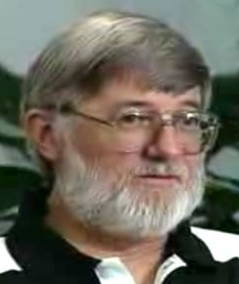
Video interview of Charles Thaxton on the origin of life

Charles Thaxton
Charles Thaxton

When I was a younger man, just starting full-time work with a hot Internet start-up in the big city, my biggest interest was in the origin of life. I liked to listen to debates about it (e.g. – Walter Bradley versus Robert Shapiro, etc.) and lectures and interviews. Two of my favorite interviews are from the University of California series on Origins, featuring Charles Thaxton and Dean Kenyon.

I found the one with Charles Thaxton in miniature form on Youtube.

About Charles Thaxton:

Charles Thaxton received his Ph.D. in physical chemistry from Iowa State University. He completed two post-doctoral programs, one in history of science at Harvard University and the second in the molecular biology laboratories of Brandeis University.

He has specialized in the origin of life and in science’s relationship with Christianity through history.

He is co-author of The Mystery of Life’s Origin and also The Soul of Science. He is Academic Editor of the high school biology book Of Pandas and People. He has contributed significant chapters to the books God and Culture and The Creation Hypothesis.

He has published technical articles in Journal of Inorganic Chemistry, Journal of Scientific Instruments, and Journal of Cell Biology.

He has lectured widely in American universities including Princeton University, Yale University, University of Michigan, University of Delaware, Rice University, Texas Universtiy, Johns Hopkins University, Vanderbilt University, and Harvard Law School.

He has lectured outside the country at the Korean Advanced Institute of Science, the Russian Academy of Science, and in various universities in Mongolia, Romania, Poland, Hungary, and the former Czechoslovakia.

He has held appointments at Slovak Technical University in Bratislava, Czechoslovakia, the Biomathematical Institute in Craiova, Romania, and at Charles University in Prague, where he was a Templeton scholar in the department of natural sciences.

He is a member of American Chemical Society, American Association for the Advancement of Science, and Fellow of American Institute of Chemistry, American Scientific Affiliation, and Discovery Institute.

He and his wife Carole homeschooled two sons, both of whom are college graduates. He is a survivor of two bouts of cancer, which left him with one leg and one lung. He and his wife reside near Atlanta, Georgia, where they teach homeschooled teens at Konos Academy. He also is writing two books, punctuated by speaking stints.

Here’s the lecture I liked so much featuring Charles Thaxton:

And here are the questions:

1. How did you first get interested in the origin of life?
2. How did you come to write The Mystery of Life’s Origin with Walter Bradley and Roger Olsen?
3. Was there an advantage to having the three of you collaborate on the project?
4. What is the primary argument of your book, The Mystery of Life’s Origin?
5. Have scientists come close to developing a plausible naturalistic explanation to the origin of life or do you still consider the origin of life to be a mystery?
6. Do you see a particular irony in the timing of Stanley Miller’s experiments and the discovery of DNA by Watson and Crick?
7. How does the emergence of modern genetics tie in with the Darwinian scenario of life going from simple to complex?
8. What are the major problems with origin of life simulation experiments?
9. Isn’t it rather impressive that amino acids were produced in the Miller experiments?
10. How close is the development of amino acids to the threshold of life?
11. What are the steps involved in producing proteins from amino acids?
12. Why are amino acids isolated during this process?
13. How can the investigator affect the outcome of a simulation experiment?
14. How did you evaluate the different chemical evolution experiments?
15. Are the initial conditions in the simulation experiments plausible?
16. What did the earth’s early atmosphere contain?
17. Will the simulation experiments work with this atmosphere?
18. There seems to be an underlying assumption that the origin of life resulted without any intelligent input whatsoever yet the simulation experiments appear to rely upon intelligent guidance. Could you comment on this irony?
19. Are there any natural processes that would have filtered out destructive ultraviolet light?
20. What additional steps beyond creating amino acids would be required to develop life?
21. What is so difficult about making proteins or nucleic acids?
22. In addition to the energy problem in protein synthesis isn’t there a sequencing problem?
23. Are DNA sequences analogous to a written language?
24. Has Hubert Yockey made similar claims?
25. In The Mystery of Life’s Origin you refer to order, randomness, and specified complexity. Could you give us an overview of these concepts?
26. What do you think the presence of specified complexity in a living system indicates about its origin?
27. In inferring the necessity of intelligence to produce life haven’t you ventured from the realm of science to religion?
28. Could you summarize the reasons why you believe intelligence was involved in the origin of life?
29. What are the major objections to your current point of view?
30. How was The Mystery of Life’s Origin received by the scientific community?
31. What was Dean Kenyon’s response to your critiques of his book, Biochemical Predestination?
32. What was Dean Kenyon’s response to The Mystery of Life’s Origin?
33. Were you a bit apprehensive about meeting Kenyon after writing a book which was quite critical of his views in Biochemical Predestination?
34. Are self-organizational theories plausible?
35. Would you comment on the work done by Prigogine and Eigen?
36. What is your assessment of RNA scenarios?
37. What other problems do you see with an RNA world?

This is an argument you never hear in William Lane Craig debates, but it’s worth knowing well.

Related posts

William Dembski reviews a new book by two theistic evolutionists

From Patheos, an opening statement by William Dembski. This is the first part of a four-part debate with two scientists of the Biologos group, which advocates for theistic evolution. (And not to be confused with the Biologic Institute, which is supportive of intelligent design).

Excerpt:

Throughout their book, Giberson and Collins overconfidently proclaim that Darwinian evolution is a slam-dunk. Thus one reads, “There has been no scientific discovery since Darwin–not one–which has suggested that evolution is not the best explanation for the origin of species” (21-22). No theory is that good. Every theory admits anomalies. Every theory faces disconfirming evidence. Repeatedly readers are informed that mountains of overwhelming evidence support Darwin’s theory and that the authors are “unfamiliar with any premier scientists who reject evolution.” And just so there’s no doubt, in that same paragraph, they reiterate, “There are certainly a few scientists who reject evolution . . . But these are never premier scientists.”

Oh, you reject Darwinian evolution; you can’t be a premier scientist. What counterexample would convince Giberson and Collins to retract such a claim? How about Henry Schaefer’s signature on a “Dissent from Darwin” list? Schaefer heads the computational quantum chemistry lab at the University of Georgia, has published over a thousand peer-reviewed journal articles, and is one of the most widely cited chemists in the world. Then again, Giberson and Collins look askance at this list (according to them, it has too many emeriti professors and not enough biologists). But why engage in such posturing about scientific pecking order in the first place? The issue is not who’s doubting Darwinism, but what are the arguments for and against it and whether they have merit. Giberson and Collins’ constant drumming of mainstream and consensus science is beside the point–science progresses by diverging from the mainstream and by breaking with consensus.

Because Giberson and Collins assert that natural selection is such a powerful mechanism for driving evolution–and one that admits no reasoned dissent–it’s worth recounting here briefly why the intelligent design community is so skeptical of it. It’s not, as theistic evolutionists often suggest, that we have a desperate need to shore up faith and morality and are using ID as our instrument of choice to accomplish that end. Rather, it’s that natural selection is, in essence, a trial and error tinkering mechanism for which all evidence suggests that its power is quite limited. Trial and error works fine when you have something that’s functional and are trying to enhance it or adapt it to a new situation.

But for natural selection, as a trial and error mechanism, to traverse vast swatches of biological function space, we need to see an extended series of small gradual structural changes (under neo-Darwinism, these are genetic mutations leaving effects at the phenotypic level) that continually improve, or at least maintain, function, with evolving functions and evolving structures covarying and reinforcing each other. But we know of no detailed testable (macro-)evolutionary pathways like this in any field, whether in the evolution of living forms or in the evolution of language or in the evolution of technologies. In fact, when we can trace such evolutionary pathways, we find that significant change happens in creative leaps, not via trial and error tinkering.

Everyone who has read Dembski’s opening remarks in this four-part series is raving about the quality of what he’s written. I was hoping to wait for the response before publishing his opening salvo, so we could balance it, but no reply has appeared yet. For me, there is only one issue in the debate about the origin of life: if natural causes can create life from non-life with the time and resources available on the early Earth, then show me the mechanism. That’s all I want to see – the evidence that natural causes can do the creating that the naturalists say that it can do. I don’t want to hear about feelings, possibilities, what God could or couldn’t do, philosophy, what church you attend, your favorite hymn, the way you were raised, your religious experiences, etc. I just want to see you prove that nature can do all the creating that you say it can do.

Jonathan Wells is interviewed about his new book on Junk DNA

Note to regular readers – don’t forget that the William Lane Craig vs. Lawrence Krauss debate is tonight at 7 PM Eastern time. And you can watch it online here. It is also being live-blogged here.

From Uncommon Descent. The interviewer is science journalist Denyse O’Leary.

Excerpt:

What caused the change of view about junk DNA? Can you suggest a couple of key findings?

In a word, evidence. The first to emerge was the fact that almost all of an organism’s DNA is transcribed into RNA. (So although most of it may be non-protein-coding, it codes for RNA.) From a Darwinian perspective, this is surprising: Why would an organism struggling to survive devote so many of its internal resources to producing supposedly useless RNA? Indeed, since 2003 it has become clear that non-protein-coding RNAs perform many essential functions in living cells.

Pseudogenes constitute one type of so-called “junk DNA.” These are segments of DNA that resemble segments that elsewhere (or in other organisms) code for protein. Yet RNAs transcribed from some pseudogenes have been found to function in regulating how much protein is produced by the DNA segments they resemble. Repetitive DNA, in which a non-protein-coding sequence is repeated many times, is another type of so-called “junk DNA.” Yet repetitive DNA is now known to regulate many essential functions, including embryo implantation in mammals.

There is also growing evidence that non-protein-coding DNA can perform functions that are independent of its sequence. One example is the region of a chromosome (called a “centromere”) that attaches it to other structures in the cell. Another example is the retina in the eyes of nocturnal mammals, in which non-protein-coding DNA acts like a liquid crystal to focus scarce rays of light.

Some claim that ID theorists predicted the finding and others claim they didn’t. What’s your take?

The literature doesn’t lie. Design theorist William A. Dembski wrote in 2004, “For years now evolutionary biologists have told us that the bulk of genomes is junk and that this is due to the sloppiness of the evolutionary process. That is now changing. For instance, researchers at the University of California at San Diego are finding that long stretches of seemingly barren DNA sequences may form a new class of noncoding RNA genes scattered, perhaps densely, throughout animal genomes. Design theorists should be at the forefront in unpacking the information contained within biological systems.” (The Design Revolution, p. 317.) At the time, biologists such as Dawkins, Coyne, Avise and Collins were still claiming that most of our DNA is junk.

Last week there was a paper in the peer-reviewed journal Science that discussed the problem of genetic similarities in different organisms that do not share a common inheritance. Evolution News talked about that here.