Tag Archives: Debate

Michael Brown and Eric Smaw debate: should same-sex marriage be legal?

This debate wasn’t just enlightening, it was entertaining. I am a software engineer and I work all day with software engineers. It makes me feel funny when I am the only one at work who follows the research on marriage and parenting and about no-fault divorce and cohabitation and same-sex marriage. I am so passionate about this, because I believe that children have legitimate needs and we need to care about those needs. I really don’t care as much about the needs of adults and their stupid careers as much as I care about children growing up with attentive, available mothers and fathers.

This is a must-see debate! (And you can buy Michael Brown’s new book here if you like it – I bought two copies)

About the debate:

On April 21, 2011 at 7:30pm at UCF’s Health and Public Affairs Building (Room 119), Rollins College professor, Dr. Eric Smaw and author and seminary professor Dr. Michael L. Brown will debate the question “Should same sex marriage be legalized in America?” The event will be held at 4000 Central Florida Blvd and is open to the public. After the formal portion of the debate, Brown and Smaw will field questions from the audience.

About the speakers:

Dr. Smaw will be responding in the affirmative. He earned his Ph.D. in Philosophy of Law from the University of Kentucky in 2005. His areas of expertise are philosophy of law, international law, human rights, ethics, and modern philosophy. He has published articles on human rights, terrorism, and cosmopolitanism. His most recent publication is “Swaying in the Balance: Civil Liberties, National Security, and Justice in Times of Emergency”.

Dr. Brown will be responding in the negative. He earned his Ph.D. in Near Eastern Languages and Literatures from New York University and is a nationally known evangelical lecturer and radio host. He is the author of numerous scholarly articles and twenty books, including the recently published study “A Queer Thing Happened to America”, which is quickly being recognized as the definitive work on the history and effects of gay activism on American culture.

Here are the first two parts:

Part 1 of 10:

Part 2 of 10:

The rest of the segments are here.

Summaries of the opening speeches

Summary of Dr. Brown’s opening speech:

There is no compelling reasons by the state should change the definition of marriage

The reason the state conveys benefits for marriage is because marriage is beneficial for the state

Traditional marriage is recognized by the state for several reasons:
– it domesticates men
– it protects women
– it provides a stable, nurturing environment for children

Marriage has three public purposes:
– to bind men and women together for RESPONSIBLE procreation
– to get the benefit
– to provide children with two parents who are bonded to them biologically
– to create the next generation of people to keep the society going

Normally, opposite sex couples create children

Homosexual couples can NEVER create children together

Men and women are differences that are complementary

Monogamy is the norm for opposite sex couples.

For gay men, open relationships / cheating is the norm.
This is because women have a tempering effect on sexuality.

There is no evidence that recognizing same-sex civil unions and marriages have changed this trend.

Same-sex marriage guarantees that children will either not have a father or a mother
So which of the sexes is dispensable when raising children?

For example, consider Dawn Stefanowicz, who grew up with a gay father and no mother
She never got a chance to see a man model love and protect a women within a marriage
That makes an enormous difference in a woman’s life – in the way she relates to men

Even with scientific advancements, every baby has a mother and a father

If we change the definition of marriage so that it is based on consent, then why limit it to just two people
If marriage is not the union of male and female, then why have only TWO people
In Canada, you have civil liberties lawyers arguing for for polygamy
In the United States, Professor David Epstein was in a consensual relationship with his daughter
Should incestuous relationships also be celebrated as marriage? Why not?
Should polyamorous relationships also be celebrated as marriage? Why not?

Sexual orientation is not the same as race
Men are women are different in significant ways, but different races are not
You need separate bathrooms for men and women, but not for people of different races

Summary of Dr. Smaw’s opening speech: (He ended his speech after only 10 minutes)

You can redefine marriage so that it no longer based on the public purposes he mentioned (controlling procreation, fusing complementary male and female natures, providing children with mothers and fathers who are biologically linked to them, providing children with a comparatively stable development environment that offers comparatively less instability, promiscuity and domestic violence rates compared to cohabitation, etc.), but is instead based on consent and feelings, and that redefinition of marriage won’t open marriage up to polygamy, polyamory, etc.

If you like feminism, then you should allow same-sex marriage

If you like abortion rights, then you should allow same-sex marriage

Homosexuals participate in society by working at various jobs, so they are participating in society

Homosexuals should be given the same tax breaks as married people because they work at various jobs for money

Working at a job for money achieves the same public purpose as procreating and staying together to raise children in a stable environment

You can listen to the rest for the rebuttals, and cross-examination. Oh yes – there was cross-examination! It starts two thirds of the way through Part 5, if you want to jump to it. And sparks were flying! There is also Q&A from the audience of students.

This is such a great debate – I love to hear two passionate guys disagreeing about something. I love to hear both sides of the issues. There is always something to learn by listening to the other side. It makes me more effective and more tolerant when I stand up to defend my side of the argument.

Related posts

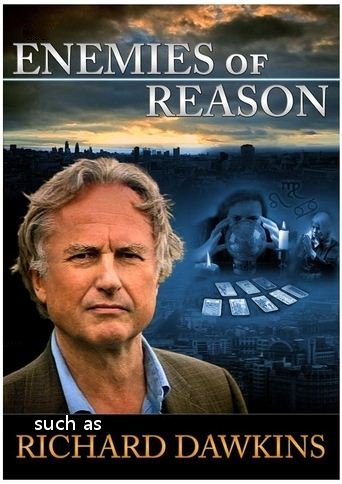
UK Telegraph on Richard Dawkins’ cowardly refusal to debate William Lane Craig

Will Richard Dawkins debate William Lane Craig?

(Image stolen from Glenn Peoples)

Cowardly Richard Dawkins refuses to debate William Lane Craig on this latest UK tour. (H/T Mary)

Excerpt:

Richard Dawkins has made his name as the scourge of organised religion who branded the Roman Catholic Church “evil” and once called the Pope “a leering old villain in a frock”.

But he now stands accused of “cowardice” after refusing four invitations to debate the existence of God with a renowned Christian philosopher.

A war of words has broken out between the best selling author of The God Delusion, and his critics, who see his refusal to take on the American academic, William Lane Craig, as a “glaring” failure and a sign that he may be losing his nerve.

Prof Dawkins maintains that Prof Craig is not a figure worthy of his attention and has reportedly said that such a contest would “look good” on his opponent’s CV but not on his own.

An emeritus fellow of New College, Oxford, Prof Dawkins last year supported a plan to charge Pope Benedict XVI with crimes against humanity for his alleged involvement in the cover-up of sex abuse by Catholic priests.

Prof Craig is a research Professor of Philosophy at Talbot School of Theology, in California, and the author of 30 books and hundreds of scholarly articles on Christianity.

He has debated with leading thinkers including Daniel Dennett, A.C.Grayling, Christopher Hitchens, Lewis Wolpert and Sam Harris.

Prof Craig is due to visit Britain in October this year. Four invitations to take part in public debates were sent to Prof Dawkins from The British Humanist Association, The Cambridge Debating Union, the Oxford Christian Union and Premier Radio.

Prof Dawkins declined them all.

[…]Some of Prof Dawkins’s contemporaries are not impressed. Dr Daniel Came, a philosophy lecturer and fellow atheist, from Worcester College, Oxford, wrote to him urging him to reconsider his refusal to debate the existence of God with Prof Craig.

In a letter to Prof Dawkins, Dr Came said: “The absence of a debate with the foremost apologist for Christian theism is a glaring omission on your CV and is of course apt to be interpreted as cowardice on your part.

“I notice that, by contrast, you are happy to discuss theological matters with television and radio presenters and other intellectual heavyweights like Pastor Ted Haggard of the National Association of Evangelicals and Pastor Keenan Roberts of the Colorado Hell House.”

Prof Craig, however, remains willing to debate with Prof Dawkins. “I am keeping the opportunity open for him to change his mind and debate with me in the Sheldonian Theatre in Oxford” in October, he said.

Read it all. And please forward this to EVERYONE you know.

Dawkins mentions that he “already debated Craig” in that lame, worthless Mexico event where all the speakers got 2 minutes for their speeches, and one minute rebuttals. That was not a formal academic debate, that was a spectacle. I want a formal debate so Craig can put this blowhard in his place like he did with Hitchens, Harris, and Dennett. I want this nonsense about atheism being a  rational, moral worldview to end NOW. And by now, I mean yesterday.

Why won’t Dawkins debate Craig?

Let’s re-cap Dawkins’ reasons in point form: (with my comments in parentheses)

  • Dawkins claims that he is willing to debate high-ranking clergymen (but Craig is a scholar, not a clergyman)
  • Dawkins claims that Craig is a creationist (but Craig supports his kalam cosmological argument with the Big Bang)
  • Dawkins claims that Craig’s only claim to fame is that he is a professional debater (but see Craig’s CV and publications below, which is far more prestigious than Dawkins)
  • Dawkins claims that he’s too busy (busy cowering in fear hugging his Darwin doll for comfort)

Let’s review William Lane Craig’s qualifications:

William Lane Craig is Research Professor of Philosophy at Talbot School of Theology in La Mirada, California.

Dr. Craig pursued his undergraduate studies at Wheaton College (B.A. 1971) and graduate studies at Trinity Evangelical Divinity School (M.A. 1974; M.A. 1975), the University of Birmingham (England) (Ph.D. 1977), and the University of Munich (Germany) (D.Theol. 1984). From 1980-86 he taught Philosophy of Religion at Trinity… In 1987 they moved to Brussels, Belgium, where Dr. Craig pursued research at the University of Louvain until assuming his position at Talbot in 1994.

He has authored or edited over thirty books, including The Kalam Cosmological Argument; Assessing the New Testament Evidence for the Historicity of the Resurrection of Jesus; Divine Foreknowledge and Human Freedom; Theism, Atheism and Big Bang Cosmology; and God, Time and Eternity, as well as over a hundred articles in professional journals of philosophy and theology, including The Journal of Philosophy, New Testament Studies, Journal for the Study of the New Testament, American Philosophical Quarterly, Philosophical Studies, Philosophy, and British Journal for Philosophy of Science.

Craig’s CV is here.

Craig’s list of publications is here.

Here are some of Craig’s most recent publications:

From 2007:

  • Ed. with Quentin Smith. Einstein, Relativity, and Absolute Simultaneity. Routledge Studies in Contemporary Philosophy. London: Routledge, 2007, 302 pp.
  • “Theistic Critiques of Atheism.” In The Cambridge Companion to Atheism, pp. 69-85. Ed. M. Martin. Cambridge Companions to Philosophy. Cambridge University Press, 2007.
  • “The Metaphysics of Special Relativity: Three Views.” In Einstein, Relativity, and Absolute Simultaneity, pp. 11-49. Ed. Wm. L. Craig and Quentin Smith. Routledge Studies in Contemporary Philosophy. London: Routledge, 2007.
  • “Creation and Divine Action.” In The Routledge Companion to Philosophy of Religion, pp. 318-28. Ed. Chad Meister and Paul Copan. London: Routledge, 2007.

From 2008:

  • God and Ethics: A Contemporary Debate. With Paul Kurtz. Ed. Nathan King and Robert Garcia. With responses by Louise Antony, Walter Sinnott-Armstrong, John Hare, Donald Hubin, Stephen Layman, Mark Murphy, and Richard Swinburne. Lanham, Md.: Rowman & Littlefield, 2008.
  • “Time, Eternity, and Eschatology.” In The Oxford Handbook on Eschatology, pp. 596-613. Ed. J. Walls. Oxford: Oxford University Press, 2008.

From 2009:

  • Ed. with J. P. Moreland. Blackwell Companion to Natural Theology. Oxford: Blackwell.
  • “The Kalam Cosmological Argument.” With James Sinclair. In Blackwell Companion to Natural Theology. Ed. Wm. L. Craig and J. P. Moreland. Oxford: Blackwell.
  • “In Defense of Theistic Arguments.” In The Future of Atheism: Alister McGrath and Daniel Dennett in Dialogue. Ed. Robert Stewart. Philadelphia: Fortress Press.

Forthcoming:

  • “The Cosmological Argument.” In Philosophy of Religion: Classic and Contemporary Issues. Ed. Paul Copan and Chad Meister. Cambridge: Blackwell.
  • “Cosmological Argument”; “Middle Knowledge.” In The Cambridge Dictionary of Christian Theology. Ed. G. Fergusson et al. Cambridge: Cambridge University Press.
  • “Divine Eternity.” In Oxford Handbook of Philosophical Theology. Ed. Thomas Flint and Michael Rea. Oxford: Oxford University Press.

Richard Dawkins is eminently qualified to debate uninformed clergymen, but he has too much at stake (in terms of book royalties) to disappoint his loyal horde of foam-flecked fundies by debating a professional scholar who has debated hundreds of times, against the top non-Christian scholars, in hundreds of universities, including Harvard, Cambridge and Oxford.

The Craig-Hitchens debate

This debate was moderated by HUGH HEWITT, host of the nationally-syndicated Hugh Hewitt Show.

This is just an example of what these debates typically look like. No one gets hurt, so what is Dawkins afraid of?

Who is linking to this post?

Related posts

Greg Koukl responds to cultists knocking on his door

Here’s a commentary from Greg Koukl. He talks about dealing with Mormons, and what their approach to evangelism says about them.

Here’s the problem:

When LDS missionaries knocked on my brother Dave’s door while he was working, he took off his tool belt and sat down to talk with them. When he began to press them on their case, though, they took offense. “We just came here to share our point of view and now you are trying to have an argument with us,” they said. “We’re not here to argue with people. We just want to talk about our view and our experience.” Dave pointed out that they knocked on his door for the purpose of changing his point of view. They weren’t just “sharing.”

Sometimes they’ll take another tack. When you try to offer evidence counter to their view they’ll say, “You’re persecuting us.” I have heard that as well. I’m not sure if LDS missionaries are actually taught to take that approach when challenged. Maybe they just see it modeled by their mentors, or maybe they have a persecution complex, but this is ready on their lips the minute you offer an objection to their point of view.

How do you get around that? If those young men I saw pedaled up to my house and knocked on my door, I’d want to politely set some ground rules.

And here is the ground rule for dealing with Mormons:

Here’s the way I’d introduce the first question: “Great. I’d be glad to talk to you. I just want to be clear on a couple of things before we get going. Do you think your religion is actually true, I mean really true?”

Now this is a “yes” or “no” question. Either they’ll say “yes” which is the right answer, because they do think their religion is true and that’s why they’re proselytizing or they’ll say “no,” in which case I would ask, “If you don’t think Mormonism is true, then why are you knocking at my door?” So they are probably not going to say that. They might say, “Well, it’s true for us.” Then I’m going to ask what that means. If it is just “true” for them that is, just their opinion that works for them then why should I listen? I have my own “truths” that work for me. What we are getting at is the fact that they actually believe their view about religion is right and ours is wrong. It’s not just true for them. That’s why we should change our religion and become Mormon.

Of course, that’s a politically incorrect way of putting it, and they may be uneasy having their position stated so baldly. (I had one LDS young man say, “I would never say anyone else is wrong in their religious view,” a statement he ultimately retracted after my probing questions forced him to think a little more carefully about that remark in light of his missionary efforts.) To ease the discomfort you might say, “I’m not in the least offended by that view. My religion is a missionary religion, too. We think we’re right and others are wrong in so far as they differ from our beliefs. I just want us both to be clear on our positions. We both think we’re right and the other is mistaken. That’s all.”

We continue. “Okay, so you believe your view is correct. That’s why you’re here. If my view is different from yours, then mine is incorrect and I should change my view if I’m a reasonable person and become a Mormon. So what this discussion is about is who’s view is true, yours or mine. Is that fair? Great — come on in.”

I can remember like yesterday my encounters with Mormons in high school. I told them about the evidences for the Big Bang, and then asked them to square their view of eternally existing matter with the Big Bang. And they replied “we don’t really try to make our religion fit with what science shows”. Later on when I started working, I got into a debate with another Mormon. I noticed she was reading the Book of Mormon. So I asked her why she had chosen Mormonism out of all the other faiths. And she said “because it makes me feel good”. It just doesn’t seem like Mormonism is a religion that you arrive at after some careful investigation, because none of the ones I’ve know or read seem to be able to defend it to me when I ask them.

Here’s another commentary from Greg Koukl. In this one, he gets a visit from Jehovah’s Witnesses. They come to his door, ring the door bell and ask him if he wants some of their apocalyptic literature.

So Greg says this:

“I’m a Christian pastor,” I said, directing my comments to the younger convert, the one less influenced by the Watchtower organization and more open to another viewpoint.  “In fact, I’m studying theology right now.”  I held up the tome I’d been reading, Turretin’s 18th century Institutes of Eclentic Theology.

“It’s clear we have some differences, including the vital issue of the identity of Jesus.  I believe what John teaches in John 1:3, that Jesus is the uncreated Creator.  This makes Him God.”

And they run away!

“You’re entitled to your opinion and we’re entitled to ours,”  was all she said.  No question, no challenge, no theological rejoinder.  This was a dismissal, not a response.  She turned on her heels and started for the next house–young cadet in tow–in search of more vulnerable game.

Greg reflects:

Third, they don’t take the issue of truth very seriously.  Religious evangelism is a persuasive enterprise; the evangelist is trying to change people’s minds.  He thinks his view is true and other views are false.  He also thinks the difference matters.  Follow the truth, you win; follow a lie, you lose–big time.  A commitment to truth (as opposed to a commitment to an organization) means an openness to refining one’s own views, increasing the accuracy in understanding, constantly searching for more precision in thinking.

A challenger could always turn out to be a blessing in disguise, an ally instead of an enemy.  An evangelist who’s convinced of his view would want to hear the very best arguments against it.  One of two things is going to happen.

He may discover that some objections to his view are good ones.  The rebuttal helps him make adjustments and corrections in his thinking, refining his knowledge of the truth.  Or it may turn out he’s on solid ground after all.  Developing answers to the toughest arguments against him strengthens both his witness and his own confidence in his religion.

But my visitors didn’t wait to hear my thoughts to inform their own beliefs, so they might know the truth more accurately.  They didn’t pause to hear the reasons I reject the Watchtower’s authority, so they might try to refute me and gain confidence in their own view.

I remember my own days of dealing with Jehovah’s Witnesses who were trying to convert a member of my family. They came back to our door and I stepped outside the house and shut the door behind me. Then I asked them about the failed predictions for the end of the world that their organization had made, especially 1914, 1975 and so forth. They had never heard of the predictions that their organization had made, so I showed them the printouts I had made. Then I asked them why I should trust their organization to tell me the truth, if they were trying to make these prophetic statements and failing so miserably. They left and never came back.