
Tag Archives: Consciousness

William Lane Craig talks about the book “Contending With Christianity’s Critics”

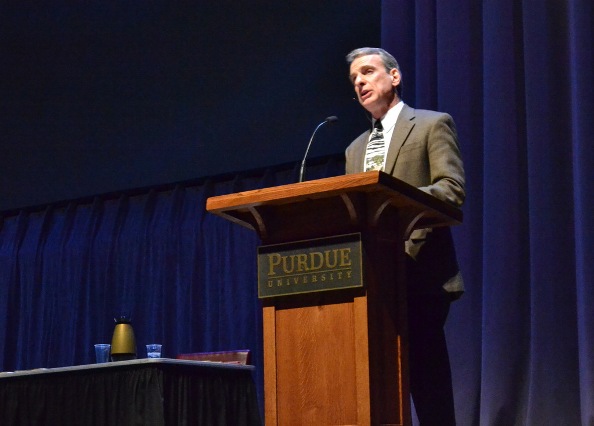
William Lane Craig lecturing to university students
William Lane Craig lecturing to students and faculty at Purdue University

Note: This book is currently on sale for only 99 cents (Kindle edition). Get it! Sorry if the price has changed by the time you read this post.

A series of three interviews from the “Reasonable Faith” podcast about the essay collection “Contending with Christianity’s Critics: Answering New Atheists and Other Objectors“.

Here is the first MP3 file.

Topics:

  • About the editor Paul Copan, (the nicest Christian apologist)
  • 1: Responding to Dawkins’ argument “Who designed the designer?”
  • 2: Responding to the multiverse counter to the fine-tuning argument
  • 3: The argument that rationality and consciouness require theism
  • 4: The evidence for humans being hard-wired for belief in God
  • 5: Responding to naturalism’s claim to rationally ground morality
  • 6: Responding to Dawkins’ idea that the universe looks undesigned

Here is the second MP3 file.

Topics:

  • 7: The criteria that historians use to establish historical reliability
  • 8: Did Jesus think that he was the Son of Man in Daniel
  • 9: A time line for the resurrection of Jesus from the early sources
  • 10: Responding to scholarly distortions of the historical Jesus
  • 11: Responding to Bart Ehrman’s claim that the NT text is corrupted
  • 12: The evidence for Jesus divine self-understanding

Here is the third MP3 file.

Topics:

  • 13: The logical coherence of the concept of God
  • 14: The logical coherence of the doctrine of the Trinity
  • 15: The logical coherence of the doctrine of the Incarnation
  • 16: The logical coherence of the doctrine of the Atonement
  • 17: The logical coherence of the doctrine of the Hell
  • 18: Responding to objections to God’s knowledge of the future

My favorite chapters in this book are the ones by Mark Linville on evolution and morality, and the chapter by Robert H. Stein on historical criteria and methodology. This is not an introductory book, this book is an intermediate-level book. You want to read the two Jim Wallace books and the Lee Strobel “Case For” books before you tackle this one.

Much of the book is philosophy and philosophy of religion and philosophical theology. Well, I guess everyone knows that I hate non-STEM disciplines, and I only read philosophy because it’s useful for Christian apologetics. If you are like me, and think that only STEM disciplines have value, then this book is for you. You will be able to make use of it in your case-making adventures. It. Works. This is the stuff that gets William Lane Craig invited to all the best universities to debate against all the best atheists. And he beats them all up with it, too.

Study by UCLA neuroscientist Jeffrey Schwartz falsifies materialist determinism

Apologetics and the progress of science

Here’s a summary of the research of UCLA professor Jeffrey Schwartz, authored by William Dembski.

Excerpt:

Schwartz provides a nonmaterialist interpretation of neuroscience and argues that this interpretation is more compelling than the standard materialist interpretation. He arrived at this position as a psychiatrist specializing in the treatment of obsessive-compulsive disorder (OCD). OCD sufferers recognize obsessive-compulsive thoughts and urges as separate from their intrinsic selves. For instance, after a few washings, the compulsive hand-washer realizes that his hands are clean and yet feels driven to keep washing them. It was reflection on this difference between the obvious truth (the hands are clean) and the irrational doubts (they might still be dirty) that prompted Schwartz to reassess the philosophical underpinnings of neuroscience.

From brain scans, Schwartz found that certain regions in the brain of OCD patients (the caudate nucleus in particular) exhibited abnormal patterns of activity. By itself this finding is consistent with a materialist view of mind (if, as materialism requires, the brain enables the mind, then abnormal patterns of brain activity are likely to be correlated with dysfunctional mental states). Nonetheless, having found abnormal patterns of brain activity, Schwartz then had OCD patients engage in intensive mental effort through what he called relabeling, reattributing, refocusing, and revaluing (the 4 Rs). In the case of compulsive hand-washing, this involved a patient acknowledging that his hands were in fact clean (relabeling); attributing anxieties and doubts about his hands being dirty to a misfunctioning brain (reattributing); directing his thoughts and actions away from handwashing and toward productive ends (refocusing); and, lastly, understanding at a deep level the senselessness of OCD messages (revaluing).

Schwartz documents not only that patients who undertook this therapy experienced considerable relief from OCD symptoms, but also that their brain scans indicated a lasting realignment of brain-activity patterns. Thus, without any intervention directly affecting their brains, OCD patients were able to reorganize their brains by intentionally modifying their thoughts and behaviors. The important point for Schwartz here is not simply that modified thoughts and behaviors permanently altered patterns of brain activity, but that such modifications resulted from, as he calls it, “mindful attention”-conscious and purposive thoughts or actions in which the agent adopts the stance of a detached observer.

So mind-brain interaction is not a one-way street. Everyone knows that you can alter your consciousness, beliefs, moods, sensations, etc. by changing your brain, e.g. – with drugs. But it turns out that you can also will to focus your thoughts on certain things in order to change your brain chemistry. So the causation is not just bottom-up, but also top-down.

Now mindfulness therapies – which are documented in the research papers published by Schwartz (like this one and this one and this one)- assume the existence of free will. Naturalists don’t like these scientific publications because naturalists don’t believe in free will, as the famous naturalist philosopher Alex Rosenberg explained in his debate with William Lane Craig.

This post from Uncommon Descent explains the naturalist conundrum.

Excerpt:

The issue, for Schwartz, turns on whether or not there is such a thing as free will. The assumption of free will is critical to mindfulness therapies for practical purposes.

Philosophies and religions have various opinions about ultimate free will. The therapist must ask, is my patient capable of carrying out a program that requires that he choose to focus his attention on A and not B? In practice, this turns out to be true for many patients, which makes the therapy useful. There is neuroscience evidence for brain reorganization as a result, showing that it is not merely an imagined effect.

Now, if someone wishes to claim, as many outspoken advocates of Darwinian evolution have, for example, that free will is impossible, the only thing that a mindfulness therapist can say is, go away. Either they are mistaken or the research results from mindfulness therapies are.

By the way, if you like this topic, and want a resource to show your friends, be sure and get a hold of the debate on mind vs. brain between Jeffrey M. Schwartz and Michael Shermer.

Study by UCLA neuroscientist Jeffrey Schwartz falsifies materialist determinism

Apologetics and the progress of science

Here’s a summary of the research of UCLA professor Jeffrey Schwartz, authored by William Dembski.

Excerpt:

Schwartz provides a nonmaterialist interpretation of neuroscience and argues that this interpretation is more compelling than the standard materialist interpretation. He arrived at this position as a psychiatrist specializing in the treatment of obsessive-compulsive disorder (OCD). OCD sufferers recognize obsessive-compulsive thoughts and urges as separate from their intrinsic selves. For instance, after a few washings, the compulsive hand-washer realizes that his hands are clean and yet feels driven to keep washing them. It was reflection on this difference between the obvious truth (the hands are clean) and the irrational doubts (they might still be dirty) that prompted Schwartz to reassess the philosophical underpinnings of neuroscience.

From brain scans, Schwartz found that certain regions in the brain of OCD patients (the caudate nucleus in particular) exhibited abnormal patterns of activity. By itself this finding is consistent with a materialist view of mind (if, as materialism requires, the brain enables the mind, then abnormal patterns of brain activity are likely to be correlated with dysfunctional mental states). Nonetheless, having found abnormal patterns of brain activity, Schwartz then had OCD patients engage in intensive mental effort through what he called relabeling, reattributing, refocusing, and revaluing (the 4 Rs). In the case of compulsive hand-washing, this involved a patient acknowledging that his hands were in fact clean (relabeling); attributing anxieties and doubts about his hands being dirty to a misfunctioning brain (reattributing); directing his thoughts and actions away from handwashing and toward productive ends (refocusing); and, lastly, understanding at a deep level the senselessness of OCD messages (revaluing).

Schwartz documents not only that patients who undertook this therapy experienced considerable relief from OCD symptoms, but also that their brain scans indicated a lasting realignment of brain-activity patterns. Thus, without any intervention directly affecting their brains, OCD patients were able to reorganize their brains by intentionally modifying their thoughts and behaviors. The important point for Schwartz here is not simply that modified thoughts and behaviors permanently altered patterns of brain activity, but that such modifications resulted from, as he calls it, “mindful attention”-conscious and purposive thoughts or actions in which the agent adopts the stance of a detached observer.

So mind-brain interaction is not a one-way street. Everyone knows that you can alter your consciousness, beliefs, moods, sensations, etc. by changing your brain, e.g. – with drugs. But it turns out that you can also will to focus your thoughts on certain things in order to change your brain chemistry. So the causation is not just bottom-up, but also top-down.

Now mindfulness therapies – which are documented in the research papers published by Schwartz (like this one and this one and this one)- assume the existence of free will. Naturalists don’t like these scientific publications because naturalists don’t believe in free will, as the famous naturalist philosopher Alex Rosenberg explained in his debate with William Lane Craig.

This post from Uncommon Descent explains the naturalist conundrum.

Excerpt:

The issue, for Schwartz, turns on whether or not there is such a thing as free will. The assumption of free will is critical to mindfulness therapies for practical purposes.

Philosophies and religions have various opinions about ultimate free will. The therapist must ask, is my patient capable of carrying out a program that requires that he choose to focus his attention on A and not B? In practice, this turns out to be true for many patients, which makes the therapy useful. There is neuroscience evidence for brain reorganization as a result, showing that it is not merely an imagined effect.

Now, if someone wishes to claim, as many outspoken advocates of Darwinian evolution have, for example, that free will is impossible, the only thing that a mindfulness therapist can say is, go away. Either they are mistaken or the research results from mindfulness therapies are.

By the way, if you like this topic, and want a resource to show your friends, be sure and get a hold of the debate on mind vs. brain between Jeffrey M. Schwartz and Michael Shermer.