
Tag Archives: Christianity

Can people be good if God doesn’t exist?

First, a post by Luke Nix defining the term objective morality.

Excerpt:

Let us examine a more recent debate: William Lane Craig vs. Sam Harris. One of the words that was not clearly defined and accepted by both participants was “objective”. Sam Harris clarified that he was only arguing for a “universal” morality (one that only exists as long as conscious minds exist- he’s referring to humans), while Craig was arguing for morality that exists regardless of whether or not conscious minds exist- he’s also referring to humans. The fact that they were each using different definitions of “objective” caused much confusion for those who did not pick up on the distinction or its significance for the debate (even though Craig pointed out both in his first rebuttal).

Objective morality is binding on us whether we like it or not. An objective moral standard lays out what is right or wrong for us independently of how we feel about that standard. What could ground such a moral standard?

From the Apologetics Guy blog, a simple post explaining the main issue in the debate over morality.

Excerpt:

“Can’t people be good without God?” I mean, couldn’t an atheist do some really good things without God? I guess if we mean “doing the right thing while not believing in God,” then sure. An atheist could do the right thing. For example, they could honestly report their income to the government, be faithful their spouse and so forth. And why not? But maybe the better question is, “Why?” Why even care about being moral?

Think about it like this: If God’s not real, there’s no moral law giver and no such things as objective moral commands. If that’s true, then why not say, “I’ll do the right thing when it makes me feel good or gives me an advantage, and I’ll do the wrong thing when it makes me feel good or gives me an advantage.” Or why not say, “I hereby declare from this day forward that it’s always right to steal.”

If there’s no God and no objective moral standard, there’s no moral difference between abusing someone or taking care of them. Basically, good and evil are reduced to preference. All you could say is, “I don’t like terrorism,” or “I’m not into slavery.” “Human trafficking isn’t my thing.”  But who can really live like this?

If there is no designer of the universe, then there is no design for the universe. If there is no design for the universe, then there is no way that anything ought to be. If there is no way anything ought to be, then there is no way humans ought to be. Any statement about what we “ought” to do in an accidental universe is just someone opinion – you can accept it if you like it, but it’s not real.

Here’s another post by Micah from the Student Apologetics Alliance about the most common objective to the moral argument from objective morality to a moral lawgiver.

Excerpt:

First and foremost though, I want to start off with some background information…namely the Euthyphro Dilemma. This famous dilemma is named after Plato’s dialogue Euthyphro. The dilemma here is thus, “Is something good because God commands it? Or, does God command it because that thing is good?” Either way, one runs into problems. If something is good because God commands it, then God could command anything–like rape or murder–and that would be good, and Christians certainly don’t want to advocate that. On the other hand, does God command something because it’s good? If so, then aren’t we appealing to an independent standard of goodness? Is it that God is looking at some moral standard and says, “Oh, I see, that’s a good thing. I’ll command people to do this then…”? We would then have something that sets itself above God, and in fact, this standard would seem to exist even in God’s absence.

Now, the response I and a lot of other Christian thinkers have offer is that there is a third option: namely that something is good because God is good. God is the standard for morality to which all others measure up to. God being good and being moral is essential to His nature. What this implies is that God’s commands are not arbitrary at all, but rather expressions of His nature. What this also implies is that God does not obey moral laws, but rather He is goodness itself. God being good is as natural and essential as humanness is natural to Plato. What this also implies is that without God, we would not have objective moral values and duties incumbent upon us as humans. Sure, we could subjectively make up our own rules, but they wouldn’t be objective or binding. We would not be able to truthfully say, in the absence of God, that rape is objectively wrong regardless if some believe it’s right.

What I’m NOT saying here is that a person needs to believe in God in order for him or her to recognize moral values and vices. One does not need to believe in God in order to know that rape is wrong, but that’s not the argument here. The argument being offered is that without God Himself, objective morality would not exist–morality would not be grounded. The difference lies between two domains: epistemology (how we come to know things; we can come to know certain moral truths without reference to God) and ontology (the nature of being and existing; that such moral truths would need to be grounded in God’s nature in order for them to be binding on everyone).

It’s very important that we all understand what the moral argument is about. It’s about the means of existing of moral value and moral duties. Are they real? Do they really exist somewhere? Or are they just our personal preferences – like clothing fashions and culinary conventions?
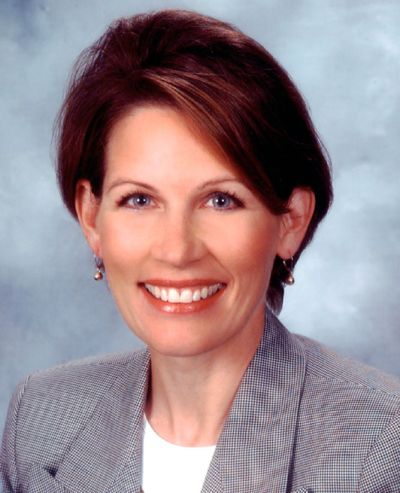

MUST-HEAR: Michele Bachmann gives the best speech ever

Rep. Michele Bachmann

My favorite Congresswoman stole the spotlight in Iowa when she lectured for the Family Leader Presidential Lecture Series. She’s back to the passionate arm-waving that I always liked so much.

The MP3 file is here. (17 Mb)

Shane Vander Hart from Caffeinated Thoughts has a great summary of the speech.

Excerpt:

Bachmann started her speech sharing her testimony saying she understood the Gospel for the first time at age 16 after growing up in a Lutheran Church and then she gave her life to Christ.  She said that it “changed her life forever.”  She said she had a hunger for the Word after then, and explained that the Holy Spirit “lifted the veil” from her eyes so she was then able to understand it.  She participated in YoungLife and another Bible study when in high school.  That first year in Christ was, Bachmann said, “was the defining year of my life.”

In college she participated the InterVarsity Christian Fellowship at her school, and cited Francis Schaffer’s film, How Now Shall We Live, made an impact on how she lives out her faith.  During law school at Oral Roberts University Law School she did advocacy for better homeschooling laws.  She and her husband, Marcus, homeschooled their five children in their early years.  She got involved in public schools as they did foster care for 23 kids since they were not allowed by Minnesota law to put those kids in private school or to home school them.

She noted a change in public schools where “knowledge, facts, and information” were taking a back seat to indoctrination.  She noted the 2000 Goals to Work standard implemented in the public schools that was a federal program implemented in all 50 states.  She advocated for its repeal in Minnesota – the first state to do so.  She said later this is where she got her start in politics.

She highlighted her prolife advocacy in the Minnesota Legislature – a requirement to fund prolife groups if they were going to fund Planned Parenthood and a woman’s right to know act.

[…]On marriage, she commended Iowans for booting the three Iowa Supreme Court justices up for retention last fall.  She said that Minnesota could possibly vote in favor of a Marriage Amendment now that Republicans  She noted that Congress can limit the subject matter jurisdiction for Article Three courts federally denying them an opportunity to rule on marriage. “This is the first time in recorded history that we have seen marriage in society defined as anything other than between one man and one woman.”

[…]On life she said that she and her husband has done more than just talk about life, but have tried to live it out through being sidewalk counselors and taking unwed mothers into their home.  Quoting Francis Schaeffer she, “life is the watershed issue of our time.”  Bachman proclaimed her commitment to life, “I will not give up until we give life the position it deserves in the United States and is protected from conception until natural death.”

She explained how taxes has impacted the family where in the 1950s would pay approximately 5% of their income to taxes.  She said now some families can pay up to 50% which explains why we have fewer one income families.  She noted the spending which has fueled anti-family tax policy.  She said the first thing on the House’s pro-family agenda was to rein in spending.  Regarding education reform, she noted how the Supreme Court has recently ruled that tax credits for private religious schools is constitutional.  She also said that she’d abolish the Federal Department of Education. She also called for the abolishment of the United States Tax Code.

[Note: commenter Francine notes that Michele says that this is the first time that marriage has been redefined to not be between men and women – the summary is in error about what she said]

She ends the speech with her concern for the fact that over 40% of children are beig born without a mother and father in the home, and she blames bad fiscal policies for this injustice. She makes the connection between left-wing fiscal policies and social breakdown. It’s so important that social conservatives understand that big government, high taxes, excessive regulation and massive spending are major causes of virtually all of our social problems. The breakdown of the family is what makes soul-destroying secularism possible.

There was also a press conference after the speech.

The MP3 file is here. (3 Mb)

Shane also covered the press conference.

Excerpt:

During the press conference that was held after Congresswoman Michelle Bachmann’s speech in Pella, IA for The FAMiLY Leader’s Presidential Lecture Series, she was asked to elaborate on the bill in Minnesota she helped to get passed that allowed funding for prolife organizations basically putting them on the same footing as Planned Parenthood.  During her answer she mentioned that she said that she introduced a similar bill in Congress.

She was also asked about what programs would she be open to abolishing other than the Federal Department of Education.  She listed the Department of Energy and the Department of Commerce as ones that have been discussed in Congress.  She said “anywhere we can abolish we might as well cut back and abolish.”  Saying in particular that our private sector has the capability to handle our energy needs.  She was asked about her disappointment with the House budget deal and where she would like the House leadership to put up a fight.  Bachmann said, “defunding Obamacare, this will change our country forever.”  She noted later that some may not be willing to take on budget battles in the future, she said that we have to… she said, “we have to change course.”

I have been pushing Michele Bachmann on this blog since the beginning two years ago, because she represents what I consider to be an ideal Christian woman. She is everything that I have ever hoped a Christian woman could be in my wildest, wildest dreams. I could not give any politician a more ringing endorsement. I hope with all my heart that she will some day be President of the United States.

Related posts

She explained how taxes has impacted the family where in the 1950s would pay approximately 5% of their income to taxes.  She said now some families can pay up to 50% which explains why we have fewer one income families.  She noted the spending which has fueled anti-family tax policy.  She said the first thing on the House’s pro-family agenda was to rein in spending.  Regarding education reform, she noted how the Supreme Court has recently ruled that tax credits for private religious schools is constitutional.  She also said that she’d abolish the Federal Department of Education. She also called for the abolishment of the United States Tax Code.

Conservative Party unveils plan to promote religious liberty abroad

Canadian Prime Minister Stephen Harper

From the Montreal Gazette.

Excerpt:

A Conservative government would create a new, special “Office of Religious Freedom,” the party announced in its electoral platform on Friday.

The office would be housed at the Department of Foreign Affairs and International Trade and its role would be:

  • To monitor religious freedom around the world;
  • To promote religious freedom as a key objective of Canadian foreign policy;
  • And to advance policies and programs that support religious freedom.

Under the heading, “Defending Religious Freedom,” the Conservatives said they recognize that “respect for religious pluralism is inextricably linked to democratic development.” And that the federal government could and should do more to respond to the plight of those “who suffer merely because of their faith.”

[…]The Conservative platform also includes a pledge to create a national Holocaust memorial in the Ottawa area and to support the establishment of a memorial to the victims of communism.

This is not a surprise, as the Canadian conservatives are famous for taking bold stands to defend the rights of persecuted Christians in places like Egypt.

Excerpt:

Prime Minister Stephen Harper participated in a round table discussion on security with Coptic Christian leaders.

A deadly suicide bombing in Egypt on New Year’s Day claimed the lives of some 21 worshippers.

And nearly 100 people were wounded in the attack as they left a midnight mass at an Alexandria church.

Harper condemned the attacks, saying the international community must stay vigilant against such violence against Coptic Christians.

Harper met with several priests at the Church Of the Virgin Mary and St. Athanasius in Mississauga Thursday.

He says he wants Coptic Christians in Canada to know the country stands behind their right to safely practice their faith.

So, not only is Harper introducing policies that will strengthen families and marriages so that there will be fewer abortions and healthier children, but he is also dedicated to defending the religious liberty of minorities abroad.