
Tag Archives: Christian Apologetics

Christian philosopher (Craig) vs atheist scientist (Atkins) debate: Does God Exist?

I found a video of a debate from the Reasonable Faith speaking tour in the UK, between Christian philosopher Dr. William Lane Craig and atheist chemist Dr. Peter Atkins.

Here is the video:

This is a must-see debate. It was extremely fun to watch, and I have a snarky summary of the opening speeches below.

Details:

On Wednesday 26th October 2011 William Lane Craig debated Peter Atkins on the topic: Does God Exist? This debate took place at the University of Manchester  as part of the UK Reasonable Faith Tour with William Lane Craig. The debate was chaired by Christopher Whitehead, Head of Chemistry School at the University. Post-debate discussion was moderated by Peter S Williams, Philosopher in Residence at the Damaris Trust, UK.

Dr. William Lane Craig:

William Lane Craig (born August 23, 1949) is an American analytic philosopher, philosophical theologian, and Christian apologist. He is known for his work on the philosophy of time and the philosophy of religion, specifically the existence of God and the defense of Christian theism. He has authored or edited over 30 books including The Kalam Cosmological Argument (1979), Theism, Atheism and Big Bang Cosmology(co-authored with Quentin Smith, 1993), Time and Eternity: Exploring God’s Relationship to Time (2001), and Einstein, Relativity and Absolute Simultaneity (co-edited with Quentin Smith, 2007).

Craig received a Bachelor of Arts degree in communications from Wheaton College, Illinois, in 1971 and two summa cum laudemaster’s degrees from Trinity Evangelical Divinity School in Deerfield, Illinois, in 1975, in philosophy of religion and ecclesiastical history. He earned a Ph.D. in philosophy under John Hick at the University of Birmingham, England in 1977 and a Th.D. underWolfhart Pannenberg at the University of Munich in 1984.

Dr. Peter Atkins:

Peter William Atkins (born 10 August 1940) is a British chemist and former Professor of Chemistry at the University of Oxford and a Fellow of Lincoln College. He is a prolific writer of popular chemistry textbooks, including Physical Chemistry, Inorganic Chemistry, and Molecular Quantum Mechanics. Atkins is also the author of a number of science books for the general public, including Atkins’ Molecules and Galileo’s Finger: The Ten Great Ideas of Science.

Atkins studied chemistry at the University of Leicester, obtaining a bachelor’s degree in chemistry, and – in 1964 – a PhD for research into electron spin resonance spectroscopy, and other aspects of theoretical chemistry. Atkins then took a postdoctoral position at the UCLA as aHarkness Fellow of the Commonwealth fund. He returned to Oxford in 1965 as fellow and tutor of Lincoln College, and lecturer in physical chemistry (later, professor of physical chemistry).

I am happy when debates like this come out. I have friends who are Christians who doubt the importance of apologetics in evangelism, because they don’t think that apologists can prove anything or win arguments. I have friends who are skeptical of using arguments that assume a 14-billion year old universe, because they think that the Big Bang is compatible with atheism (!). I have friends who think that philosophical arguments have no persuasive force. I have friends who think that nothing can be proven from history, beyond a reasonable doubt. I have co-workers who ask me whether anyone wins these debates. I think that this debate answers all of those questions.

This debate clearly shows why Christians should not shy away from studying science, philosophy and history. We will not discover anything that harms Christian theism by thinking logically and by looking at the evidence. To the contrary, it is the atheist who makes war on the progress of science, and who is forced to resist the clear experimental evidence, and to resort to baseless speculations and blind faith. If you want to see a good debate with an intelligent atheist, I recommend watching the debate between William Lane Craig and Peter Millican instead. But if you want to see a really, really overwhelming defeat for atheism, watch this debate. It is very clear at the end of this debate why Richard Dawkins refused to debate William Lane Craig at Oxford.

SUMMARY OF THE OPENING SPEECHES

I only had time to summarize the first two speeches. Keep in mind that Dr. Craig always shines in his rebuttals, and this debate is no different. So you’ll want to watch those rebuttals. Dr. Atkins literally says in this debate in his first rebuttal “There was nothing here originally. There is nothing here now. But it is an interesting form of nothing which seems to be something.” And the audience laughs nervously. This debate is like that. You will see a clear winner and clear loser in this debate. This fight is decided by knockout.

William Lane Craig opening speech:

1. the origin of the universe
2. the moral argument
3. the resurrection of Jesus

Peter Atkins opening speech:

1. Dr. Craig is stupid, lazy and evil:
– Dr. Craig’s arguments are old: from the 11th century! Old arguments can’t be true
– Dr. Craig is just asserting that “God did it” because he is lazy
– Dr. Craig feels pressured to agree with the theistic majority
– Dr. Craig needs a psychological crutch to comfort him
– Dr. Craig is fearful of death
– Dr. Craig is just wishing for an eternal life of bliss
– Dr. Craig is driven by his heart, and not by his head

2. Origin of the universe:
– Maybe the universe is eternal and has no beginning – we don’t know
– Maybe mommy universes can give birth to daughter universes
– It is naive to think that a cause is needed to cause the creation of the universe from nothing
– Science is just about to show how it is possible that something appears out of nothing without cause
– Some scientists have already begun to speculate about about how something can come into being out of nothing
– Maybe nothing is not really nothing, but it is actually something
– It would be admitting defeat to say that God created the universe out of nothing

3. Fine-Tuning:
– It could be the case that the fundamental constants are not variable
– It could be the case that the fine-tuning of the cosmic constants is a happy accident
– It could be the case that there are billions of billions of unobservable universes that are not fine tuned
– It could be the case that the cosmic constants in these billions and billions of unobservable universes are all random so that some are fine-tuned
– Anyone who infers that an intelligence is the best explanation of a finely-tuned set of life-permitting cosmic constants is lazy

4. Purpose:
– Philosophers and theologians are stupid
– I don’t think that there is purpose in the universe
– I think that the universe is more grand if there is no purpose, so there is no purpose

5. Miracles:
– I don’t think that miracles happen
– The resurrection is a fabrication
– It could be the case that Jesus didn’t exist
– It could be the case that Jesus wasn’t really crucified
– It could be the case that Jesus didn’t  really die after being crucified
– It could be the case that the disciples stole his body
– It could be the case that the women went to the wrong hole in the ground
– the gospels are political propaganda written long after the events they are reporting on

6. Theodicy:
– God has no morally sufficient reason for allowing humans to perform actions that result in suffering
– God has no morally sufficient reason for allowing nature to cause suffering

7. Morality:
–  customs and conventions emerges arbitrarily in different times and places based on an awareness of the consequences of actions, as well as various anecdotes and experiences
–  these customs and conventions are decided based on the goal for survival, in much the same way as politeness and manners emerge for decorum and to avoid offense
– it is childish to presume that there is an umpire God who decides moral values and duties

8. Religious believers are stupid, lazy and evil:
– the notion of God has arisen because people are stupid and want to be comforted
– there are no arguments or evidences for belief in God
– people who believe in God do not think, but instead take refuge in incomprehensible nonsense

What is the criterion of embarrassment, and what are some examples of it?

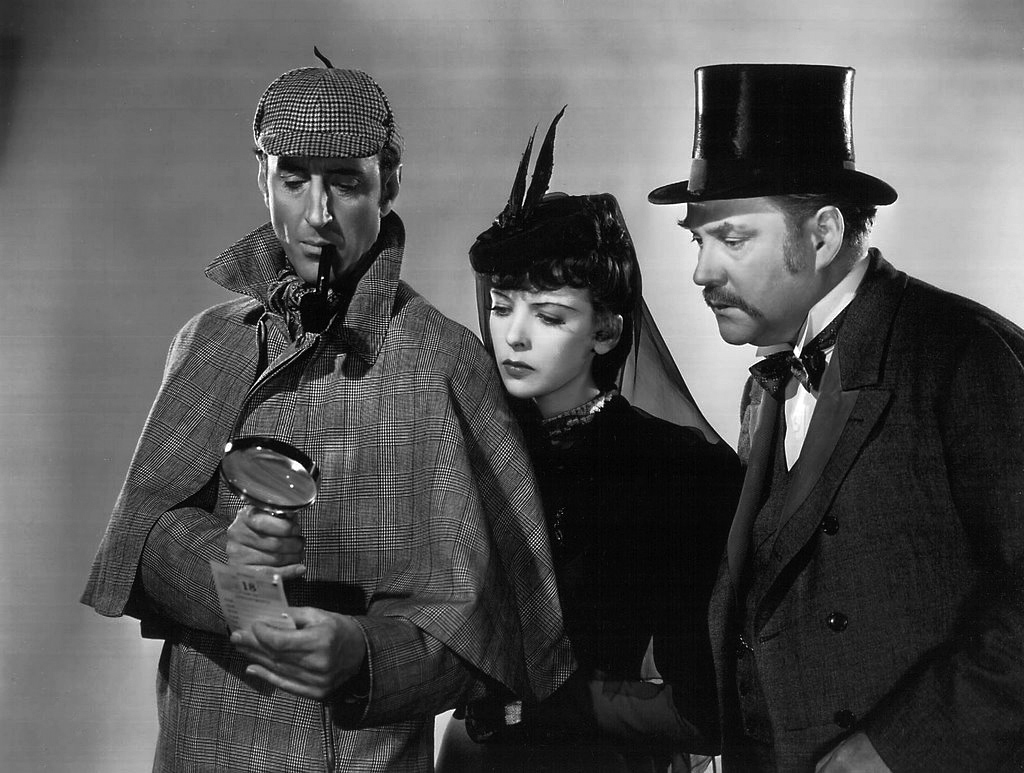
Sherlock Holmes and John Watson are going to take a look at the data

The criterion of embarrassment is just one of the historical criteria used to select the parts of a piece of ancient literature that are likely to be historical. Other things in the source may have happened, but we can’t know them as history. If significant parts of a text are historical, it is possible to accept it as historical until there are specific reasons to say that some part of it is NOT historical.

Here is William Lane Craig’s list of criteria for a saying or event to be historical:

  1. Historical congruence: S fits in with known historical facts concerning the context in which S is said to have occurred.
  2. Independent, early attestation: S appears in multiple sources which are near to the time at which S is alleged to have occurred and which depend neither upon each other nor a common source.
  3. Embarrassment: S is awkward or counter-productive for the persons who serve as the source of information for S.
  4. Dissimilarity: S is unlike antecedent Jewish thought-forms and/or unlike subsequent Christian thought-forms.
  5. Semitisms: traces in the narrative of Aramaic or Hebrew linguistic forms.
  6. Coherence: S is consistent with already established facts about Jesus.

The criteria is the same for liberal historians and conservative historians, although some historians weight one criteria more than others when trying to evaluate the historicity of different New Testament parts.

What’s amazing is that even liberal historians will give you facts that are embarrassing to the authors as “historical”.

Anyway, here are 8 examples of parts of the New Testament that exhibit the criterion of embarrassment, thanks to theologian C. Michael Patton.

  1. Jesus’ Baptism
  2. Jesus’ Family Did Not Believe
  3. John the Baptist’s Doubt
  4. The Disciples Doubted After the Resurrection
  5. Jesus Does not Know the Time of His Coming
  6. Women are the First to Witness the Resurrection
  7. Jesus Cursed a Fig Tree
  8. Death and Resurrection of Christ

I think 6 and 8 are the ones I want you to take away with you when you finish this post.

Here they are:

Women are the First to Witness the Resurrection

This is one that is often brought up. Craig Keener puts it well enough: “The witness of women at the tomb is very likely historical, precisely because it was so offensive to the larger culture — not the sort of testimony one would invent. Not all testimony was regarded as being of equal merit; the trustworthiness of witnesses was considered essential. Yet most of Jesus’ Jewish contemporaries held much less esteem for the testimony of women than for that of men; this suspicion reflects a broader Mediterranean limited trust of women’s speech and testimony also enshrined in Roman law.” (Keener, The Historical Jesus, 331)

And:

Death and Resurrection of Christ

This easily escapes our notice since the basic story of Christ is so well known. However, both the death and resurrection of Christ are, from the standpoint of the culture of the day, embarrassing and damaging. Concerning the death of Christ on a cross, Paul sees this problem: “But we preach Christ crucified: a stumbling block to Jews and foolishness to Gentiles” (1 Cor. 1:23). The word used for “stumbling block” is skandalon. Louw-Nida defines this as “that which causes offense and thus arouses opposition.” Why? Because the Jews would never have thought their Messiah would have been hung on a tree. “Cursed is one who hangs on a tree” (Gal. 3:13; Deut 21:23). The Greeks thought of the resurrection as foolishness as they were dualist, essentially believing that the material world was evil and the spiritual world good. They would have scoffed at the idea that Christ returned to physical form. This is why later Greeks attempted to adapt the Christ story, doing away with the physical resurrection. Marcion is the most famous promoter of this view (see Docitism).

Now, when you are talking about the New Testament to your non-believing friends, you definitely want to draw attention to passages that are embarrassing to the authors. It will help you to be more convincing when you explain the New Testament like a historian.

By the way, you can read an entire post I did on all the criteria that historians use to evaluate ancient historical documents.

William Lane Craig lectures on the moral argument at Georgia Tech

Making sense of the meaning of atheism

This video has 3 parts, as well as questions and answers in individual clips.

For those who cannot watch the video, you can read this essay by Dr. Craig which covers exactly the same ground as the video. The essay is for Christians already familiar with basic apologetics.

Part 1 of 3:

Part 2 of 3:

Part 2 of 3:

Here’s a quick couple of quotes from the essay for those who cannot watch:

If there is no God, then any ground for regarding the herd morality evolved by homo sapiens as objectively true seems to have been removed. After all, what is so special about human beings? They are just accidental by-products of nature which have evolved relatively recently on an infinitesimal speck of dust lost somewhere in a hostile and mindless universe and which are doomed to perish individually and collectively in a relatively short time. Some action, say, incest, may not be biologically or socially advantageous and so in the course of human evolution has become taboo; but there is on the atheistic view nothing really wrong about committing incest. If, as Kurtz states, “The moral principles that govern our behavior are rooted in habit and custom, feeling and fashion,”5 then the non-conformist who chooses to flout the herd morality is doing nothing more serious than acting unfashionably.

The objective worthlessness of human beings on a naturalistic world view is underscored by two implications of that world view: materialism and determinism. Naturalists are typically materialists or physicalists, who regard man as a purely animal organism. But if man has no immaterial aspect to his being (call it soul or mind or what have you), then he is not qualitatively different from other animal species. For him to regard human morality as objective is to fall into the trap of specie-ism. On a materialistic anthropology there is no reason to think that human beings are objectively more valuable than rats. Secondly, if there is no mind distinct from the brain, then everything we think and do is determined by the input of our five senses and our genetic make-up. There is no personal agent who freely decides to do something. But without freedom, none of our choices is morally significant. They are like the jerks of a puppet’s limbs, controlled by the strings of sensory input and physical constitution. And what moral value does a puppet or its movements have?

[…]Moreover, if atheism is true, there is no moral accountability for one’s actions. Even if there were objective moral values and duties under naturalism, they are irrelevant because there is no moral accountability. If life ends at the grave, it makes no difference whether one lives as a Stalin or as a saint. As the Russian writer Fyodor Dostoyevsky rightly said: “If there is no immortality, then all things are permitted.”

If you want a much shorter, slicker version of this argument to share, Reasonable Faith has produced this nice 5-minute video that you can tweet or share on your Facebook page or whatever:

The moral argument is the easiest argument in the world to discuss with non-Christians, as everyone has to have an answer to questions like “what makes humans valuable?” and “why should I do the right thing when it goes against my self-interest?” and “will evildoers who escape justice in this life be punished when they die?” and “do humans have free will to make moral choices?” These are interesting questions, and people can just give their opinion and then think about it as they discuss it.

You can read a debate transcript where Dr. Craig puts his ideas to the test, against Dr. Richard Taylor. I found this debate very helpful for answering the question that everyone should be able to answer: “why should I be moral?”