Tag Archives: Atheist

A Harvard University student explains how evidence changed her mind about God

Harvard University student discovers apologetics

Here’s a must-read article  about the effectiveness of apologetics on college campuses in Christianity Today.

Excerpt:

I don’t know when I first became a skeptic. It must have been around age 4, when my mother found me arguing with another child at a birthday party: “But how do you know what the Bible says is true?” By age 11, my atheism was so widely known in my middle school that a Christian boy threatened to come to my house and “shoot all the atheists.” My Christian friends in high school avoided talking to me about religion because they anticipated that I would tear down their poorly constructed arguments. And I did.

As I set off in 2008 to begin my freshman year studying government at Harvard (whose motto is Veritas, “Truth”), I could never have expected the change that awaited me.

It was a brisk November when I met John Joseph Porter. Our conversations initially revolved around conservative politics, but soon gravitated toward religion. He wrote an essay for the Ichthus, Harvard’s Christian journal, defending God’s existence. I critiqued it. On campus, we’d argue into the wee hours; when apart, we’d take our arguments to e-mail. Never before had I met a Christian who could respond to my most basic philosophical questions: How does one understand the Bible’s contradictions? Could an omnipotent God make a stone he could not lift? What about the Euthyphro dilemma: Is something good because God declared it so, or does God merely identify the good? To someone like me, with no Christian background, resorting to an answer like “It takes faith” could only be intellectual cowardice. Joseph didn’t do that.

And he did something else: He prodded me on how inconsistent I was as an atheist who nonetheless believed in right and wrong as objective, universal categories. Defenseless, I decided to take a seminar on meta-ethics. After all, atheists had been developing ethical systems for 200-some years. In what I now see as providential, my atheist professor assigned a paper by C. S. Lewis that resolved the Euthyphro dilemma, declaring, “God is not merely good, but goodness; goodness is not merely divine, but God.”

Joseph also pushed me on the origins of the universe. I had always believed in the Big Bang. But I was blissfully unaware that the man who first proposed it, Georges Lemaître, was a Catholic priest. And I’d happily ignored the rabbit trail of a problem of what caused the Big Bang, and what caused that cause, and so on.

By Valentine’s Day, I began to believe in God. There was no intellectual shame in being a deist, after all, as I joined the respectable ranks of Thomas Jefferson and other Founding Fathers.

I wouldn’t stay a deist for long. A Catholic friend gave me J. Budziszewski’s book Ask Me Anything, which included the Christian teaching that “love is a commitment of the will to the true good of the other person.” This theme—of love as sacrifice for true good—struck me. The Cross no longer seemed a grotesque symbol of divine sadism, but a remarkable act of love. And Christianity began to look less strangely mythical and more cosmically beautiful.

Now, I’m going to get into a lot of trouble for saying this, but I think that if you are a Christian and you are in a secular university, then you really need to have put in the effort to study the areas of science, history and philosophy that are relevant to the Christian faith. This is regardless of your personal abilities or field of study. We must all make an effort regardless of how comfortable we are with things that are hard for us to learn.

Granted, most people today are not interested in truth, because we just have this cultural preoccupation with having fun and feeling good and doing whatever we want to do whenever we want to do it. Most atheists I’ve met are like that, but some are more honest, open-minded, and they just have never encountered any good reasons or evidence to think that God exists and that Jesus is anything other than a man. There are a lot of atheists like that who are just waiting to hear some decent evidence. Our job is to prepare for them and then engage them, if they are willing to be engaged.

I think that definition of love she cited – self-sacrifice for the true good of another person – is important. I don’t think that ordinary Christians like you or me spends time on apologetics because we “like” it. I know lots of Christians who are in tough, expensive academic programs trying to get the skills they need to defend truth in areas that matter. They do this because they know that there are people out there who are interested in truth, and who are willing to re-prioritize their lives if the truth is made clear to them. We need to be willing to serve God by doing hard things that work.

Positive arguments for Christian theism

William Lane Craig debates James Crossley: Did Jesus rise from the dead?

This is my favorite debate on the resurrection.

You can watch the debate here:

The MP3 file can be obtained from Apologetics 315.

There is not much snark in this summary, because Crossley is a solid scholar, and very fair with the evidence. He’s also done debates with Richard Bauckham and Michael Bird. You have to respect him for getting out there and defending his views in public.

SUMMARY

William Lane Craig’s opening speech

Two contentions:

  • There are four minimal facts that are accepted by most historians
  • The best explanation of the four minimal facts is that God raised Jesus from the dead

Contention 1 of 2:

Fact 1: The burial

  • The burial is multiply attested
    • The burial is based on the early source material that Mark used for his gospel
    • Scholars date this Markan source to within 10 years of the crucifixion
    • The burial is also in the early passage in 1 Cor 15:3-8
    • So you have 5 sources, some of which are very early
  • The burial is credited to a member of the Sanhedrin
    • the burial is probable because shows an enemy of the church doing right
    • this makes it unlikely to to be an invention

Fact 2: The empty tomb

  • The burial story supports the empty tomb
    • the site of Jesus’ grave was known
    • the disciples could not proclaim a resurrection if the body were still in it
    • the antagonists to the early Christians could have produced the body
  • The empty tomb is multiple attested
    • it’s mentioned explicitly in Mark
    • it’s in the separate sources used by Matthew and John
    • it’s in the early sermons documented in Acts
    • it’s implied by 1 Cor 15:3-8, because resurrection requires that the body is missing
  • The empty tomb was discovered by women
    • the testimony of women of women was not normally allowed in courts of law
    • if this story was being made up, they would have chosen male disciples
  • The empty tomb discover lacks legendary embellishment
    • there is no theological or apologetical reflection on the meaning of the tomb
  • The early Jewish response implies that the tomb was empty
    • the response was that the disciples stole the body
    • that requires that the tomb was found empty

Fact 3: The appearances to individuals and groups, some of the them hostile

  • The list of appearances is in 1 Cor 15:3-8
    • this material is extremely early, withing 1-3 years after the cross
    • James, the brother of Jesus, was not a believer when he got his appearance
    • Paul was hostile to the early church when he got his appearance
  • Specific appearances are multiply attested
    • Peter: attested by Luke and Paul
    • The twelve: attested by Luke, John and Paul
    • The women: attested by Matthew and John

Fact 4: The early belief in the resurrection emerged in a hostile environment

  • There was no background belief in a dying Messiah
  • There was no background belief in a single person resurrecting before the general resurrection of all of the righteous at the end of the age
  • The disciples were willing to die for their belief in the resurrection of Jesus
  • The resurrection is the best explanation for the transformation of the disciples from frightened to reckless of death

Contention 2 of 2:

  • The resurrection is the best explanation because it passes C.B. McCullough’s six tests for historical explanations
  • None of the naturalistic explanations accounts for the minimal facts as well as the resurrection

James Crossley’s opening speech

Appeals to the majority of scholars doesn’t prove anything

  • the majority of people in the west are Christians so of course there are a majority of scholars that support the resurrection
  • there are Christian schools where denial of the resurrection can result in termination

The best early sources (1 Cor 15:3-8 and Mark) are not that good

1 Cor 15:3-8 doesn’t support the empty tomb

  • verse 4 probably does imply a bodily resurrection
  • the passage does have eyewitnesses to appearances of Jesus
  • but there are no eyewitnesses to the empty tomb in this source
  • appearances occur in other cultures in different times and places
  • Jesus viewed himself as a martyr
  • his followers may have had hallucinations

Mark 16:1-8

  • Mark is dated to the late 30s and early 40s
  • The women who discover the tomb tell no one about the empty tomb

The gospels show signs of having things added to them

  • Jewish story telling practices allowed the teller to make things up to enhance their hero
  • one example of this would be the story of the earthquake and the people coming out of their graves
  • that story isn’t in Mark, nor any external sources like Josephus
  • if there really was a mass resurrection, where are these people today?
  • so this passage in Matthew clearly shows that at least some parts of the New Testament could involve
  • what about the contradiction between the women tell NO ONE and yet other people show up at the empty tomb
  • the story about Jesus commissioning the early church to evangelize Gentiles was probably added
  • there are also discrepancies in the timing of events and appearances
  • why are there explicit statements of high Christology in John, but not in the earlier sources?

William Lane Craig’s first rebuttal

Crossley’s response to the burial: he accepts it

Crossley’s response to the empty tomb: he thinks it was made up

  • rabbinical stories are not comparable to the gospel accounts
  • the rabbinical stories are just anecdotal creative story-telling
  • the gospels are ancient biographies – the genre is completely different
  • the rabbinic miracle stories are recorded much later than the gospels
  • the rabbi’s legal and moral ideas were written down right away
  • the miracle stories were written down a century or two later
  • in contrast, the miracle stories about Jesus are in the earliest sources, like Mark
  • the rabbinical stories are intended as entertainment, not history
  • the gospels are intended as biography
  • just because there are some legendary/apocalyptic elements in Matthew, it doesn’t undermine things like the crucfixion that are historically accurate

Crossley’s response to the evidence for the empty tomb:

  • no response to the burial
  • the empty tomb cannot be made up, it was implied by Paul early on
  • the women wouldn’t have said nothing forever – they eventually talked after they arrived to where the disciples were
  • no response to the lack of embellishment
  • no response to the early Jewish polemic

Crossley’s response to the appearances

  • he agrees that the first followers of Jesus had experiences where they thought Jesus was still alive

Crossley’s response to the early belief in the bodily resurrection:

  • no response about how this belief in a resurrection could have emerged in the absence of background belief in the death of the Messiah and the resurrection of one man before the general resurrection of all the righteous at the end of the age

What about Crossley’s hallucination theory?

  • Crossley says that the followers of Jesus had visions, and they interpreted these visions against the story of the Maccabean martyrs who looked forward to their own resurrections
  • but the hallucination hypothesis doesn’t account for the empty tomb
  • and the Maccabean martyrs were not expecting the resurrection of one man, and certainly not the Messiah – so that story doesn’t provide the right background belief for a hallucination of a single resurrected person prior to the end of the age
  • if the appearances were non-physical, the disciples would not have applied the word resurrection – it would just have been a vision
  • the visions could easily be reconciled with the idea that somehow God was pleased with Jesus and that he had some glorified/vindicated non-corporeal existence – but not resurrection
  • not only that, the hallucination hypothesis doesn’t even explain the visions, because there were visions to groups, to skeptics and to enemies in several places

What about the argument that only Christians accept the resurrection?

  • it’s an ad hominem attack that avoids the arguments

James Crossley’s first rebuttal

Regarding the burial:

  • I could be persuaded of that the burial account is accurate

Regarding the non-expectation of a suffering/dying Messiah:

  • Jesus thought he was going to die
  • this thinking he was going to die overturned all previous Messianic expectations that the Messiah wouldn’t suffer or die
  • the early Jews could easily reconcile the idea of a suffering, dead man killed by the Romans with the power of the all-powerful Messiah who supposed to reign forever
  • no actually bodily resurrection would have to happen to get them to continue to identify an executed corpse with the role of Messiah

Regarding the belief in the bodily resurrection:

  • it would be natural for Jews, who believed in a general resurrection of all the rigtheous dead at the end of the age, to interpret a non-physical vision of one man after he died as a bodily resurrection, even though no Jew had ever considered the resurrection of one man before the general resurrection before Jesus

Regarding the testimony of the women:

  • Just because women were not able to testify in courts of law (unless there were no male witnesses), the early church might still invent a story where the women are the first witnesses
  • first, the disciples had fled the scene, so only the women were left
  • and it would have been a good idea for the early church to invent women as the first witnesses – the fact that they could not testify in court makes them ideal witnesses and very persuasive
  • also, it’s a good idea to invent women as witnesses, because the Romans had a rule that said that they never killed women, so they wouldn’t have killed these women – Romans only ever kill men
  • in any case, the first witness to the empty tomb is angel, so as long as people could talk to the angel as being the first witness, that’s the best story to invent

Regarding the consensus of Christian scholars:

  • I am not saying that Craig’s facts are wrong, just that appealing to consensus is not legitimate
  • he has to appeal to the evidence, not the consensus

Regarding my naturalistic bias:

  • I don’t know or care if naturalism is true, let’s look at the evidence

Regarding the genre of the gospels:

  • the creative story-telling is common in all genres, it’s not a genre in itself
  • stuff about Roman emperors also has creative story-telling

Regarding the legendary nature of the empty tomb in Mark:

  • First, Christians interpreted the visions as a bodily resurrection
  • Second, they invented the story of the empty tomb to go with that interpretation
  • Third, they died for their invention

William Lane Craig’s second rebuttal

The burial:

  • Bill’s case doesn’t need to know the specifics of the burial, only that the location was known
  • the location is important because it supports the empty tomb
  • to proclaim a resurrection, the tomb would have to be empty
  • a tomb with a known location is easier to check

The empty tomb:

  • creative story telling was common in Judaism: retelling OT stories (midrash), romances/novels, rabbinical anecdotes
  • but the gospels are none of these genres – the gospels are ancient biographies
  • Craig also gave five arguments as to why the tomb was empty
  • the burial story supports the empty tomb
  • there is multiple independent attestation, then it cannot be a creative fiction invented in Mark alone
  • the witnesses were in Jerusalem, so they were in a position to know
  • regarding the women, even though Jesus respected the women, their testimony would not be convincing to others, so why invent a story where they are the witnesses
  • the male disciples did not flee the scene, for example, Peter was there to deny Jesus three times
  • if the story is made up, who cares what the male disciples did, just invent them on the scene anyway
  • the angel is not authoritative, because the angel cannot be questioned, but the women can be questioned
  • there was no response on the lack of embellishment
  • there was no response to the earliest Jewish response implying that the tomb was empty

The appearances:

  • we agree on the appearances

The early belief in the resurrection:

  • he says that Jesus predicted his own death
  • yes, but that would only cause people to think that he was a martyr, not that he was the messiah – something else is needed for them to keep their believe that he was the Messiah even after he died, because the Messiah wasn’t supposed to die
  • and of course, there was no expectation of a single person rising from the dead before the general resurrection, and certainly not the Messiah

The consensus of scholars:

  • Jewish scholars like Geza Vermes and Pinchas Lapide accept these minimal facts like the empty tomb, it’s not just Christian scholars

Against Crossley’s hallucination hypothesis:

  • it doesn’t explain the empty the tomb
  • it doesn’t explain the early belief in the resurrection
  • hallucinations would only lead to the idea that God had exalted/glorified Jesus, not that he was bodily raised from the dead
  • the hallucination theory cannot accommodate all of the different kinds of appearances; individual, group, skeptic, enemy, etc.

The pre-supposition of naturalism:

  • if Crossley is not committed to naturalism, then he should be open to the minimal facts and to the best explanation of those facts
  • the hallucination hypothesis has too many problems
  • the resurrection hypothesis explains everything, and well

James Crossley’s second rebuttal

Religious pluralism:

  • well, there are lots of other religious books
  • those other religious books have late sources, and are filled with legends and myths, and no eyewitness testimony
  • so why should we trust 1 Cor 15 and the early source for Mark and the other early eyewitness testimony in the New Testament?
  • if other religious books can be rejected for historical reasons, then surely the New Testament can be rejected for historical reasons

Genre:

  • the genre of ancient biography can incorporate and commonly incorporates invented legendaryt story-telling
  • this is common in Roman, Greek and Jewish literature and everyone accepts that

Empty tomb: multiple attestation

  • ok, so maybe the empty tomb is multiply attested, but that just gets back to a belief, not to a fact
  • multiple attestation is not the only criteria, and Craig needs to use the other criteria to make his case stronger

Empty tomb: invented

  • if there is a belief in the resurrection caused by the visions, then the empty tomb would have to be invented
  • why aren’t there more reliable stories of people visiting the empty tomb in more sources?

Empty tomb: role of the women

  • there are women who have an important role in the Bible, like Judith and Esther
  • Mark’s passage may have used women who then kept silent in order to explain why no one knew where the empty tomb was
  • if the fleeing of the men is plausible to explain the women, then why not use that? why appeal to the supernatural?
  • we should prefer any explanation that is naturalistic even if it is not as good as the supernatural explanation at explaining everything

Empty tomb: embellishment

  • well there is an angel there, that’s an embellishment
  • anyway, when you say there is no embellishment, what are you comparing it to that makes you say that?

Appearances: anthropology

  • I’ve read anthropology literature that has some cases where people have hallucinations as groups

Appearances: theology

  • the hallucinations would not be interpreted against the background theological beliefs that ruled out the resurrection of one man before then general resurrection of all the righteous dead
  • these hallucinations could have been so compelling that they made the earliest Christians, and skeptics like James, and enemies like the Pharisee Paul abandon all of their previous background beliefs, proclaim the new doctrine of a crucified and resurrected Messiah which no one had ever expected, and then gone on to die for that belief
  • the hallucinations could have changed all of their theology and reversed all of their beliefs about the what the word resurrection meant

William Lane Craig’s conclusion

Supernaturalism:

  • None of the four facts are supernatural, they are natural, and ascertained by historians using normal historical methods
  • the supernatural part only comes in after we decide on the facts when we are deciding which explanation is the best
  • a tomb being found empty is not a miraculous fact

Genre:

  • the gospels are not analagous to these rabbinical stories, the purpose and dating is different

Empty tomb:

  • what multiple attestation shows is that it was not made-up by Mark
  • and the argument was augmented with other criteria, like the criterion of embarrassment and the criterion of dissimilarity
  • Judith and Esther are very rare exceptions, normally women were not viewed as reliable witnesses
  • if the story was invented, whatever purpose the inventors had would have been better served by inventing male witnesses
  • Craig grants that the angel may be an embellishment for the sake of argument, but there are no other embellishments
  • the real embellishments occur in forged gnostic gospels in the second and third centuries, where there are theological motifs added to the bare fact of the empty tomb (e.g. – the talking cross in the Gospel of Peter)
  • he had no response to the earliest jewish response which implied an empty tomb

Belief in the resurrection:

  • there was no way for Jewish people to interpret an appearance as a bodily resurrection before the end of the world, they did not expect that
  • they could have imagined exaltation, but not a bodily resurrection

James Crossley’s conclusion

Supernatural explanation:

  • as long as there is any other other possible naturalistic explanation, we should prefer that, no matter how unlikely

Creative stories:

  • some of these creative stories appear within the lifetimes of the people connected to the events (none mentioned)

Embellishment:

  • you should compare to earlier stories when looking for embellishments, not later
  • and we don’t have any earlier sources, so we just don’t know the extent of the embellishment

Jewish response:

  • they probably just heard about the empty tomb, and didn’t check on it, then invented the stole-the-body explanation without ever checking to see if the tomb was empty or not

Atheist Richard Carrier, who divorced his wife to go polyamorous, seeks new sex partner

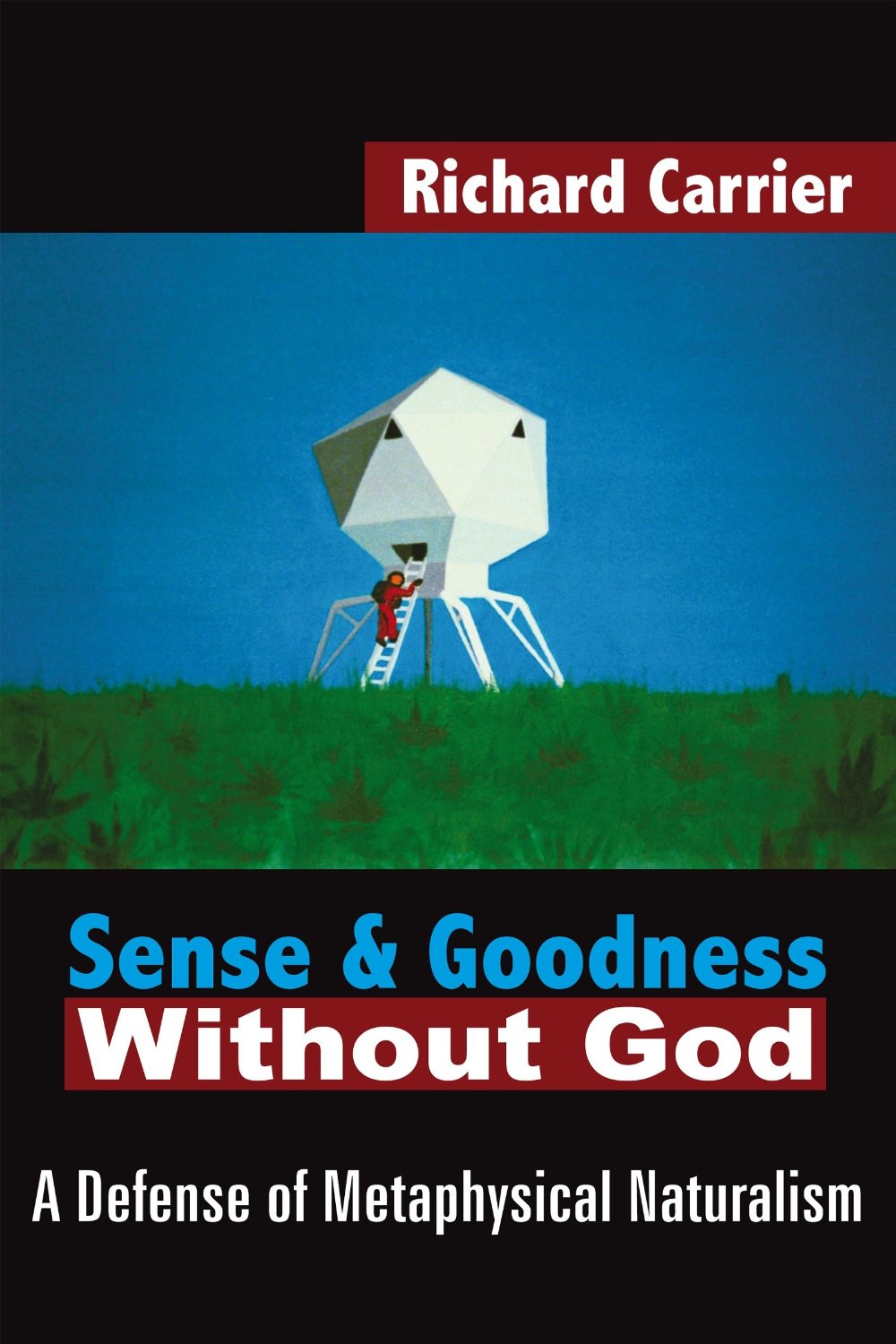
Goodness Without God: is it possible?

Is atheism a rational worldview, or is it just rationalizing sexual misbehavior?

A while back, prominent atheist Dr. Richard Carrier explained how he was divorcing his wife – who supported him financially – in order to go polyamorous full-time.

The Yeti’s Roar, a libertarian atheist blog reacted to the news: (link removed)

In a recent blog post, entitled “Coming Out Poly + A Change of Life Venue”, the esteemed Dr. Richard Carrier PhD, discusses his “coming out” as polyamorous, an “orientation” that he just discovered at the young age of 47.

[…]Carrier claims that after 17 years of marriage, he cheated on his wife multiple times, for reasons that he won’t disclose.  In the midst of his infidelity, he suddenly “discovered” (as a middle aged man) that he was polyamorous.  Even though his wife attempted to make the marriage work by allowing him to see other women under the guise of an “open marriage”, Carrier still decided to kick her to the curb.   So in Carrier’s view, his affairs were not a mistake, but rather a fun new “lifestyle choice” that he will pursue, regardless of the past commitment to his wife.

What is even more despicable about Carrier’s behavior toward his wife is the fact that she supported him financially.

[…] The only reason he has been able to live a comfortable lifestyle while blogging and writing obscure books is due to his wife’s financial support.  The reason that he could afford to invest his time in getting graduate degrees from Columbia in subjects that will never land him a decent paying job is due to the support of his wife.  The reason he was able to travel around the country for low paying speaking engagements instead of having to get a real job is due to his wife’s financial support.  And how does he repay his wife for the support she has given him?  He cheats on her, waits until he is making enough money where he no longer needs her income, and kicks her to the curb.

So, whenever Richard Carrier was talking about morality without God, now we know what he meant. He even dedicated his book on morality without God to his now ex-wife. How ironic.

But the new polyamoratheism news is that Carrier is actually searching for a new “date”.

I am not linking to his blog post, but it says: (H/T The Yeti’s Roar)

I’ll start by making sure anyone considering this is up to speed. I am polyamorous. I currently have many girlfriends. All I consider my friends. Some are just occasional lovers. Some I am more involved with. They are also polyamorous, or near enough (not all of them identify that way, but all of them enjoy open relationships). And I will always have relationships with them, as long as they’ll have me in their life.

Many different things can be meant by the following terms, but just for the present purpose, if by a primary relationship is meant someone you live with or just about as good as live with, a secondary as someone you date regularly, and a tertiary as someone you date occasionally, all my relationships are tertiary, but only because of geography. I live just below Sacramento, California, where the rents are cheap, which means, where no one wants to live. And I’m unlikely to move anytime soon. So relationships with me, at best, are likely to be tertiary—long distance chatting with occasional being together throughout the year. Even so, I always take such friendships seriously.

[…]I’m 0.5 on the Kinsey scale. Not heavy into kink (but get along well with people who are). I have an unusual fetish or two but don’t expect any of my partners to share them. I’m pro sex worker, and though I personally find strip clubs and brothels uninteresting at best (uncomfortable at worst), I like partners who are or who have been sex workers. I also like women who have or pursue a lot of partners or who love to boast of their sexual exploits, especially over wine or whiskey or equivalent. I’m not going to get all butt-hurt or angsty over how high Your Number is. It very much has the opposite effect on me.

[…]I am also planning to have a hotel room, and am comfortable sharing it platonically. Certainly I would enjoy sharing it non-platonically, but I don’t expect it. I can’t believe (even though I know) there are still guys who assume the other sh*t buys them sex, thus necessitating I say this: if you are going to have sex with me, it has to be because it’s fun and you want to, not because it’s something you owe me. On the same understanding, if you have a place for me to crash in town (platonically or not), and are happy to have me over to spare me the cost of hiring a room, that would be lovely. And yes, if you are poly or open and live with a partner or two, I’m comfortable with that as well.

This also means you don’t have to live in the LA area to join me for this. If you can get to LA, and don’t mind sharing a room (at my expense), the opportunity remains.

This is Richard Carrier’s book on morality without God:

Goodness Without God: Now we know what it looks like
Goodness without God: Now we know what he was talking about

And the book is dedicated to his wife, now ex-wife:

For Jen…

My buxom brunette
My wellspring of joy
My north star of sanity

Indeed.

You can read a multi-part review of the book here on Deeper Waters (Nick Peters’ site)

I trust that everyone now understands what I was saying about the reasons why atheists jettison God and objective morality. Sexual freedom is definitely a big one, and probably the biggest. This is not a worldview, people, it’s not something that is derived from logic and evidence. It starts and ends with getting rid of moral accountability to the Creator. Period. End of issue.

Not that all atheists are as immoral as Carrier, and not all atheists are motivated by sexual perversion. But the primary motivation is always to be able to get God out of the morality business. There’s no denying that atheists look pretty normal in a society that is still running on the fumes of a declining Judeo -Christian value system. But if you look at how they vote, e.g. – for abortion, for gay marriage, against religious liberty, etc., it’s very clear that they want the society to move away from Judeo-Christian values. And it is this desire that more and more human beings not respect the moral oughts that God prescribes that is the real rebellion.

Romans 1:18-21 nails this:

18The wrath of God is being revealed from heaven against all the godlessness and wickedness of men who suppress the truth by their wickedness,

19since what may be known about God is plain to them, because God has made it plain to them.

20For since the creation of the world God’s invisible qualities—his eternal power and divine nature—have been clearly seen, being understood from what has been made, so that men are without excuse.

21For although they knew God, they neither glorified him as God nor gave thanks to him, but their thinking became futile and their foolish hearts were darkened.

What is expected in the Christian worldview is not to pick and choose a few moral behaviors here and there. Individual moral values are not the issue. When Christ calls a man, he call him to die to himself and his own self-interest, and to take up his moral positions and champion them. Have you ever tried to champion the pro-life cause in an increasingly secular society? How about championing the pro-marriage cause? In order to be a Christian, you don’t just accept the sacrifice of Jesus as atonement for sin, but you also let him lead. And one of those areas of letting him lead is in defining what is and is not moral. It’s very easy for a man to not murder unborn children himself, and to marry someone of the opposite sex, and congratulate himself on how moral he is. Personal morality is not the issue. Inventing your own arbitrary  moral code and then following it might make you feel good, but that is not what God requires. The real challenge of Christianity has to do with standing up for the truth claims, including the moral values, in the face of a society that will not approve of you.

What is required of a man on the Christian worldview is total abandonment to God’s calling and a 100% re-prioritization of his life. It’s not about doing X and Y, but not A and B, and getting a passing grade. It’s about putting Jesus Christ in as your commanding officer in every area of your life.