Tag Archives: Atheism

New York Times profiles philosopher Alvin Plantinga and discusses his new book

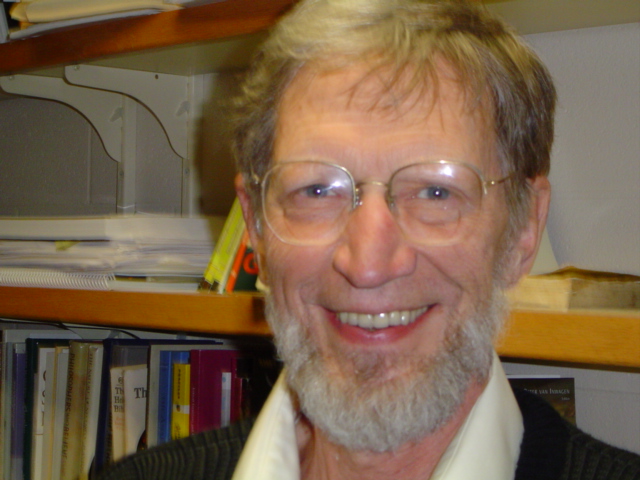
Christian philosopher Alvin Plantinga

Alvin Plantinga is widely regarded as the top Christian philosopher in the world, and a former head of the largest professional association of philosophers – the American Philosophical Association (APA).

 Mary sent me this article from the New York Times about Alvin Plantinga and his new book, published by Oxford University Press – the top academic press in the world.

Excerpt:

From Calvin [College], and later from the University of Notre Dame, Mr. Plantinga has led a movement of unapologetically Christian philosophers who, if they haven’t succeeded in persuading their still overwhelmingly unbelieving colleagues, have at least made theism philosophically respectable.

“There are vastly more Christian philosophers and vastly more visible or assertive Christian philosophy now than when I left graduate school,” Mr. Plantinga said in a recent telephone interview from his home in Grand Rapids, adding, with characteristic modesty, “I have no idea how it happened.”

Mr. Plantinga retired from full-time teaching last year, with more than a dozen books and a past presidency of the American Philosophical Association to his name. But he’s hardly resting on those laurels. Having made philosophy safe for theism, he’s now turning to a harder task: making theism safe for science.

For too long, Mr. Plantinga contends in a new book, theists have been on the defensive, merely rebutting the charge that their beliefs are irrational. It’s time for believers in the old-fashioned creator God of the Bible to go on the offensive, he argues, and he has some sports metaphors at the ready. (Not for nothing did he spend two decades at Notre Dame.)

In “Where the Conflict Really Lies: Science, Religion and Naturalism,” published last week by Oxford University Press, he unleashes a blitz of densely reasoned argument against “the touchdown twins of current academic atheism,” the zoologist Richard Dawkins and the philosopher Daniel C. Dennett, spiced up with some trash talk of his own.

[…] Longtime readers of Mr. Plantinga, who was raised as a Presbyterian and who embraced the Calvinism of the Christian Reformed Church as a young man, are used to such invocations of theological concepts. And even philosophers who reject his theism say his arguments for the basic rationality of belief, laid out in books like “Warranted Christian Belief” and “God and Other Minds,” constitute an important contribution that every student of epistemology would be expected to know.

But Mr. Plantinga’s steadfast defense of the biochemist and intelligent-design advocate Michael Behe, the subject of a long chapter in the new book, is apparently another matter.

“I think deep down inside he really isn’t a friend of science,” Michael Ruse, a philosopher of science at Florida State University, said of Mr. Plantinga. “I’m not objecting to him wanting to defend theism. But I think he gets his victory at the level of gelding or significantly altering modern science in unacceptable ways.”

Mr. Dennett was even harsher, calling Mr. Plantinga “Exhibit A of how religious beliefs can damage or hinder or disable a philosopher,” not to mention a poor student of biology. Evolution is a random, unguided process, he said, and Mr. Plantinga’s effort to leave room for divine intervention is simply wishful thinking.

“It’s just become more and more transparent that he’s an apologist more than a serious, straight-ahead philosopher,” Mr. Dennett said.

When Mr. Plantinga and Mr. Dennett (who said he has not read Mr. Plantinga’s new book) faced off over these questions before a standing-room-only crowd at a 2009 meeting of the American Philosophical Association, the event prompted ardent online debate over who had landed better punches, or simply been more condescending. (A transcript of the proceedings was published last year as “Science and Religion: Are They Compatible?”)

Mr. Plantinga, who recalled the event as “polite but not cordial,” allowed that he didn’t think much of Mr. Dennett’s line of reasoning. “He didn’t want to argue,” Mr. Plantinga said. “It was more like he wanted to make assertions and tell stories.”

Would you like to know how well Daniel Dennett can debate the naturalism/theism dispute? First of all, Plantinga has debated Dennett, and you can find the audio for it at Apologetics 315.

William Lane Craig also presented several arguments against naturalism to Daniel Dennett in 2007, and Dennett responded by calling it a “first-rate piece of philosophical reasoning”. I link to the exchange and complain about Dennett’s weak response to Craig’s arguments in a previous post.

You may also find this recent interview with Alvin Plantinga, conducted by Brian Auten, informative.

The resurgence of Christian theism in analytical philosophy

Now let’s move from the specific to the aggregate. What is going on with these Christian philosophers?

Well, you can read an excellent article about the resurgence of Christian theism in philosophy departments in the peer-reviewed philosophy journal Philo, which, in my opinion, is the best journal for atheists and agnostic philosophers. The article is authored by the well-known atheist Quentin Smith.

He writes:

THE DESECULARIZATION OF ACADEMIA THAT EVOLVED IN PHILOSOPHY DEPARTMENTS SINCE THE LATE 1960s

By the second half of the twentieth century, universities and colleges had been become in the main secularized. The standard (if not exceptionless) position in each field, from physics to psychology, assumed or involved arguments for a naturalist world-view; departments of theology or religion aimed to understand the meaning and origins of religious writings, not to develop arguments against naturalism. Analytic philosophers (in the mainstream of analytic philosophy) treated theism as an antirealist or non-cognitivist world-view, requiring the reality, not of a deity, but merely of emotive expressions or certain “forms of life” (of course there were a few exceptions, e.g., Ewing, Ross, Hartshorne, etc., but I am discussing the mainstream view).

[…]The secularization of mainstream academia began to quickly unravel upon the publication of Plantinga’s influential book on realist theism, God and Other Minds, in 1967. It became apparent to the philosophical profession that this book displayed that realist theists were not outmatched by naturalists in terms of the most valued standards of analytic philosophy: conceptual precision, rigor of argumentation, technical erudition, and an in-depth defense of an original world-view. This book, followed seven years later by Plantinga’s even more impressive book, The Nature of Necessity, made it manifest that a realist theist was writing at the highest qualitative level of analytic philosophy, on the same playing field as Carnap, Russell, Moore, Grünbaum, and other naturalists. Realist theists, whom hitherto had segregated their academic lives from their private lives, increasingly came to believe (and came to be increasingly accepted or respected for believing) that arguing for realist theism in scholarly publications could no longer be justifiably regarded as engaging in an “academically unrespectable” scholarly pursuit.

Naturalists passively watched as realist versions of theism, most influenced by Plantinga’s writings, began to sweep through the philosophical community, until today perhaps one-quarter or one-third of philosophy professors are theists, with most being orthodox Christians. Although many theists do not work in the area of the philosophy of religion, so many of them do work in this area that there are now over five philosophy journals devoted to theism or the philosophy of religion, such as Faith and Philosophy, Religious Studies, International Journal of the Philosophy of Religion, Sophia, Philosophia Christi, etc. Philosophia Christi began in the late 1990s and already is overflowing with submissions from leading philosophers. Can you imagine a sizeable portion of the articles in contemporary physics journals suddenly presenting arguments that space and time are God’s sensorium (Newton’s view) or biology journals becoming filled with theories defending élan vital or a guiding intelligence? Of course, some professors in these other, non-philosophical, fields are theists; for example, a recent study indicated that seven percent of the top scientists are theists.1 However, theists in other fields tend to compartmentalize their theistic beliefs from their scholarly work; they rarely assume and never argue for theism in their scholarly work. If they did, they would be committing academic suicide or, more exactly, their articles would quickly be rejected, requiring them to write secular articles if they wanted to be published. If a scientist did argue for theism in professional academic journals, such as Michael Behe in biology, the arguments are not published in scholarly journals in his field (e.g., biology), but in philosophy journals (e.g., Philosophy of Science and Philo, in Behe’s case). But in philosophy, it became, almost overnight, “academically respectable” to argue for theism, making philosophy a favored field of entry for the most intelligent and talented theists entering academia today. A count would show that in Oxford University Press’ 2000–2001 catalogue, there are 96 recently published books on the philosophy of religion (94 advancing theism and 2 presenting “both sides”). By contrast, there are 28 books in this catalogue on the philosophy of language, 23 on epistemology (including religious epistemology, such as Plantinga’s Warranted Christian Belief), 14 on metaphysics, 61 books on the philosophy of mind, and 51 books on the philosophy of science.

And how have naturalist philosophers reacted to what some committed naturalists might consider as “the embarrassment” of belonging to the only academic field that has allowed itself to lose the secularization it once had? Some naturalists wish to leave the field, considering themselves as no longer doing “philosophy of mind,” for example, but instead “cognitive science.” But the great majority of naturalist philosophers react by publicly ignoring the increasing desecularizing of philosophy (while privately disparaging theism, without really knowing anything about contemporary analytic philosophy of religion) and proceeding to work in their own area of specialization as if theism, the view of approximately one-quarter or one-third of their field, did not exist. (The numbers “one-quarter” and “one-third” are not the result of any poll, but rather are the exceptionless, educated guesses of every atheist and theist philosophy professor I have asked [the answers varied between “one-quarter” and “one-third”]). Quickly, naturalists found themselves a mere bare majority, with many of the leading thinkers in the various disciplines of philosophy, ranging from philosophy of science (e.g., Van Fraassen) to epistemology (e.g., Moser), being theists. The predicament of naturalist philosophers is not just due to the influx of talented theists, but is due to the lack of counter-activity of naturalist philosophers themselves. God is not “dead” in academia; he returned to life in the late 1960s and is now alive and well in his last academic stronghold, philosophy departments.

Quentin Smith is a good friend of William Lane Craig, who is a philosopher/theologian and the top Christian defender in the world, and probably of all time. Smith is the co-author, with William Lane Craig, of the book “Theism, Atheism, and Big Bang Cosmology“, also published by Oxford University Press. Craig and Smith debated at Harvard University in 2003, and I transcribed the debate for posterity. If some of you are looking for a way to help promote Christian apologetics, you should pick a debate that hasn’t been transcribed and transcribe it. A lot of people read these debate transcripts. I had them printed out in my binder when I was an undergraduate student, in case my professors got boring! I like a good fight.

On a lighter note, my office plant is named Alvin Plantinga. It was grown in water and then given to me by an atheist with whom I work. We discuss these interesting topics over lunch every few months. And so should you. Why not send the New York Times article and the Philo article to an atheist in your office and get the conversation started? There’s enough in this post alone to help you sound like Alvin Plantinga!

Christopher Hitchens debates William Lane Craig: Does God Exist?

Here’s the full debate on video. Hugh Hewitt is the moderator.

Now I think most people are familiar with Christopher Hitchens and his arguments – he is widely regarded as the top atheist debater in the world, and has written bestselling books on atheism. So below is a little more about the Christian debater William Lane Craig. Craig is  regarded as the top defender of Christianity in the world, although many people are unfamiliar with his arguments. Here is a written explanation of the five arguments he uses in the debate with Hitchens, if you want to follow along. This is a good debate for any of you who have never seen a debate on God’s existence before.

About William Lane Craig

Let’s review William Lane Craig’s qualifications:

William Lane Craig is Research Professor of Philosophy at Talbot School of Theology in La Mirada, California.

Dr. Craig pursued his undergraduate studies at Wheaton College (B.A. 1971) and graduate studies at Trinity Evangelical Divinity School (M.A. 1974; M.A. 1975), the University of Birmingham (England) (Ph.D. 1977), and the University of Munich (Germany) (D.Theol. 1984). From 1980-86 he taught Philosophy of Religion at Trinity… In 1987 they moved to Brussels, Belgium, where Dr. Craig pursued research at the University of Louvain until assuming his position at Talbot in 1994.

He has authored or edited over thirty books, including The Kalam Cosmological ArgumentAssessing the New Testament Evidence for the Historicity of the Resurrection of JesusDivine Foreknowledge and Human FreedomTheism, Atheism and Big Bang Cosmology; and God, Time and Eternity, as well as over a hundred articles in professional journals of philosophy and theology, including The Journal of PhilosophyNew Testament StudiesJournal for the Study of the New TestamentAmerican Philosophical QuarterlyPhilosophical StudiesPhilosophy, and British Journal for Philosophy of Science.

Craig’s CV is here.

Craig’s list of publications is here.

Here is a partial list of his past debates against the top atheist scholars. Many of those have audio and video. His best recent debate was against the British philosopher Peter Millican. Recommended for advanced students only.

Why do Christians leave the faith? Dashed expectations of a “nice” God

Part 2 of a brilliant series by Bradley Wright. This time he explains how people leave Christianity because they expect God to meet their needs and he doesn’t.

Excerpt:

In a study of religious deconversion, we analyzed 50 on-line testimonies posted by former Christians, and in these testimonies we found four general explanations for deconversion. The first explanation, which I wrote about last week, regarded intellectual and theological concerns about the Christian faith. The second, which I elaborate here, regards a failed relationship with God. Almost half (22 of 50) of the writers expressed sentiments that in some way God had failed them by His not doing what they thought He should.

God’s perceived failure took various forms, most of which fall under the general heading of “unanswered prayers.”

One way that people felt that God had failed them happened when He did not respond to requests for help during difficult times. A young man raised in a Baptist church epitomized this feeling of failure when he wrote about God not answering his prayers about family difficulties. He wrote: “The first time I questioned the faith was when my grandmother shriveled up in front of me for 6 month’s due to cancer. I was 13 & my mother & father [were] getting a divorce. My father told me I should have been aborted. I prayed to God but nothing fails like prayers.”

So you can see here where people have this expectation that it is God’s job to give them good health. But is that anywhere in the Bible? Is it God’s job to make us healthy so that we can have a happy life, even if we are busy spending that happy life ignoring him and not knowing his character. When you ask a serious Christian what it is like to be a Christian, we will tell you that what God is about is NOT making us healthy or happy, but instead giving us time and peace to study him, to make plans to serve him, to execute those plans, and to have (sometimes unhappy) experiences that cause our sympathies to change as we feel what God feels. In short, life is about getting closer to him, and suffering and sickness is one of the tools God uses in order to get us to know him as he is and to participate in the relationship.

Likewise, a woman raised in a Methodist household described her step-father as “cruel and abusive” to her, and she could not understand why “if God loves me, why won’t he protect me instead of letting this happen to me?”

I think the reason why God allows suffering like this is to create people who take his rules about sexual morality seriously. When I was growing up I had front-row seats to the divorces of many of my friends. I remember vividly talking to children who cried to me about how they felt when their mothers invited new men into the house after the divorce. Pain and suffering like this is a reminder to us that the moral law is real, that God expects us to follow it in order to prevent harm. One of the reasons why I am chaste is because I listen to the stories of men whose girlfriends aborted their babies, the stories of women who cohabitated and then were betrayed, the stories of the children of divorces. And from this I learn that morality is real and it matters.

In a variation of this theme, some deconverts lamented God’s inactivity amidst spiritual difficulties. A man in his forties, a former elder at a charismatic church, wrote: “In my own life, no matter how much I submitted to ‘God’ and prayed in faith, ‘sin’ never seemed to leave me. Well, what’s the point of being ‘saved’ if you aren’t delivered from ‘sin’?”

This is why accurate theology matters. No serious Christian thinks that you stop sinning after you become a Christian, and no serious Christian thinks that prayer alone is a solution to sin. To stop sinning, you need to engage more than the spirit, you need to engage the mind. Most people want to spiritualize things because prayer is easier than study. But if you want to stop sinning, the best way is a combination of prayer and study. If you want to stop premarital sex, study how premarital sex affects STD infection, risk of divorce, future marital stability, oxytocin, quality of marriage, and so on. Study the risks of divorce. That’s how you stop sinning. Some people want to dumb Christianity down to the level of superstition then they complain that it doesn’t work. But Christianity is better when you learn more and work harder.

A former Southern Baptist described the various good things that God failed to give him: “God promises me a lot in the bible and he’s not come through. Ask and it shall be given. Follow me and I will bless you. I promise you life and promise abundance. Man should not be alone. I have a plan for you. Give tithe and I will reward you. All broken promises. This god lacks clarification. This god lacks faith in me. He wants my faith. I want his too.”

Do you know what I expect from God after reading the Bible? I expect what Jesus got: pain and suffering during obedience. What kind of simpleton reads the Bible and thinks that it is about getting goodies from God? That is NOWHERE in the Bible. It’s projecting Santa Claus onto God and that isn’t going to work – God has other plans for us, and those plans involve work and pain. People become Christians because they want to be like Jesus, and they understand that Jesus was not having fun. He was doing a job, and he wasn’t happy or appreciated.

Other writers took a different approach to God’s failures. They too sought God’s help, but when they did not receive it, they simply concluded that God did not exist. A former member of an Assemblies of God church explicitly linked unanswered prayers and the existence of God: “How many humble and totally selfless prayers offered up to and ignored by the imaginary skydaddy does it take for the average person to finally throw in the towel and say [God doesn’t exist]!!!!” His answer: “Too damn many.”

It’s so strange to me that people think that the best way to see God interfere is to pray. The way I see God working in my life is when I go home and listen to some debate about the problem of evil, and then the next day some atheist asks me out to lunch to talk about why God allows evil. Maybe instead of doing easy things, we should actually invest in our relationship with God and then see if he responds by giving us work to do. Maybe a relationship with God is about serving him, and the joy is about seeing him reward those efforts by working with us and through us. Maybe God has more for us than just entertainment.

Still others sought a tangible sign of God’s presence. A former Pentecostal exclaimed: “There were many nights while in bed I would ask God to show me the truth, or give me some type of sign to show that he or she existed. These prayers would never be answered. So I would just go on with my life having doubts.” Likewise, a former Baptist missionary wrote: “I’ve begged God to show himself to me and put an end to my inner torture. So far it hasn’t happened and the only thing I know for sure is that I have unanswered questions.”

I think this paragraph is interesting, since I consider attending church, praying and singing hymns to be useless when compared with practical and difficult things like chastity, apologetics, charity, studying hard things, getting a good job, committing to caring for others who have special needs, etc. If you want to feel the presence of God, then do the right thing and take the punishment for doing it. That’s what Christianity is really about. When William Dembski was drummed out of Baylor University for opposing the presupposition of naturalism in the sciences, he experienced God more than all snake-handling, tongue speaking Pentecostals in the history of the universe. Similarly for Michele Bachmann’s decision to take in 23 foster children into her home. Christianity is a serious religion, and it is not accessible to superstitious people who reduce it to singing and praying alone. Christianity is about serious people doing serious things. Even reading the Bible is not enough – you need to study the Bible.

The example of Dan Barker

I’ve actually written about this before in the context of Dan Barker, a charismatic fundamentalist praise hymn singer and writer who expected God to validate all of his irresponsible ministry decisions. Eventually, he fell away from the church because he had this ludicrous Santa Claus caricature of God that didn’t match reality. Dan Barker is the complete opposite of everything I consider a manly Christian to be. He is the polar opposite of what I recommend to men when I recommend that they study math, science, engineering and technology, avoid music, singing and dancing, and prefer apologetics and conservative politics over speaking in tongues and apocalyptic fiction. This man, when he was a “Christian”, was the complete opposite of the WK Christian man model. However, he is more welcome in most churches than I am, because most Christians reject my views.

I think that Christians should protect themselves from that by being aware of how emotional experiences and praise hymns warp your view of God. God is a person, and he has a goal for you – to know him. To achieve that goal, it may not be effective to just give you everything you want. It may be the case that God has to allow you to experience some suffering, to increase your character and to bring your goals in line with his character. Children have to grow up, and shielding them from pain and responsibility doesn’t allow them to grow up.

In my own case, I have my own disappointment with God, revolving around my chastity while waiting for marriage. But does that cause me to reject God? Hell, no. I just assume that he has something else he wants me to do instead of being married, and I am OK with that. It’s part of this relationship that God’s goals are important to me. I have to participate and hold up my end of the relationship. When it comes to God’s purposes in the world, my happiness and comfort are expendable. That is an appropriate response, I think, to Jesus’ own self-sacrificial behavior on the cross. I was born obligated to him, and I am OK with that. It does not bother me.

By the way, I wrote about Part 1 in the series, which was about how the #1 cause of apostasy is lack of apologetics.

UPDATE: Commenter Mbelina adds this much-needed and valid correction:

You make some very good points.

However, I think you’re a bit too dismissive of people’s very real pain. Imagine being told by your parent that you should have been aborted. That would mess anyone up. It’s not just expecting to get what you want (I have no sympathy for that). It’s people struggling intellectually and emotionally with the problem of evil in a very real way.

Moreover, I think you need to realize that a lot of people who believe these rubbish things and have expectations based on a warped reading of scripture got that from a church where they respected the pastor as someone who “knows”. There’s a lot of bad theology coming from many pulpits and when things don’t go well it doesn’t stand up to the test of reality. I think churches need to be held accountable for verse-byte culture, trite “answers”, and platitudes. People need REAL Christianity, not the prosperity gospel or “seeker sensitive” hogwash.

And she is 100% correct of course.

What I came to realize is that whenever a person was mistreating me like this, that they also were mistreating God. He wasn’t the cause of this evil, and he has to let people be free to be evil. It was this that allowed me to make the move from being a victim to being sympathetic with God and then finally being a servant of God. God is at least as upset with evil that happens to me as I am. In fact, that is the message of the cross. Sin was so hated by God the Father that he literally had to send his own Son to atone for it on the cross. One you understand that, then you don’t think of human evil as something that happens to “me” but as something that happens to “we”. And then you feel a lot less like a victim.