The Muratorian fragment / The Muratorian canon (click for larger image)
I sometimes hear this odd objection that the books that were to be included in the Bible were not decided until the 4th century. I think it comes from some Hollywood movie, or maybe a TV show. Anyway, this post should help fix that myth.
One of the key data points in any discussion of canon is something called the Muratorian fragment (also known as the Muratorian canon). This fragment, named after its discoverer Ludovico Antonio Muratori, contains our earliest list of the books in the New Testament. While the fragment itself dates from the 7th or 8th century, the list it contains was originally written in Greek and dates back to the end of the second century (c.180).
[…]What is noteworthy for our purposes here is that the Muratorian fragment affirms 22 of the 27 books of the New Testament. These include the four Gospels, Acts, all 13 epistles of Paul, Jude, 1 John, 2 John (and possibly 3rd John), and Revelation. This means that at a remarkably early point (end of the second century), the central core of the New Testament canon was already established and in place.
Although there is still dispute about some books, that does not negate the fact that the main books we use (the gospels, Acts, the letters of Paul) are all considered to be canon by 180 A.D., much before any famous church councils ever happened. And those books were decided on because they were in widespread use and respected by everyone.
What about the books that were in dispute? Do they throw any core doctrines into doubt?
Second, if there was a core collection of New Testament books, then the theological trajectory of early Christianity had already been determined prior to the debates about the peripheral books being resolved. So, regardless of the outcome of discussion over books like 2 Peter or James, Christianity’s core doctrines of the person of Christ, the work of Christ, the means of salvation, etc., were already in place and already established. The acceptance or rejection of books like 2 Peter would not change that fact.
By the way, I’d actually heard that the date for this fragment was 170 A.D., so it might even be earlier than Dr. Krueger says.
I did search around a bit for something to break the tie between me and Krueger, because I couldn’t remember my source for the date. I found this book “Jesus, Gospel Tradition and Paul in the Context of Jewish and Greco-Roman Antiquity” by David E. Aune, and he writes on p. 22:
The four Gospels are also referred to in the Canon Muratorianus, a seventh or eighth century manuscript originally translated from Greek into a deponent form of Latin and widely regarded as having been produced ca. 170 CE. Though the beginning of this canonical list is fragmentary (though obviously referring to Mark), the first two clear references to New Testament books are to Luke and John (lines 2, 9): tertio euangelii librum secando Lucan guard evangeliorutn lohannis ex decipolis.” (“The third book of the Gospel is that according to Luke … The fourth of the Gospels is that of John, [one) of the disciples”).
So, that’s why the date in the title of this post is 170 A.D., and not the later 180 A.D. he mentions. And that’s why there’s no reason to be skeptical that the Bible we have today is any different than the Bible that everybody in the early church had.
God’s Crime Scene: A Cold-Case Detective Examines the Evidence for a Divinely Created Universe
I’ve been spending some time going over J. Warner Wallace’s splendid book “God’s Crime Scene” with a friend of mine over Skype. Last week we did chapter 1 on the origin of the universe. We were both struck at Wallace’s statement about Alexander Vilenkin, a non-theist who thinks that the universe had a beginning out of nothing.
Wallace writes:
If you’re a bit confused by all the alternatives offered by those who deny the universe had a beginning, perhaps it’s time to call an expert witness. In this case, there’s no one better than Alexander Vilenkin, theoretical physicist, cosmologist, professor of physics, and director of the Institute of Cosmology at Tufts University. Partnering with mathematician Arvind Borde, cosmologist Alan Guth, and graduate researcher Audrey Mithani, Vilenkin has written several papers demonstrating demonstrating any model of the universe in which expansion is occurring, regardless of the early conditions of the cosmos, must have a beginning.[8] Vilenkin’s work addresses all the models we’ve already described, plus any future proposals in which the expansion of the universe is acknowledged. [9]Vilenkin is a critical expert witness because he simplifies and makes sense of the diverse, sometimes-confusing scientific data.’
This week, my friend asked me why Vilenkin was still not ready to become a theist. Well, Dr. William Lane Craig got asked that same question in his question of the week, and his answer was interesting.
Vilenkin’s view affirms the nothing that precedes the universe:
Modern physics can describe the emergence of the universe as a physical process that does not require a cause. Nothing can be created from nothing, says Lucretius, if only because the conservation of energy makes it impossible to create nothing [sic; something?] from nothing. . . .
There is a loophole in this reasoning. The energy of the gravitational field is negative; it is conceivable that this negative energy could compensate for the positive energy of matter, making the total energy of the cosmos equal to zero. In fact, this is precisely what happens in a closed universe, in which the space closes on itself, like the surface of a sphere. It follows from the laws of general relativity that the total energy of such a universe is necessarily equal to zero. . . .
If all the conserved numbers of a closed universe are equal to zero, then there is nothing to prevent such a universe from being spontaneously created out of nothing. And according to quantum mechanics, any process which is not strictly forbidden by the conservation laws will happen with some probability. . . .
What causes the universe to pop out of nothing? No cause is needed.[1]
Dr. Craig replies at length, here is the part I liked best:
Finally, Vilenkin’s inference that because the positive and negative energy in the universe sum to zero, therefore no cause of the universe’s coming into being is needed is hard to take seriously. This is like saying that if your debts balance your assets, then your net worth is zero, and so there is no cause of your financial situation! (Vilenkin would, I hope, not agree with Peter Atkins that because the positive and negative energy of the universe sum to zero, therefore nothing exists now, and so “Nothing did indeed come from nothing.”[2] For as Descartes taught us, I, at least, undeniably exist, and so something exists.) Christopher Isham, Britain’s premier quantum cosmologist, rightly points out that there still needs to be “ontic seeding” to create the positive and negative energy in the first place, even if on balance its sum is naught.[3]
Vilenkin’s interaction with the kalam cosmological argument is, as I say, fascinating because we see here so clearly how philosophical faux pas, not scientific mistakes, invalidate the objections of an eminent scientist to the argument. This should be an object lesson to all those who, like Stephen Hawking or Lawrence Krauss, naïvely think that philosophy is a sterile and irrelevant discipline compared to science. Philosophy can help all of us, including scientists, to avoid the logical mistakes and conceptual confusions that are all too prevalent in discussions taking place on the borderland of physics, metaphysics, and theology.
That’s a very simple refutation of a famous scientist’s speculative cosmology that anyone can understand. Christians are on very good ground when it comes to the science of origins.
You would think that more Christians would be aware of this evidence and the difficulties that naturalists have in accounting for the origin of the universe in their worldview. But, for some reason, it’s not a real hot topic in most churches. Nor is the fine-tuning or the origin of life or the Cambrian explosion. It’s really strange! If you haven’t yet picked up Wallace’s book, I highly recommend it. It’s the best book for blue collar workers who like evidence. The book touches on virtually every piece of evidence relevant to the God question, including some I had never seen before.
One overwhelming impression of these engagements is the way in which the intellectual defense of Christian faith attracts men. Both at Texas A&M and again at Miami every single student who got up to ask a question was a guy! I wondered if the girls are just shy. But then I remembered a lengthy clip Jan and I watched of cast members of Downton Abbey doing a Q&A with an audience in New York. Almost every person who came to the microphone at that event was a woman! It wasn’t until late into the evening that a man finally asked a question, which was remarked by all the cast members. Why the difference between that session and the ones I experienced?—simply because the Downton Abbey program is highly relational, which is more appealing to women, whereas my talks were principally intellectually oriented, which is more appealing to men.
Churches have difficulty attracting men, and the church is becoming increasingly feminized. I believe that apologetics is a key to attracting large numbers of men (as well as women) to church and to Christ. By presenting rational arguments and historical evidences for the truth of the Gospel, by appealing to the mind as well as the heart, we can bring a great influx of men into the Kingdom. I’m so pleased that the church in Canada seems to be awakening to this challenge! I’m convinced that we have the opportunity to revolutionize Western Christianity by reclaiming our intellectual heritage.
Now, I hear a lot of complaints from women in the church and pastors in the church about men not being interested in going to church. I think that the problem is that church is hostile to men’s natures. Men thrive on conflict and competition. Men prefer strict rules and moral judgments. Men prefer to shame people who underperform, rather than coddle them. Men are practical and results focused. So how should the church accommodate the different nature that men have? Apologetics is one way to appeal to the male nature.
Let’s take a look at it.
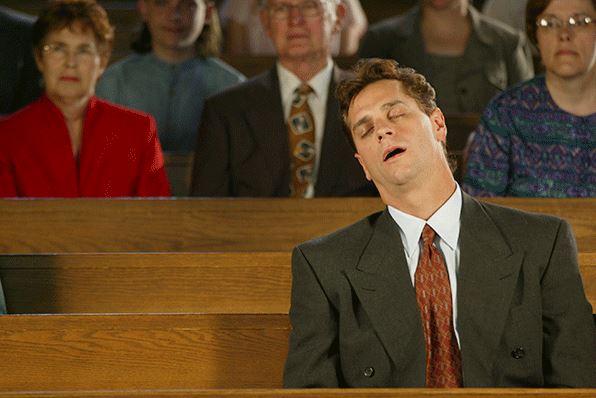
Pastors: church as it is now is abrasive to men’s male nature
In a recent William Lane Craig podcast, at time 8:47, the WLC tells Kevin Harris about how he and his wife Jan asked about six of the young men who attend his “Defenders” apologetics class which morning service they attended: traditional or contemporary. ALL of the young men said that they attended neither service, because they go to church to learn something and the service has no educational value to them. The only attend the Defenders class. The apologetics class taught them things they could actually use – things they could actually use to think better, and fight better. This is my experience as well, although I am looking for a better church that does have some appeal to men. I might even have to move to find a decent church that has apologetics.
There is absolutely nothing going on in most churches that is valuable to a man. Men, by and large, only pray as a last resort, after we have done everything we can to solve the problem ourselves. We pay the most attention to the parts of the Bible that help us debate with non-Christians, or that give us things to do. We like to find evidence in the real world that connects with what the Bible is saying. We are interested in planning, execution and results. We are not very interested in feelings, singing, devotions, or bending the rules to make people doing bad things feel good. Now that’s not necessarily true for all men, but it is true for the majority of men.
And lest some people worry that fighting makes enemies, it doesn’t. Fighting with non-Christians has two effects: 1) they respect Christianity more, and 2) they want to be your friends and talk to you about spiritual things. Atheists see your standing up for what you believe in and living consistently with it indicative of authenticity. That is not the exception, Christian women and pastors – that is the rule. Atheists don’t think that standing up for what you believe in makes Christianity look fake, they think it makes Christianity look authentic. Well, at least the ones who are worth talking to think that.
Wives: don’t choose men who had no interest in advocating for Christianity before you married them
A related problem I see is the problem of wives marrying the wrong men then complaining that the men they freely chose to marry are not interested in church. This is actually the woman’s fault. Most women don’t think about what is best for God when they think about who to marry and have children with, they think about what makes them feel good. They don’t have any kind of plan where they match the man’s ability to the roles he will play as husband and father – they just pick who makes them feel good. This works about as well as buying and selling stocks based on which make you feel good, or choosing electronics and computers based on the color, or choosing a job or a church based on what the building looks like. The Bible lays out a few minimal requirements for a man: chastity, self-sacrificial love, providing for family, leading on moral and spiritual issues. Most young, unmarried women don’t value those things. If a woman picks a man who doesn’t make any demands on them, and who doesn’t judge them, then she cannot depend on him to show spiritual and moral leadership later on in the marriage. So don’t pick a man like that.
Wives: men respond to attention, recognition and approval from women
The reason that most husbands don’t engage in Christianity is because most wives (not my married friends of course) haven’t approached Christianity as something that is objectively true. Men don’t create illusions for themselves in order to feel better – they are more practical than that. Men only invest in things that they think are true, and where they can see that their practical efforts will make a difference. Men are turned off by the view that Christianity is just something that helps families and communities bond, and makes people feel comfort. We think that’s weakness, and we abhor weakness. Once men get the idea that a woman thinks of Christianity as feelings-fulfillment, we stop trying to achieve anything for the Kingdom of God. Men don’t want to be roped into Christianity if all it means is helping people get along and feel good. But they very much want to be roped into a demanding relationship with God where their efforts to achieve results count with God and gets them recognition and approval from their wives.
So how do wives learn to recognize and approve of what men do as Christians? Well, women need to learn apologetics and they need to practice debating with non-Christians. That will teach them to value conflict and competition, and to see how engagement and authenticity drives relationships with non-Christians forward. If women show an interest in objective truth, moral goodness and theological correctness, then men will become interested in these things, too. They will do it because men are addicted to pleasing women, and they want to help women more than anything in the world, second only to pleasing God. Men will enthusiastically engage in whatever will get them praise and recognition from women, and that means that women have to care about Christianity beyond their personal emotional experience of it and beyond their social cohesion experience of it. Initially, wives must be ready to praise and encourage their husbands, and then once the husbands get it, then they will be self-motivated and move out on their own. It will be self-sustaining.



 WINTERY KNIGHT