Peter J. Williams debates Bart Ehrman on his book “Misquoting Jesus”

The audio for this Unbelievable radio show debate is available from Apologetics 315.

Bart Ehrman actually posted the audio on YouTube, as well:

Details:

Bart Ehrman is the US author of the bestselling book “Misquoting Jesus” (In the UK “Whose word is it?”).  He calls into question the authority of the New Testament as scribal changes over time have changed the documents.

So can we trust the scripture? Bible scholar Peter Williams believes in the reliability of the New Testament and that Bart’s prognosis is far too pessimistic.

This post is a re-post from 2011. I have been listening to this lecture by Peter J. Williams on “Misquoting Jesus” this week, and it reminded me to re-post this debate.

Summary of the Williams-Ehrman debate:

Note: this summary is snarky. If you want an accurate view of the debate, then listen to it. My summary is meant to be humorous.

Ehrman:

  • I had a mystical experience in childhood and became an evangelical Christian
  • I went to Moody Bible Institute, and they told me that the Bible was inerrant
  • For a while, I was committed to the view that there are no mistakes in the Bible
  • At Princeton, I was taught and graded by professors who did not accept inerrancy
  • By a strange coincidence, I began to see that the Bible did have errors after all!
  • We don’t have the original documents written by the original authors, we only have thousands of copies
  • if the words of the Bible are not completely inerrant, then none of it is historical
  • if all of the words in all the copies of the Bible are not identical, then none of it is historical

Williams:

  • I would say the New and Old testaments are the Word of God
  • We don’t need to have the original Greek writings in order to believe in the authority of the Bible
  • I believe in inerrancy, but doesn’t mean there are no problems
  • the doctrine of inerrancy has always referred to the original Greek copies, not the translations

Moderator:

  • what are the main points of Misquoting Jesus?

Ehrman:

  • we don’t have the originals of any of the books of the New Testament
  • we have copies that are much later, sometimes even centuries later!!1!
  • the copies we have all differ from one another – they were changed by scribes!!1!
  • we have 5000 manuscripts in the original Greek language
  • there are hundreds of thousands of differences!!1!
  • most of the differences don’t matter
  • some differences are significant for meaning or doctrine
  • errors are propagated because the next scribe inherits the mistake of their source copy
  • a large gap between the time of writing and the first extant copy means more errors have crept in

Williams:

  • the reason we have so many variants is because the number of manuscripts is large

Angry Jesus or compassionate Jesus in Mark

Ehrman:

  • most manuscripts say that Jesus was compassionate when healing a leper, but one says he was angry
  • it makes a huge huge huge really really big difference if Jesus is compassionate or angry
  • the whole Bible needs to be thrown out because of this one word between different in one manuscript

Williams:

  • this variant is important for understanding the passage, but it has no great meaning
  • the change is probably just an accident – the two words are very similar visually in Greek
  • it’s just an accident – it emerged in one manuscript, and it impacted a few more
  • the tiny number of manuscripts that have the error are geographically isolated
  • I’m pretty sure that WK prefers the angry Jesus anyway – so who cares?

Ehrman:

  • no! someone changed it deliberately! it’s a conspiracy! you should buy my book! it’s a *big deal*!!!!!1!!1!one!!eleventy-one!

The woman caught in adultery in John

Ehrman:

  • it is isn’t in any of the earliest manuscripts
  • this is an apocryphical story that some scribe deliberately inserted into the text
  • most people don’t even know about this! it’s a cover-up! you need to buy my scandalous book!

Williams:

  • that’s right, it’s a late addition by some overzealous scribe
  • and it’s clearly marked as such in every modern Bible translation
  • the only people who don’t know about this are people who don’t read footnotes in their Bible
  • and in any case, this isn’t a loss of the original words of the New Testament – it’s an addition

Grace of God or apart from God in Hebrews

Ehrman:

  • well this is just a one word difference, but it makes a huge huge really really big difference!
  • the words are very similar, so it’s could be an accident I guess
  • but it wasn’t! this was a deliberate change! it’s a conspiracy! it’s a cover-up! scandal!
  • buy my book! It’s almost as good as Dan Brown!

Moderator:

  • hmmmn…. I kind of like “apart from God” – why is this such a big scandal again?

Ehrman:

  • you don’t care? how can you not care? it has to be inerrant! or the whole thing is false!
  • Moody Bible Institute says!

Williams:

  • yeah Bart is always saying that every change is deliberate but it’s just an accident
  • the words are very similar, just a few letters are different, this is clearly an accident
  • I have no problem with apart from God, or by the Grace of God
  • please move on and stop screaming and running around and knocking things over

Moderator:

  • but what if pastors try to use this passage in a sermon?

Williams:

  • well, one word doesn’t make a big different, the meaning that appears is fine for preaching
  • it’s only a problem for people who treat the Bible as a magic book with magical incantations
  • they get mad because if one word is out of place then the whole thing doesn’t work for their spell
  • then they try to cast happiness spells but the spells don’t work and they experience suffering
  • the suffering surprises them since they think that fundamentalism should guarantee them happiness
  • then they become apostates and get on TV where they look wide-eyed and talk crazy

Ehrman:

  • hey! are you talking about me? a lot of people buy my books! i am a big success!
  • it is very important that people don’t feel bad about their sinning you know!

Is Misquoting Jesus an attack?

Williams:

  • it’s rhetorically imbalanced and misleading
  • it tries to highlight change and instability and ignore the majority of the text that is stable
  • he makes a big deal out of 5 or so verses that are different from the mainstream text
  • he says that scribes deliberately changed the scriptures, but he doesn’t prove that
  • it’s just as likely that the differences are just scribal errors made by accident

Ehrman:

  • well, maybe the variants aren’t a big deal, but what about one angel vs. two angels?
  • that’s a significant issue! significant enough for me to become an apostate – a rich apostate
  • if one word is different because of an accident, then the whole Bible cannot be trusted
  • it has to be completely inerrant, so a one word difference means the whole thing is unreliable
  • we don’t even know if Jesus was even named Jesus, because of one angel vs two angels!!!1!
  • buy my book! you don’t have to read it, just put it on your shelf, then you’ll feel better about not having a relationships with God – because who’s to say what God really wants from you? Not the Bible!

What is the criterion of embarrassment, and what are some examples of it?

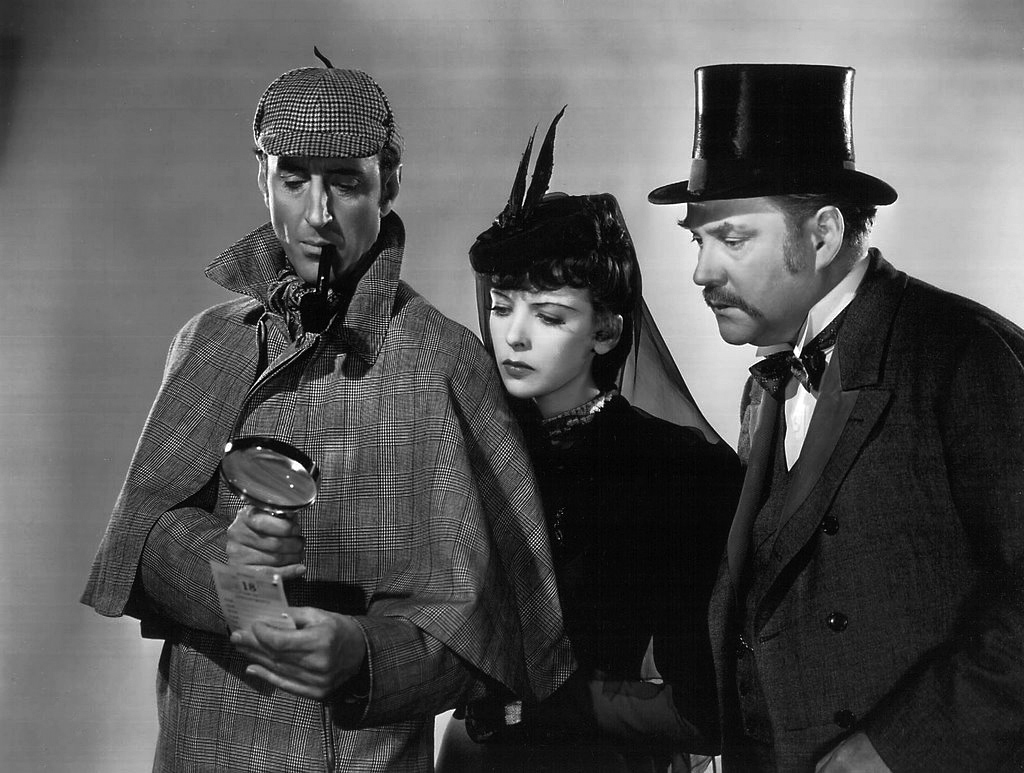
Sherlock Holmes and John Watson are going to take a look at the data

The criterion of embarrassment is just one of the historical criteria used to select the parts of a piece of ancient literature that are likely to be historical. Other things in the source may have happened, but we can’t know them as history. If significant parts of a text are historical, it is possible to accept it as historical until there are specific reasons to say that some part of it is NOT historical.

Here is William Lane Craig’s list of criteria for a saying or event to be historical:

  1. Historical congruence: S fits in with known historical facts concerning the context in which S is said to have occurred.
  2. Independent, early attestation: S appears in multiple sources which are near to the time at which S is alleged to have occurred and which depend neither upon each other nor a common source.
  3. Embarrassment: S is awkward or counter-productive for the persons who serve as the source of information for S.
  4. Dissimilarity: S is unlike antecedent Jewish thought-forms and/or unlike subsequent Christian thought-forms.
  5. Semitisms: traces in the narrative of Aramaic or Hebrew linguistic forms.
  6. Coherence: S is consistent with already established facts about Jesus.

The criteria is the same for liberal historians and conservative historians, although some historians weight one criteria more than others when trying to evaluate the historicity of different New Testament parts.


What’s amazing is that even liberal historians will give you facts that are embarrassing to the authors as “historical”.

Anyway, here are 8 examples of parts of the New Testament that exhibit the criterion of embarrassment, thanks to theologian C. Michael Patton.

  1. Jesus’ Baptism
  2. Jesus’ Family Did Not Believe
  3. John the Baptist’s Doubt
  4. The Disciples Doubted After the Resurrection
  5. Jesus Does not Know the Time of His Coming
  6. Women are the First to Witness the Resurrection
  7. Jesus Cursed a Fig Tree
  8. Death and Resurrection of Christ

I think 6 and 8 are the ones I want you to take away with you when you finish this post.

Here they are:

Women are the First to Witness the Resurrection

This is one that is often brought up. Craig Keener puts it well enough: “The witness of women at the tomb is very likely historical, precisely because it was so offensive to the larger culture — not the sort of testimony one would invent. Not all testimony was regarded as being of equal merit; the trustworthiness of witnesses was considered essential. Yet most of Jesus’ Jewish contemporaries held much less esteem for the testimony of women than for that of men; this suspicion reflects a broader Mediterranean limited trust of women’s speech and testimony also enshrined in Roman law.” (Keener, The Historical Jesus, 331)

And:

Death and Resurrection of Christ

This easily escapes our notice since the basic story of Christ is so well known. However, both the death and resurrection of Christ are, from the standpoint of the culture of the day, embarrassing and damaging. Concerning the death of Christ on a cross, Paul sees this problem: “But we preach Christ crucified: a stumbling block to Jews and foolishness to Gentiles” (1 Cor. 1:23). The word used for “stumbling block” is skandalon. Louw-Nida defines this as “that which causes offense and thus arouses opposition.” Why? Because the Jews would never have thought their Messiah would have been hung on a tree. “Cursed is one who hangs on a tree” (Gal. 3:13; Deut 21:23). The Greeks thought of the resurrection as foolishness as they were dualist, essentially believing that the material world was evil and the spiritual world good. They would have scoffed at the idea that Christ returned to physical form. This is why later Greeks attempted to adapt the Christ story, doing away with the physical resurrection. Marcion is the most famous promoter of this view (see Docitism).

Now, when you are talking about the New Testament to your non-believing friends, you definitely want to draw attention to passages that are embarrassing to the authors. It will help you to be more convincing when you explain the New Testament like a historian.

By the way, you can read an entire post I did on all the criteria that historians use to evaluate ancient historical documents.

Sean McDowell reviews new book on Darwinian evolution and intelligent design

Investigation in progress

I really love the two books on intelligent design written by Dr. Stephen C. Meyer, but they are just so big that you can’t really give them to a co-worker or a family member or a friend to read. I’ve been looking for a decent book that explains the issues in a compelling way, and now it looks like I’ve found one.

First, a review of the new book from Amazon:

Possibly the best ID book to read first

For those with a specific interest, there are many other excellent ID books that take a deep dive into a particular topic. Heretic stands out as being excellent as an introductory doorway into considering Intelligent Design.

One doesn’t need to be involved in the sciences to benefit greatly from this clearly written book. The great majority of the material can be readily understood by a general audience and the authors provide guidance if you want it on how to skim or skip ahead when the next part has more technical details.

That said, this is now my preferred and recommended first book for any scientist who has just assumed Darwin’s grand claim must be true and who hasn’t yet given any serious consideration to the possibility that design is real, not merely an appearance of design.

The book allows one to follow along as the main author begins from that same point of assuming Darwinism, but then must grapple and struggle with the hard realities of the evidence. Along the way, this book provides one of the clearest and most illuminating examinations of the influence of assumptions (and of career considerations) upon what people are willing to consider.

Ultimately the book invites the reader to make the same commitment made early on by the main author to follow the evidence wherever it leads.

I don’t know of a book that does a better job of calling scientists away from blind faith in an assumed paradigm and toward a return to sound science based on following the observed evidence — including those most troublesome facts that don’t agree with old assumptions.

OK, so this review gave me some hope, but it’s what Dr. Sean McDowell had to say that really caught my attention.

He writes:

Heretic: One Scientist’s Journey from Darwin to Design is the most recent book published by the Discovery Institute, the foremost Intelligent Design (ID) organization. If you are looking for a good, introductory text to help understand the current debate, this is an excellent place to start.

Unlike other recent book on intelligent design (such as Darwin’s Doubt by Stephen Meyer or Undeniable by Doug Axe) this book does not offer a fresh argument for intelligent design. But this is hardly a criticism, because the book does not aim to. Rather, it tells the story of Matti Leisola—an accomplished scientist, professor, and researcher from Finland—and how he became disillusioned with the Darwinian paradigm and came to embrace design.

The storied nature of this book is one of its greatest strengths. Rather than weeding into difficult scientific details (that can distract the non-specialist reader), Heretic takes readers on Leisola’s personal journey of wrestling with important issues like the fossil record and the origin of life (It is also co-written with Jonathan Witt). Leisola does discuss relevant scientific issues, but with full awareness of his primarily lay audience.

I am thrilled to see the Discovery Institute publishing books that take a narrative approach to origin questions. In our book Understanding Intelligent Design, William Dembski and I include a plethora of stories and examples. But Heretic is told entirely as a story, and my suspicion is that it may incite new readers to consider the arguments for intelligent design.

Heretic would be an excellent book to give to someone who is new to discussions over Darwin and design. Along with being interesting, the narrative approach is also much “softer” to read. Rather than directly trying to persuade readers, Leisola simply shares his personal conclusions regarding origins. And yet it is impossible for the thoughtful reader to miss the force of many of his arguments, even if he or she ultimately disagrees with Leisola’s conclusions.

Just in passing, I didn’t like “Undeniable” at all, although I’m a great admirer of Doug Axe and his story of getting his PhD from Caltech, and then post-doctoral research on protein formation at Cambridge University. He was able to get his research published multiple times in the peer-reviewed Journal of Molecular Biology. But I just don’t find him to be a good writer, especially for ordinary people.

OK, so after reading the Amazon review and then having it confirmed with Dr. McDowell’s review, I am officially excited. I decided to buy a copy of the book, but not for me. I have lots of friends who are voracious readers who can read it and then tell me what they thought of it. So, I bought a copy of it for my very best friend Dina – she has a couple of STEM degrees and a STEM career, so she’ll be able to make short work of it, and then she’ll tell me whether it is worth giving away to my friends and co-workers.

If anyone else has read the book and wants to send me a review, please do. My e-mail is in the About Me section. There have been so many good books coming out lately that I haven’t even gotten through them all: “A Fortunate Universe” (Cambridge University Press), “The Case for Miracles” (by Lee Strobel), “Why Does God Allow Evil?” (by Clay Jones), “Five Proofs of the Existence of God” (by Ed Feser), “Discrimination and Disparities” (by Thomas Sowell), etc. I hope everyone knows about these books and gets one or two or all to read.