What is the fine-tuning argument for God’s existence, and does the multiverse counter it?

Christianity and the progress of science

One of the best arguments for the existence of a Creator and Designer of the universe is the cosmic fine-tuning argument. The argument argues that individual constants and quantities in nature cannot be much smaller or larger than they are, because it would remove the ability of the universe to support life of any kind. Dr. Michael Strauss, an experimental physicist, explains some examples of the fine-tuning in a recent post on his blog.

He writes:

I liken the finely-tuned universe to a panel that controls the parameters of the universe with about 100 knobs that can be set to certain values. If you turn any knob just a little to the right or to the left the result is either a universe that is inhospitable to life or no universe at all.

Consider the knob that controls the strength of the strong nuclear force that holds quarks inside the neutrons and protons and binds the nucleus of the atom together. If the strength were increased by 2%, the element hydrogen would be either non-existent or very rare. Without hydrogen there would be no water (H2O) or stars that burn hydrogen as their nuclear fuel like our sun.  Without hydrogen there would be no life. If the strength of the strong nuclear force were decreased by about 5%, then hydrogen would be the only element in the universe. That would simplify the periodic table and make Chemistry class very easy, but it would render life impossible.

All known life in this universe is based on the element carbon, which is formed in the final stages of a star’s life. The carbon you and I are made of is the result of the nuclear processes that occurred as previous stars ended their lives. One nice recent study showed that if the mass of the quarks that make up neutrons and protons were changed by just a few percent, then the process that makes carbon as stars die would be altered in such a way that there would not be sufficient carbon in the universe for life. The masses of the lightest sub-atomic quarks are the precise value that is required for carbon to form and for life to exist.

Regarding the multiverse, let me just quote from MIT physicist Alan Lightman, writing in Harper’s magazine about the multiverse:

The… conjecture that there are many other worlds… [T]here is no way they can prove this conjecture. That same uncertainty disturbs many physicists who are adjusting to the idea of the multiverse. Not only must we accept that basic properties of our universe are accidental and uncalculable. In addition, we must believe in the existence of many other universes. But we have no conceivable way of observing these other universes and cannot prove their existence. Thus, to explain what we see in the world and in our mental deductions, we must believe in what we cannot prove.

Sound familiar? Theologians are accustomed to taking some beliefs on faith. Scientists are not. All we can do is hope that the same theories that predict the multiverse also produce many other predictions that we can test here in our own universe. But the other universes themselves will almost certainly remain a conjecture.

The multiverse is not pure nonsense, it is theoretically possible.But even if there were a multiverse, the generator that makes the universes itself would require fine-tuning, so the multiverse doesn’t get rid of the problem. And, as Lightman indicates, we have no independent experimental evidence for the existence of the multiverse in any case. Atheists just have to take it on faith, and hope that their speculations will be proved right. Meanwhile, the fine-tuning is just as easily explained by postulating God, and we have independent evidence for God’s existence, like the the origin of biological information, the sudden appearance of animal body plans, the argument from consciousness, and so on. Even if the naturalists could explain the fine-tuning, they would still have a lot of explaining to do. Theism (intelligent causation) is the simplest explanation for all of the things we learn from the progress of science.

It’s very important to understand that if these values were any different, then it’s not like we would bridges on our foreheads, or have green skin, or have pointy ears, etc. That’s what science fiction teaches you. And many atheists form their view of science by watching science fiction entertainment. But the truth is that the consequences of changing these values are much more consequential: no stars, no planets, no hydrogen, no heavy elements, the universe re-collapses into a hot fireball. You’re not going to have complex, embodied intelligent agents running around making moral decisions and relating to God in a world like that.

Questions like the existence of God should be NOT decided by feelings and faith and superstitious nonsense. They ought to be decided by evidence. Specifically, scientific evidence. Everyone has to account for this scientific evidence for fine-tuning within their worldview, and they have to account for it in a way that is responsible and rational. Punting to the multiverse, without any evidence for it, is neither rational nor responsible. Holding out hope that the evidence we have now will all go away is neither rational nor responsible.

By the way, if you are looking for a good book on the cosmic fine-tuning, especially for evangelism and debating with atheists, you really need to get a copy of “A Fortunate Universe“. Although it is from one of the most prestigious academic presses, it is pretty funny to read, and the main points are made clearly, even if you don’t understand the science. Two astrophysicists wrote it – one who believes that God is the best explanation of the fine-tuning, and one who doesn’t. I really think that Christians need to get used to the idea that evangelism can be pretty easy, so long as you are arguing from peer-reviewed facts. When you get a good book on evidence for God that is not in dispute, then you are invincible. Everybody ought to believe in God in a universe with this much overt scientific evidence spilling out everywhere. Whether this Creator and Designer is the God of the Bible, who visited us as Jesus of Nazareth, takes more work to establish. Working through the emotional objections people have to God, and coaching them to take on the difficulties of living out a authentic Christian life (very unpopular!), is even harder.
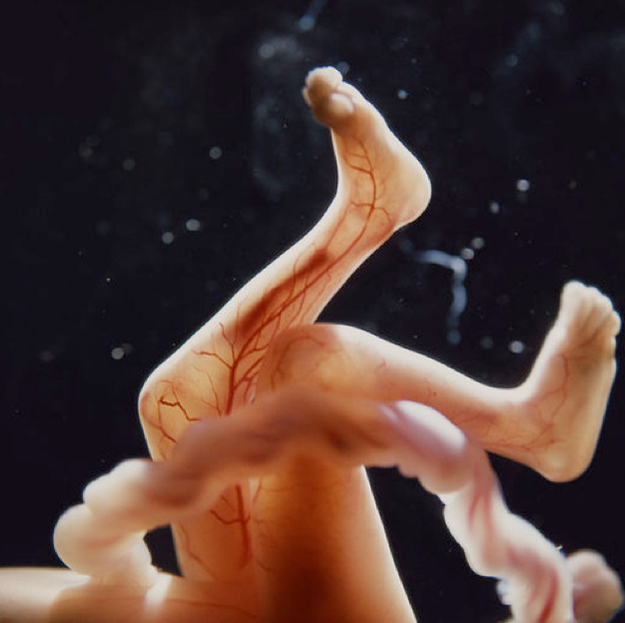

What did early church fathers think about abortion and infanticide?

Unborn Baby - 10 weeks old
Unborn Baby – 10 weeks old

I noticed that the Southern Baptists over at ERLC had a post up which seemed to say that preaching against abortion was morally wrong, because it hurts women’s feelings. This didn’t seem like a very traditional Christian view to me.

The author Phoebe Cates writes:

So, you don’t have to post internet memes and videos, display bumper stickers, or make rude comments to tell me how terrible abortion is. Nor do you need to shout it from street corners or pulpits—I know. My mother knows. Over 66% of women know.

I quoted her from Pulpit and Pen, and it looks like the post has been edited to remove this shaming of pro-life apologists.

The author thinks that women do think abortion is wrong, despite the fact that young, unmarried women vote overwhelmingly for abortion rights in elections. Her goal doesn’t seem to be to convince women not to have abortions by making a case for the right to life of the unborn. Her goal seems to be to stop Christians from making women feel judged when they kill their children. Her focus is on women’s feelings, not the right to life of unwanted children.

The church has been changing a lot lately to accept the teachings of radical feminism. Radical feminism urges women to abandon chastity, delay marriage, get on birth control, and have reckless recreational sex with attractive, no-commitment men, while pursuing their careers. And abortion is fine with these Christians, because they think it’s just a method of birth control to be used to help women to avoid being “punished with a baby” as Obama said. The concern of these Christians about abortion isn’t that it kills babies, it’s that women feel judged when they kill babies.

So, what did Christians used to believe about protecting children before they tossed out the Bible for radical feminism?

This is from Birds of the Air.

Summary:

Recently I came across a reading of the Didache. “The what?” you may ask. The Didache is a book written somewhere in the first or second century. For a long time it was up for consideration as Scripture. It was believed to be the Teaching of the Twelve Apostles. Eventually it was agreed that the book was an excellent book, but not inspired Scripture. So I was pleased to be able to download this admirable book containing good teachings from the early Church fathers.

The book seemed to be largely a lot of quotes from Scripture. You’ll learn the basic rules of Christianity — “First, you shall love God who made you; second, love your neighbor as yourself.” You’ll learn that “grave sins” are forbidden, like adultery, murder, fornication, and so on. (They specifically include pederasty in the list.) There are instructions regarding teachers, prophets, Christian assembly, and so on. Lots of the normal, good stuff. But, since this was written sometime prior to 200 AD, I was somewhat surprised at this instruction: “You shall not murder a child by abortion” (Didache, Ch 2).

I got curious about what babies look like when they are just a few weeks old, so I went looking for pictures of them.

This post from Life News has ten excellent pictures of life inside the womb.

Here’s my favorite from 10 weeks:

Unborn Baby - 10 weeks old

Unborn Baby – 10 weeks old

This is a first trimester baby!

I decided to go hunting to see what is developed at this time, and found this list:

  • From this week until birth, the developing organism is called a fetus.
  • The fetus is now the size of a small strawberry.
  • The feet are 2mm long (one tenth of an inch).
  • The neck is beginning to take shape.
  • The body muscles are almost developed. Baby has begun movement.
  • While still too small for you to feel, your little one is wriggling and shifting.
  • The jaws are in place. The mouth cavity and the nose are joined.
  • The ears and nose can now be seen clearly.
  • Fingerprints are already evident in the skin.
  • Nipples and hair follicles begin to form.

The unborn baby is now called a fetus. Though the fetus is constantly moving, you will not be able to actually feel fetal movement for several more weeks. All of the organs, muscles, and nerves are in place and beginning to function. As the hands and feet develop fingers and toes, they have lost their paddle like look. The touch pads on the fingers form and already have fingerprints.

During this week of pregnancy the crown to rump length of the fetus is 0.9 inch to 1.2 inches (22 to 30mm), weight 0.07 ounce (2gm). They are now on the way to forming their testicles or ovaries, getting ready for the next generation. Until the ninth week of fetus development, the fetal reproductive apparatus is the same one for the both sexes. The head is still large and curves into chest.

Each week your uterus grows larger with the baby growing inside it. You may begin to see your waistline growing thicker by this time. A pelvic exam will detect that your uterus has grown from it’s normal, size of your fist, to a little bigger than a grapefruit.

Fascinating!

Why are Christians allowed to eat shellfish but not allowed to have sex before marriage?

I have a key that will unlock a puzzling mystery

Here’s a wonderful article from Peter Saunders.

The challenge:

An argument frequently advanced by those attempting to defend homosexual practice is that Christians ‘cherry pick’ the commands in the Bible – that is, they chose to emphasise some commands while ignoring others.

The Old Testament may forbid homosexual acts (Leviticus 18:2; 20:13) but it also forbids eating seafood without fins and scales (Leviticus 11:9-12; Deuteronomy 14:9, 10).

So how can Christians then justify upholding laws on sexual morality whilst at the same time ignoring the food laws from the very same books of the Bible? Why may they eat shellfish but not be allowed to have sex outside marriage? Isn’t this inconsistent and hypocritical?

The solution is that God enters into “covenants” with his people, and the terms of those covenants change.

Especially dietary laws:

The answer to this question lies in an understanding of biblical covenants.

A covenant is a binding solemn agreement made between two parties. It generally leaves each with obligations. But it holds only between the parties involved.

There are a number of biblical covenants: Noahic, Abrahamic, Sinaitic (Old), Davidic and New.

Under the Noahic covenant, which God made with all living human beings (Genesis 9:8-17), people were able to eat anything:

‘Everything that lives and moves about will be food for you. Just as I gave you the green plants, I now give you everything’ (Genesis 9:3).

But under the Sinaitic (Old) Covenant, which God made with the nation of Israel, people were able to eat certain foods, but not others.

Jesus clearly created a new covenant with his followers, where the dietary laws are lifted:

Jesus said that he had come to fulfil the ‘Law and the Prophets’ (Matthew 5:17; Luke 24:44). He would establish this new covenant with new laws, with himself as high priest based on his own sacrificial death on the cross.

This new covenant would completely deal with sin (Hebrews 10:1-18) and protect all those who put their faith in him from God’s wrath and judgement…

[…]‘In the same way, after the supper (Jesus) took the cup, saying, “This cup is the new covenant in my blood, which is poured out for you”’ (Luke 22:20). ‘…we have been made holy through the sacrifice of the body of Jesus Christ once for all’ (Hebrews 10:10)

People would come under the protection of this new covenant, not by virtue of belonging to the nation of Israel, but through faith in Christ. In fact the function of the Old Testament Law (Sinaitic covenant) was to point to Christ as its fulfilment.

[…]So what then did Christ say about foods? He pronounced all foods clean for his followers to eat:

‘ “Don’t you see that nothing that enters a person from the outside can defile them?  For it doesn’t go into their heart but into their stomach, and then out of the body.” (In saying this, Jesus declared all foods clean.) He went on: “What comes out of a person is what defiles them.  For it is from within, out of a person’s heart, that evil thoughts come—sexual immorality, theft, murder,  adultery, greed, malice, deceit, lewdness, envy, slander, arrogance and folly.  All these evils come from inside and defile a person.” (Mark 7:18-23)

Jesus was making that point that under the new covenant God required purity of the heart. Internal thoughts and attitudes were as important as external actions.

Food is OK for Christians, but sexual immorality – which includes premarital sex and adultery – are NOT OK for Christians.

I think sometimes when you are talking to people whose motivation is just to get rid of any objective moral law entirely, they tend to ask questions without really wanting a good answer. This is especially true when it comes to the morality of sex. They ask the question not to get an answer, but to justify getting rid of the moral rules governing sexuality. The answers are there for people who are willing to respect God in their decision-making to find. The answers are not found only by people who have a reason to not want to find them.

In case you’re wondering, I am one of those Christian men who takes chastity seriously. Marriage is about having a close connection with your spouse. Sure, I could break the rules and have a lot of fun now. A lot of Christians have a hard time turning down fun. But when I look at Jesus, I don’t see a man who is pursuing fun and thrills. I see a man who sees a need and then sacrifices his own interests to rescue others from peril.